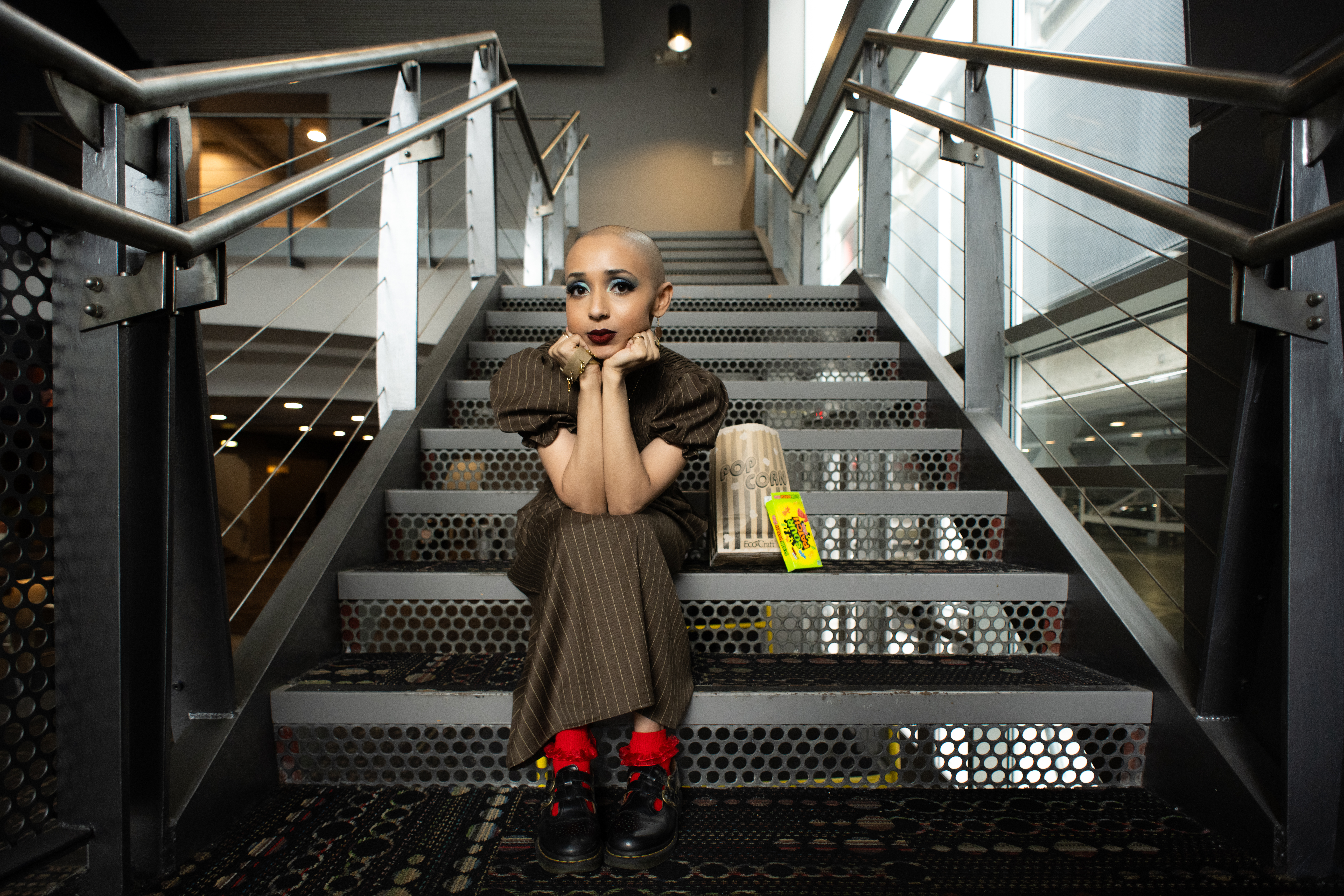
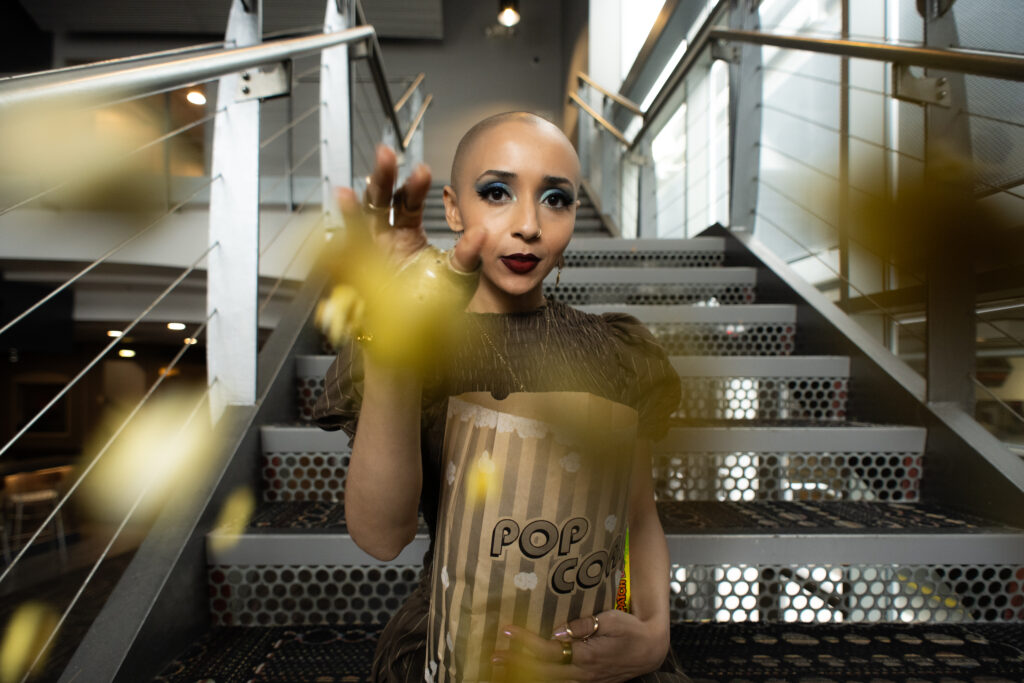
When I call Grace Givertz, I catch the folk singer as she’s on her way to the post office to ship out pre-ordered vinyl copies of her new album, Midnight Feature. Almost immediately, she starts explaining USPS’ Media Mail program, which discounts shipping rates on books, film, manuscripts, and recorded music. These are the things you learn after almost 10 years in the indie distribution game.
It’s an unseasonably warm March day and her spirits seem high; Midnight Feature has sold enough pre-orders that Givertz needs a wheeled cart just to lug them all to the Brookline USPS. As she passes Village Vinyl on Harvard, she notices a poster for her upcoming album release show in the window. She was planning to ask if she could leave one in the shop, but someone beat her to it. She sighs, delighted.
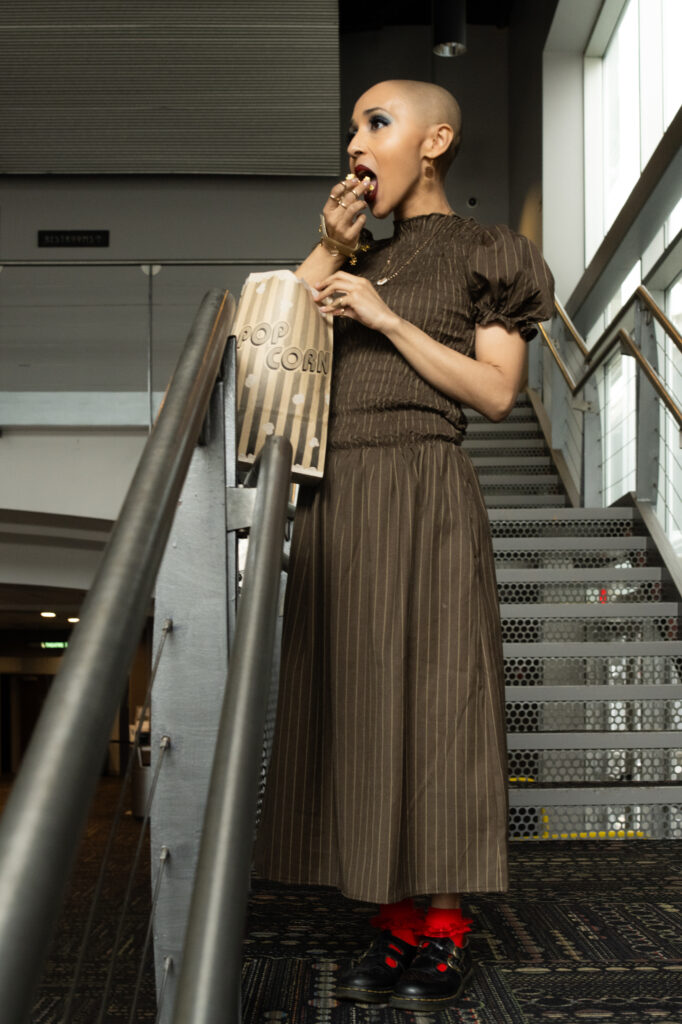
Midnight Feature is Givertz’s second album and first since 2019’s Year of the Horse. It’s a bitter record by the singer’s own admission, a reflection of the tumultuous period in her life when it was written.
In 2017, Givertz was hit by an MBTA bus, an accident that necessitated shoulder surgery. “Apparently when you’re in the bus/bike lane, the bus has the right of way,” she deadpanned. Shoulder surgery left her unable to play guitar or banjo but she was still able to sing undeterred.
That was until temporomandibular joint (TMJ) disorder, stemming from both the accident and a latent case of rheumatoid arthritis, made it impossible for her to sing and forced her into a period of musical hibernation. “Singing is something that has never made me feel sick, and having that taken away from me for almost a year while my jaw deteriorated was devastating,” she said. TMJ discopexy, a minimally invasive jaw surgery, followed in 2019 and has led to a (nearly) full recovery.
Though the music on Midnight Feature carries the weight and pain of several hard-fought years, Givertz no longer identifies with the person who wrote these songs three years ago. “I know it’s my story, but a lot of it feels like I’m retelling a story that didn’t happen to me. And maybe that’s just me dissociating. But you know what? Make it healthy.” She credits her boyfriend, pets (a cat, a dog, several lizards), and a close circle of friends for her newfound positive outlook.
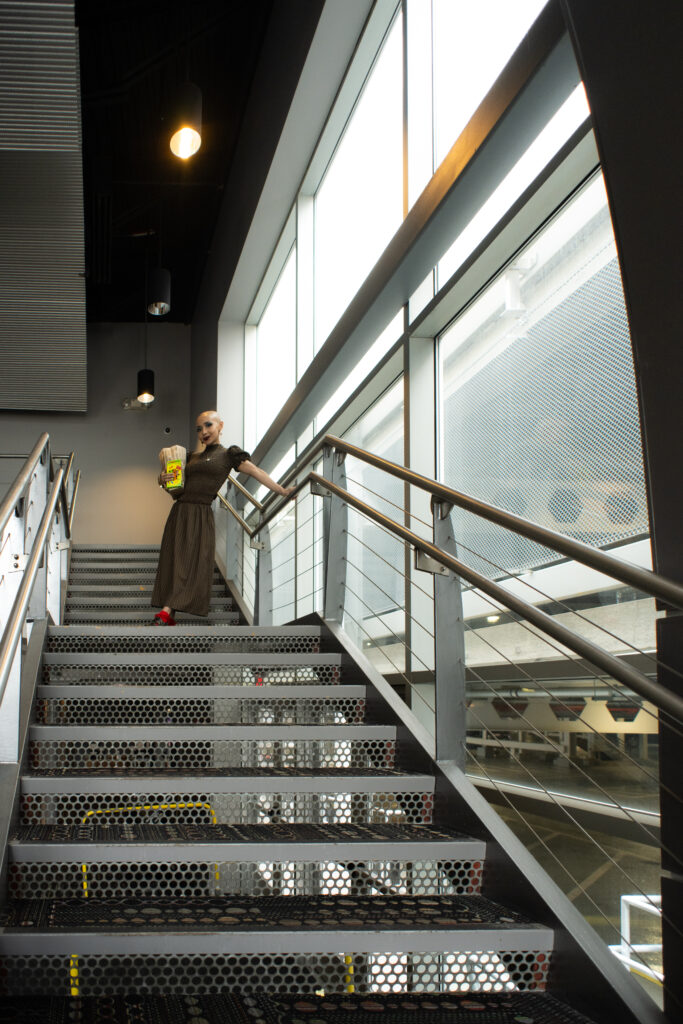
For the Midnight Feature recording sessions, Givertz only collaborated with musicians and technicians that were BIPOC, disabled, or queer. If you think this narrowed her talent pool considerably, she’d urge you to reconsider. “You just have to look outside of the 5 white dudes playing guitar in front of you to realize that there are other people playing the same music and playing it just as well.” In fact, the Midnight Feature band is one of the largest ensembles the folk artist has ever assembled: ten players encompassing fiddle, horns, and drums. Most of the band she used in the recording sessions will return for the album release show at Capitol Theater.
Midnight Feature also includes the first featured vocalists in the Grace Givertz canon. Closing track “America” gives Providence-based folk artist Jake Blount, someone Givertz considers a mentor and a scholar of the Black roots of folk music, a turn on the mic. In his verse, he laments the deep-rooted racism of the country and doubts its ability to ever fully accept Black people as equals. Folk songs about America are almost as old as America herself and Givertz’s take on the traditional form doesn’t pull any punches.
After leaving the post office, I asked Givertz about America. Is there any hope there? “I have hope in my community, and there’s a really cute baby dog I’m walking by and I have hope in that.” She runs down a list of ills facing the nation and the nation’s role in many of the world’s ills. Amidst it all she lists the individual struggles—breakups, bad Hinge dates—that color our world and, mid-sentence, is catcalled by a passing man as if the world itself is proving her point for her. Givertz powers through the unpleasantness. Then, to the now-passed catcaller she offers, “Unless you want to give me $5,000 you can fuck right off.”