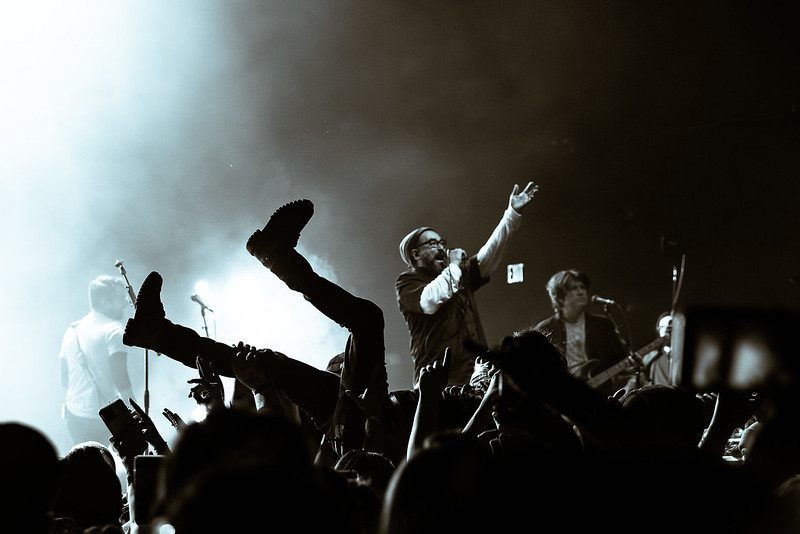
February 4, 2026: Motion City Soundtrack perform at Roadrunner. Photo by Wendy Schiller
There’s a lot going on these days, and the sun still sets before 5:00PM! It’s enough to give one pause about a gig where the final band doesn’t start until 10:35. But, Motion City Soundtrack and Say Anything hit Roadrunner this week on their co-headlining tour, and elder millennials and youths alike turned out in droves. Surprising? Not at all, because screaming along to both bands never gets old even if we must. Say Anything fronter Max Bemis did his best to be gracious to voracious fans in the front row, while playing hits like “Wow, I Can Get Sexual Too” and “Every Man has A Molly.” Suffice to say, songs we love inevitably change with time, so “Alive with the Glory of Love,” the holocaust tribute to the singer’s grandparents, hit a little different in 2026. Bemis acknowledged this, less so by his words than by his shy and muted demeanor throughout the set. He thanked fans for showing out and caring for each other at nearly every song break.
The vibes continued with Motion City Soundtrack exploding onto the stage for their set, playing many new tracks from their latest album The Same Old Wasted Wonderful World including “She is Afraid” and “You Know Who the Fuck We Are.” The band sounded as good and crisp as ever, with lead guitarist Joshua Cain and keyboardist Jesse Johnson dancing at a fever pitch through every track. After playing cathartic hits like “Attractive Today”, “L.G.FUAD”, and “Even if it Kills Me,” Motion City Soundtrack’s Justin Pierre closed by saying the quiet part out loud: making an impassioned speech about ICE’s presence in his homebase of Minneapolis.
Beloved Chicago band Sincere Engineer supported, with Justin bringing out lead singer Deanna Belos to do her solo on “Things Like This” during their set.
Dream folk project Wulfer recently went that well-weathered path from Boston to New York in pursuit of new experiences, new opportunities, new places to play and new people to play with, all that admirable stuff. We as a publication are obviously quite happy for Ashleigh and will always be rooting for anyone with Allston roots. Wulfer’s set at our Zone 3 concert series last spring was among of our very favorite, so it was a joy to sit down ahead of her second full length LP I Love My TV (recorded at home and at Studio 52 in Allston by the way) to dig in on the process, songwriting, and how her time as a gun-for-hire in the alt pop world has coalesced into such a strong sophomore statement. Hit play on the stream below and read on for more.
Allston Pudding: What is it about TV that you find so inspiring?
Wulfer: TV is something like a universal comfort for everyone, and even when you’re not loving parts of life, you always do kind of love your TV, or at least most people feel that way. So just that sort of comforting aspect of it, I guess I’m interested in that. The TV is always there for you
AP: Between the way you interlay all these musical elements and how your arrangements often start from quiet and gradually build plus all the drum machines, is it safe to assume that electronic music is an influence on this project, as well as indie rock and folk?
W: Yeah, definitely. I love electronic music and pop music, pop production. I’m super inspired by pop melodies and vocals. So I think that absolutely bleeds into my production when I’m fleshing out the tracks. So, yeah dance music and all of that are things I very much love, on top of the folk and the indie rock stuff.
AP: How do you connect those disparate elements into what becomes a Wulfer song?
W:I think the more electronic and pop inspired production definitely happens after I’ve written a song and I’ve gone to produce it in my computer. It’s not much of a stretch because I already write pop melodies, so I just sort of chase little ideas when I’m producing. Really a lot of it is experimenting, trying little things, taking ideas from electronic tracks I love, and seeing what they’ll do on top of this little bookish song.
AP: Do you produce for other artists as well?
W: I don’t, I only produce for myself. I’ve thought about how I would feel doing that and and maybe I would like it, but for right now I just really love doing it just for me, because I only really know how to do it in a way that works for me right now, and that’s that’s fin. I love that it’s like a playground to me, and I feel like that’s my little happy place when I have a song and I get to just turn it into anything.
AP: Obviously, you’re watching a lot of TV, but were you watching in particular, or listening to, or reading, or was there any other sort of media in your world while you were putting together the album?
W: Well, I’ve always been really into fantasy stuff, honestly, because of the whole like separation of worlds and like escapism of that, which I do feel like definitely ties into that comfort away from your life that TV gives you. I was honestly, really into the the Lord of The Rings movies this year.
AP: When did you start messing around with vocal processes and how does it inform your songwriting?
W: I always write the songs on my guitar with just myself and singing, and then when I go to record them in my room that’s when I start messing around with vocal effects. I usually don’t have a vision of where the song is going to go in a produced manner when I’m writing it, so it all kind of comes together when I am just messing around on top of it. I love the vocal processing effects because sometimes I have a hard time recording my own voice and getting it to sound a way that I like. So when I get to mess with it that usually starts to do it for me. So, yeah, post-song existing to me: writing the song and then creating it in a production are two very different steps.
AP: Do you consider those sort of elements a core part of the Wulfer project?
W: Definitely, it’s cool to me to have the song exist when I’m playing it live or something, and just me and my guitar sort of way, and then to also have these produced versions as a separate thing. They’re both important to me, but I feel like the first part is a cycle that becomes what I get up to when I’m producing.
AP: So the album has the sort of immediate, in the room feel of a bedroom recording, but it also has a lot of deep resonance like something more professional. How much of it, if any, was tracked in the studio, or vice versa?
W: Every part of it was recorded in my room, except for the drums, which weren’t in a studio, but I did bring some mics to Studio 52 in Allston where I rented a room and just recorded the kit there. So, no official studio on this album, all bedroom studio and then taking my mics around different places. Actually kind of a more DIY vibe than even my last record, which happen be circumstance more than anything else, but I feel like it allowed me to just make it even more specifically how I wanted it. So I kind of love it.
AP: Do you prefer stuff bedroom recording or would you rather have the resources?
W: I guess it’s tough to say, because I’ve never really recorded more than been drums in the studio for my own songs. I’ve never been like one of those with in studio songwriting time. I think that the way it’s going on right now, just myself at home, really does work for me because I think feeling unbothered is really important for me getting my best ideas. Being alone in the studio wouldn’t really be helpful for me either, because I’m honestly not super collaborative when I’m writing the Wolfer stuff. I’m actually sort of anti social when I’m making it, so just like being able to go into the void in my room and make them really does work for me. So I foresee this being the way I do it for a long time.
AP: Your guitar playing is especially striking part of the Wulfer project, do you feel like you have any like particular guitar moves that feel singular?
W: Well this is definitely not singular to Wulfer, but open tunings, I love them. What is becoming kind of signature to me now is our super low tunings, you know, like my guitar is often in B or pitch down the recordings often, but especially when I’m doing the initial takes, or when I’m playing live, the strings on the guitar are usually B’s and C’s, usually with open tuning. So those low sounds I really love, and I think those kind of sounds along with the auto tune live, especially with the with the acoustic very much feel like my sound right now. I also use the shruti box to drone underneath me when I’m playing live and often in the recordings, and I definitely don’t want to claim any sort of signature with the shruti box, because that’s like a traditional Indian instrument, and anyone can get one, but I do love to use that to drone under me I’m playing live and recording.
But yes, as far as specifically guitar, it’s those low, low register tunings, open tunings, and sort of close, tight voicings for the chords. Those are in pretty much every song.
AP: It’s like a nice balance here between the sort of like dream folk of your early releases under Wolfer, and then there’s some of that louder, more full band stuff you were playing towards the end of your time here in Boston, (like at our Zone 3 show with handhold last year). How do you sort of translate, or how are you planning to translate those dynamics in a life setting moving forward?
W: If I’m playing full band show, (and I do play a good mix of both full band and stripped down shows), but with my friends that play in my band with me, we try to make every song pretty much, loud. I really enjoy arranging these softer songs for drums and bass and it’s just more fun for me to play them kind of loud with the band and having them become their own thing. We just sort of mess with them, see what works and and what lends itself to making them a little louder, and that’s fun for us. You know, throw the distortion on and see, see what sounds good and what sounds bad.
AP: Where do you see Wolfer in the continuum of this sort of, like, newer wave of dream pop and shoegaze?
W: I think I do see myself in there, I’m definitely a part of this movement of young people who’ve been inspired by people like TAGABOW and Alex G as well as the folkier people like, you know, Adrienne Lenker. I think I definitely fall somewhere in the dream folk/ alt pop thing and it’s nice to feel a part of a larger scene of musicians who are making things that are really exciting. It’s the best thing in the world to go see a band, and then you’re inspired, and then you go back to your band, and you change something, and it all feeds off of each other.
AP: I know you’ve been playing guitar with some other more like pop leading acts. How have those experiences influenced this project?
W: I love playing guitar for other people and like playing the more pop music live especially. I’m so satisfied by pop chord progressions and pop melodies and like, I definitely get a lot of track ideas from playing these pop sets where you’ve got the tracks going into your ears while you’re at the show, so I’m definitely influenced by it, and I’ve gotten all sorts of cool production ideas from it. It definitely fed into th more pop/electronic dance elements that fall into this album too.
AP: What ways do you feel like you’re playing differs for Wolfer versus those side gigs?
W: I sort of compartmentalize that standard tuning is for other people, and then open tuning is just for me. I feel like when I’m in standard tuning I’m thinking maybe more academically about the guitar. And then when I get to open it up it’s much easier for me to write a song, I feel freer in a way. Also, honestly it comes down a lot to electric versus acoustic guitar. Like my electric guitar playing is way more about doing gigs for others and the acoustic guitar, at least in a writing sense, that sort of feels more like just for me.
AP: In what ways has moving to New York changed this project and or you as musician in general?
W: I can feel my tastes changing since moving here, and just you know, experiencing a big change in my life in general has done a lot for me musically. Also, my band is full of different friends now, and each of them brings new, awesome stuff into the project as well. I think being in a huge new pool of bands to go see and hearing all these new to me sounds and all this talent around me with people taking their music, really, really, seriously, it’s all very inspiring to me. I already feel my interests shifting a little bit, like I’m very inspired by a lot of the singers here, so that’s something that I’m trying to work on.
And I could see myself slightly phasing out of the shoegaze-ier sounds moving forward, because I do feel like my tastes are changing from there. Since coming here, I’ve become a lot more interested in singing and writing real song-y songs. I’m just very interested in making good songs and maybe less in the sort of alternative, soundscapes. Moving away from the more textured stuff and towards more song-based writing, so who knows what the next batch could look like.
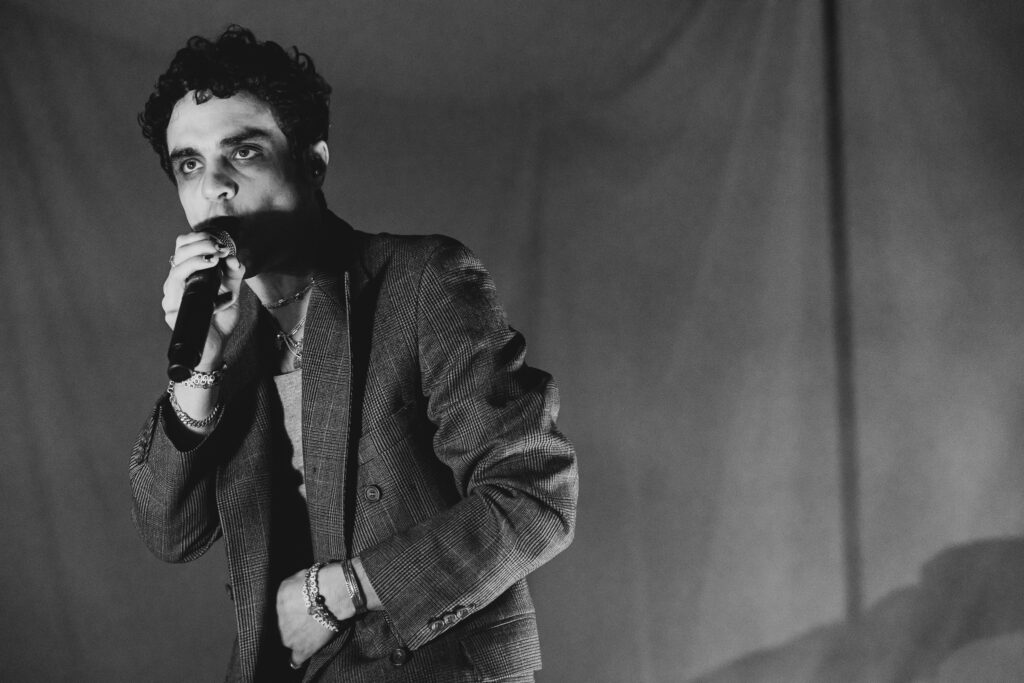
January 27th, 2026. Del Water Gap performs at Roadrunner. Photo by Samantha Davidson.
Beloved indie rock artist Del Water Gap stopped by Roadrunner Boston in support of his latest album, Chasing the Chimera, on January 27th. At doors, fans rushed into the venue, eager to connect with each other after the weekend’s snow-in. First up was dreamy alt-pop artist Hannah Jadagu, who stepped into the spotlight in black jeans and a black shirt with cutouts, playing a floral-patterned electric guitar. She serenaded the audience with tracks like “Warning Sign” and “My Love,” showcasing her smooth, haunting vocals. During “All My Time Is Wasted,” she asked the audience who could sing and taught a lucky fan named Grace the call and response for the song, a great way to engage the audience.
Giant white curtains with a singular black stripe across the middle covered the stage, creating a flowy liminal portal to step into. Soon after, Del Water Gap strutted onto the stage in a crisp grey plaid suit, a plethora of silver necklaces, and friendship bracelets from fans. He opened his set with “Small Town Joan of Arc” as the lights flashed. His powerful and gritty vocals reverberated around the venue as he jumped around the stage and kicked his legs high up into the air to the beat. Tracks like “Doll House” and “Marigolds” showcased his command of the audience, as they screamed each word, eyes glued to the stage. Fans at the barricade brought a “Boston Loves Del Water Gap” flag that they all signed, featuring the iconic ‘Horse with a Bowl Cut’ symbol based on Del Water Gap’s napkin art. He infused his set with equal creativity, sitting down to sew for a moment during “Damn.” His dedication to making this a once-in-a-lifetime show was made clear when he hopped over the barricade to sing with fans, and brought out Nine Days to sing a cover of “Absolutely (Story of a Girl).” He ended his high-energy set with the viral hit “Ode to a Conversation Stuck in Your Throat,” with lyrics like “Tell me that nobody else touches you like I do,” reminding everyone how he touched them with his music during the show. Make sure to catch Del Water Gap live before the Chasing The Chimera Tour ends in May. Buy tickets here.
Check out all of Samantha’s photos from the show below.
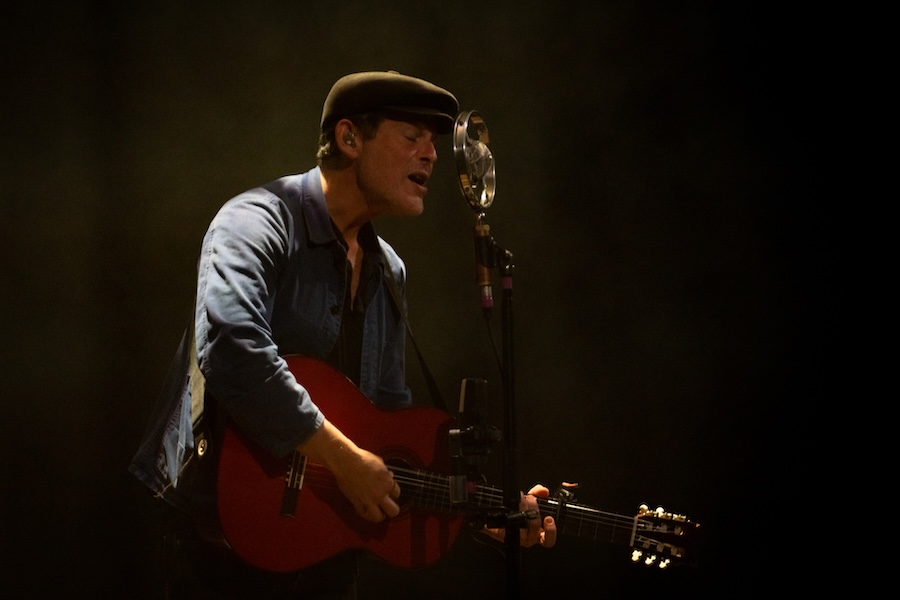
Gregory Alan Isakov performs at the Wang Theater, January 23, 2026. Photo by Greg Wong
Boston area fans endured the harsh wind and biting cold on January 23 to catch Gregory Alan Isakov at the Wang Theatre. The indie-folk farmer fulfilled his vision of an intimate acoustic performance with barebones “kitchen table” renditions of his music. The scaled-down tour nevertheless attracted a huge crowd and the sold-out theatre was packed with enraptured listeners.
Isakov intimated between songs that he had put off doing such a minimalist tour due to the anxiety of performing solo in front of such large crowds. He joked however that he had named his anxiety “Carl” and told him “Alright Carl, we’re going on tour. You can come, but you can’t talk that much.” The anxiety melted away, and what remained was 90 minutes of evocative music spanning 5 of his 6 studio albums, performed solo and occasionally accompanied by his brother Ilan. At the end of such a wonderful concert, everybody won, and Gregory Alan Isakov was comfortable enough to let the audience know his feelings when he quipped “You guys aren’t so scary!”
Opposite of what Karl Marx once wrote, Dirt Buyer began as farce and then as tragedy. Started by two Berklee kids as one in a series of genre-locked fake bands they were to collect into a compilation that secretly just featured themselves, Dirt Buyer was the blandest “New England emo band” name they could come up with. This did not happen. As the emo-folk tunes they recorded on an iPhone kept flowing, the duo of Joe Sutkowski and Ruben Radlauer instead issued a terse self-titled Dirt Buyer LP (originally under pseudonyms as this very website once covered) and planned to play one show before breaking up. That also did not happen. Instead, what started as a lark has become Sutkowski’s purest musical expression, and now four albums in, something like a means of survival.
We talked with Joe Dirt ahead of today’s album release day about this and more, hit the stream below and read on.
Allston Pudding: We’ve come a long way from the the pseudonyms and the dirt on the table. Did you ever foresee this project reaching a third or fourth album?
Dirt Buyer: I didn’t even foresee it reaching a first album honestly, because the project, it wasn’t necessarily a joke, but it was just a thing that Ruben and I were doing for fun. It was our emo band. We were going to put out an emo album for our emo band, and it was just one of our many hypothetical projects, but I had no fucking clue that it was gonna become what it has.
AP: How do you think your songwriting for this band has changed over over this time?
DB: I mean the sounds that I like have remained pretty consistent, but I think that over the years the process has just become a lot more refined and I have imposed more limitations on myself. The first Dirt album was kind of my introduction to writing real songs, but since then, I’ve spent thousands and thousands of hours thinking about what makes a song good or like, “what do I want to hear? What do I like? What what do I think makes a song good?”
I guess I’m just a lot more sure of myself, and I’m much more confident in approach. I have formulas and shit now where the process is much less abstract, because I know what I’m looking for, and I have the language and tool set to find those things pretty quickly.
AP: When you say you have an idea of what you’re looking for to make a song good ae you looking at that through the prism of like, what makes a good Dirt Buyer song, or is it just simply a good song to you?
Well, Dirt isn’t the only right project that I write songs for. So I guess when I’m sitting down to write a Dirt Buyer song that in itself is a limitation, and I use very specific tools from my toolbox. For instance, during lockdown I was writing all kinds of shit just for fun. like I made five or six songs that I wanted to put out as, like a lo-fi Doo-wop album, and the process is totally different, like the lyrics are very specific and harmonically, the there are only so many places you can go in a Doo-wop song. There are like three Doo-wop songs. Very Jersey.
AP: Your live show has gotten more and more dramatic over the years. What is it about this music that kind of provides you with that nervy energy you have on stage?
DB: I don’t know. I guess Dirt is kind of like my diary, like all the songs are very intentional and personal to me, and they come from a place of something I’m trying To work out in my head. I guess it’s writing the songs is a part of my healing process, and as far as the live show goes, I just try and be as honest as possible, I’m playing the songs onstage the way that I would at home in my room, by myself.
AP: Some of the press around has talked about your battle with alcoholism and some tough relationship strife so obviously, first of all, how are you now?
DB: It’s always fucking something: if it’s not this, it’s that. But, that was just a really fucked up time of my life. I guess, and all things considered, I’m doing pretty okay. It’s a forever process, like figuring out how to exist in a way that is healthy and helpful in the long term. But I lived my life extremely day to day, like, “Okay, what do I need right now?” I think that’s partly why I’m prone to falling into these explosive and self sabotaging patterns. That’s something that I’m working on, something that I’ll be working on forever. But yeah, I’m doing pretty okay right now.
AP: Do you see, you know the album is kind of like a survival log of sorts?
DB: Yeah, in the past few years I have learned so much about myself and what I want and what I don’t want, what works and what doesn’t. I’ve gotten really deep into therapy, and when I was writing those songs, I just didn’t have the language to express what I so badly, so it all came from a place of like, not to be so dramatic, but despair and feeling like I had no other options.
AP: Redemption, making amends, clarity of purpose: these are some of the themes that pop up on the album, how much of that was sort of informed by your attempts at recovery?
DB: I guess it’s all an attempt at recovery, just having no idea where to where to turn, or what to say or how to say it, or how to learn or figure out the things that I need to know to say them. I guess it all funnels out to the same place, which is, I’m just trying to be okay with existing at all.
AP: You’re big runner, do you find yourself workshopping songs or working on ideas while you’re doing it, or is it kind of an escape from the creative process?
DB: It’s an escape for sure, but I’ve definitely worked out songs or had epiphanies while running, especially during lockdown when I wrote a solo acoustic record Of Wisdom and Folly. I was in New Jersey, and I was running listening to Chocolate USA. It’s like a side project of a side project, part of the Elephant Six crew, Julian Coster’s rock band. The lyrics are really cartoony and fantastical. One of the lines in one of the songs, it was like: “we dug a hole that was really deep.” And I was like damn you can just say whatever you want, and the way it was presented in the song is like it’s a physical, real life hole that is being dug, and that just sent me down a rabbit hole, and I got home and I recorded “Sherry Had A Pretzel Head” just immediately. And then every day until the thing was done, I would wake up every morning and write a song before I did anything.
But recently, it’s mostly just been an escape. I’m not necessarily working anything out, it’s just the thing that works and will help.
AP: Slowcore and emo are still primary influences for Dirt Buyer but there’s some cool genre exercises on this new one. There’s a straight up like folk song, and you got almost like a radio pop punk song on there. Is that sort of a reflection of your taste changing? Or were those always like moves you had wanted to try out with Dirt?
DB: I mean, all the slowcore stuff is very near and dear to my heart, but I didn’t want to write another slowcore record. The way that the album was put together was much different than anything else that I’ve made. I wrote like, 24 or 25 different songs and then brought them to Hayden and Chris at Studio G and we cut it down to 11 songs, so there’s a little bit of everything as a result of the album coming from a batch of songs rather than them being written specifically as a record.
I don’t know if my taste has changed so much as my approach to writing songs, I’m trying to do more, I’m expanding the idea of what a Dirt Buyer song could be. It’s exciting, and it has me thinking about what I want to do after this. Usually I have an entire record in the chamber before the one that I’m supposed to be thinking about even comes out, but I’m doing a lot more thinking this time around. I want to be more intentional about my jumping off point, because now it feels like I could do whatever I want to do for myself now.
AP: Your guitar playing is such a big voice in this group, but I feel like you’re doing some more vocally expressive stuff here. Got some falsetto on “Bullshit Fuck”. What pushed you to try some different things vocally on this one?
DB: I think it’s because I had to in service of the songs. I typically write the music first, and then I go through my psychic Rolodex of like potential melodies that fit over the thing that I made, and whatever I think is the best fit for that song is what happens. I kind of forced my own hand here, like those were the melodies for those songs, so that’s what I had to sing. This album specifically, is a lot more going on vocally, for sure, but I don’t know, it’s just as simple as that: those were the melodies for those songs, so that’s what I sang. I’m just gonna keep trying to write songs that I like and hopefully people also like them.
AP: How has your relationship to the city of Boston changed over time?
DB: Oh man, it feels much less emotionally dangerous than it once had. The years that I spent living there were really intense, I mean, talk about growing pains: that was the first real place that I ever lived with real people, not just like fucking like white suburban families. So for a long time after leaving I made it into this big scary monster, but something changed in me, maybe I was the big scary monster this whole time. It’s different now, I feel comfortable there again.
Dirt Buyer III is out now on Bayonet Records, grab a copy here.
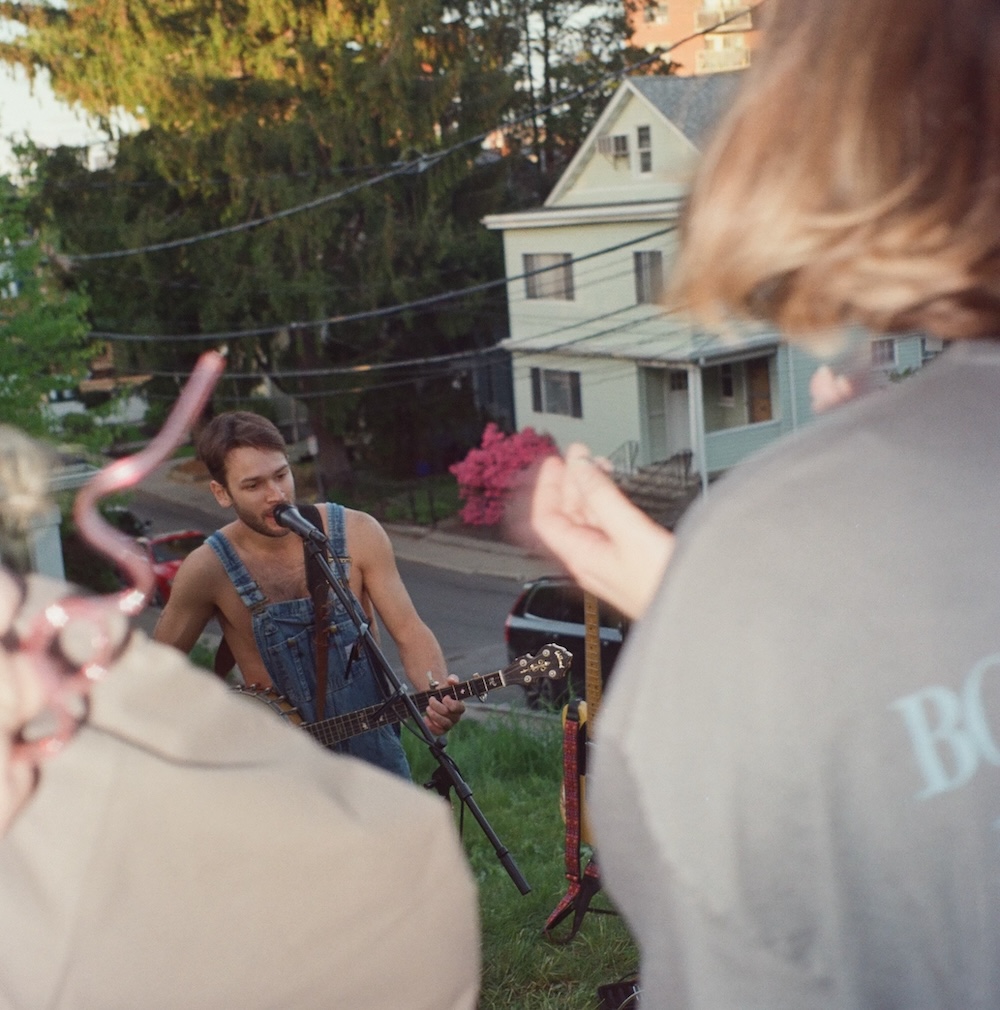
Mozz’s Cole Triedman performing with a banjo. Photo by Bonnie Parrot
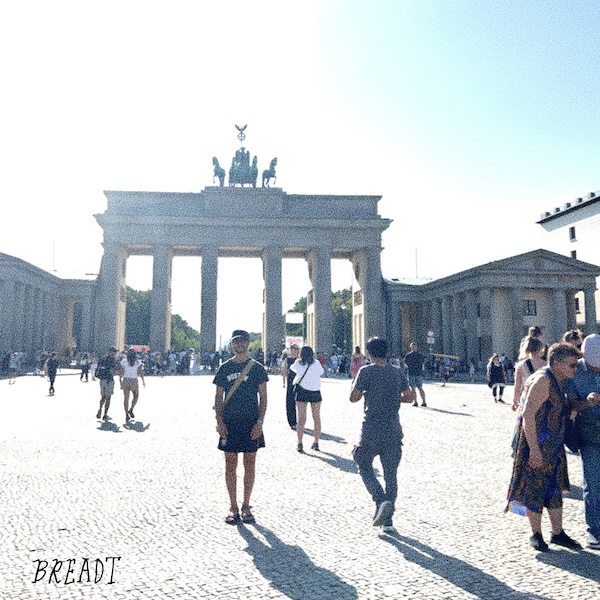
You might know Cole Triedman as the fronter of Fortuna 500, the Somerville slackers that sound like Pavement with some mud caked on their boots. Today, Triedman has dusted off his solo project Mozz (pronounced “motts,” rhymes with “ugatz”) and released its first new song in three years. It’s called “Another Day of Heavy Rain,” and it’s the first single from an upcoming EP called Breadt.
The Mozz project has taken many forms since its inception: endearingly twee acoustic songs done with ukulele, lo-fi recordings with so much fuzz you think you’ll die, other odds and ends of a songwriter figuring shit out. 2023’s Personal Spuds was an incredibly accomplished collection of folk rock tunes with enough garage spirit to wake the neighbors. It’s a worthy listen for fans of the ‘tuna’s country leanings, especially considering the Mozz stuff tends to be a skosh more tender than what’s going on in Fortuna. You’ll find no ironic detachment here. Turns out Triedman’s got an underbelly as soft as a ball of burrata.
“Another Day of Heavy Rain” follows the trajectory set by Spuds. It’s plaintive singer-songwriter ditty on piano and acoustic guitar with some twangy slide guitar thrown in for good measure. Triedman’s poetry in Fotuna 500 has a wry slant to it but it’s mostly done away with here for something a little more pathworn. “Today I lived and died, closed my eyes and turned around / Drove stick shift all the way to town.” The title phrase almost comes as a resigned sigh and a roll of the eyes.
Recorded live in Brooklyn, the track features Triedman as well as a coterie of players including:
Patrick Murray (Dogwood Gap): Bass, engineering, mixing Hayden Carr Loize (Sockeye, Dogwood Gap): Drums Hal Triedman (Celestine Manno): Keys Celestine Manno and Duke DiEugenio: backing vocals Julian Snyder (Fortuna 500, Otis Shanty): Mix & mastering
Listen to “Another Day of Heavy Rain” below. Breadt will be out in March 2026, so keep your peepers on Allston Pudding for the latest.
The 2026 Levitate Music & Arts Festival lineup has been revealed, and it features a mix of genres and legendary acts set to grace the stage on July 18th and 19th. After over a decade of music, art, and community, the beloved festival will host global rock icon Alanis Morissette and Americana-Folk stars Caamp as headliners. Reggae royalty Ziggy Marley and ascendant Massachusetts-based reggae rockers The Elovaters will return to the festival with rising stars Sammy Rae & The Friends, Bebe Stockwell, Daniel Donato, and many more.
July 13, 2025. The Elovaters perfom at Levitate Music and Arts Festival 2025. Photo by Greg Wong.
Returning this year is the Levitate Foundation Songwriter’s Stage in partnership with the Levitate Foundation. This long-running tradition of blending national touring acts with rising local talent will help launch the careers of four unsigned, emerging artists, providing them with the opportunity to perform in front of tens of thousands of fans and to receive a grant to fund an album produced by a notable studio professional in their genre. Stay tuned as fan voting will open soon and learn more about last year’s Songwriter’s Stage artists in our 2025 Levitate Music Festival coverage.
The festival’s dedication to creative arts extends to the visual realm with live muralists and the launch of the Visual Artist Showcase, a larger-than-life art gallery open to all attendees. In typical fashion, Levitate transforms the festival experience into a celebration of creativity, community, and connection. The marketplace, full of local artisans and a selection of regional New England food trucks, will be open all weekend. Tickets are available for sale now, with single-day pricing starting at $129. Click here to buy tickets and here to learn more about the festival.
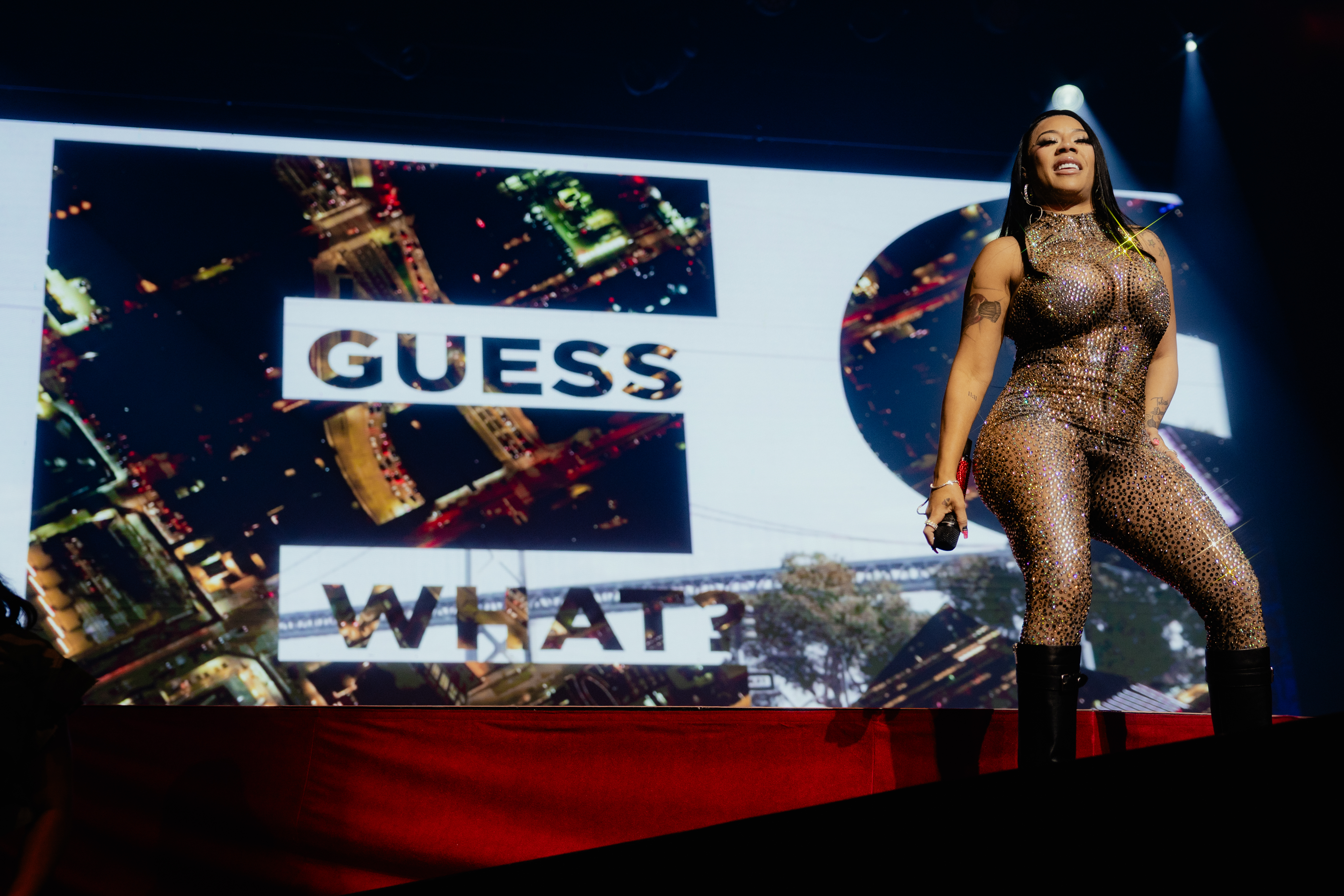
January 15th, 2026. Keyshia Cole performs “Guess What?” at MGM Music Hall Fenway. Photo by Samantha Davidson.
Legendary singer, songwriter, and TV personality Keyshia Cole stopped by MGM Music Hall on January 15th to close out The Way It Is 20th Anniversary Tour. Fans in faux-fur boots, bomber jackets, and sparkling skirts spilled into the venue and to their seats. One guest sported a pair of 2026 glasses, a reminder that most fans were ringing in the new year of live music with this concert. The opening DJ set the energetic tone for the night by curating a set that best engaged the crowd. Tracks like “I Will Always Love You” by Whitney Houston had everyone belting their hearts out, and songs like “WATCHU KNO ABOUT ME” by GloRilla had everyone out of their seats dancing.
Soon after, the curtains opened to reveal a giant heart-shaped platform in the center of the stage, outlined by dancers in camo print outfits and marching band drummers. Cole appeared in the center of the platform to thunderous applause in a skin-tight, skintone, fully rhinestone-encrusted bodysuit, immediately grabbing all the attention with her sparkly look and vocals. This run of shows celebrated her beloved debut album, with performances of hits like “I Changed My Mind,” “I Should Have Cheated,” and “Love,” showcasing her vocal prowess even two decades later. She strutted around the stage, holding the audience in the palm of her hand as she flawlessly hit each dance move and note. Stay updated on future performances here.
Check out all of Samantha’s photos from the show below.
January 10th, 2026. Sweetie performs at O’Brien’s Pub in Allston. Photo by Wendy Schiller.
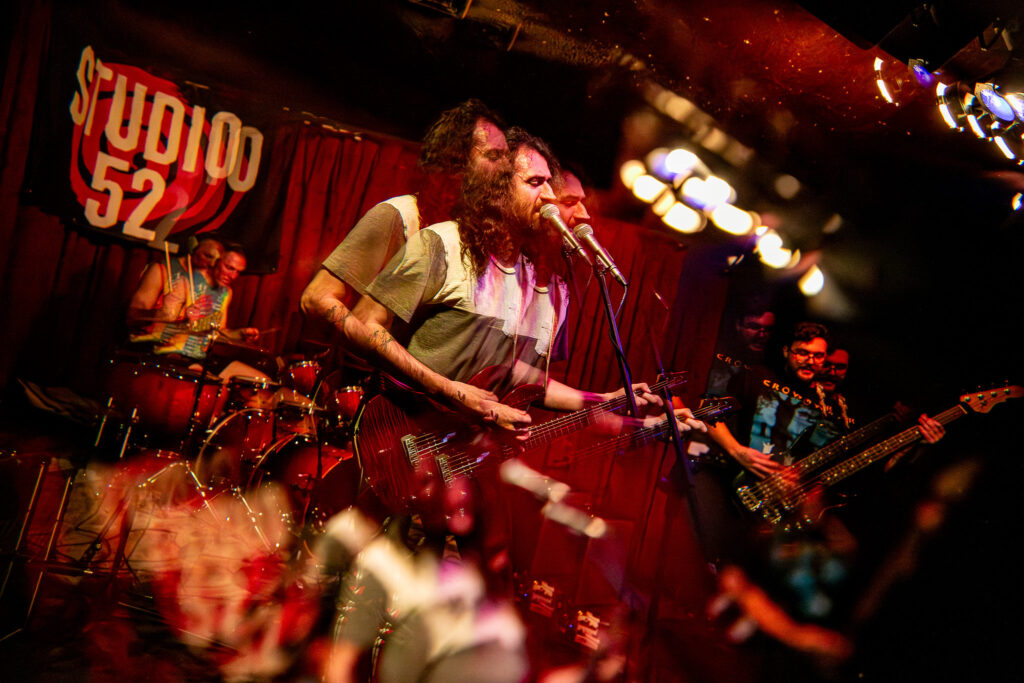
A FREE, matinee gig at a punk bar so emo millennials can go home early and binge reality TV on the couch? More likely than you’d think! Studio 52, Allston’s favorite rehearsal space, had their first sponsored show of the year at O’Brien’s pub, and it was a rousing success! Punk band Sweetie headlined, featuring vocals and lyrics from Actor Observer guitarist Nick Grieco, supported by bandmembers Frankie Benjaminsen and Jesse Hangen. They started off with songs off of their 2021 album Past Futures, including “Crazies” and “A Wolfe in the Night”, as well as debuted unreleased music off a forthcoming EP.
The openers were Cade Earick, and Never Better Baby, a grief rock band fronted by Future Teens’ Amy Hoffman and featuring Shallow Pools’ Ali Ajemian and Haley Senft. They played several tracks from their upcoming album including “Outlive” and “Grief’s Logic” (unreleased).
Be sure to check out the next free midday installment of this series on February 21!
Bus Crush performing live at the Lilypad, Jan 16, 2026. Photo by Wendy Schiller
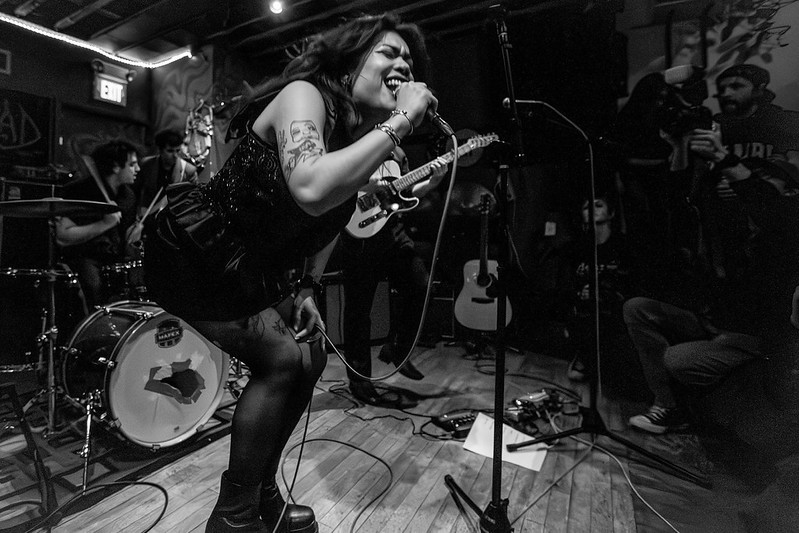
To put it simply, your success in the arts can be measured by how many people you can get into a room. That goes double for how many people you can keep in a room once it becomes uncomfortably crowded and hot. By these metrics, Bus Crush’s EP release show on January 16 at the Lilypad was a total smash. Presale tickets sold out the day before the show, but that didn’t stop the door manager from waving people in with or without tickets and keeping the room alive with energy and packed elbow-to-elbow.
When I arrived shortly after Megan From Work took the stage, the crowd was already pushing up against the bar at the back of the house. Visibility was at near zero, but that didn’t hold me back from enjoying a rousing set from the New Hampshire rockers who set the bar for energy early in the night. During the set break I was able to fight my way through the crowd to Allston Pudding Corner (front left, baby) where I could get a better view of Doss; their harmonious, dreamy pop was a balm for my growing claustrophobia.
By the time Bus Crush took the stage, their star power was hard to ignore. My first clue? The near-constant flashes from the row of photographers crouched just behind the stage monitors. The papping started early and didn’t let up until after the closing number rang out. But really, who can blame them? There’s a palpable excitement around this band that compels their audiences to capture their image, whether on their DSLR or iPhone cameras.
The band has always had a magnetism–sharp dressers with strong stage presences, an air of mystique–and the furor with which they were documented is a strong indicator of their appeal. “It” factor is an agglomeration of qualities, after all, and how good you look in pictures is moving swiftly toward the top of that heap. Watching them rip through tracks from their excellent new EP Star of the Show, me and the horde of photographers must have had the same feeling: that this band has a real chance of being very, very famous some day, and we’re all ready to brag about seeing them at a crowded DIY venue when we were the only ones who knew how special they were.
Check out Harry and Wendy’s photos from the show below