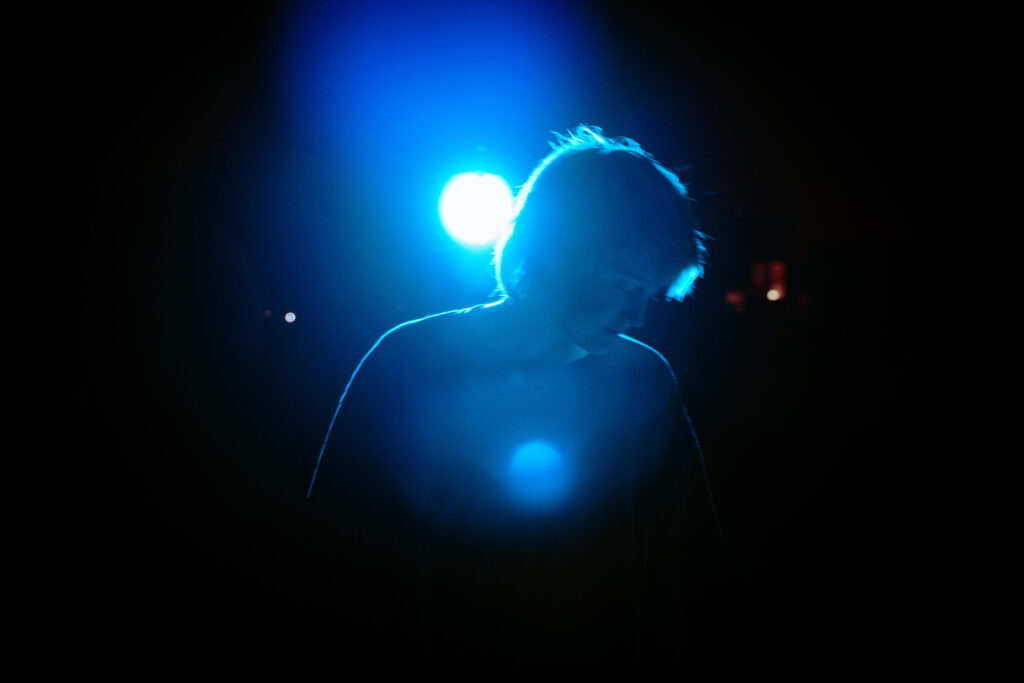
Dream folk project Wulfer recently went that well-weathered path from Boston to New York in pursuit of new experiences, new opportunities, new places to play and new people to play with, all that admirable stuff. We as a publication are obviously quite happy for Ashleigh and will always be rooting for anyone with Allston roots. Wulfer’s set at our Zone 3 concert series last spring was among of our very favorite, so it was a joy to sit down ahead of her second full length LP I Love My TV (recorded at home and at Studio 52 in Allston by the way) to dig in on the process, songwriting, and how her time as a gun-for-hire in the alt pop world has coalesced into such a strong sophomore statement. Hit play on the stream below and read on for more.
Allston Pudding: What is it about TV that you find so inspiring?
Wulfer: TV is something like a universal comfort for everyone, and even when you’re not loving parts of life, you always do kind of love your TV, or at least most people feel that way. So just that sort of comforting aspect of it, I guess I’m interested in that. The TV is always there for you
AP: Between the way you interlay all these musical elements and how your arrangements often start from quiet and gradually build plus all the drum machines, is it safe to assume that electronic music is an influence on this project, as well as indie rock and folk?
W: Yeah, definitely. I love electronic music and pop music, pop production. I’m super inspired by pop melodies and vocals. So I think that absolutely bleeds into my production when I’m fleshing out the tracks. So, yeah dance music and all of that are things I very much love, on top of the folk and the indie rock stuff.
AP: How do you connect those disparate elements into what becomes a Wulfer song?
W:I think the more electronic and pop inspired production definitely happens after I’ve written a song and I’ve gone to produce it in my computer. It’s not much of a stretch because I already write pop melodies, so I just sort of chase little ideas when I’m producing. Really a lot of it is experimenting, trying little things, taking ideas from electronic tracks I love, and seeing what they’ll do on top of this little bookish song.
AP: Do you produce for other artists as well?
W: I don’t, I only produce for myself. I’ve thought about how I would feel doing that and and maybe I would like it, but for right now I just really love doing it just for me, because I only really know how to do it in a way that works for me right now, and that’s that’s fin. I love that it’s like a playground to me, and I feel like that’s my little happy place when I have a song and I get to just turn it into anything.
AP: Obviously, you’re watching a lot of TV, but were you watching in particular, or listening to, or reading, or was there any other sort of media in your world while you were putting together the album?
W: Well, I’ve always been really into fantasy stuff, honestly, because of the whole like separation of worlds and like escapism of that, which I do feel like definitely ties into that comfort away from your life that TV gives you. I was honestly, really into the the Lord of The Rings movies this year.
AP: When did you start messing around with vocal processes and how does it inform your songwriting?
W: I always write the songs on my guitar with just myself and singing, and then when I go to record them in my room that’s when I start messing around with vocal effects. I usually don’t have a vision of where the song is going to go in a produced manner when I’m writing it, so it all kind of comes together when I am just messing around on top of it. I love the vocal processing effects because sometimes I have a hard time recording my own voice and getting it to sound a way that I like. So when I get to mess with it that usually starts to do it for me. So, yeah, post-song existing to me: writing the song and then creating it in a production are two very different steps.
AP: Do you consider those sort of elements a core part of the Wulfer project?
W: Definitely, it’s cool to me to have the song exist when I’m playing it live or something, and just
me and my guitar sort of way, and then to also have these produced versions as a separate thing. They’re both important to me, but I feel like the first part is a cycle that becomes what I get up to when I’m producing.
AP: So the album has the sort of immediate, in the room feel of a bedroom recording, but it also has a lot of deep resonance like something more professional. How much of it, if any, was tracked in the studio, or vice versa?
W: Every part of it was recorded in my room, except for the drums, which weren’t in a studio, but I did bring some mics to Studio 52 in Allston where I rented a room and just recorded the kit there. So, no official studio on this album, all bedroom studio and then taking my mics around different places. Actually kind of a more DIY vibe than even my last record, which happen be circumstance more than anything else, but I feel like it allowed me to just make it even more specifically how I wanted it. So I kind of love it.
AP: Do you prefer stuff bedroom recording or would you rather have the resources?
W: I guess it’s tough to say, because I’ve never really recorded more than been drums in the studio for my own songs. I’ve never been like one of those with in studio songwriting time. I think that the way it’s going on right now, just myself at home, really does work for me because I think feeling unbothered is really important for me getting my best ideas. Being alone in the studio wouldn’t really be helpful for me either, because I’m honestly not super collaborative when I’m writing the Wolfer stuff. I’m actually sort of anti social when I’m making it, so just like being able to go into the void in my room and make them really does work for me. So I foresee this being the way I do it for a long time.
AP: Your guitar playing is especially striking part of the Wulfer project, do you feel like you have any like particular guitar moves that feel singular?
W: Well this is definitely not singular to Wulfer, but open tunings, I love them. What is becoming kind of signature to me now is our super low tunings, you know, like my guitar is often in B or pitch down the recordings often, but especially when I’m doing the initial takes, or when I’m playing live, the strings on the guitar are usually B’s and C’s, usually with open tuning. So those low sounds I really love, and I think those kind of sounds along with the auto tune live, especially with the with the acoustic very much feel like my sound right now. I also use the shruti box to drone underneath me when I’m playing live and often in the recordings, and I definitely don’t want to claim any sort of signature with the shruti box, because that’s like a traditional Indian instrument, and anyone can get one, but I do love to use that to drone under me I’m playing live and recording.
But yes, as far as specifically guitar, it’s those low, low register tunings, open tunings, and sort of close, tight voicings for the chords. Those are in pretty much every song.
AP: It’s like a nice balance here between the sort of like dream folk of your early releases under Wolfer, and then there’s some of that louder, more full band stuff you were playing towards the end of your time here in Boston, (like at our Zone 3 show with handhold last year). How do you sort of translate, or how are you planning to translate those dynamics in a life setting moving forward?
W: If I’m playing full band show, (and I do play a good mix of both full band and stripped down shows), but with my friends that play in my band with me, we try to make every song pretty much, loud. I really enjoy arranging these softer songs for drums and bass and it’s just more fun for me to play them kind of loud with the band and having them become their own thing. We just sort of mess with them, see what works and and what lends itself to making them a little louder, and that’s fun for us. You know, throw the distortion on and see, see what sounds good and what sounds bad.
AP: Where do you see Wolfer in the continuum of this sort of, like, newer wave of dream pop and shoegaze?
W: I think I do see myself in there, I’m definitely a part of this movement of young people who’ve been inspired by people like TAGABOW and Alex G as well as the folkier people like, you know, Adrienne Lenker. I think I definitely fall somewhere in the dream folk/ alt pop thing and it’s nice to feel a part of a larger scene of musicians who are making things that are really exciting. It’s the best thing in the world to go see a band, and then you’re inspired, and then you go back to your band, and you change something, and it all feeds off of each other.
AP: I know you’ve been playing guitar with some other more like pop leading acts. How have those experiences influenced this project?
W: I love playing guitar for other people and like playing the more pop music live especially. I’m so satisfied by pop chord progressions and pop melodies and like, I definitely get a lot of track ideas from
playing these pop sets where you’ve got the tracks going into your ears while you’re at the show, so I’m definitely influenced by it, and I’ve gotten all sorts of cool production ideas from it. It definitely fed into th more pop/electronic dance elements that fall into this album too.
AP: What ways do you feel like you’re playing differs for Wolfer versus those side gigs?
W: I sort of compartmentalize that standard tuning is for other people, and then open tuning is just for me. I feel like when I’m in standard tuning I’m thinking maybe more academically about the guitar. And then when I get to open it up it’s much easier for me to write a song, I feel freer in a way. Also, honestly it comes down a lot to electric versus acoustic guitar. Like my electric guitar playing is way more about doing gigs for others and the acoustic guitar, at least in a writing sense, that sort of feels more like just for me.
AP: In what ways has moving to New York changed this project and or you as musician in general?
W: I can feel my tastes changing since moving here, and just you know, experiencing a big change in my life in general has done a lot for me musically. Also, my band is full of different friends now, and each of them brings new, awesome stuff into the project as well. I think being in a huge new pool of bands to go see and hearing all these new to me sounds and all this talent around me with people taking their music, really, really, seriously, it’s all very inspiring to me. I already feel my interests shifting a little bit, like I’m very inspired by a lot of the singers here, so that’s something that I’m trying to work on.
And I could see myself slightly phasing out of the shoegaze-ier sounds moving forward, because I do feel like my tastes are changing from there. Since coming here, I’ve become a lot more interested in singing and writing real song-y songs. I’m just very interested in making good songs and maybe less in the sort of alternative, soundscapes. Moving away from the more textured stuff and towards more song-based writing, so who knows what the next batch could look like.
I Love My TV is out now, grab a copy right here.