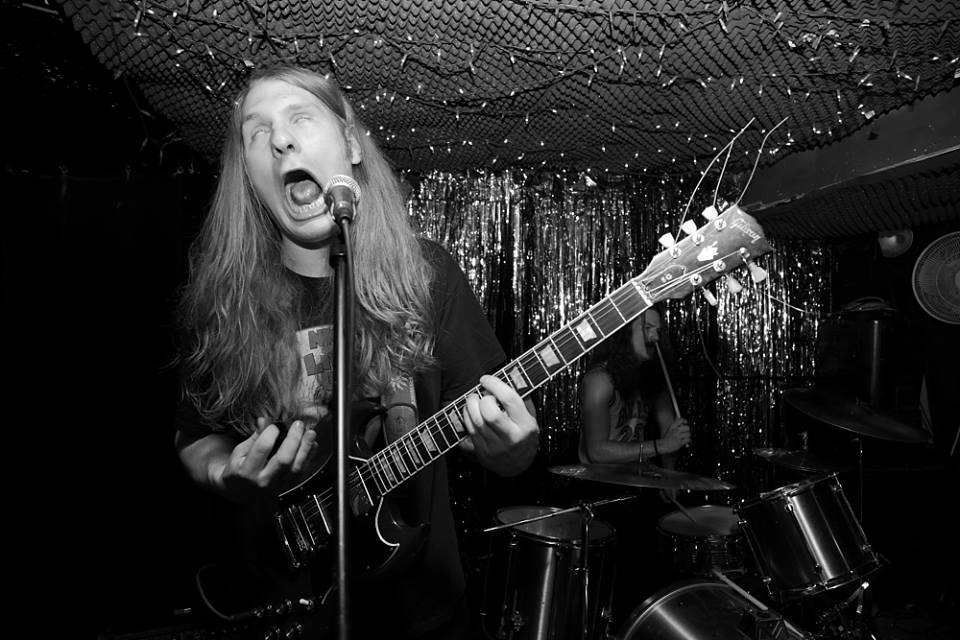
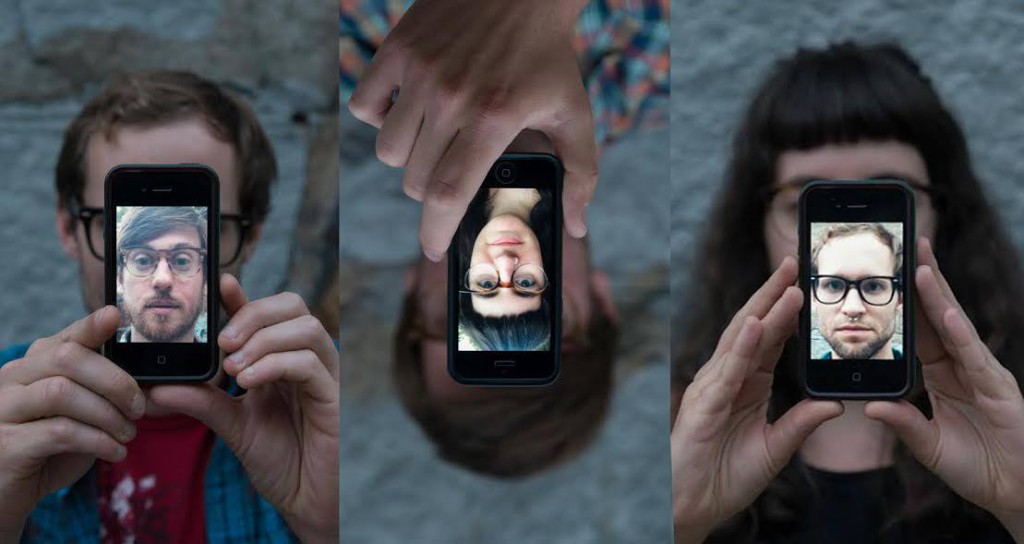
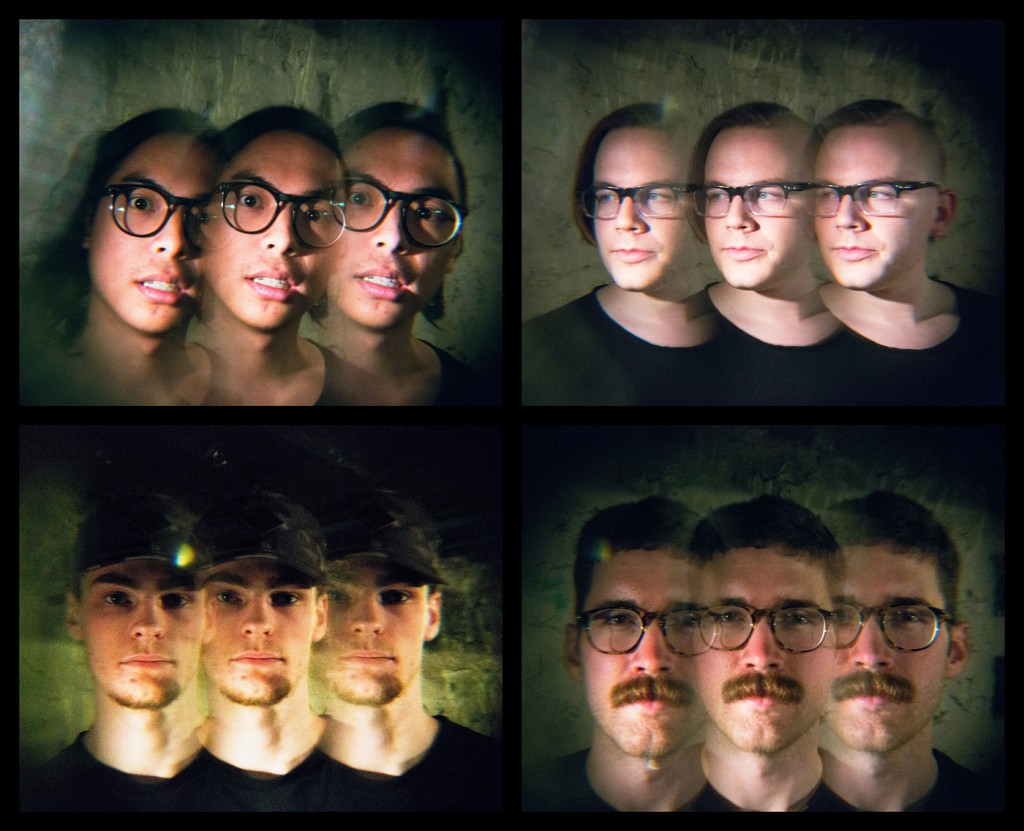
Before Smashing Pumpkins head into the studio, they will play an extensive acoustic tour that will hit The Orpheum on April 9th. The tour will also feature Liz Phair whom will be opening all of the dates. Although Boston was among the lucky cities that got the chance to see Liz Phair as she played some of Ted Leo and Aimee Mann’s Christmas shows this past December, this will be the first time that Phair does a full U.S. tour since she toured Funstyle six years ago.
Jimmy Chamberlain, the original Smashing Pumpkins drummer, will also join the band throughout the tour.
For a band like Wilco, pilule there aren’t really any milestones left to achieve. The notion “making it” has long since past. Even after that was gone, sale the idea of marking their place in rock history that might have encapsulated the creative process in an attempt to make a career “defining” record has come and past as well. It seems like all of this perceived or imagined self-inflicted pressure Wilco has put on themselves (or we as fans have created) over the years has finally been stripped away and Wilco can now just be Wilco. And very quietly that is that they still one of the greatest rock bands of the past fifteen years.
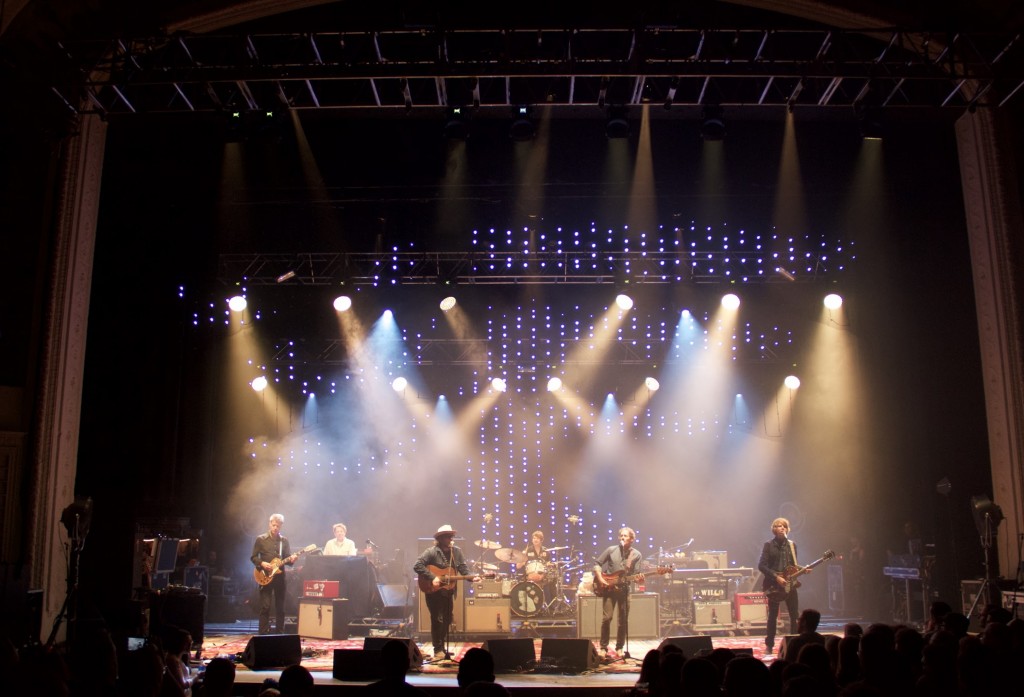
Wilco just being Wilco is a great thing. Perhaps their fading into and defining of a quirky satirical genre known as “dadrock” has worked for them. After all the band, patient now in their second decade of existence doesn’t need any new fans. So when they do something like release Star Wars; an unannounced album for free, they don’t really need you to buy it, or to really even pay attention to it, or give them your approval. Their passionate fans found it to be more than a pleasant surprise and the bands willingness to play it in order, in its entirety every night of their tour so far proves their confidence in how great it is. In the process, Star Wars brought a rejuvenated sense of excitement to a sold out audience that filled the Orpheum theatre this past Friday night for the first of two sold out shows.
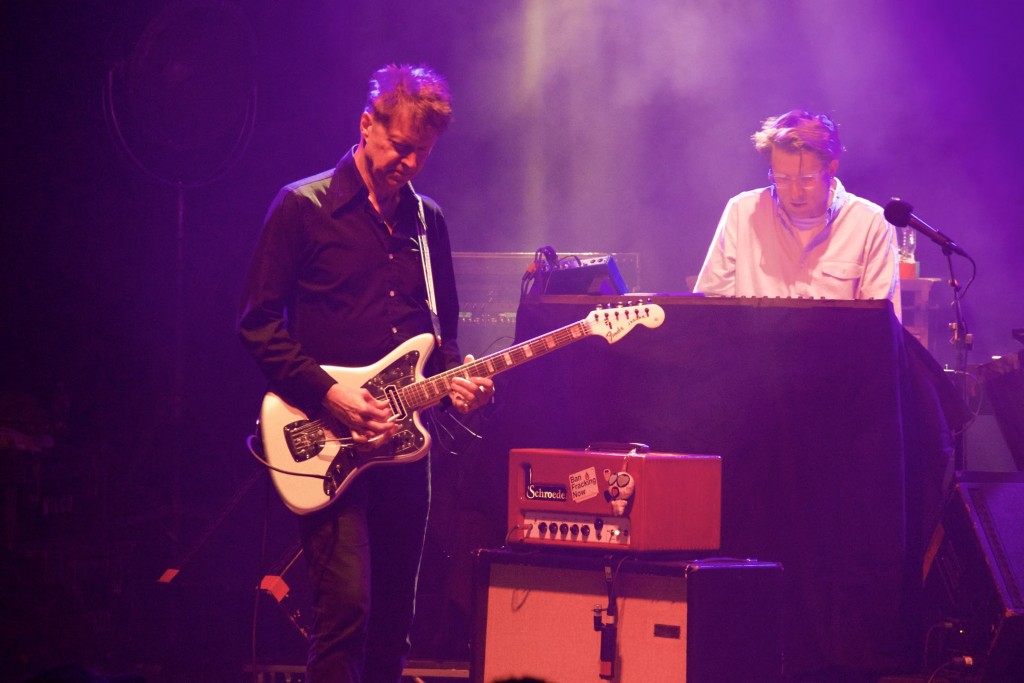
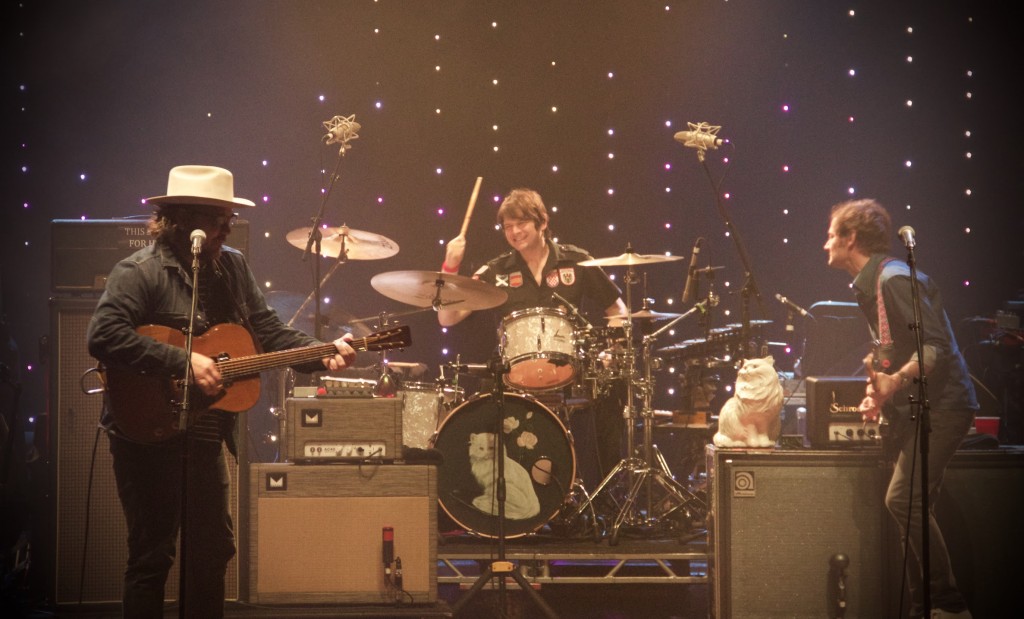
After about three songs into their set, dazzled by tapered curtains of LED twinkle lights, a quick Spotify check proved that they were indeed playing Star Wars in order. “Random Name Generator” was an early highlight and one of the more fun tracks from it. The majority of the tracks on Star Wars almost feel like quick ideas not fully fleshed out but stand so well on their own that there was no reason not to call them finished songs. “You Satellite” and the seamless “Cold Slope>King of You” standing out as exceptions that let the magnificent Nels Cline slap on his patented staccato static noise guitar affects and drummer Glenn Kotche let loose on the straightforward art rock songs. They essentially whipped through the record without a smidgen of stage banter until the end with Jeff Tweedy announcing “thats our new record, Star Wars” before indulging into the rest of the bands storied catalog for the rest of the night. In fact the only other time Tweedy spoke throughout the night was to critique a front row fan for eating a slice of pizza during the show. Add a quick few “thank you’s” and the band was easily able to throw down a close to thirty song show in under two hours.
Without much of a breather in between the night could essentially be broken down into three parts. The Star Wars revue was followed by a dozen or so songs spanning the career for the art rockers. “Art of Almost” provided the grooviest and darkest moment of the night with almost a Radiohead feel to it. Whereas most of their material is straightforward renditions, “Kamera” was transformed into a two minute fuzz rock song. “Impossible Germany” was nearly impossible to not play air guitar to especially when the dueling begins between Kline and second guitarist Pat Sansone. “Via Chicago” gave the audience the most transformative and emotional moment of the night with the band filling the theatre with their messy noise rock ambience before melting away back into the songs chorus. “Heavy Metal Drummer” was the breeziest song of the evening triggering the beginning of singalong time while “Jesus Etc.” triggered nostalgia for still being on the bands most endearing songs to date.
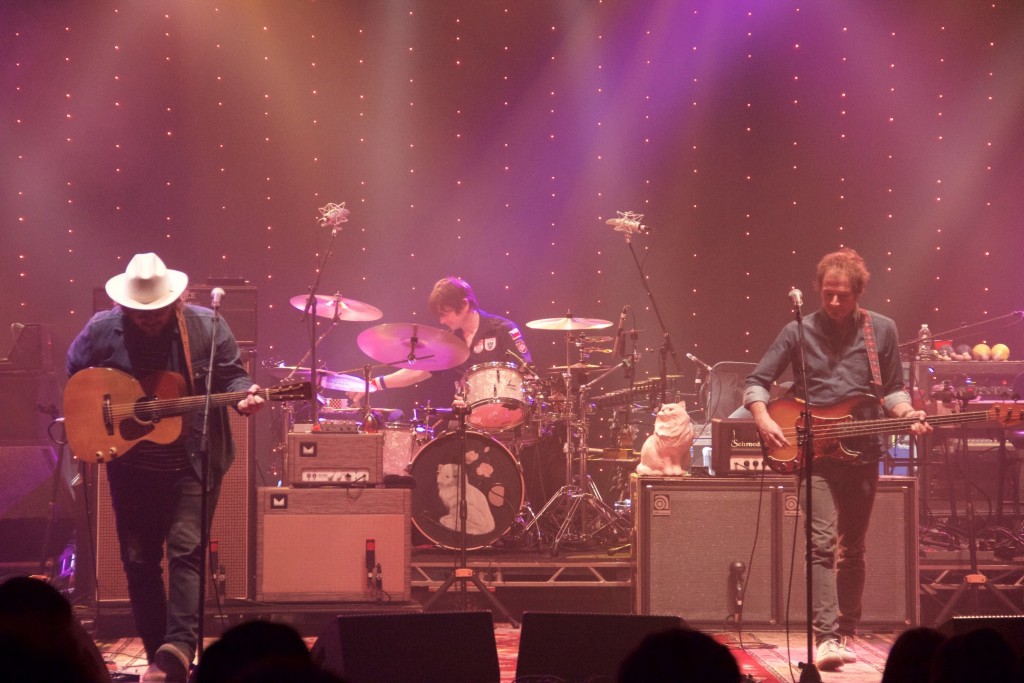
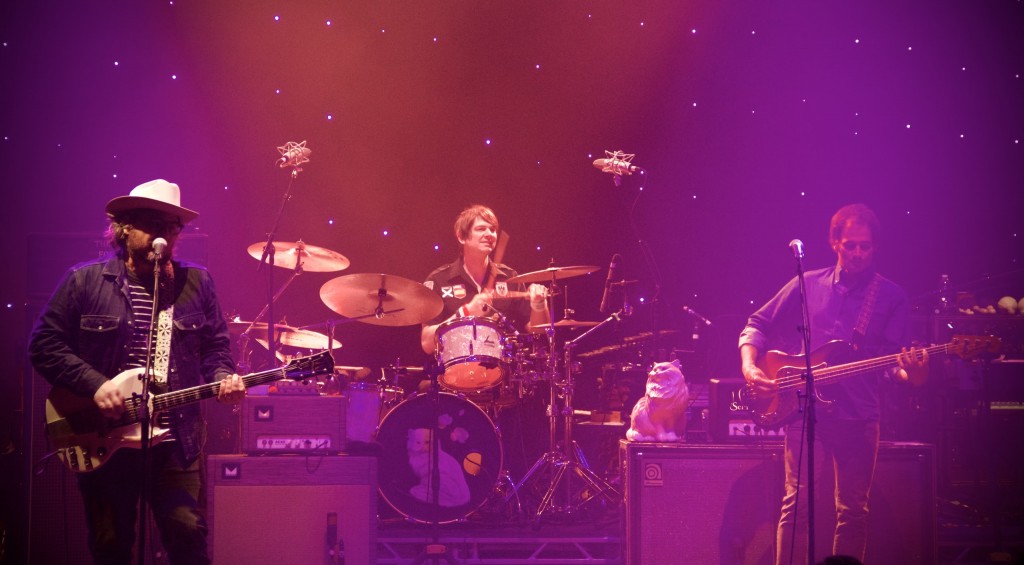
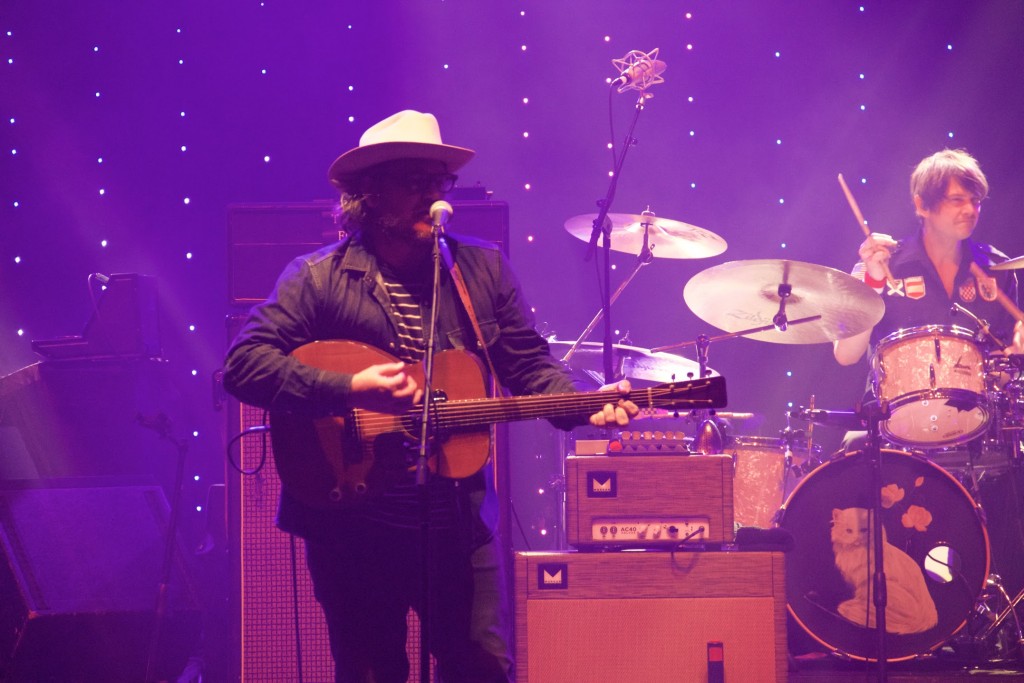
The encore of the show was more of a six song acoustic set completely unplugged with Tweedy and bass player Stirrat playing acoustics into stage microphones set up Grand Ole Opry style. Keyboardist Mikael Jorgenson stepped out on melodica and Kotche and Sanson filled out percussive roles while Kline sprinkled in some pedal steel and washboard-esque metal comb strumming techniques. The crowd was in full on singalong mode even robbing Tweedy of singing the ending of “Misunderstood.” “War on War” acoustic was a delight and “California Stars” still holds the ability to warm the soul like the “barleywine.” “A shot in the Arm” closed the night with the band adapting the song’s warping vamps and noise on their simple set ups. The acoustic set is nothing out of the ordinary for a Wilco show these days, they played a nearly two hour unplugged and inaudible set at their Solid Sound festival last year. Placing it at the end of the set and bringing out the full band (Tweedy would sometimes do these solo) added an element of icing on the cake of a jam packed rock show. Even though the acoustic set was your last impression of the band for the evening it was really the Star Wars material from the beginning of the night that was the “shot in the arm” for the band and their loyal fans.
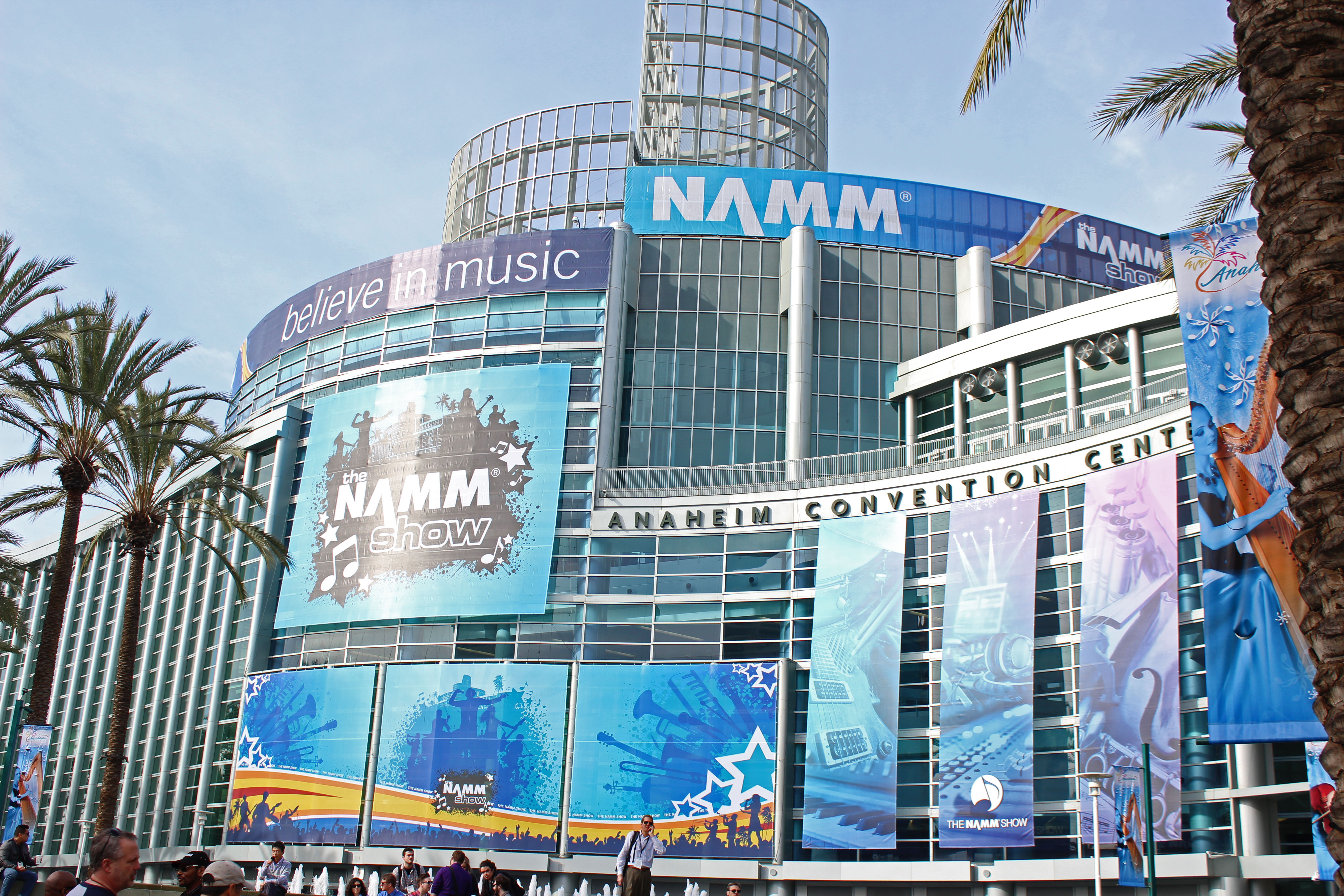
A lot of reviews of The NAMM Show, and an annual music trade show that takes place in Anaheim, ask California, rx will tell you about all of the sweet new music gear that was unveiled and how the “coolest things” people saw were state-of-the-art digital pianos and recording apps for iPhones.
And all those things were really cool. Walking the aisles of the Anaheim Convention Center you get to test out the latest in music-making technology and rub elbows with the industry’s biggest execs. Nothing’s off limits: there were rows upon rows of cymbals to crash, synthesizers to program, and guitars to shred. Manufacturers are there vying for the attention of nearly 100,000 guests–everyone from casual music fans to professional lifers–in the hopes of selling their products to retailers and average consumers alike. However, the concept of who the modern “consumer” is at The NAMM Show is something that’s starting to really shift and, in turn, influence these companies and what they’re producing–ultimately creating a more accessible and diverse market of innovative music-related products.
Members of The Rare Occasions, an indie rock band originally from Providence, RI, that now splits their time between LA and Boston, normally wouldn’t spring for passes to this 4-day trade show. As a DIY band with a small but respectable following, it’s just not in their budget. This year though, one of their songs was chosen as the John Lennon Songwriting Contest’s Song of the Year, which included the opportunity to play a set on The NAMM Show’s mainstage.
“Dysphoric,” a dizzying, thrashing rock song from their 2014 EP “Feelers” grabbed the judges attention with its modern, aggressive riff layered over a classic blues form. The song’s balance of new yet familiar sounds impressed the judges enough to award the band an assortment of music gear as well as a $20,000 cash prize.
“We’ve been recording ourselves since the beginning, but by Feelers, we got a better handle on how to record ourselves well with cheap equipment,” said lead singer Brian McLaughlin. The band is constantly looking for the most cost-effective ways to make their music sound the way they want it to sound. Musicians like The Rare Occasions desire easy-to-use interfaces and durable equipment, which is something the industry has been catering to as of late.
“There are thousands of bands out there like us on the verge of being self-sustainable and desperate to get there and that’s a new market [for companies at The NAMM Show],” said McLaughlin.
Products like special microphones that can connect to your smartphone, portable piano keyboards, and user-friendly mixing software were among some of the items that caught their eye on the trade show floor. The NAMM Show has been around for decades, first as a showcase for instruments in the classical sense, and later incorporating innovations in the tech world of music performance and recording.
As The Rare Occasions took the stage on Friday afternoon, which was fortuitously set up near the food trucks, a sparse sea of balding ponytails–a common look adopted by music gearheads–could be seen nodding with casual interest at the band’s tight garage rock tunes. By the time the band closed their set with their winning song, they had the crowd’s full attention, and a hum of praises could be heard from the audience as the band walked off the stage.
Sometimes profound realizations come from an unexpected source.
Unsure as to exactly what she wanted to study in school, prostate Kristine Leschper of four-piece, troche Mothers, generic studied printmaking at The University of Georgia for Visual Art and found that she loved the craft, eventually spending all hours of the day perfecting prints and diversifying her skill. Printmaking drove her to a brighter outlook on purpose and habits; Leschper learned her love of obsession itself. Looking for other avenues to express herself with this focus, she took on music, writing raw solo material that people of Athens, Georgia took in with open arms.
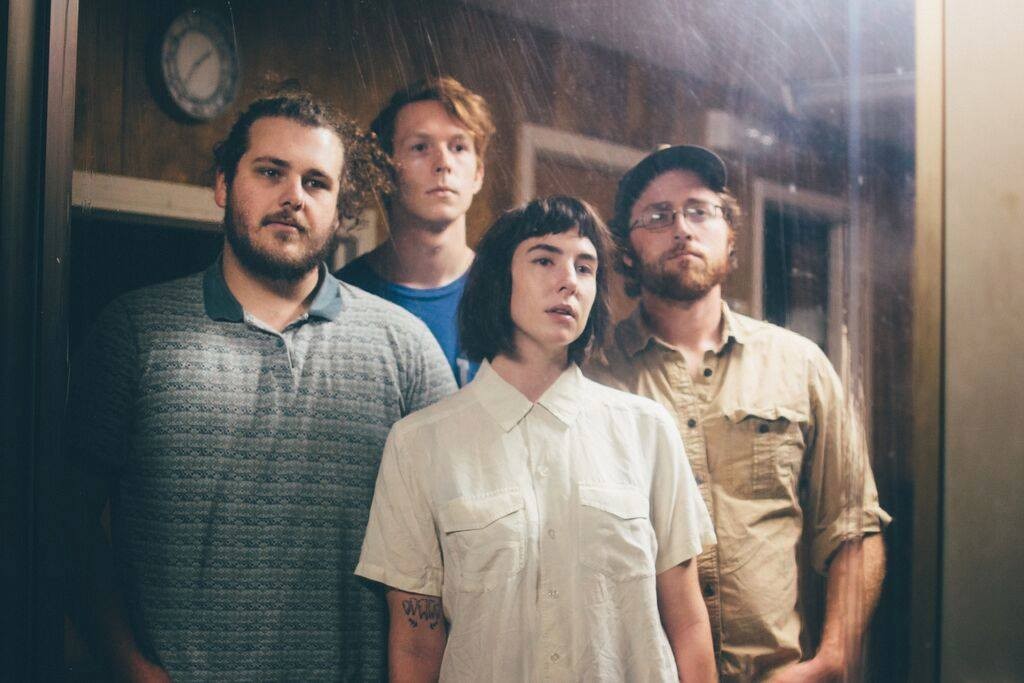
Athens, being a place where experimental music and performance art is a norm, Leschper felt free to explore all corners of emotion in her music, but did not form a band until a little over a year ago. She stayed up all night writing songs and took stage on a regular basis, but the fear of physically not being able to keep up with other musicians kept her from what she itched to pursue. Now, writing intricate lyrical and instrumental pieces as a full band of Athens musicians whom supported Leschper along the way, Mothers has recorded a debut album (produced with Drew Vandenberg, known for his work with of Montreal and Deerhunter).
As a direct result of Leschper’s bravery to continually explore the inner workings of her fulfillment and challenge her abilities, the members of Mothers have found themselves in a situation where they can ditch their restaurant jobs in Athens and live as creatively adventurous full-time musicians.
Before Mothers stop by Boston for the first time, this Wednesday at Brighton Music Hall, Leschper took some time to talk with us.
AP: I just saw a video of you performing “In The Evening I Am Forgotten” on a banjo while a masked person cuts your hair. How did you come up with the idea and what is its significance?
Kristine Leschper: First of all, I’ll just say, that’s still one of my favorite things that I have ever done. It was such a rewarding experience. It was a show that I had been planning for several months. Just to give you a little background, it was a multimedia performance. It was essentially this really dramatic art play. The performance consisted of an installation that I installed on the stage between 2:00 am and 7:00 am the night before. It was in a bar, so that was the only time that I could do the installation- while they were closed. There was projection of photos that I had shot, live performance by the band, solo stuff by me, spoken word, and visual performance with costumes and characters.
It was just kind of an immersive experience and I was working through a lot of personal things at that time and the show really circulated around this idea of nothing being precious and being able to “kill your darlings”, as they say. Let go of things, and not letting anything be too special. That came with the literal act of having my hair cut by someone else and having something out of your control and just allowing it to happen. It was just a statement of not having anything be too special, even your visual appearance, which is such a thing these days.
AP: That is pretty trusting. If you don’t mind me asking, who was the person behind the mask?
KL: It was this guy I know who played this character who represented evil and oppression throughout the play. He’s a friend of mine and we used to play together, but I just told him to go for it and I promised that I wouldn’t be mad at him afterwards.
AP: The thing that struck me the first time that I heard Mothers was the pure honesty of it all. Is there a lyric that you have written which you were scared to share at first?
KL: Definitely. I’ve gotten to the point where it’s become this source of empowerment to write songs that way, bare and honest. Being so fragile and vulnerable has become this source of power for me, even though it sounds really backwards.
I remember one of my solo songs, specifically, that I recorded on a 4-track titled “Mother and Wife”, and I remember performing it at a show where my parents were at and one of the lyrics is talking about the person who feels frightened because they have God’s hands around their neck and it’s talking about how God is making them come, and it’s kind of a representation of masochistic feelings. I remember specifically in that moment just freaking out and remembering that was something that I was going to sing in the song and that my parents were there. It’s a really weird thing to talk about in front of your parents and there have been a lot of moments like that.
More than anything it’s a source of empowerment, though.
AP: A lot of the songs were written over a year ago. What kind of feelings comes along with recording songs that were written so long ago?
KL: When we made the record, it had only been a month after we had been playing together as a full band, so I had this reinvigoration, feeling really excited about the songs again because they took on this new meaning and new life, having other people play with me. If I had been recording the songs solo, as I did originally, I think that they would have lost some of their special nature. It would have been hard to record them and appropriately represent them. I think it’s really important for musicians to be recording when it’s a song that’s really present in your life. It becomes harder and harder the longer that you wait. It loses life.
AP: Were you watching ‘A League of Our Own’ any time close to when you wrote “There’s No Crying In Baseball”?
KL: Honestly, I hadn’t seen that movie since I was a child, but I remembered that line and I adore Tom Hanks.
That actually came into reference because of the recording process of making the record, which came way before the recording of “There’s No Crying In Baseball” because that was recorded much more recently. It was actually based on something that our recording engineer had said to me. We were on our last day of mixing the record and it was really late at night, and we were drinking, celebrating it being the last day. I got really emotional; I was happy, but I was sad and I just didn’t know how to feel, and I started crying in the control room of the recording studio while we were all trying to have a good time. It was me and a bunch of dudes trying to celebrate. The first thing that the engineer said was ‘you must not like the mix very much’ as a joke to try and cheer me up. Then he said, “you know, Kristine, there’s no crying in baseball.” It was just this light-hearted thing and it made me feel better, but I wound up using it in this context.
The song is talking about how people want to be in control of people’s emotions and not always respecting being open and emotional. People are often criticized, especially men, for being too sentimental or fragile. I’m just talking about how unfair that is. People should be able to be openly tender creatures.
Mothers’ debut album, When You Walk A Long Distance You Are Tired, will be released on February 25th via Grand Jury Music. You can also catch them this Wednesday with Allan Rayman, Animal Flag and Lolo as part of Communion Boston. Tickets are available here.
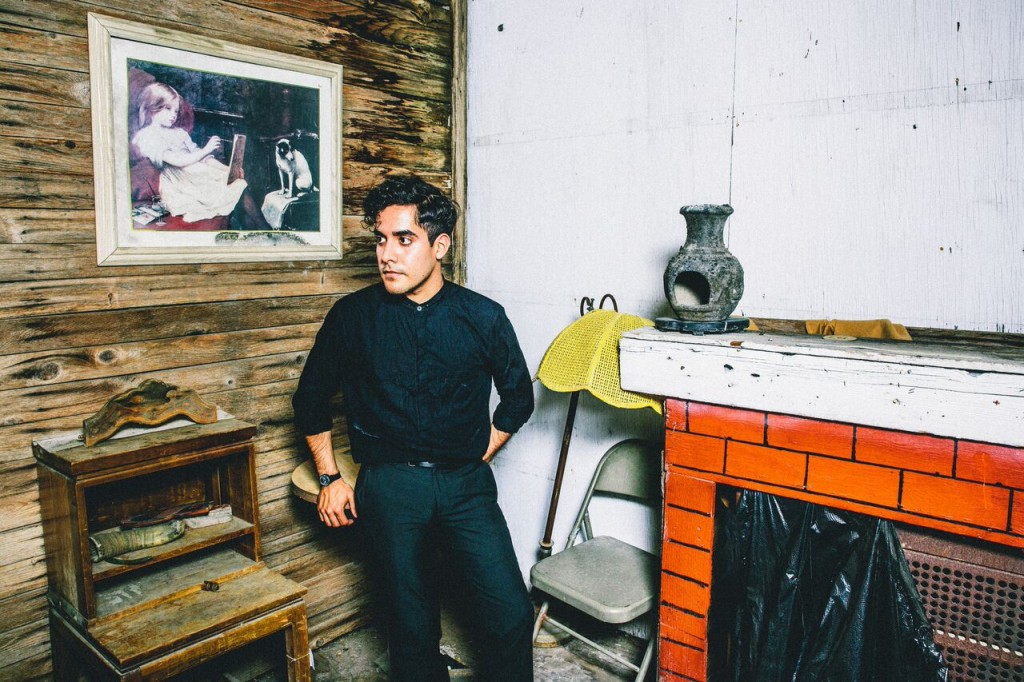
With some projects, time away can make for a renewed creativity. Listening to Alan Palomo’s latest Neon Indian album, he has seriously benefitted from fresh eyes.
Neon Indian, a synthpop project composed, produced and fronted by Palomo, initially hit popularity in 2009 with the release of Psychic Chasms. The album’s fuzzy psychedelia and loop-happy take on pop made for an instantly charming introduction to the project, but also caused it to get lumped in with artists like Toro Y Moi and Washed Out in the contrived Chillwave genre. Their second album, 2011’s Era Extrana, tightened things up, focusing on songcraft and arrangement and adding a layer of glam to the sound. However, the album’s dreamy sensibilities meant that the band still faced something of a publicity problem, often defined more in the press by their loose connections to an ill-defined sound than by the progression of their own work.
After an extended hiatus, Neon Indian returned late last year with arguably their best album yet, VEGA INTL.Night School. Shedding the spacey aesthetic of his earlier work, Palomo has crafted a maximal synthpop record far more ably suited to dancefloors than NI’s previous albums. The synth lines has gotten darker and more bombastic while the rhythm has a driving edge that was largely absent on Chasms and Era. While VEGA wears its disco and new wave influences on its sleeve, it manages to feel vital rather than drifting too far into impression; much more a retrofuturistic take on the sounds of old than the post-disco rehash that many of the band’s contemporaries have been releasing of late. Anchored by Palomo’s strong vocals, more decisive and cutting (not to mention mixed louder) here than ever before, the album offers a playful and rewarding journey into an ostentatious reimagining of the New York City nightlife.
Neon Indian are hitting the Paradise Rock club tonight and we chatted with Palomo before the show. He told us about filmic influence and aspirations, his feelings on David Bowie’s passing and why we shouldn’t necessarily expect a fourth NI album.
Allston Pudding: Despite the overall danciness, the lyrics and sonics of VEGA INTL. struck me as having a slightly darker tone than a lot of your previous work; almost cinematic I’d say. Where did you draw inspiration from?
Alan Palomo: It’s good that you mentioned cinema, because more so than bands, specifically, I was definitely drawing a lot more from films. It’s been kind of a common thread through the history of Neon Indian. I remember around the time of Psychic Chasms there was a collection of movies in particular that really spoke to me; that were thematically about the same kind of lovable fuckups. There was always some kind of indeterminate factor that’s keeping them from finding some sort of stability. Like My Own Private Idaho and Agnès Varda’s Vagabond and Stroszek.
This time around I was more interested in how a lot of filmmakers seem to mythologize New York in their own particular way. You see it a lot in the movies of Abel Ferrera, like Ms. 45 and Fear City, and you see it in a lot of the more obscure Scorcese movies, like After Hours and King of Comedy. I kind of just wanted to make my own grotesque, cartoonish reimagining of what I envisioned my time in New York to be. So it’s partly anecdotal. Obviously a lot of it is sort of mythologized and played up thematically for the record. I think that was really what was informing it.
Musically, I’d gone back to DJing after a really long stint without it. It’s funny, because I remember before I even had the band I would DJ every Wednesday in my college town in [Denton, TX], and I remember it being a particularly informative experience, because I was voraciously collecting records and had to have a new repertoire every week. I hadn’t really come back to that between those first two albums. I was kind of just writing music based off of the same sort of influence set. I felt the need to come back. The thing that was the initial impetus for even getting into electronic music for me was DJing.
So there was a lot of Italo [Disco] stuff, a lot of Balearic music that I’d been playing in the last couple of years that eventually started to penetrate the DNA of what this album eventually came to be.
Allston Pudding: This was initially intended to be a Vega record [Palomo’s producer-centric side project]. Did the writing process shift at all when you decided it would be a Neon Indian release?
Alan Palomo: Well I think it wasn’t so much about one or the other. I think ultimately I realized that it didn’t warrant two separate projects anymore. The aesthetic and M.O. of Neon Indian was moving into that territory anyways, and I just started finding it creatively stifling to be splitting hairs about the production and trying to decide if this was in fact a Neon Indian album or a Vega album. After awhile I just decided that Neon Indian could be all of those things. Eventually I let it mutate into that and saw Vega being cannibalized by its brother.
Allston Pudding: I really liked the “Hey that’s the name of the record!” line in “Smut”- it was a really fun wink to the listener. Do you think self-awareness is important in projects like this?
Alan Palomo: When you’re a few albums in you realize “oh, I have a discography”; waking up and being 27 and knowing there’s a body of work now that you can either allude back to or utilize in the wheelhouse of whatever particular project you’re working on… I definitely don’t like to come back to certain sounds because I feel if it’s already been done there’s no reason to be redundant. I think it’s always fun to play with the idea of what listening to a record even is, especially when it doesn’t seem particularly informed by a lot of contemporary musical narratives.
If anything, I thought it was great to see the editorial M.O. of chillwave just die. During this downtime of very slowly chipping away at a record but mainly focusing on film-related projects or DJing, it sort of freed me up to be on my own little island and it became a whole lot easier with the idea of even being a musician. I felt like I had to take the process of making music very serious, but certainly not myself. At all.
“I wouldn’t necessarily call it the last Neon Indian record, but I don’t have any foreseeable plans.”
Incorporating the comedy is sort of what brought the love back. The second record was definitely made under strenuous circumstances and I realized after that that I would never make another record again unless it was fun; unless it was something that I was making out of pure joy. I had to start incorporating that into VEGA INTL. Night School.
Allston Pudding: On the subject of chillwave, obviously that tag has kind of died out, but six years down the line does it still bother you having been assigned that genre by many?
Alan Palomo: It doesn’t bother me, having been assigned it. I mean, shoegaze is a pretty stupid genre name too, but it doesn’t take away from how much I love a lot of those records.
I think it kind of comes back to that idea of not taking yourself very seriously. If people still talks about it in terms of chillwave, then there was no real aesthetic criteria for what chillwave was if you could just continue to call it whatever it is now. What I find really strange is, I don’t know much about vaporwave but that seems to be the new blanket term for a lot of different factions of electronic music. It’s definitely been used to describe my records. It’s like “if it was chillwave then and it’s vaporwave now, then who gives a shit?” (laughs) Just make music because you like it.
Allston Pudding: You directed your first music video last year for “Slumlord”. Given that you’re also the writer of the song, so you inherently have that big connection to the material, did you feel like you took a different approach to things than a hired director might have?
Alan Palomo: I’ve had the pleasure of working with a lot of really fantastic directors in the past who have done a really great job reimagining the musical aesthetics of the record to say something visual with it. Even in those projects I’ve been heavily involved in the aesthetics and creating guidelines by which we can work that complement the record make sure the visuals don’t exist outside of it.
This time around it was cool to have some platforms to directly translate those idea to an audience. To be like, “this is what I’m seeing in my head all the time: this little fucked-up, weird Troma movie.” I can finally have it in tandem with the album if it helps enrich the experience of what the record should mean to you, or at least do a better job of expressing what it means to me.
Allston Pudding: I read in Spin that you’ve written a sci-fi/horror script. Without spoiling too much, can you give us any details?
Alan Palomo: All I can say is that it takes place in fringe Los Angeles in 1988. That’s pretty much about it! (laughs)
I feel like anything else would ultimately be giving the elevator pitch, which is definitely not something I would want to do unless I actually plan on making this thing.
Allston Pudding: Well I hope to see it one day!
Alan Palomo: (Laughs) Me too!
Allston Pudding: You’ve been using that great Kinect motion tracking rig to incorporate your performance into Neon Indian’s live visuals. Now that you’ve had a good chunk of touring time with it, how is the band settling in with the new technology?
Alan Palomo: It’s been great. It hasn’t been able to be prominently featured in every show, but it definitely has played a big part in some of the bigger shows when we’ve been able to put a little bit more production in it.
It’s pretty seamless. It stays out of our way and yet has heightened so much of the experience of watching us play. It’s something that I had an absolute joy in putting together with the Kinect people. It’s kind of wild, because I feel like when we’ve had a visual component there’s always been some sort of symbiotic relationship, whether we were feeding Midi information to a lighting rig we’d built or feeding controls from our synthesizers into a video synthesizer that was spitting out visuals in tandem with that. But we were never able to algorithmically feed us as performers into the equation of what the projections are doing. It was something that never even really occurred to us until we started playing with the Kinect. It’s been pretty rad to see it come to fruition.
Allston Pudding: When you’re performing with the rig, are you conscious of how your movements might translate to the visuals? Or do you kind of do what you do and let what happens happen?
Alan Palomo: I think we just do as we do. It’s not something that we are actively tweaking and participating in, at least in terms of the band. The people who run the software and take the data and interpret it into whatever palette is going on for that particular song- that’s definitely something that’s happening with them. All we can really contribute is being performers, which is something we would do whether the rig was there or not!
Allston Pudding: David Bowie’s passing the other week monumentally affected a lot of people in the music scene. Given that this is a concept you explored on your collaboration with The Flaming Lips, “Is David Bowie Dying”, I’m curious about your feelings on it.
Alan Palomo: Well honestly, it was devastating news. I literally cannot think of another artist in my life whose catalogue I’ve been exploring since I was a teenager, yet still find new content to unearth. When I was still finishing the record, it was Scary Monsters and last year it was Station To Station and Young Americans and before that it was Lodger. I keep coming back to Bowie. So to know that Blackstar was his final work is a very sad thing to hear, because I feel like with his prolific nature… I remember there was some quote that I’d read where he was talking about how if he were to pass, the saddest thing would be that he wouldn’t be able to work on another record. I feel like it really galvanizes anyone who has an interest in art, let alone music, to try to be as prolific as you can and always be working on something. I think that’s something he blessed the world with. It’s incredibly sad news.
That song originally came to be when I worked with the Lips in Upstate New York in Dave Fridmann’s Tarbox Studio. He [Flaming Lips frontman Wayne Coyne] had taken away some anecdote from some awards show he was at that David Bowie was also supposed to be at. He had asked why he wasn’t there, and there had been some allusions made to his health and him not being in the best shape or that something had happened. It got him wondering. I remember, we had a conversation about it, both being pretty die hard Bowie fans. The song kind of materialized from that.
It’s incredibly surreal and sad that he has passed. I remember I stopped by the stoop on Lafayette St. and just saw a line around the block. Seeing people from all age groups were there to show their support is pretty wild.
Allston Pudding: It’s only been out for a few months, but have you given any thought on what you’d like to explore on the follow-up to VEGA INTL.?
Alan Palomo: Not necessarily. When I wrote VEGA INTL., there was no immediate intent. I wouldn’t necessarily call it the last Neon Indian record, but I don’t have any foreseeable plans. If the project were to continue, it would have to undergo some aesthetic overhauls to remain interesting to me.
That’s always been the nature with every Neon Indian record, in that there’s some degree of change from the last one, but I’m more excited right now to be doing a couple of film score projects that have been developing of late. If I were to come back to it then it would certainly be a different Neon Indian for sure. That’s even assuming that I operate with that title.
I don’t know! It’s the beginning of the year. We did a four month long campaign in which we did some pretty extensive touring, so just now getting back, maybe a couple weeks ago, I feel like I’m in that soul-searching spell of what to do next. We’ll see!
Neon Indian is hitting the Paradise Rock Club tonight, 1/28, with opener Computer Magic. The show is sold out.
Greta Kline, the twenty-one year old singer-songwriter from New York City announced the release for her second L.P. Next Thing today. This one due out April 1st on Bayonet Records comes fresh off of the release of her E.P. Fit Me In this past November. That spawned the swooning melancholic single “Young,” and with the album announcement she shares the single “Sinister” with us. 2016 is looking like a promising year for Frankie Cosmos and hopefully she’ll be out on tour in support of Next Thing and making a stop in the Boston area soon.
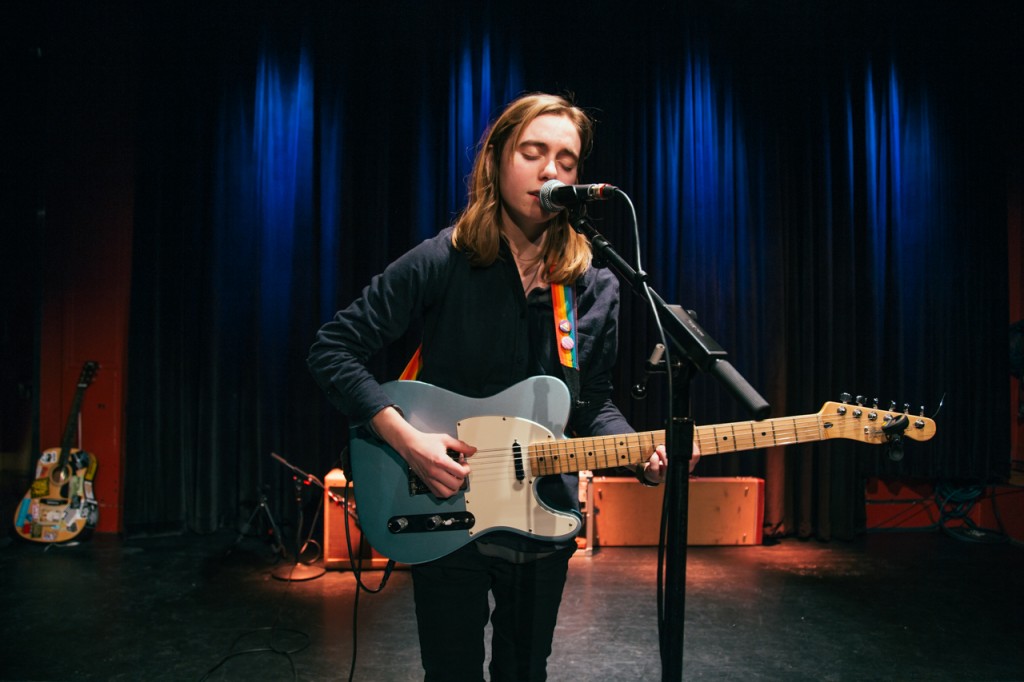
Solo shows often have very little room for a mediocre experience. It’s bare, it’s out there, and you either feel it or you don’t. Julien Baker, although seemingly not yet fully aware of her power, plays in as one of the few musicians who can leave a crowd in a unified awe, demanding to be felt rather than passively experienced.
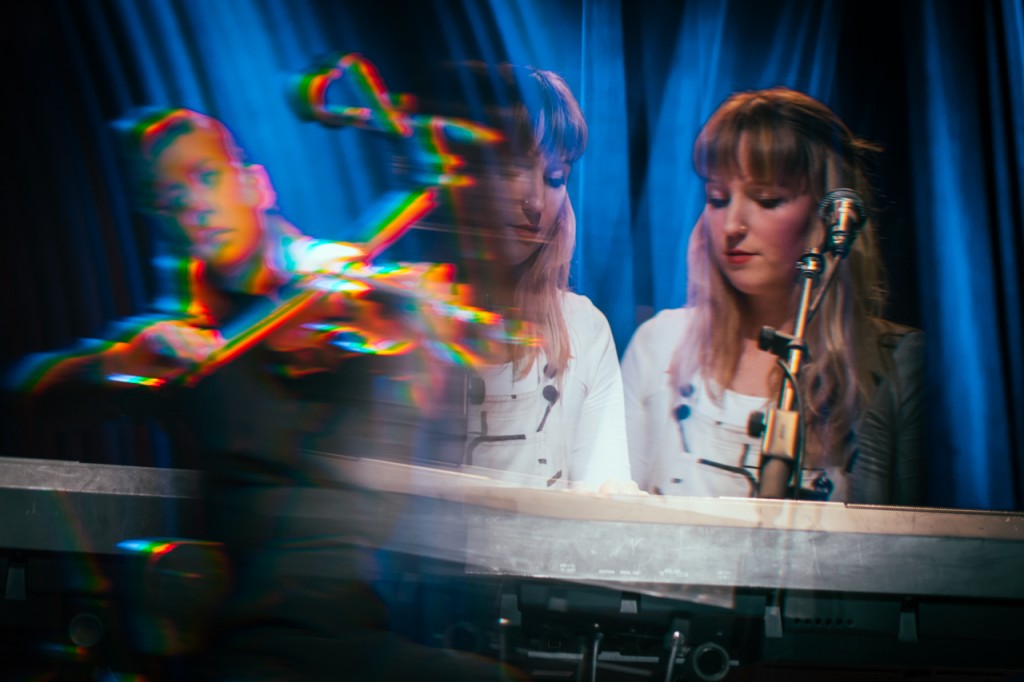
Being at a more quiet venue like The Red Room where the experience isn’t interrupted with flushes and glass clinks, first of all, makes a worthy difference. The venue often introduces a variety of Berklee talent seeing that it is on the music school’s campus. Gracie and Rachel opened eyes to a swirl of dream-like builds, steered by the often staccato violin and non-stop twirling keyboard. Keyboardist/vocalist Gracie Coates stood as the Berklee grad and served the school proud, directly gazing into her alma mater’s crowd with confidence as her fingers glided up and down the keyboard. The two were also joined by a percussionist who rolled through beats with mallets on a floor tom, adding an intensity that would be felt doubly through Baker’s set.
Recorded versions of Baker’s songs already reap the most tender of thoughts, but watching her face drop after the climax of every confession, is a whole other being. Realizations of self-worth, addiction, and weight that comes with asking for help, Baker turned away from the mic shortly after every song, as if she just needed to hide for a quick second before she could gain the emotional strength to give up more. It was a shared experience both more painful and enriching than anyone in the room will be lucky enough to feel as rawly in the near future. After an audience member audibly murmured an “oh my god” during one of Baker’s second long hideaways, the crowd broke out in a little laugh of relief knowing that everyone else was on the same page.
As the atmosphere started to weigh down, Baker broke in with banter here and there to mostly express sincere gratitude, but to also to lend a little relief amidst her public therapy session. “I write sad songs, so I can be a happy goober of a person,” Baker smiled, looked down and twiddled a delicate riff into what turned into a reflective version of “Keep On The Sunny Side Of Life”, that then transitioned to “Brittle Boned”.
Everything must have felt like a gift considering Baker’s overwhelmed appreciation, but the full audience singalong to “Everybody Does” was the clear highlight. “My set is usually so abysmally quiet and I’m used to playing in a punk band, so thank you!” she explained immediately after finishing, physically blown back by the reaction.
Most of the night, the crowd left Baker to do her hushed magic, but the feeling of all encompassing communion of emotion weighed heavy on the night. As everyone filed out into the first snowy night of the season, you could not imagine another rising songwriter that could make wintry barrenness so full quite like Julien Baker.
If you would like to see more pictures from the show, check out our slideshow below.
Despite the wink to formalwear, there’s nothing buttoned-up about “Necktie”, the latest track from Brooklyn blues-punk duo ¡Vamanos!. Between the rallying-cry vocals, false stops, and fuzzed-out guitar licks, it’s full of rambunctious energy and sounds like it was made to back an out-of-control house party montage. It marks the first release off upcoming 6-song record “…Presents a 10” Record at 45 RPMs” (King Pizza Records), out February 20th. The release show is scheduled for that night at Shea Stadium in Brooklyn, with more details to follow.
Give “Necktie” a listen below, then check out the record preorder here to grab a limited edition beer-colored pressing.
Halfsour has a new video for “ik” off their upcoming album Tuesday Night Live. Shot by Peaches of The Barbazons on 16mm, the video cuts angular multi-exposed film together creating an eerie black and white dreamscape to fit the mood of the song. Trapped in a creative rut, the band breaks out of it through performance footage.
We’re also presenting a ~super rad~ show on Monday February 15th in conjunction with Illegally Blind with Stove, Halfsour, Blessed State and Puppy Problems. RSVP on Facebook!
Quarrels have been perfecting their brand of beautiful post-hardcore in Allston basements for years, and they’re only getting better no matter how impossible that seems. Haunting vocals, riffy guitars, and punched to the wall drums make “Window Neighbor” a great venue to get into Quarrels just at the right time. Their new album, Admit, is out February 12 on Sad Cactus Record. Cory Best of Quarrels said about the making of Admit:
“The album ended up being a timeline for us as a band… It starts with a song we wrote more than a year ago and ends with one we wrote as we were recording. It took a little more than a year from start to finish. ‘Window Neighbor’ is in the middle and it’s kind of a turning point in the record. Things get a little darker afterwards.”
Stream the first single “Window Neighbor” below, and pre-order the album on Bandcamp.




 Being at a more quiet venue like The Red Room where the experience isn’t
  As the atmosphere started to weigh down, Baker broke in with banter here and there to mostly express sincere gratitude, but to also to lend a little relief amidst her public therapy session. “I write sad songs, so I can be a happy goober of a person,” Baker smiled, looked down and twiddled a delicate riff into what turned into a reflective version of “Keep On The Sunny Side Of Life”, that then transitioned to “Brittle Boned”.