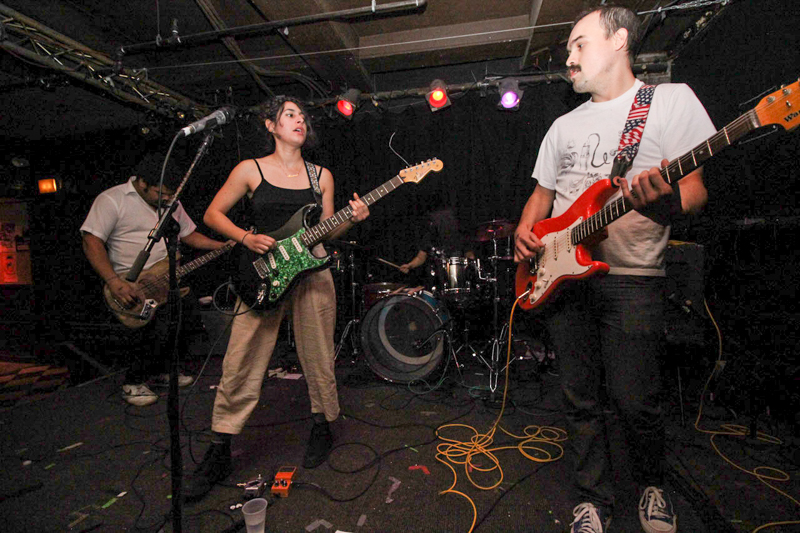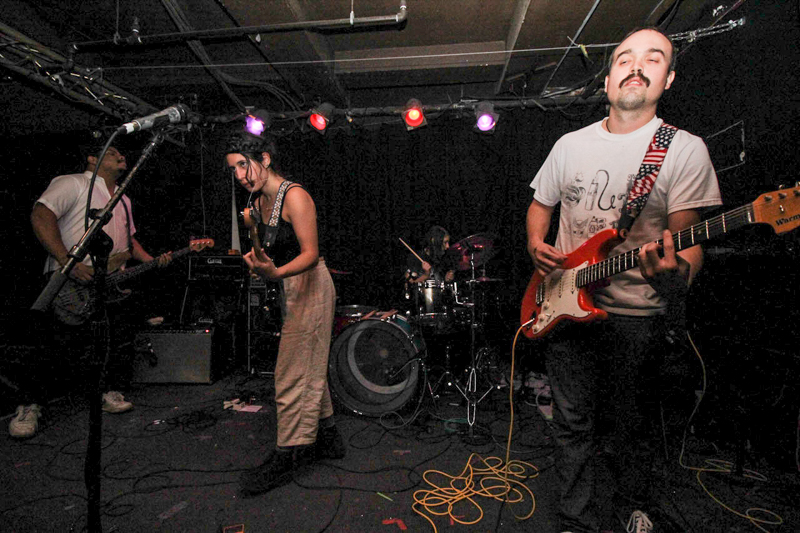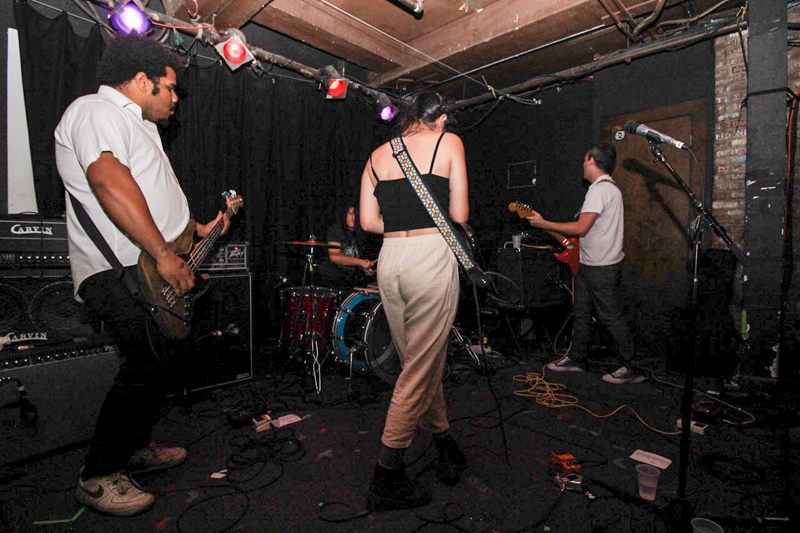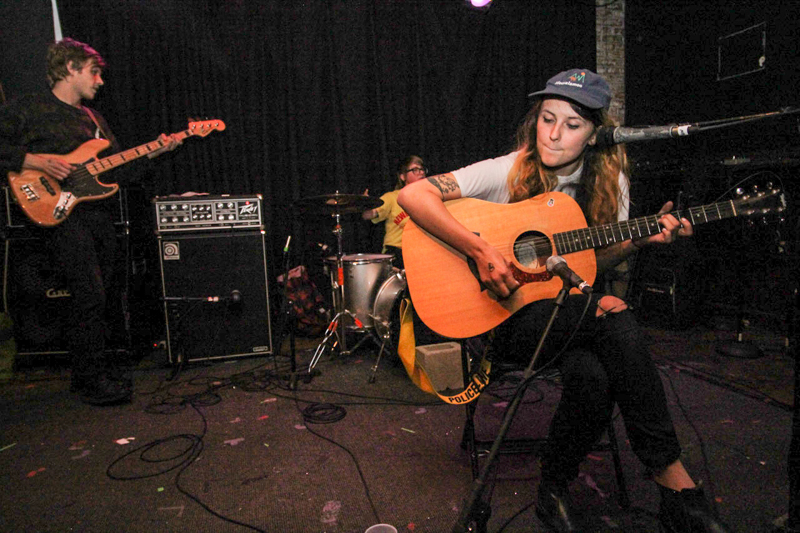
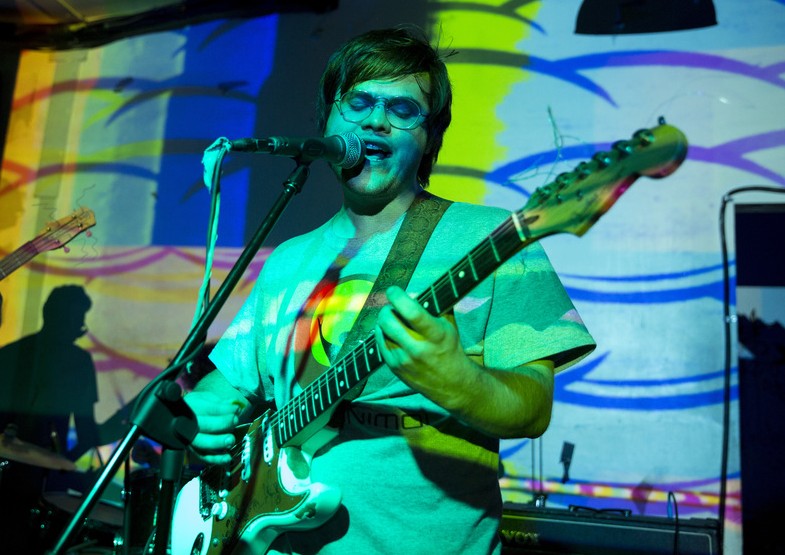
INTERVIEW: Steve Hartlett of Stove

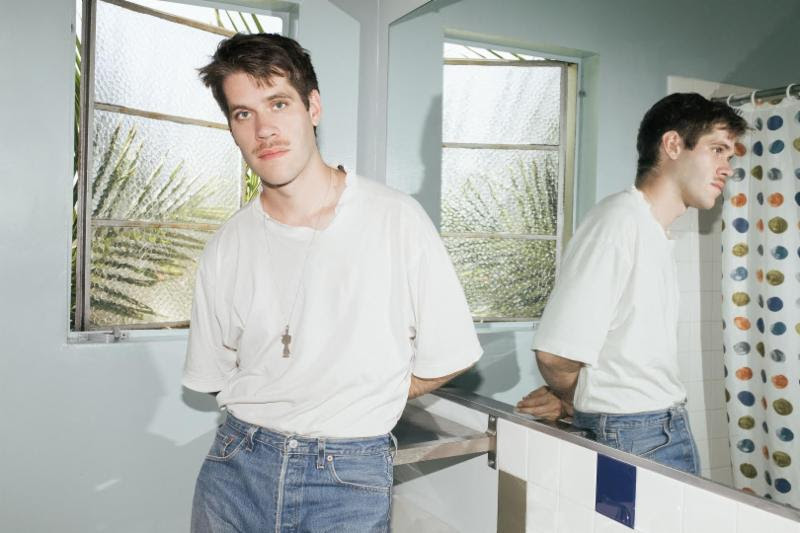
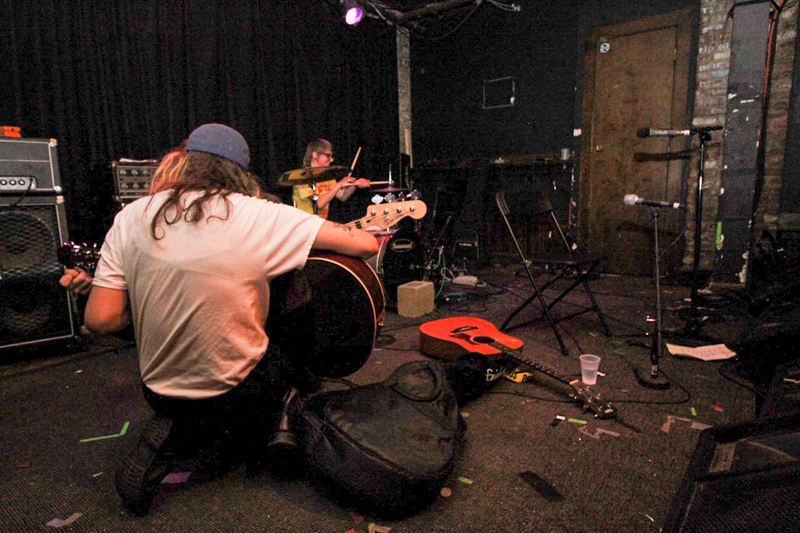
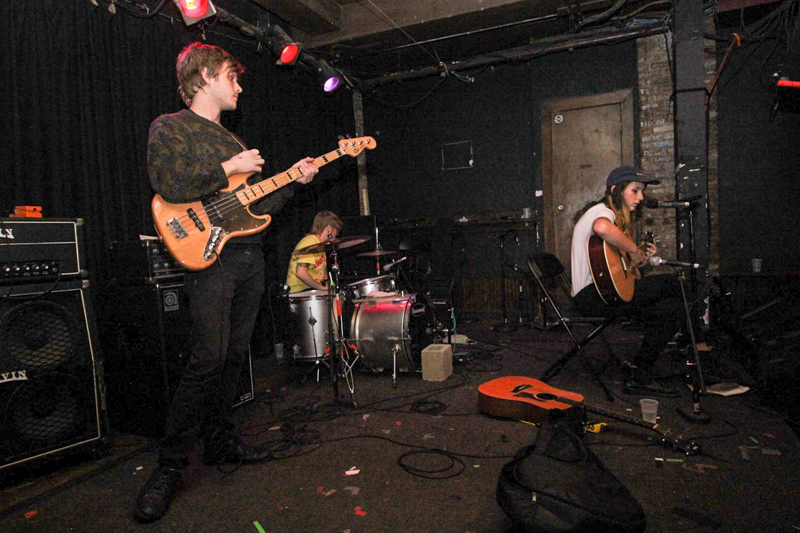
Fresh starts can be overrated– just ask Steve Hartlett. Heading up a new solo-spirited project, Stove, that picks up right where his last band, Ovlov, left off, Hartlett’s less concerned with drawing distinctions between the two endeavors and more interested in throwing all his energy into the work itself. Is Stupider, Stove’s debut album, came out on Exploding in Sound Records this past Friday, and the new project’s name (a combination of “Steve” and “Ovlov”) concisely captures its sound: a reincarnation of Ovlov’s strongest elements framed through Hartlett’s liberated creative lens. Both the album and Stove itself are, at heart, about starting over, but rather than searching for a blank slate they find strength in acknowledging past errors before moving on. The record ruminates on stupidity, but everything about its approach is smart.

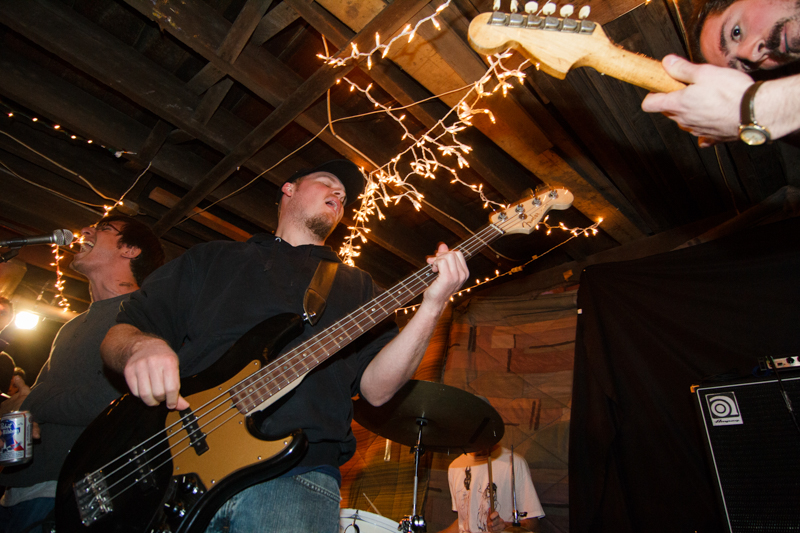
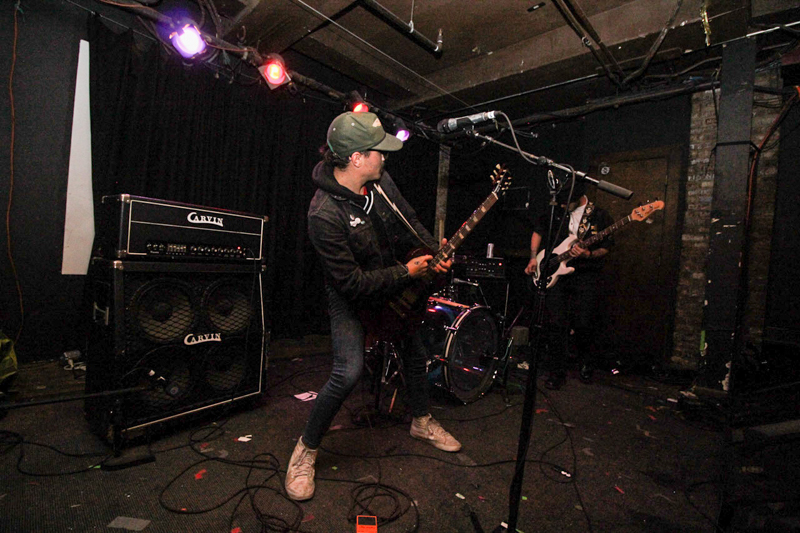
It’s no exaggeration to say that Stove had a proper fan base well before releasing its first single, courtesy of Ovlov’s success and Hartlett’s riotous live performances. His records’ steadily grungy riffage turns explosive onstage, producing the kind of shows where guitars tend to leave in much rougher shape than they’d arrived in and fans get converted on the spot. While on the road to support Is Stupider, Hartlett caught up with AP via email to discuss the album’s creation and the role of artistic identity in his work.

Allston Pudding: Many of the tracks on Is Stupider were originally written for Ovlov. What was your inspiration for this album at the outset?

Steve Hartlett: I was just very anxious to get everything recorded and released without any specific intentions. Wasn’t sure if it would be a solo project or eventually a full band, which it quickly became. It was just important to me that it existed in one way or another and [I] figured things would just work themselves out.

AP: How did they evolve when they became Stove songs?

SH: We only ever played “Jock Dreams”, “Dusty Weather”, “Wet Food” and “Stupider” in Ovlov. They were definitely dumbed down a bit for Stove, given that I couldn’t play a lot of what Theo played on drums. Morgan and Theo are both much better musicians than I am, so they sounded a lot tighter when Ovlov played them.

AP: How did your creative process change between the two projects?

SH: I just started settling with any song I write, rather than thinking maybe something sounded too different or didn’t fit the band’s sound or something and then not using them.

AP: The theme of the album is pretty clear, from “Stupid” to “Stupider” to “Stupidest”, and if it’s not too much of a stretch, “Dumboy”. Is the general theme as strong as the connection gets, or is there a narrative progression between those songs?

SH: Yeah, that theme just kinda sums up Stove in general. It’s all about starting over and learning from the stupid mistakes we all make throughout our lives and doing the best we can to not repeat them.

AP: You recorded the guitar, vocals, bass, and drums entirely on your own on this record. What was your time in the studio like?

SH: Pretty relaxing. Working with Nick Dooley and Dan Francia didn’t really feel like work at all. It felt like they were just listening to me play and before we knew it we were done. It was all done at Nick’s mother’s house in a barn and it was one of the most beautiful properties I’ve ever gotten to spend some time on. I usually never wake up before 10 A.M but that week I would wake up super early (for me) and have a cigarette and coffee and watch the end of the sunrise above the Catskills. It felt like a vacation.

AP: Which aspect was the biggest challenge?

SH: Everything went pretty smoothly besides tracking drums. I rarely ever play them so I suppose I had to warm up a bit. Also, trying to make Nick laugh. He is stone cold.

AP: Is Stove a solo project, a band, or something in between?

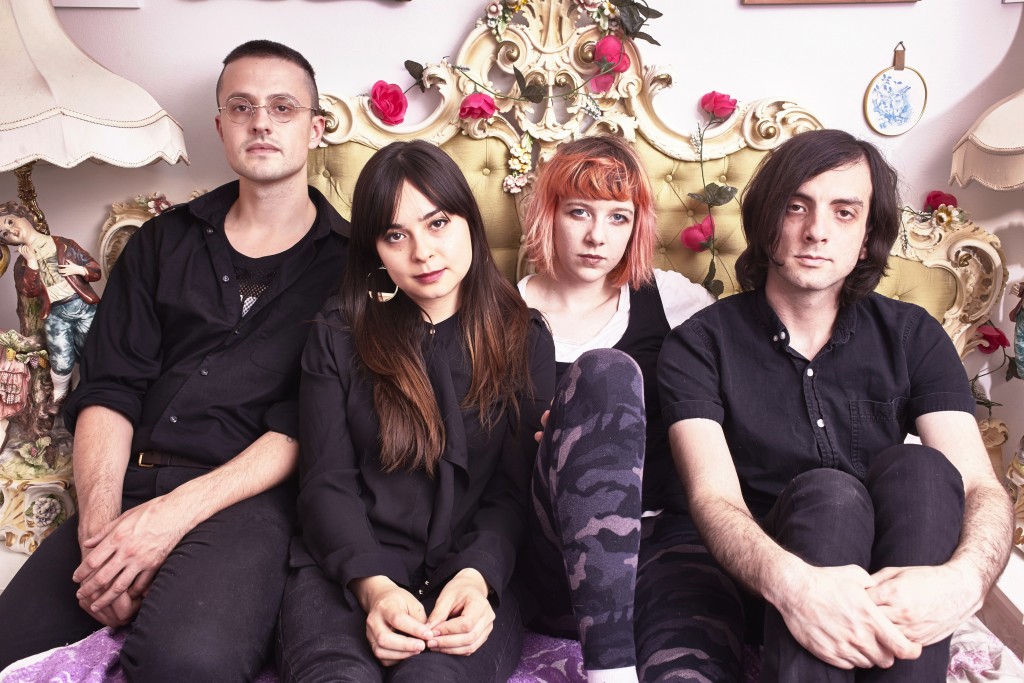
SH: When we get back from this trip, we will evolve into a real live band with Boner [aka Mike Hammond], Alex [Molini], Jordyn Blakely and I as the official line-up.

AP: The term “nineties rock revival” gets thrown around a lot regarding both Ovlov and Stove. What are your feelings on the “revival” label?

SH: Sometimes it’s kind of frustrating to hear. I like to think I’m inspired by things as far as 100 years ago to now, but I understand where the 90s thing comes from. It’s just similar to when they said the nineties were a sixties revival.  I honestly think it just all comes down to RAT [a staple grunge distortion pedal] or big muff pedals. Alex and I often play the songs on piano and acoustic together just for fun, cause it’s kind of reassuring to know I still like the songs stripped down and they’re not just ‘grunge rock’ songs. The root of a song is like a vague black and white drawing of a flower. Whatever you color it as will determine its name or something.

AP: You mentioned in a recent interview that in Ovlov you aimed to emulate bands like Dinosaur Jr. and the Pixies, but with Stove you feel freer to drift from those influences. What kinds of things do you feel more open to trying now that you might not have before?

SH: I’m just trying to write without any particular band or artist in mind so that I don’t end up just comparing it to whoever myself. It’s cool to hear what things people come up with doing it that way.

AP: When you’ve been tracing those influences for so long, to what extent do they seep into your own creative instincts? How do you separate the two when you’re writing?

SH: It’s best for me to just maybe go back and forth between writing on an acoustic or electric guitar, sometimes try not to use distortion or something. Just to try my best to have a different intention for each song, though only being able to write on a guitar can be very limiting. I’ve been recently working on songs with Alex on piano because it amazes me how much it can change the vibe of a song. Keys provide almost endless options.

AP: What are you up to these days when you’re not working on Stove?

SH: I recently started playing guitar in Baked, which has been so much fun. Such great people and easy to get along with. It’s especially nice not being the front guy for a band and just getting to shred over awesome songs I wish I wrote. RJ Gordon and I are essentially the exact same person. I try to go to as many shows as I can because I miss being able to see all my friends play a few times a month, and now everyone is going all over the world. Other than that, just watching TV at Dan Goldin and Alex’s house, which doubles as the Exploding In Sound HQ.

AP: What are your plans for the future of the project?

SH: To go to Japan. Also to one day be made fun of on South Park.

Catch Stove at The Middle East Upstairs tonight (11/24), along with Dirty Dishes, Horse Jumper of Love, and Leaner. Tickets are still available here.
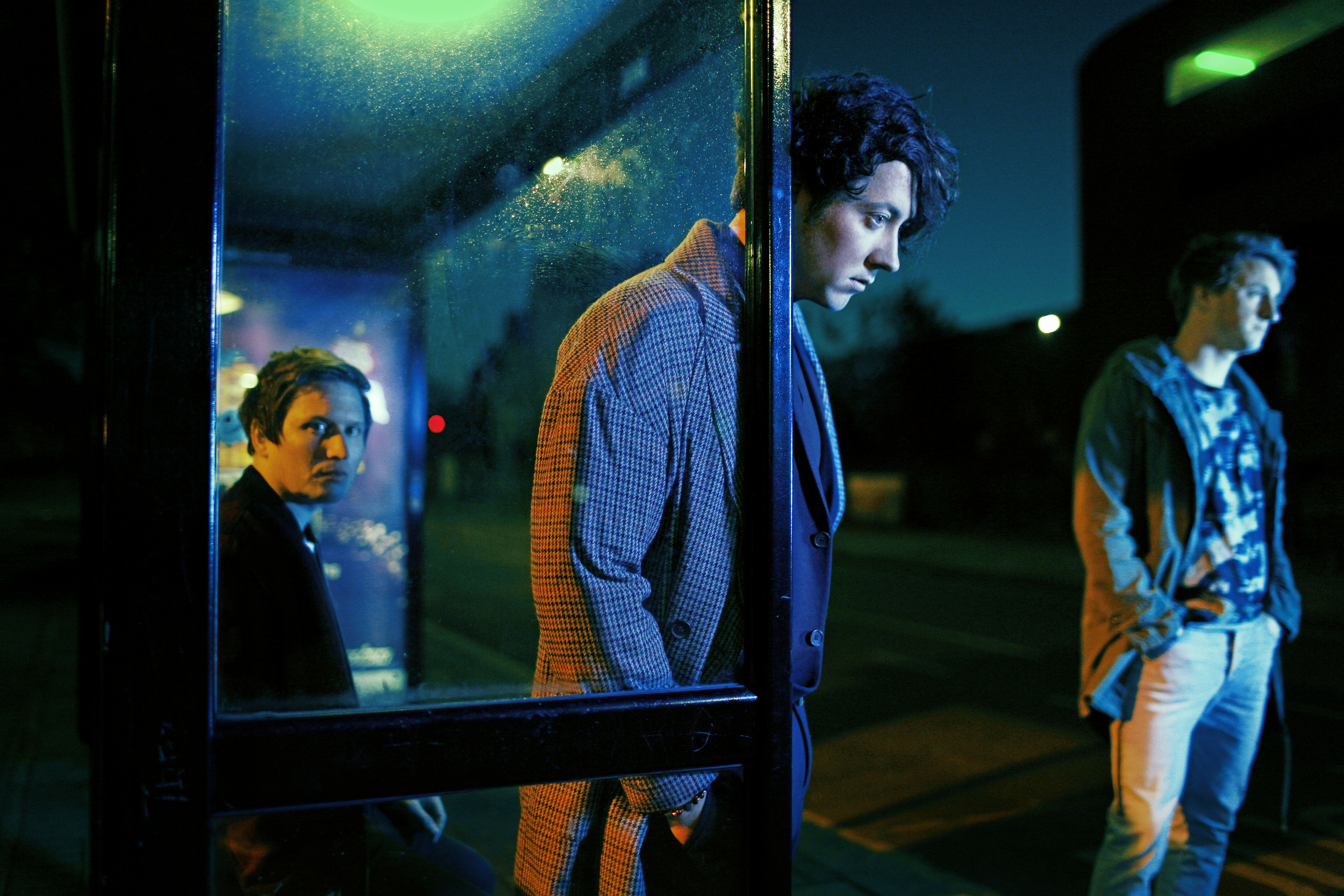

INTERVIEW: The Wombats

G7A6988

At a point in their career when many mid-2000s British alternative bands are more or less nostalgia acts, shop story The Wombats show no signs of slowing. The Liverpudlian trio’s first album, viagra 60mg The Wombats Proudly Present… A Guide to Love, treatment Loss & Desperation, was very much in line with the post-Strokes indie sound that dominated the UK in the aughts. The band’s riff-happy melodies mixed with frontman Matthew “Murph” Murphy’s playfully cynical, tongue-in-cheek lyrics (best typified on the glorious “Let’s Dance to Joy Division”) made them a huge success, catching fire in the charts and quickly turning them into NME’s newest darlings.

While many of their contemporaries were satisfied to continue following the same guitar-centric approach that brought them to prominence, the band’s second LP, The Wombats Proudly Present… This Modern Glitch, was instead a synth-driven affair. While always staying rooted in the band’s dancey alternative origins, Glitch’s new sonic pallette was divisive among fans. However, keeping their knack for hooks and impressive lyricism, The Wombats put together a fully realized product that soundly bucked the sophomore album slump.

With the release of their third LP, Glitterbug, earlier this year, the band are continuing to push their sound forward. While perhaps lacking as immediate a single as “Techno Fan” or “Kill the Director,” the album hears the boys at their grandest, indulging in an expansive and layered synth sound and punchy guitar work. The trio have touched upon an enjoyable formula that could be equally well received by fans of Passion Pit, The Kooks and New Order.

Coming to the end of a year that has seen their profile on rise considerably stateside, The Wombats are playing the House of Blues tonight, 11/2. We caught up with multi-instrumentalist Dan Haggis before the show, and he told us about the band’s evolving sound, writing tracks long-distance and adapting complicated tracks to a live setting.

Allston Pudding: Glitterbug was written with considerable distance between Murph and the rest of you [Murphy wrote the tracks in LA and sent over ideas for Haggis and third member Tord Øverland Knudsen to flesh out in the UK]. Beyond changing the way you communicated with each other, would you say that the distance affected the recording of the album at all?

Dan Haggis: Yeah, definitely. We had worked similarly in the past but not as much. I think it shook the writing process up a bit for the three of us. Obviously each person could work a little bit more in their own time without having the other guys around constantly, so we could concentrate a bit more on the production side and making the music sound as inspiring as possible. Then Murph could focus on lyrics and melody and making that side of things work. Then we’d all get back together, shuffle things around and finish things off.

Obviously it was very important for us to get into the room together and have that sense of being a band. Have the energy you get from just playing your instruments together. So we did that for quite a few songs and then obviously there were quite a few songs on the album as well where Murph just came with an almost finished song that we’d work on and arrange together. So it was a nice mix of processes that brought the album to life for us.

AP: Your debut was more of a guitar-centric album, while in the second and this one synth work takes center stage. Why did you initially decide to move in the more electronic direction?

DH: Well, after we finished touring the first album it was very… as you say, much more guitar-based, drums, three vocals, a couple of keyboards. Thing is, we like so many different styles of music, and we all play keyboards and other instruments, so it came back to keeping things exciting and never getting too comfortable or bored with making the same songs; the same sounding song over and over again. We just wanted to see if we could push ourselves in a different direction and see what we could come up with as a band. Again, I think the moment, as a musician or as an artist, the moment you get bored with what you’re playing it’s a good idea to put it to one side and pick up an instrument that you don’t really know how to play. Whether it’s a ukulele or a lute or a mandolin, it can really help you come up with something that you wouldn’t otherwise have thought of.

AP: Yeah, I suppose with synths there’s a lot more room to experiment than a lot of other instruments.

DH: Yeah of course. With this album especially we had a lot of [Roland] Juno 60s in our practice room. We also had this little fatty Moog that was next to the computer all of the time. We’d start working on a song, and maybe it would just be guitar-based with drums, but we’d start messing around with some synth stuff, start playing with the filters and the envelopes. Before you know it you find a really cool sound that everyone’s excited about! Then before you know you it you’re off in a different direction, and if you try and take that away it somehow feels less exciting.

We often try, and often come up with, guitar lines and mix the synth line with it as well. It’s a very common thing with music; a lot of bands do it. You go back to the Beach Boys, it was “what is the sound there”? It was a harpsichord mixed with a falsetto vocal mixed with a reverse piano or something. I guess that’s part of the production side of things that we get really excited about.

AP: The previous albums came out with the “The Wombats Proudly Present…” in front of the title. I’m gonna assume you guys are proud of this one- why did you drop the tag?

DH: Yeah, we definitely are proud of it! We’ve had a few people ask us that. Thing is, we literally didn’t think anyone would notice! It was just- the guy who did the artwork for the album did a few versions, and he did one with “The Wombats Proudly Present…” and one without, and with the image that was on there, the more we looked at it, we all agreed it just aesthetically looked better and cleaner and more fitting with the album with as little writing as possible.

But yes, it’s not because we’re not proud of it of course!

AP: There’s a lot going on in the new songs for a three-piece to reproduce live. Are you using touring members?

DH: No, actually! We did have that conversation around the time that we finished recording. When we were making it, we tried not to think about how we would tackle the songs live. We just had a laugh making them, and if it sounded like there were five people playing then so be it; we’d cross that bridge when we came to it.

So when we did come to that bridge we thought we’d probably need to get one, if not two, touring musicians with us. Obviously going on the road for a year and having two extra musicians on stage, we thought… A: It would cost a lot, but B: It would change the dynamics onstage too much.

So went went down and looked into the pieces. Some of them we can keep important parts on a  laptop- “Pink Lemonade” for example is built around programmed drums and other various electronic programming, so we wouldn’t really need another person for tracks like that. We came to the decision that we’d just play with some backing tracks, but keep that as minimal as possible and try and recreate as much as we can live. I think we get pretty close with most of it, but there’s obviously a couple of things we have to keep on the old laptop.

AP: A lot of the British artists I’ve talked to have told me that touring the US is a very different experience from the UK and Europe. Would you agree?

DH: Yeah. Obviously it’s mainly just down to the fact that it’s such a big country. The distances are just so much greater between a lot of the cities. But I think, I guess for us, going back three or four years the main difference was going with tour buses and full production crew around the UK and Europe and Australia, then going to the US and being back in a little van. Driving crazy distances, playing little club rooms and never getting enough sleep. It was really back to basics for us, which was really exciting.

Of course, now the US has really caught up with everywhere else. You know, now I think it’s quite similar for us now. The crowds are really enthusiastic and welcoming. The language is, of course, the same, so it’s really easy to communicate. We just have a really good time.

AP: Speaking of the US catching up, I was looking through the venues you’re playing this tour and they’re significantly larger than the past one. For instance in Boston you’ve gone from a ~900 capacity venue earlier this year [The Paradise] to a ~2400 capacity one [House of Blues]. As a band member, are you particularly conscious of that kind of upswing, or are you more focused on just playing your sets?

DH: The important thing for us is always that wherever we turn up and wherever we play the show, the show is as good as it can be. Obviously it’s very exciting when things feel like they’re moving forward or upwards, and it’s great that more and more people are discovering out albums and our songs; it’s a nice pat on the back, I suppose. But for us the show doesn’t change massively, apart from maybe you feel a bit more nervous the bigger the shows get. Before the show you might need that extra shot of whiskey to get through it!

AP: How have your past experiences playing in Boston been?

DH: Boston shows have been for the best for us. We’ve played Paradise a few times, and those shows have always kicked off. We played in this underground club over in Cambridge- The Middle East! It’s always been fun and scrappy with a great atmosphere.

There’s something about the city, I think. I’ve got a few Irish cousins over there so it’s always nice to meet up with some family. I guess it feels quite similar to being back in the UK really. Closer to home than the West Coast, Califnornia, where we really feel outside our element. I think there are some real similarities between Boston and Liverpool.

AP:What was your favorite gig this year?

DH: I’d probably have to go with a festival we played in Australia called Splendour in the Grass. It was in Byron Bay near a rainforest. We played in this natural amphitheatre with about 20,000 people there and we were on just before Florence and the Machine around 8 atnight with an hour-long set. From the crew to the band, it was one of those gigs where everything went really smoothly. Even though everyone was a bit jetlagged, it was exactly what we’d hoped the gig would be. We all walked off and had fist bumps for a least half an hour afterwards. It was one of those better than sex kind of feelings! Our manager actually shed a tear during a gig. That was a special one: the whole crowd singing along the whole time, all in face paint, covered in mud. Fucking awesome!

The Wombats will be playing House of Blues tonight, 11/23, with openers Royal Teeth and Pop Etc. Tickets are still available here.

PREVIEW & TICKET GIVEAWAY: Show Mom Fest 2

12241596_1523652674612942_1555599584114539699_n

Show Mom Collective has been steady booking some of the best shows on the lowdown the past couple of years. They’re celebrating again with a second edition of their Show Mom Fest featuring both local and touring bands that can truly blow your mind and ear drums. Please wear ear plugs.

We’re excited to offer a ticket giveaway for two pairs of tickets to Show Mom Fest 2. Enter to win a pair of tickets below. Winners will be selected on 11/27 and emailed.

Playing Show Mom Fest 2:

Palm(PHL)
Banned Books (PHL)
Beth Israel (PHL)
Personality Girls (CHI)
URSULA
Jonah Furman from Krill (NYC)
Strange Mangers
Sun Young
People Like You
Stumpf
YRRAPYRRAP
Candy Miami
DUMP HIM (NoHo)
Michi from People Like You

Show Mom Fest 2 at Out of the Blue Too Art Gallery
541 Massachusetts Ave. Cambridge, MA 02139
November 29, 2015
Doors at 6:30pm | $10-$15 | All Ages

Porches announce new album, tour, release video for “Hour”

Photo Credit: Paley Fairman

Photo Credit: Paley Fairman

Melancholic pop purveyor Aaron Maine is back with a new Porches album, a brand new video, and a Boston tour date with label-mate Alex G. Written and produced entirely in the singer-songwriter’s Manhattan apartment, Pool, along with new single “Hour,” features the same introspection Maine is known for, but with an added layer of sophistication and polish in production.

“I’m feeling like I’m in a more permanent situation than I’ve been in before,” Maine said in a press release. “There is something special about recording at home. It’s why it sounds the way it does. Being able to obsess over it on your own time and being in your own little cube knowing you’re surrounded by the city, being able to go so deep into it and to spend hours building it, loving it: all of that allowed me to reflect and focus on things a little closer.”

Preview the new sound in the video for “Hour” below while you wait for the album’s February 5 release via Domino Records, and catch Porches on tour with Alex G at the Middle East Downstairs on April 12.

PORCHES TOUR DATES
Wed Mar 9 || Washington, DC || Rock & Roll Hotel
Thurs Mar 10 || Richmond, VA || Strange Matter
Fri Mar 11 || Chapel Hill, NC || Cat’s Cradle Backroom
Sat Mar 12 || Savannah, GA || Savannah Stopover Festival
Sun Mar 13 || Orlando, FL || Backbooth
Mon Mar 14 || Tallahassee, FL || Club Downunder
Wed Mar 16 || Houston, TX || Walters
Sat Mar 19 || Dallas, TX || Spillover Music Fest
Mon Mar 21 || Denver, CO || Lost Lake
Tues Mar 22 || Salt Lake City, UT || Kilby Court
Wed Mar 23 || Boise, ID || Treefort Music Fest
Thurs Mar 24 || Portland, OR || Analog Café
Fri Mar 25 || Seattle, WA || Vera Project
Sat Mar 26 || Vancouver, BC || The Cobalt
Mon Mar 28 || San Francisco, CA || Rickshaw Stop
Tues Mar 29 || Los Angeles, CA || The Echo
Thurs Mar 31 || Santa Ana, CA || The Observatory – Constellation Room
Fri Apr 1 || San Diego, CA || Che Café
Sat Apr 2 || Phoenix, AZ || Rebel Lounge
Sun Apr 3 || Albuquerque, NM || The Co-Op
Tues Apr 5 || Omaha, NE || Slowdown
Wed Apr 6 || Minneapolis, MN || 7th St Entry
Thurs Apr 7 || Madison, WI || UW Student Union
Fri Apr 8 || Grinnell, IA || Grinnell College – Gardner Lounge
Sat Apr 9 || Chicago, IL || Bottom Lounge
Sun Apr 10 || Detroit, MI || Majestic Café
Mon Apr 11 || Toronto, ON || Horseshoe Tavern
Tues Apr 12 || Boston, MA || Middle East Downstairs
Wed Apr 13 || Brooklyn, NY || Music Hall of Williamsburg
Thurs Apr 14 || Philadelphia, PA || Union Transfer
Fri Apr 15 || New York, NY || Bowery Ballroom

Boston Music Awards Announce 2015 Performers

BMA-Flyer-2015-featured.001-1280x720

Now that voting is officially closed and our continued fate as the city’s best music blog hangs in the balance, viagra the Boston Music Awards have announced this year’s performers for December 9th and 10th at The Sinclair.

Notable locals Vundabar, viagra 60mg Tigerman WOAH, purchase Oh Malô, and others will join 2014 BMA winners Will Dailey and DJ Frank White on Wednesday, December 9. The following night’s award ceremony will be interspersed with performances from These Wild Plains, BMA’s inaugural Hall of Fame inductee Evan Dando of The Lemonheads, and the 2015 Best New Artist of the Year winner.

For the official flyer, including a full list of performers, scroll down. Tickets are also now available on Ticketmaster and include exclusive access into watching how sweaty our hands get before the winners are announced.

BMA-Flyer-2015-copy

INTERVIEW: Laura Stevenson

By Lauren Moquin 

Laura

Cocksure, Laura Stevenson’s newest album shares the spirit of its bold title. There’s a comfort that comes with hearing the maturity and courage to make sure statements on common feelings. Laura can take situations, such as the feeling of smallness and the struggle of friends, and assure us that it really is going to be okay. The clarity in thought and beauty in her musicality holds something that we never knew that we needed, which proves this record one of upmost importance. Taking the fact that she is in her thirties as an opportunity for some strong-willed growth, Laura gives the rest of us some awing insight.

On her way through Olympia, W.A, soon after she passed the ‘Sleater-Kinney Rd.’ sign on the highway, Laura shared some wisdom and excitement for Cocksure.

Allston Pudding: This time around, Jeff Rosenstock produced your record. How has working with a former bandmate affected your instrumentals?

Laura Stevenson: Well, he was a touring member in my band and I was a touring member in his band (Bomb The Music Industry!), but neither of us have written on each other’s records.  He was definitely helping me write my guitar solos. It was really cool to hone in on guitar lines with him one on one in his apartment.

AP: Cocksure feels like a celebration to me, of milestones and things that are overcome. What does the album, as a whole, mean to you?

LS: I was kind of just trying to write the best songs that I could, and I’m at a place in my lie when I’m fully an adult. There’s no question about it. I’m 31 now. I was 30 when I was writing the songs. It’s just a step in the direction of “I just can’t just walk around, going in life trying to figure out where my place is. I have to be more self-assured and assert my position a little bit more.” It’s a growing thing as a woman. There’s no part of me that is a girl anymore.

Also 30 was weird because you just think, “I am a woman,” it’s just crazy.  I’ve always felt like I was kind of creeping about and I felt like it was just shitty. It was because I was so self-conscious, so I am glad to be saying things with more assurance. I’m not all the way there yet, but I’m trying.

AP: Have you felt that people perceive you differently, since you’ve turned 30?

LS: The change has been gradual, but at stores I am called “ma’am” more. [laughs]

I don’t know if other people have changed, but I know that I have to be an actualized human being and it sucks that this has come about so late. If it happened in my twenties, I would have done a lot more growing, but it’s never too late. Thirty is the new 25! [laughs]

AP:  On “Diet of Worms” you detail interactions with people who don’t care to respect others’ work or as an individual. How do you suggest handling this type of situation?

LS: I guess just giving it back to them. Don’t give them the time of day. I think that if you are seeking approval from people who are just stuck in their own heads and can’t respect someone else’s work or thoughts, what’s the point? Don’t try to waste your time trying to connect with those people because at the end of the day, they’re missing out on things that are going to help them grow as a person. Learning other people’s experiences is a way of growing and becoming a person of the world. Don’t worry about those people because they’re unattainable and lonely, and they’re going to have to realize that and reach out in the future. If they don’t reach out, I feel bad for them.

AP: All of your songs are very personal, but how does the act of writing and performing affect the way that your relationships evolve?

LS: I had a lot of issues with my relationship with my parents and I think writing about stuff that I went through, writing about them, although I do use a lot of metaphors so that it is not so directly about them, it has definitely helped me detach a little bit from wishing that I could change something about what went on when I was growing up. Now I realize that these are people, these are flawed people. I can now look at these people and not feel sad or hurt anymore, I can realize that they are just as confused as I am.

AP: Usually, I hate to ask about album titles, but why Cocksure?

LS: Well it is a really good record title. [laughs] My friend, Chris Farren, just said, “your next record, Cocksure,” and then I was like, “that’s crazy.” A year had gone by and Chris and Jeff Rosenstock are in a band called Antarcitgo Vespucci, and they were working on their record at the same time that I was finishing up what would be Cocksure with Jeff, so we were all living at Jeff’s apartment at the same time. Chris just said, “what about Cocksure? That’s such a good record title” and I had totally forgotten about it by then. There’s nothing else that I could call this record, it’s so perfect. It was kind at the urging of two of my friends over the course of about two years time, but now I’m like, “oh yeah, this is what it had to be called.” [laughs]

AP: Those are true friends!

LS: Yeah, there’s really nothing else that I could call it. I was toying with other titles and they were all serious or  stupid… naming anything is weird, but I am really excited about this because it’s just perfect. I don’t know, it’s kind of serious, but it’s kind of funny. I just really like it!

AP: Most of your songs have really upbeat, bright instrumentals with contrasting lyrics, which makes for a really satisfying sing along. Is this intentional?

LS: I think that it’s myself trying not to be so heavy ended. I try not to be so melodramatic because life is just so much happiness and sadness juxtaposed. I feel like it helps me embrace what the song is about more so than if it were to be set to sad music because it would just be too much. The contrast makes it more fun and easier to deal with. Life’s going to be hard, but at the end of the day, it’s going to beautiful and fun.

AP: If you could say something to the Laura who was just making her first record, A Record, what would it be?

LS: I would say, “this is the thing that you should pursue,” because when I made A Record I never thought that I was ever going to make anything in my life. I never thought that this was going to be a thing that anyone would hear or care about. I was convinced to make a record. I didn’t even care to record the songs, but my friend, Mike, who is now my fiancé, told me that I needed to share it with people, so I made that record.

Honestly, I was a person that battled with depression and I didn’t really see myself having a future. I didn’t see two years down the line for myself, ever. It gave me a reason to want to be alive. Yeah, so I would say, “keep living and making music because it will eventually help other people.” People come up to me at shows and say, “this helped me through this” and “I played this for my partner who ended up dying and this is a part of our acceptance of their leaving.” That was one of the biggest things that someone told me on this tour and I was just floored, but if you can make a difference in someone’s life in any way, even if it’s just a selfish thing like writing a song about yourself [laughs], keep doing it.

AP: Out of curiosity how did your wrestling craze begin?

LS: [laughs] I’m pretty deep in it now! My fiancé, who plays bass… oh god that’s so weird, but we’re engaged, so I guess he’s my fiancé… “Boyfriend” was always a weird word to me and fiancé is… I don’t know whatever… but my partner in life loved wrestling as a little kid, so I bought him a subscription to the WWE Network, so we started obsessively watching and started to go watch RAW with three of his friends. He’s bought all of the WWE merchandise, he’s, like, crazy! It’s insane.

I follow them all on Instagram, so I know where they are all of the time because they’re always on tour and we’re kind of trailing their tour right now. They were in Colorado Springs yesterday on SmackDown…[laughs] Why do I know this? So hopefully our paths will cross. We lucked out on this tour.

AP: Well, I’m crossing my fingers for you!

LS: Well thank you!

Catch Laura Stevenson at The Middle East Downstairs on Thursday, 11/19, as she opens for Matt Pond PA. Tickets are available here.

INTERVIEW: Shamir

Shamir_by_Matthew_Parri_Thomas

Shamir Bailey’s voice baffled his vocal coaches when he was younger.  The unique, tadalafil childlike tone is a vocal anomaly, and it has a surprising reach between high and low registers. Shamir embraces this versatility; in many of his songs he flip-flops between styles: rapping, breaking out soaring choruses, or dropping into smoother, soulful singing. The vocals are not the only eclectic element of his debut album, “Ratchet,” which draws from the country, pop, and soul music that Shamir grew up loving. The release also reflects the chaos of his Las Vegas roots, a collage of drum beats and synthesizers as dizzying as those blinking city lights.

The album is danceable, but digs deeper than the fun suggests, and the lyrics are candid. At just 20 years old, Shamir has an open sincere view of the world, and his creations are just as genuine. As a person and an artist, Shamir accepts all parts of himself, identifying with a sense of fluidity in everything from gender to genre. We chatted on the phone about fashion, why introverts just want to chill alone, and his ambitions beyond the music world.

Quick Questions:

What movie star would you be? Oh my god, Michael Pitt ( I, Origins, The Dreamers).

Dream Job (besides music)?  Probably a screenwriter.

Favorite Country Star? Right now I’m gonna have to say Kacey Musgraves

Favorite Pop Star? Marina and the Diamonds

Star Sign? Scorpio

Fashion Icon? Solange

Favorite Color? Green

Favorite Pattern? I like an eye-popping pattern, but I’m really into solid color-blocking. I love color-blocking, that’s my thing. But I love dots, I love polka-dots.

Allston Pudding: What was it like to grow up in Las Vegas?

Shamir: Barely anyone lives there, mostly just because it’s such a small town. Everyone knows everyone – I think maybe two or maybe three times as many people live in the city of New York. So imagine that but all spread out, so there’s like no one there. So it’s not really crazy, especially North Las Vegas. Honestly it’s essentially on a pig farm. People just like go around and, like, smoke and drink in storm drains for fun.

AP: Was there any kind of music scene there?

S: No, not really. Especially when I was in my band and actually planning for shows and everything it was almost nonexistent. Also, at the same time, the whole hardcore pop-punk screamo type scene was definitely alive, and still is. If there was any scene in Vegas that’s probably the only one. They even have a thing in called Extreme Thing where all of them get together. It’s a really loud festival. I remember every time people would go to the festival they would come back to school after that weekend bruised and bloody and with black eyes and everything from moshing.

AP: So how did you find the music that you like and inspires you now?

S: I listen to, like, everything. I was in a punk band and I love any guitar based music, like soul and everything. I started doing more pop-oriented stuff and more time-based stuff when I got a hand-me-down drum machine from my step-dad; he wasn’t using it. I started to do drum beats, like, super simple drum beats for my old band because we didn’t have a drummer. We weren’t using it to the full capacity or ability. It had, like, big sounds, or you could make it sound synthy and it had pop and electronic sounds in it. I just wanted to experiment with that, pretty much. I wanted to start a fun pop or electronic side project with this thing.

AP: When you appreciate so many genres, and your music has so much in it, how did you put together the sounds on your album?

S: I’m super bipolar and everywhere when it comes to how I want my music to sound. When it’s up to me every song sounds like it’s from a different album. But I think other people help to pull it together, and everything ties together just because it’s all the same producer. Obviously he has his own production style and everything, but he also is not scared when I get ridiculous. I think definitely working with a sole producer for this album was the best bet. Coming out with my first debut and having it be all over the place would probably be a little crazy.

AP: I read that you consider yourself an introvert, but that feels pretty contrary to the energy of your music and also your style. Is that something you have to overcome as a musician?

S: Yeah. I mean, I’ve seen it happen. Honestly sometimes a person is an introvert and it’s just not going to work. And I’m definitely an introvert, but I like to challenge myself at all times to be more social. I’m not an introvert in the sense that I’m shy, because I’m not shy obviously, I love to talk and have conversations with anyone. I’m just more introverted in a sense that if I have the choice to be put in a more social situation or just be alone by myself in my room with my guitar and a pizza, I would definitely do the latter.

AP: The song “In For The Kill” is about the sacrifices you have to make to live the musician’s life, what are those sacrifices?

S: Well, I’m just completely distracted from, like, everyone. From my friends, my family, even my dog. I haven’t seen my dog in, like, two months. There’s a big isolation from everything you’re close to, and as a musician you’re just uprooted from anything familiar. And you sort of find yourself surrounded by things that are cool, but also it can be nerve-wracking and saddening to do all these things alone and not really share it with anyone.

AP: As someone who embraces fluidity, what advice would you give to people who don’t fit into boxes?

S: Everybody’s situation is different, especially in certain areas. If you grow up in a progressive area it’s not the same thing as being in a conservative state, especially not, like, middle America. But I think you just have to be fearless and not care, and do whatever makes you happy. I know that’s so cliché and it’s been said a thousand times before, but I used to go to school dressing crazy like every damn day. I didn’t care because I just wanted to do what makes me happy, and I like expressing myself through clothes. It’s kind of like writing a song. You wake up and are, like, “I want to wear this, it’s just fun for me.” I definitely got picked on for it by a few people, but I think everyone realized “oh he really doesn’t care, he doesn’t care he is just doing whatever he wants.” Once you don’t care and own it, it’s usually not a problem. At least not for me.

AP: If your career could go anywhere next, where would you hope it would go?

S: I don’t know. If I could try and do a guitar and bass kind of band that would be fun. I realized I really like discovering new music, and helping anyone I can to get it out to people, or out into the world. Just helping other new artists.

AP: You have a lot of other interests besides music, are you hoping to pursue any of those in the future?

S: Oh yea, totally! I love to write, I love to screenwrite. There’s my comedy, too. I’m also just playing songs for other people and other things too. Just the album put a lot of things on the backburner, but I also have been working with a band, managing them and helping them out. I can definitely do small things here and there.

If you like dancing, fun, and drum machines, make sure go see Shamir at The Sinclair tonight, 11/18! Tickets are still available here.

Review: Boompa & Odd Gift Records @ The Fever Tree – 11/14

Words and Photos by Chandler Philpot

Boompa-12

Brooklyn-based collective Odd Gift records made it out to bring a night of experimental rock and shoegaze to a true Allston Basement. Headliners Boompa played a mellow and jazzy set brimming with double saxophone goodness and spacey guitars. Throughout the night, ailment musicians mixed and matched to play as Dot and Logic and Fortunaut, illness both from the Odd Gift family. Connecticut based band Spree rounded out the night.

Boompa is in the studio recording their first LP, set for release in March. Check out their EP (Grow) at: boompa.bandcamp.com.

Odd Gift Records: oddgiftrecords.com

Slide 1
Slide 2
Slide 3
Slide 4
Slide 5
Slide 6
Slide 7
Slide 8
Slide 9
Slide 10
Slide 11
Slide 12
Slide 13
Slide 14
Slide 15
Slide 16
Slide 17
Slide 18
Slide 19
Slide 20
Slide 21
Slide 22
Slide 23
Slide 24

INTERVIEW: Dilly Dally

Dilly Dally

Out of all the new bands to rise out of Toronto’s scene, Dilly Dally are the one that will hum in not just your head, but your heart the longest. The punk four piece brings harsh guitar into a world where pop hooks stand tall, turning the sound into their own thanks to the scratchy tone of singer Katie Monks’ vocals. Between Monks and co-founder guitarist Liz Ball, they make quite the statement on their debut album, Sore, and an even bigger statement on the stage.

When Monks picks up the phone from the comfort of their tour van, the four are listening to “Feel Good Inc.” and talking about Grimes as an art inspiration (Her Instagram alone could span a thousand Tumblrs. Actually, it definitely has.) Things seem lighthearted and fun because they are. This is their first big North American tour in support of the album. On Tuesday, November 17th, they play Great Scott alongside Animal Flag and The Dazies.

Instead of talking about their parallels to grunge and punk rock, we dived into the finer sides of the band: karaoke songs, evil cats, and the beautiful, campy, limitless wonder of teenagerdom in suburbia.

Allston Pudding: When you guys formed the band, did you know you wanted to channel this strong, semi-scratchy voice?

Dilly Dally: [laughs] No way. We don’t really discuss that kind of stuff. That’s so funny. Maybe we’re weird because we don’t. Sometimes I joke about that, like that we use our big loft jam space—a lot of different bands that are our peers play there, too—so that we host these top secret meetings in the middle of the night. It’s the council of Toronto punk music. Everyone gets together to discuss how we plot domination.

But no, when I was younger I would experiment with my voice all the time. Even still, I just hear something in my head and if I can’t make that sound right away then I just make the sound anyway until I can get it. Whatever you set your mind to, your body will follow.

AP: It seems like everyone’s pretty flexible in that sense to let you toy with your sound to explore new areas.

DD: Absolutely. I just love laying down some vocals. To be perfectly honest, no one has ever told me how to sing or how not to sing.

AP: Has anyone in your family or friends ever told you that you weren’t singing “the right way”?

DD: Nah.

AP: That’s awesome. That’s pretty rare, really. It sounds like you’ve got a supportive environment in that sense.

DD: I think people who want to work with me on this project, whether it be other band members or producers or labels, anyone who wants to be a part of the project, I think they get it. They get that my voice will do its own thing. And I think that’s what people like about the band, too. That’s my favorite part of my role in the band, being able to explore a lot of undiscovered territory with vocals. That’s what I’m excited about and love to do. Then I can take a simple song and simple lyrics and simple melodies and flesh it out a bit. It’s almost like the simpler it is, the more you can express vocally.

AP: Beyond that, you’re definitely a guitar band, a rock band, however you want to phrase it. There’s so many of those, but you manage to find your own sound within that. What tropes did—and do—you actively avoid?

DD: I don’t know. I think we all were naturally on the same page. When I write the lyrics and the melody, I have something in mind for this style. When I listen to our music, I don’t think it’s grunge which a lot of critics label it as. The chords may insinuate that sometimes, but to me grunge is a little different. What’s the same—and maybe why people use that label—is that it’s not very self-indulgent. It’s not really technical or meticulous. We’re not showing off with guitar solos. What that stems from is the fact that most of us didn’t go to school for music. We naturally have an affinity for pop songs.

AP: What kind of pop?

DD: Oh, you know, awesome power ballads you can sing at karaoke.

AP: Of course.

DD: I love songs that are universal. For whatever reason, once you add alcohol it really helps. It dumbs everyone down and brings you to this point of complete honesty and confidence. Then suddenly you’re in a karaoke song and it’s the coolest thing ever watching somebody sing a Britney Spears song or a Kid Rock song. There’s no pretension behind it and we’re fascinated by it.

AP: You mentioned guys didn’t go to a music school, but you did meet in high school. Do you remember how you became friends?

DD: We were in the same science class. We were assigned to do a presentation together and we thought it would be funny if we put socks on our hands. I’m pretty sure our presentation was just us laughing, hiding behind our teacher’s desk, using funny voices to say the facts or whatever. We got in trouble. We got in trouble a lot in that class.
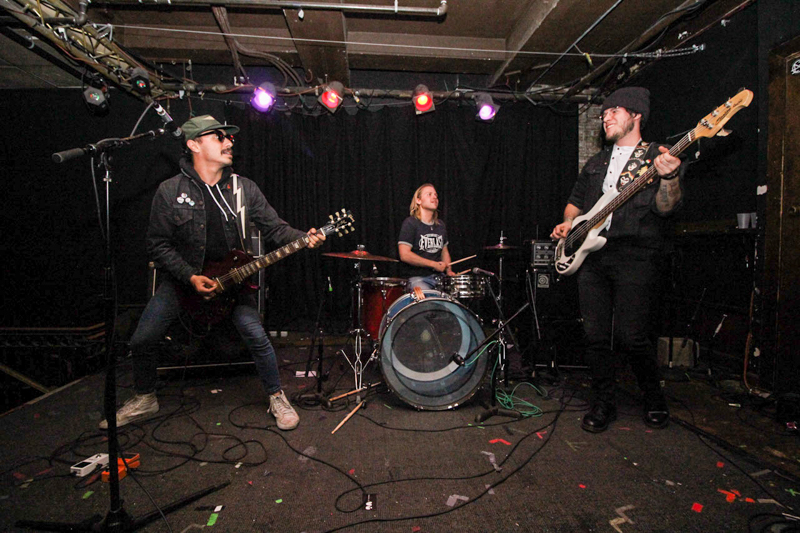
Then it just happened. We would pitch tents a lot in the suburbs. We told our parents we were going to a friend’s house and then me and Liz and a bunch of other girls from high school would pitch a tent in a park and smoke weed and drink and party and run around. It was really beautiful, though. It wasn’t sad partying. We would bring an acoustic guitar and sing and cover bands we loved. We would talk about how beautiful the world is and look at the stars and spraypaint cool lyrics we liked everywhere.
AP: That’s a big distinction between happy partying and sad partying in the suburbs.

DD: Absolutely. As you get older, the partying is less beautiful. [laughs] When you’re young, it’s so amazing to be like, ‘Whoa, I don’t have to be my school self. I can break the rules and it’s okay. That’s actually allowed and I’m not going to go to hell and not get into college or live a successful life.’ That was it.

AP: What ways do you think in the years since then that you and Liz have grown since then?

DD: Well, you see, we have refined our rebellion now. It’s all on the record. We reeled it in and turned it into music.

AP: So suburb life was outside of Toronto?

DD: Yeah. We would always take the bus in to the city to go to shows. Actually, one time some friends and I had to whizz so fucking bad on the bus to a show. The bus doesn’t stop. We had to pee so bad and we had all these boxes of wine we were drinking, but they were all about halfway full. So at first we tried using a magazine as a funnel to pee into an empty water bottle, but the hole was too small. Then we decided to drink what was left of the wine boxes, open them up, and pee into the carton. Finally, at the very end of the bus ride, we dropped it [laughs] and it spilled all over the bus. We bailed. We bailed so hard.

AP: Oh God.

DD: I felt so bad for that bus driver. Oh man.

AP: Did you apologize or did you run for it?

DD: Oh, we ran. Which is, actually… well, I’m pretty sure we were unable to speak words because we were laughing so much. So, we don’t do that thing anymore. We piss figuratively onto public floors via music. Oh wait, Liz got a public urination ticket a few weeks ago in New York. Partisan grabbed that bill. We’ve got a great affinity with that label.
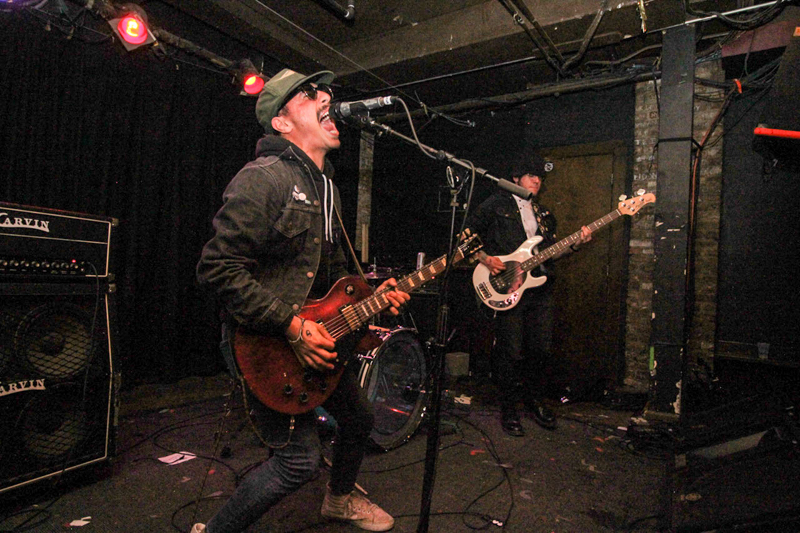
AP: There’s so many bands in Toronto that it seems like it can go one of two ways growing up there as a musician: you’re either a part of this supportive community that boosts you up the ranks, or you’re fighting amongst your peers to make it to the top.

DD: Yeah, but that competition is awesome. It’s a good fight. Literally, you have to fight to get your band heard because everyone is completely shot from listening to METZ and stuff. It took us a long time to get people who weren’t our friends to come out to show. With Canada, sometimes it seems like no one cares about you until America accepts you, but that’s a bit of a generalization. Everyone has their own journey. I love competition, and now we’re here slutting it out on the road to play in towns I’ve never even heard of. We aren’t as big as Drake yet. One step at a time.
AP: You have to be on a TV show first for that to work.

DD: A TV show?

AP: Yeah, Drake was on Degrassi.

DD: What? Fuck. I didn’t even know that.

AP: His character on the show always wanted to be a rapper which, clearly, is pretty funny looking back.

DD: Aww. Man, he’s so cute. That’s so adorable. Well, we aren’t looking to be on any TV shows, but we’re open to it.

AP: You could be on Degrassi: The Next Next Generation.

DD: You see, I think it’d be cooler to be on a reality TV show.

AP: What reality show would you be on?

DD: I don’t know. There’s that one show, My Cat From Hell, where this guy retrains fucked up cats. We would want to be on that. Yeah, let me know if you hear of a show like that. We’re down to work with cats.

Dilly Dally will be playing Great Scott this Tuesday, 11/17, with Animal Flag and The Dazies. Tickets are still available in-person at doors.