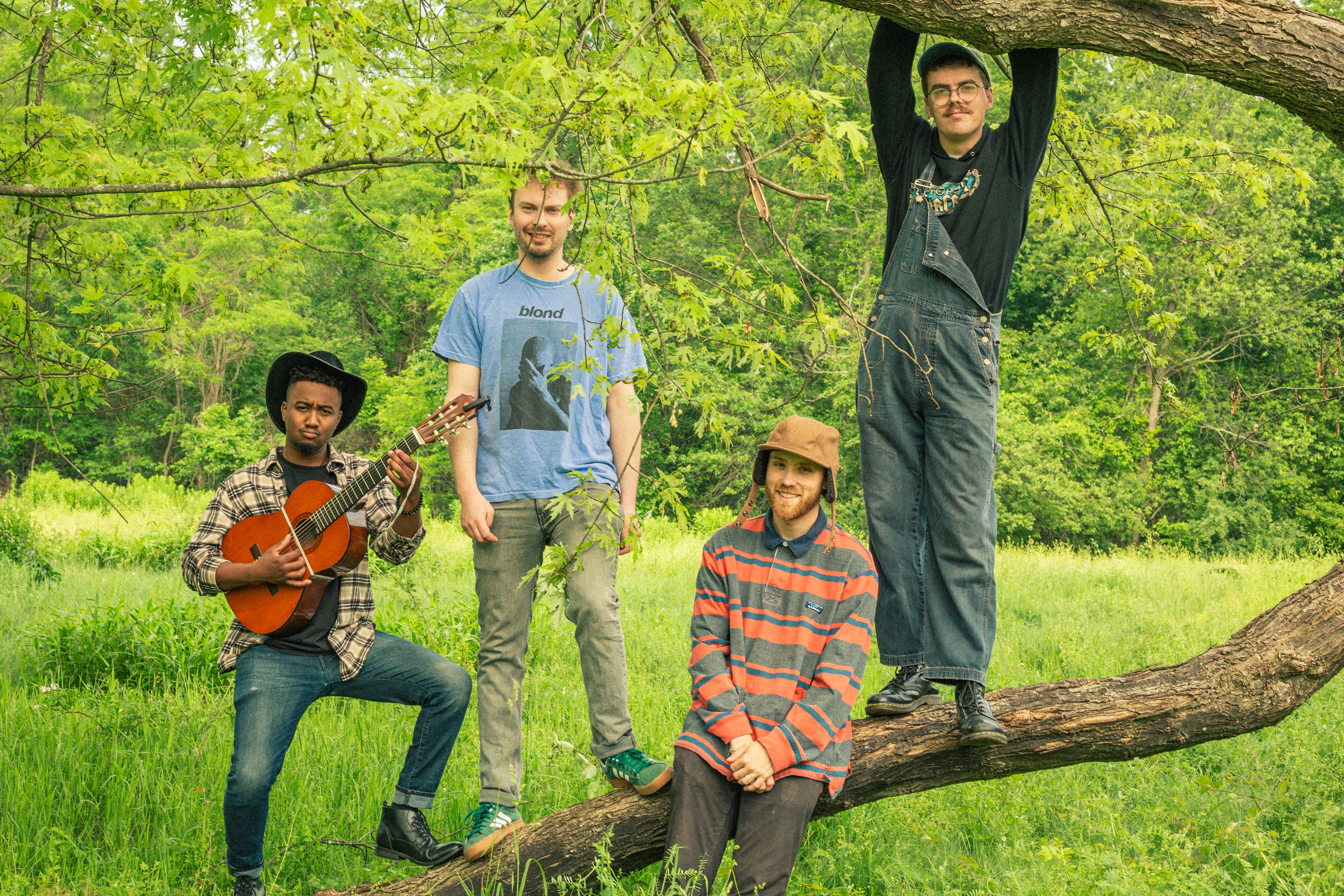
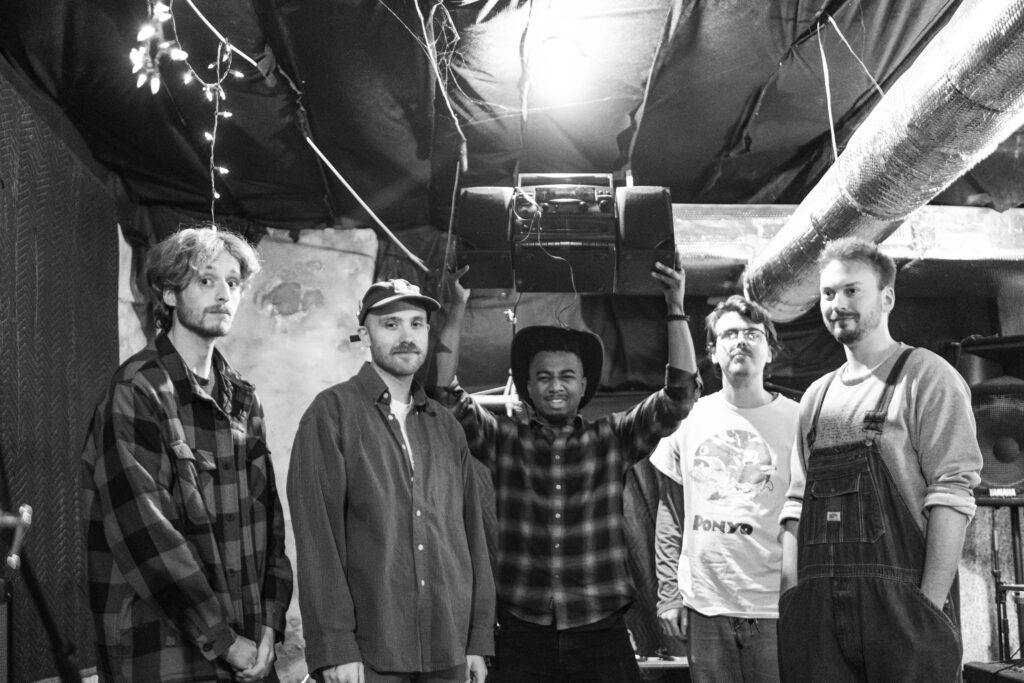
It’s been a big year for Boston indie rockers Tiberius. A couple cross-country tours have taken them as far as Texas while they’ve also found the time to play on what feels like every great band in town’s record release party all while readying their own fifth LP (and very first on hotly-tipped label Audio Antihero) entitled Troubadour. A massive leap for an already well-established group, the record finds fronter Brendan Wright writing vividly about their travels across this big nation, the allure of music scenes beyond our fine city, and the backbreaking work that is schlepping heavy ass gear from basement to basement among other topics. Moving from blistering college rock guitar manglers to pretty, steel-accented Americana (sometimes within the same song), Tiberius have truly made one of the year’s greatest sounding rock records coming outta anywhere.
Astute readers will recall that this album cycle started on this very website with a premiere of initial single “Sag”, so it feels fitting that we got the chance to sit down with the now-five-piece Tiberius ahead of Troubadour’s release, which is today. Hit play on the stream below and read through our musings.
AP: So when are you moving to New York?
Brendan: Cat’s outta the bag, huh? You know, there’s nothing in the works right now, but I’ll definitely ask everybody their plans for next year, starting September 1st, the cycle. As of right now, I’m going on the record as saying I don’t have plans to go anywhere., but ask me again in like six months.
AP: This record has a lot of characters. How much of yourself do you place within them?
Brendan: I think that they all sort of stem from personal places or personal experiences, though I feel like as the songs become what they are, they become more abstracted over time. It’s really interesting where I think some of these songs, to some degree, start out as like comfort songs or little odes of just trying to find solace in a crazy time in your life. But then as I show them to these guys and we work on them and we record them and we play them they become completely different. Like the feelings of those songs become completely new so I forget a lot of the time what they’re actually about. When we’re playing them on stage I’m thinking more about other times that we’ve played them together or trying to make one of the fellas laugh on stage when we play, as opposed to being right there in the songs.
AP: Another theme of the record feels like driving, or traveling in general. How much does the road influence this band?
Brendan: I think this record is certainly influenced a lot by the road or by traveling, but I think that a lot of it is about understanding yourself in different spaces and in relation to different people and places and objects. I think from the time that this was written and now even I think a lot about myself in relation to the kind of structures around me in my life and how those can change over time.
AP: It seems like there’s a sort of fixation on the West, too: Moab, Albuquerque, South Dakota. Is there anything about that area of the country that is especially inspiring to you, or is it just a function of how the songs, or where the songs were written?
Brendan: I feel like a lot of the songs were inspired by this really big trip I took out west, which was kind of an opportunity to get myself away from Boston. I mean I love Boston, but also I hate it sometimes. I think that when a lot of the songs were written it was my first time experiencing really anywhere outside of the Northeast. So I think there was a lot to talk about, a lot to feel.
I feel like the West is so vast and I was thinking a lot about how the places that really stood out to me in the West were ones that were just kind of like random, like a gas station in the middle of South Dakota somewhere that was just in the middle of nowhere. There wasn’t anything necessarily significant or special about that, but it was just like, ‘Oh, I’m gonna remember this spot for the rest of my life because I’m never gonna come back here’ you know? Maybe not, maybe one more time we’ll see. I was just thinking about how there are certain landmarks that you think are gonna be really significant, and it’s always kind of surprising which ones end up being the ones that really make you feel something.
AP: “Sag” is kind of like a song that deals with the minutiae, or the. bullshit things you have to do to make your art. How do all of you sort of avoid getting jaded while still maintaining joy in making music?
KP: I think about this a lot. Just at least in my life, I’m very busy and I’m always doing a million things, but I find that having something else to focus on, whether that is a good thing or a bad thing, makes coming back to music a little sweeter. You know, even with its various…characteristics that make it fun or make it sucky, like everything that makes this experience this way. The moment I’m doing something else, I’m like, ‘Man, I kind of miss the shitty driving everywhere, I miss being stuck in a car with the guys’, so I don’t know. I think lit’s easy to glamorize this lifestyle when I’m at my 9 to 5.
Colin: I’ve now moved cross country twice in pursuit of various musical projects, and that adds a layer of pressure like ‘Oh, you came all this way to do this—don’t fuck it up.’ Why aren’t you doing it all the time right now? But also, the flip side of that is that music becomes such a common experience like ‘Oh, this feels the same here as it does in the West Coast, as it does in New York, as it does anywhere.’
Pat: I just think: what a lucky way to connect with people. I did a lot of music through school, but not really like socially or like not primarily socially. I didn’t really try to get band together with friends or like until like I was probably 20 or 21, but there’s just nothing like it. To really see someone play and really connect with them musically, it’s definitely what keeps me coming back. You can be so down on everything musically or artistically, and then you see one person play one thing, or one song, and it’s just like…magic. Even something small like that can just melt everything else away like the pressures or the time commitments and stuff like that.
At the end of the day we’re all just playing songs, and we all love songs, and we all love music. Playing music, and making music with other bands that we get to meet on the road or at home. On good days it feels like such a treat to go to do this. While it doesn’t always have to feel like that, and it’s not always going to feel like that, but it’s really nice remind myself of those moments, and I always try bring it back to that feeling.
Sam: I came up into playing live music through these guys, so I don’t have the same history that the others have here, but I’ll say that I really just enjoy it thoroughly, especially being on stage and having a really fun time playing with them. I feel like that’s one thing that makes it worth it for me. Ultimately I wouldn’t be putting in as much time or effort if it wasn’t as fun and if the people I was working with weren’t as good as they are. There’s really nothing making me think that I don’t want to be doing this because those things are true. It’s nice. I enjoy every part of it.
Brendan: For a lot of my life music was as an outlet for me, and for things that I was going through personally, I think a lot of the Tiberius songs, they all start from a pretty vulnerable place, but something that’s just been so amazing about being here, especially in the Boston community, is just to be a part of this history. There’s so many artists and peers working together to be a part of this culture. And it’s so fun. And I feel like it makes me feel significant in its own way. It can be so easy at times to get really stuck on my phone and feel like I’m drowning in the abyss of everything going on, so it’s nice to have something that’s very grounded and very communal, almost like a family to keep coming back to.
AP: How do you square ego and ambition with also wanting to be a good member of this community?
Brendan: l feel like i’m constantly thinking about this, like I’m trying to think about the reason why I’m making art to begin with all the time and you know, why being in a community is so important to me while seeing other people in other communities go to places that have more opportunities. While I obviously know Boston’s musical infrastructure can be very limiting at times because there’s a lack of venues specifically serving artists of our size. I’m also aware that people don’t typically move to Boston for the music culture. I think a lot of it is people who are either from here, people who go to school here and are here for a limited time, or people who kind of find themselves in a place where they just like being here. I think that that’s kind of where this band is at, or at least where I’m at.
That said, I think there’s something really special about the community of people that exist here and the people who want to be a part of it kind of just making art for art’s sake. I think it’s really easy to get washed up in the “industry” part of all of this, and I also get that people who want to be professional musicians always have to be looking out for themselves to some degree. But I don’t know, it stinks when people leave a good place sometimes to go in search of something bigger. Maybe if more people stuck around, we’d have something bigger right here. That said, I think everyone’s got to do what makes them happy and what drives them, and if you feel like New York just will afford you more opportunities and that’s your priority then you should do it.
AP: This is a band that’s historically had people moving in and out. Do you find that influences your songwriting in any way or the way that you guys are playing the songs? Do you find it like a challenge or a blessing?
Brendan: It feels like every time we play in a new orientation each song is brand new. Colin is the newest member of the band, and we’re trying to, as this five-piece iteration, work out how these songs kind of exist in this way. A lot of that is cutting parts, rearranging, or trying things with different dynamics and different pedals, or setting up our amps differently in the room. There’s a lot more conversations about what works and what doesn’t work. I think that at times can even be like, ‘I don’t know.’ It’s definitely pushing us into places that are a little further outside our comfort zone, but from my experience it’s been super productive.
KP: That everyone who’s joined the band has been really inspiring. I love working with musicians who are new to me and who have had vastly different experiences than I have because it’s always an ear-opening and eye-opening experience. Where they point something out, and you’re like, ‘Wow, I didn’t even think about that’, which i feel that it always brings new life into the band. I’ve been in Tiberius for five or six years, and I’m a vastly different musician now than I was when I first started. I will say that I’ve had a lot of musical experiences, but I feel like everyone who’s stopped by in this band has really helped be a part of this and help shape the way that I play.
Colin: Having only joined in the past like year and a half or so has been interesting. I’ve definitely always been around indie rock and stuff, but like less emo-leaning, or less kind of harsh-leaning typically and even as an outsider seeing different iterations of this group, from even before I joined I think it’s a cool opportunity in a style that’s traditionally very part-oriented where your part is your part and it all connects to make the song. However, when you’re playing with different arrangements of the group you have to really be on your toes and just play off of each other more which i think is one of my favorite things about playing music in general: being able to just having every performance be a little bit different and its own performance. I think there’s an added kind of external motivation like “well it’s gonna be pretty fucking different now that we have like two more people or like two more instruments than it was originally.” The set is gonna be different every time like when they do a four-piece show on some of the older repertoire that’s a little more rocking. But then the next night we’ll have like a five-piece with like the pedal steel and like everyone kind of has to lock in. It’s a good like mental and musical exercise to know the songs so well that you can stretch the boundaries while still staying in your lane and staying in the box.
AP: What was the impetus of the farm emo thing?
KP: One day Brendan was like, I’ve been listening to a lot of Neil Young. They signed up for that Neil Young streaming service.
Pat: And then I was like, I just got a pedal steel.
KP: Yeah, so I’m not crazy. Those things did overlap. It was Neil Young and then it was Pat and I was like, oh shit.
Brendan: There’s that meme that’s like country music is just farm emo. I Thought that was funny, but I also think that’s accurate for these songs when you strip them back, they’re all kind of just like singer-songwriter ready. You could call them emo tunes folk tunes and it’s always kind of been like that, but I think that the decoration that’s gone around them, and the arrangements typically had that early nineties, big muff on kind of flavor. So whenever I write anything that’s softer-leaning I’m like “wouldn’t it be awesome if at this part we just get really loud and really crazy at the end.”
Which is to say they’re all kind of like folk country songs, just dressed up. When we started working with Jamie from Audio Antihero, I don’t remember if it was something I said in an interview, or if I wrote it down somewhere, but then all of a sudden it got in the press release and then now everybody gets this press release that has farm emo in it. Now people have been putting it out there all over the place. So I don’t know, if it works, it works.
AP: How long have you been at this batch of songs? How much has the live show and this new roster changed these songs from where you began?
Brendan: The songs have been around for two plus years at this point. We were playing kind of a whole different unit, just KP and me and Ben who recorded Troubadour but was kind of already stepping back from Tiberius live shows and putting in more time with Clifford, plus their partner moved to Virginia. So at that point we were playing most of our shows with Sam because Sam was our quote-unquote backup drummer. I think that’s interesting dichotomy where Ben played all of the drums on the record, but Sam has played them all live.
Sam: I think if we recorded the record today, we would change things up a little. I’ll also add that I played them all live well before hearing the recordings. So effectively we don’t play them how it sounds on the record when we play these songs live.
Brendan: Playing in a big band like this is kind of a dream come true. While I feel like the opportunity to play with anybody has always been something that I just feel very blessed to be able to do. So add in the fact that there’s now four other people, or five other people, or six other people who can jump in and are like, “Yeah, we’re down to play these songs. We’re down to work at it.” I don’t know. It’s just, it truly is a treat.
AP: So how and when did Jamie and Audio Antihero here kind of come into the picture?
Brendan: We went down to South by Southwest. We did DIY South by. We were not an official artist. I met Avery Friedman down there who was put out their last record with Jamie, so we were kind of talking about what to do with our record and she recommended maybe reaching out to Jamie and Audio Antihero is a one-person operation, so Avery were like I don’t know if they’ll necessarily have time, but you could reach out and see.
I sent the record to Jamie and I think they were initially like, ‘Oh, thanks for the really sweet email.” Like “it’s really cool record, but I don’t know if I’m necessarily going to have time to do anything with it.” But they gave me some like other resources. However, after Avery’s record came out Jamie kinda changed their mind and decided they were down to put it out so that was that. I was perfectly happy to do it on their timeline because they just have a lot on their plate between press for Avery and the label’s other bands The Noisy and Frog along with a few independent releases as well. Also they have a full-time job, and a a bird that apparently is really crazy that I hear every time we get on the phone. But Jamie is exceptionally kind and have done so much good work for all of the press and have been such a great advocate. We feel really blessed to be able to put this out with them. I’m trying to get them to come up here for the release show.
AP: What does Boston mean to you individually?
KP: I mean, I grew up here so I’m biased. I like Boston. It’s a good place.
Colin: It’s about as close to coming home as I can get. I also got to know the band before I joined and whatnot, and I’ve had a bunch of my old friends and family either in Boston or in the extended region, so it’s been a good constant in my life for a long time.
Sam: I also grew up here, and what’s so awesome is that it’s just been really fulfilling. I could have moved away and gone elsewhere, lived a totally different life, but I think I have everything I want going on here. Work’s good, I can hang out with friends and make art while still seeing family. There’s really no reason for me to leave. Don’t count me in on Tiberius (New York).
KP: I thought it was real valiant of you that you turned down the Foo Fighters for us.
Sam: I mean, I could have been doing a lot of things, but really I just wanted to settle down in my hometown and make with a bunch of…real rockers. I don’t regret anything.
Pat: I feel like Boston, to me, always had a lot of family history. It’s where my folks met and then divorced. I was born in Boston, then my parents split so I nded up spending most of my adolescence in Connecticut near Hartford. So I looking for places to go, and all my friends from college moved to Brooklyn, but I really didn’t want to move to Brooklyn. I knew a few folks in Boston, and I had always come as a kid. So there was definitely the pull in, but I think the reason I want to stay and have enjoyed it even more than I could have imagined is kind of what Sam said. It’s just a really good balance for me of not just doing one thing all the time and also not having as fast of a pace as New York. Here you can be really close to the city and be able to do stuff down there easily, but also still have a small yard or have a porch to be able to sit on and look at all the trees above all the houses in a neighborhood. It’s got everything you want, but maybe a little less hopped up energy-wise than what I imagine a city like New York would be like.
Brendan: Yeah, it’s hard not to draw the dichotomy between New York and Boston at times. And we’re doing it all the time, but my parents met at Fenway Park. Growing up and seeing a Yankees sign in someone’s yard was the equivalent of seeing a Trump sign in someone’s yard like, oh, they’re the bad guy. So in that sense, Boston’s always similar to Pat. I’ve always had some family history here, I grew up in Vermont, but Boston is kind of like big city of the Northeast.
So I moved here specifically with the idea that it’d be a good place to start after college to kind of experience adult life. And then pandemic happened, and I stayed around for a little bit longer than I thought I would. Now I’ve got some roots here and I just love the people. Here’s something I love about Boston: when I go out and I interact with people I don’t often feel like people are trying to get something out of me when I’m out socializing. I feel like people are just being friendly for the sake of being friendly, for the sake of having an experience. And maybe that’s not everybody’s Boston trademark, but it is for me.
KP: Everyone’s just so goddamn friendly.
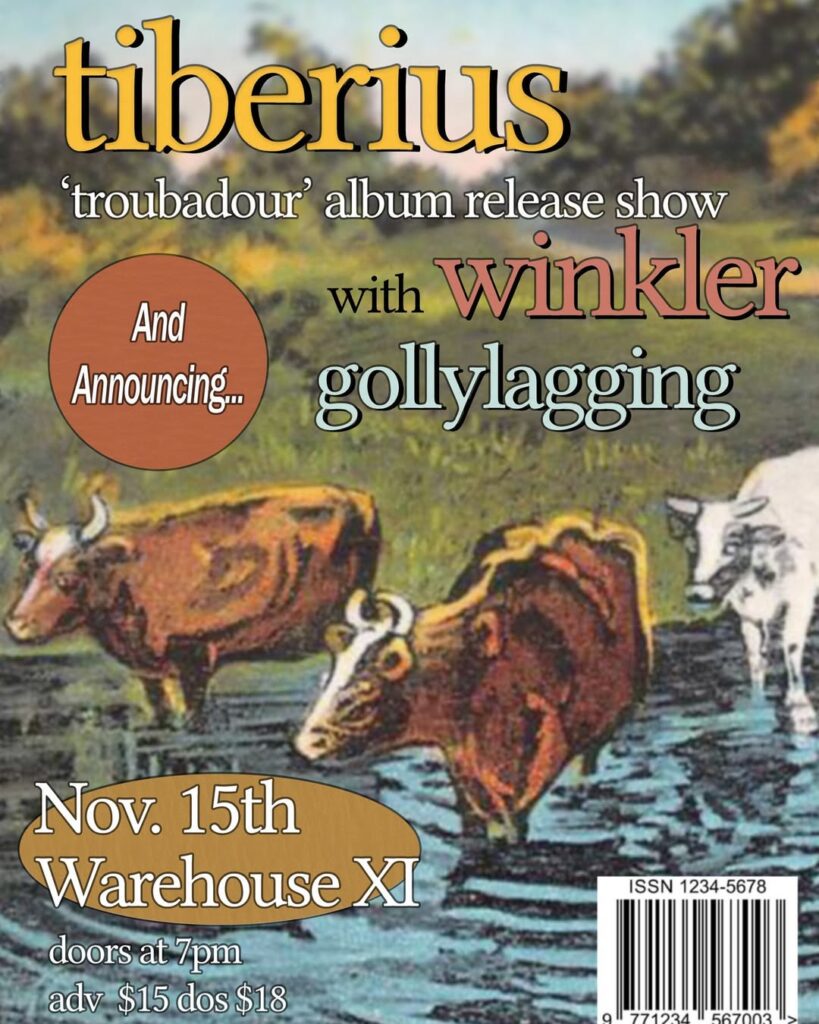
Troubadour is out now via Audio Antihero, you can grab it digitally or on tape here. Tiberius play a record release show at Somerville’s Warehouse XI on Saturday, November 15th with Winkler and Gollylagging, tickets are available here.