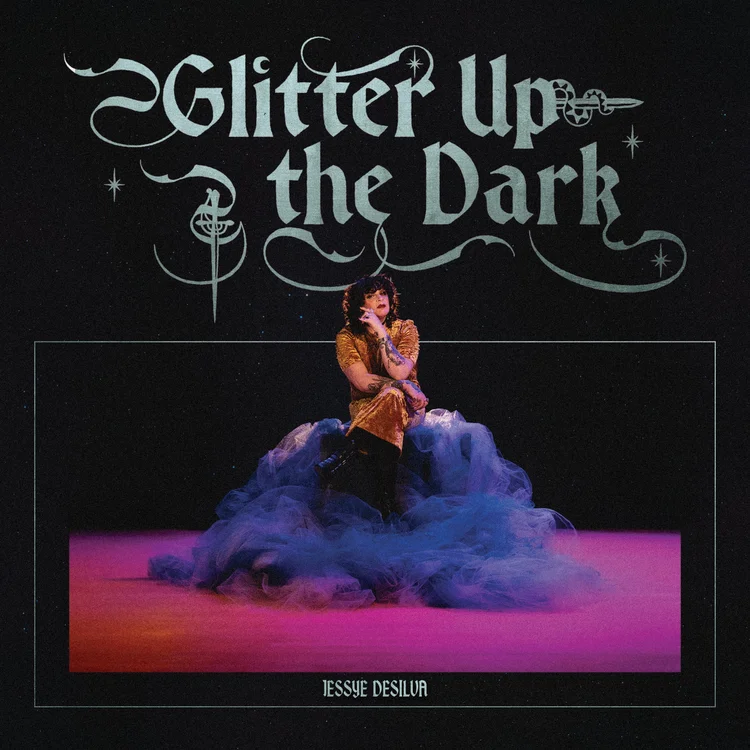
Glam-folk artist Jessye DeSilva has released her third album, Glitter Up the Dark. The musician, who is also a published author and Associate Professor of Voice at Berklee, recorded the album in Nashville with producer Aaron Lee Tasjan (ex-Semi Precious Weapons) and features contributions from Butch Walker, Adia Victoria and Lafemmebear.
“Aaron and I came up with the idea to write an album that would center the idea of joy, in a broad sense,” says DeSilva. “Specifically, the joy of marginalized communities, queer and trans communities, and how that joy is something really powerful as a tool for resistance but also something we need for survival, and something we need to fiercely protect. That doesn’t mean every song is joyful, which speaks to the nuance of what joy means and how joy is something you have to fight and work for. Standing strong in the sense of yourself in spite of the world fighting you on that is a part of joy.”
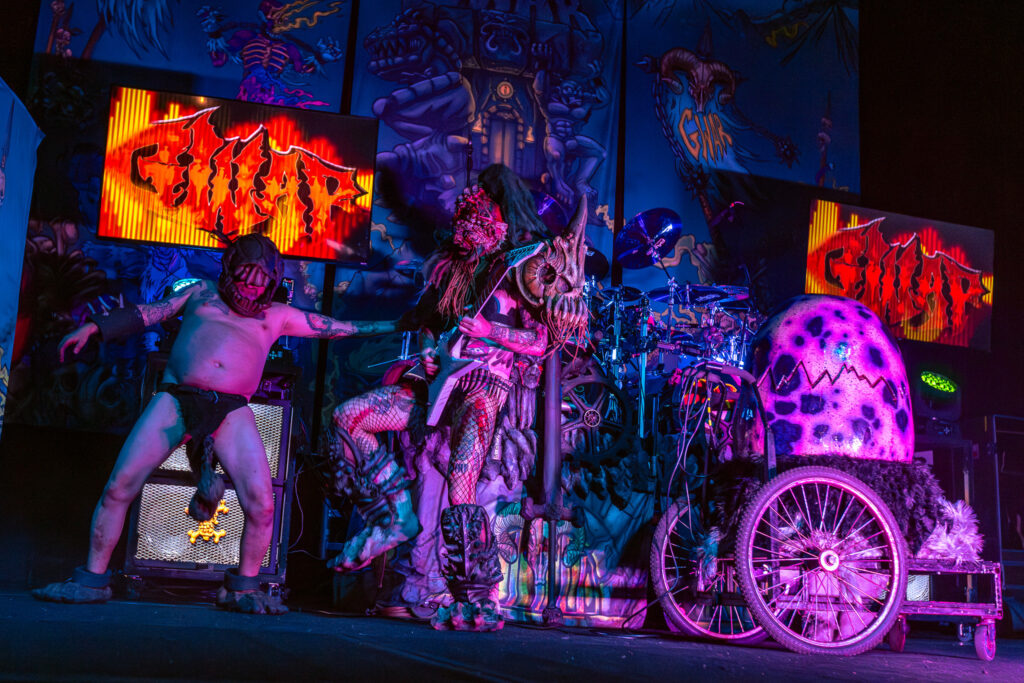
The disgusting, gooey, and abrasive heavy metal art collaborative better known as Gwar descended upon Boston this week, wreaking havoc on their loyal fans. The Gor Gor Strikes Back tour featured new puppets, including a 10+ foot dinosaur that bit several heads off of cast members, and a giant egg. The topical and shock-value laden political skits that are the signature of the group were on full blast: an ICE agent was cut in half, spewing his guts on the audience, and several United States government officials were disemboweled to similar effect. How do they get away with this? It’s simple: they are aliens (yes, from space)! Gwar played many of their hits including “Fuck this Place” and “Sick of You” while the crowd, tie-dyed red and blue in the near-constant stream of liquid crowdsurfed with glee. To the outside, it’s probably hard to see this as wholesome and heartful, but that is exactly the vibe. Not the sophomoric and explicitly bawdy content, but the atmosphere despite it. Fans brought their young children to the gig in matching battle vests and baby-sized hearing protection. Security wore matching (and customized!) white t-shirts just for this occasion. Photographers lent each other rainjackets to protect their gear. There is a lot of community to be found in the soggy pits of Gwar!
Millennials packed into Roadrunner on the 26th to welcome the Format on opening night of their first major cross-country tour in nearly 20 years. Collaborative partners Nate Ruess and Sam Means were visibly emotional at the turnout, thanking fans at multiple breaks in the set. Joining the bill were Adult Mom, and Andover punks Piebald, who got a shoutout for taking Ruess and Means on tour when they were just getting started in the early aughts. Sure was nice of them to return the favor this time around! The band played a selection of songs mostly from their 2002 album We Are The Only Friends We Have, including the always-addicting “American Hearts”. They also teased their upcoming album Tales for the Rages, by playing lead single “Still on the Couch”.
The Format played a healthy mix of hits from their earlier albums including “The First Single” and “On Your Porch”, but stocking it full of new material off of their latest album Boycott Heaven, this tour strikes a healthy balance between nostalgia and, well, Fun. The earnest music is underpinned by some extremely feel-good organizing action as well. Ruess has created supporting events that follow the tour route, bringing together local community groups and fans to register new voters and form coalitions dedicated to making the world a better place.
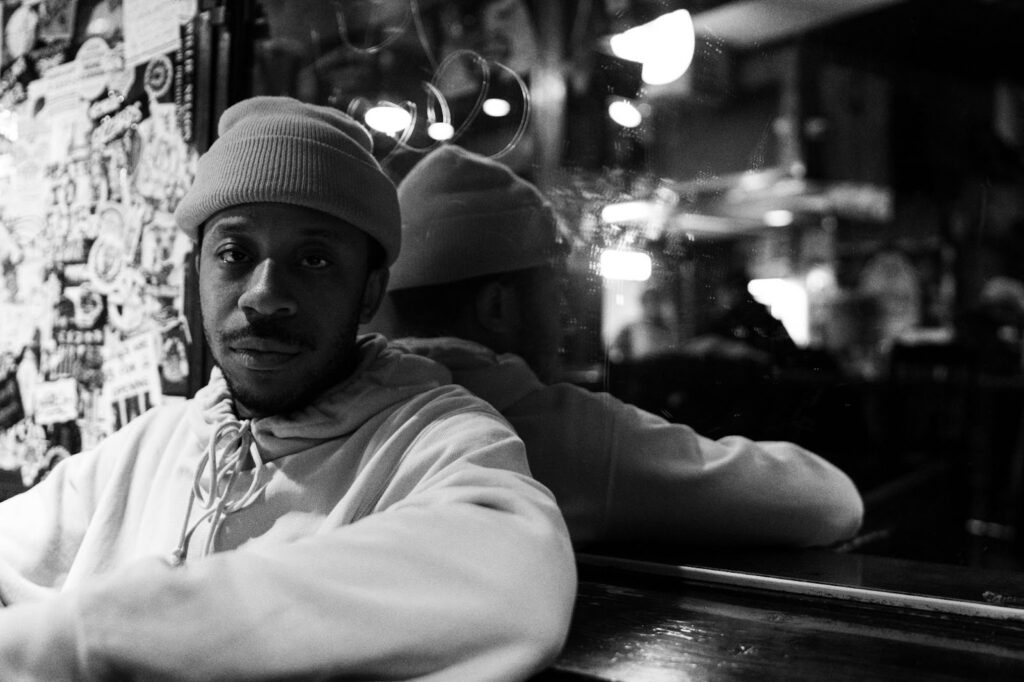
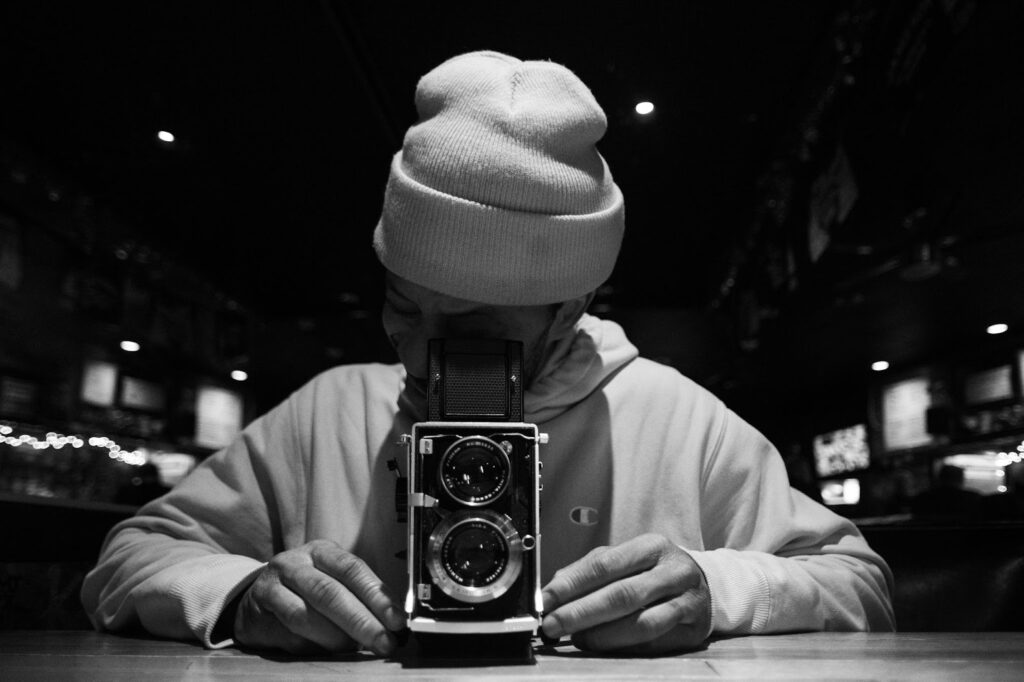
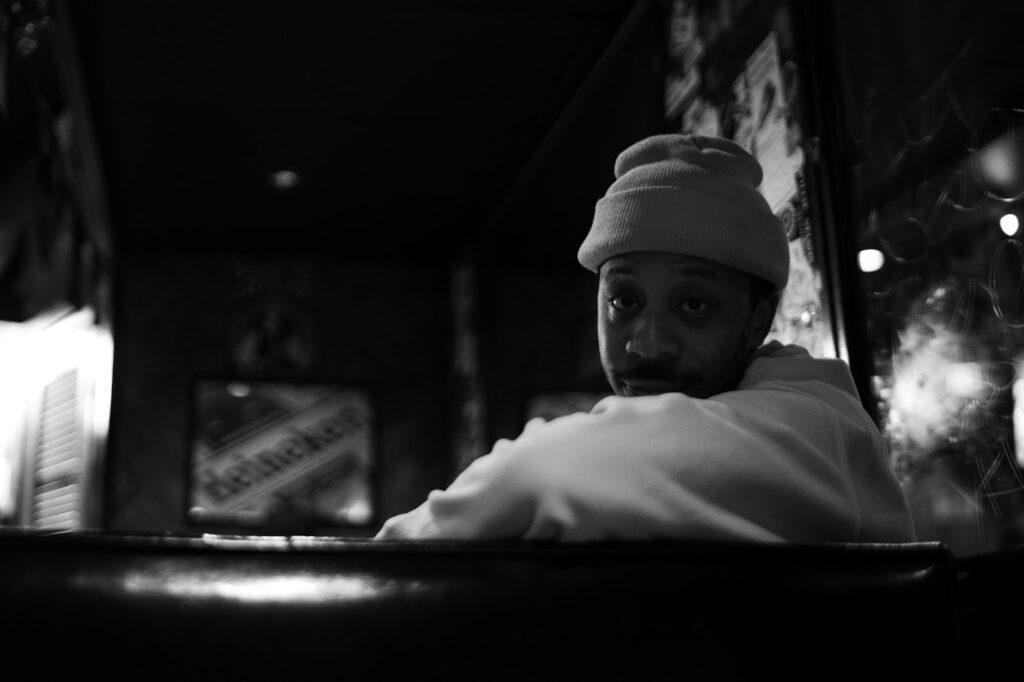
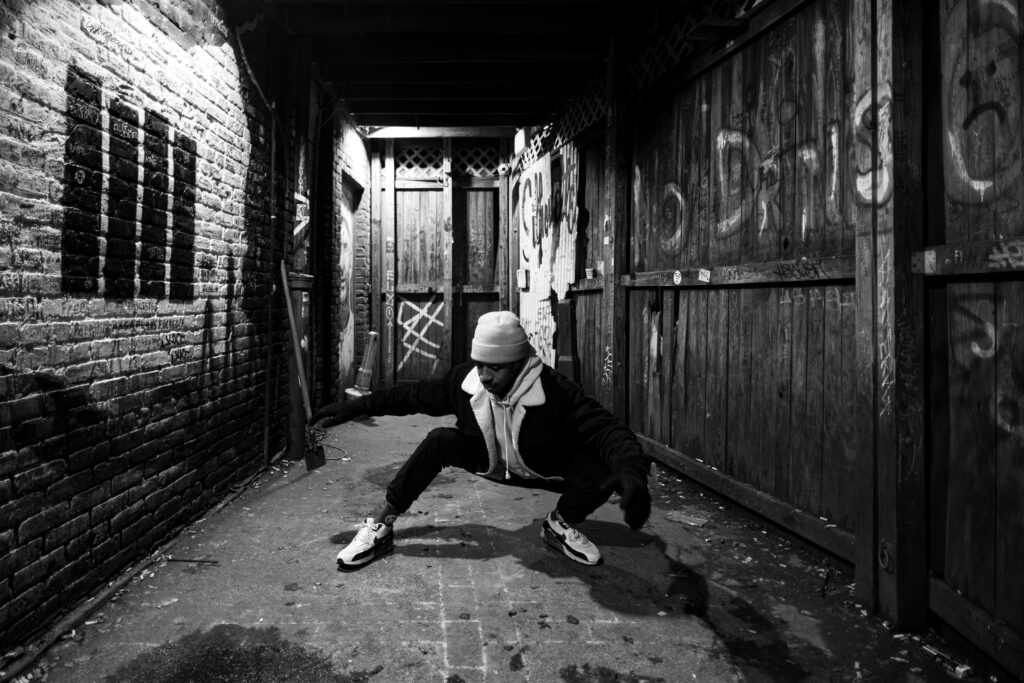
Whoever is on the TouchTunes at the Silhouette Lounge on Tuesday, March 28th has Haasan Barclay and me in mind: mid-2000s hip-hop, death metal, Benny Benassi’s “Satisfaction.” He’s one of those people I know with a music taste as erratic and unpredictable as my own. When we meet around 9PM, we’re in the mood for a chaotic playlist and a few pints. At this point, we’ve known each other for a decade, so he’s used to it when I pull out an audio recorder so we can get the interview out of the way and get to the more important task at hand: chillin’.
His new project, BELL BIV BARCLAY, is a collaboration between his production and the rapping of ET from Van Buren, the Brockton hip-hop collective that has gained a good amount of hype outside of their native Massachusetts. The duo have been on each other’s radar for over a decade. “ I was hip to Jiles and Felix from Van Buren because before they were out as a rap group, they had a publication called One Band and they did blogging,” Barclay says. “They were one of the first people to interview me as an artist back in maybe 2013. So we had that rapport from them.”
“Have you ever seen Coneheads?” he asks me, referring to the Dan Aykroyd movie that spun off from an SNL sketch about a family of aliens with – you guessed it – cone-shaped heads. While it’s not a deliberate reference to ET’s name change from Saint Lyor, it’s sort of a fitting reference. In the movie, Aykroyd’s character takes the identity of a man from Brockton, MA, the home of Van Buren. Our conversations are often filled with the referential nonsequiturs. A big chunk of the audio transcription for this interview features minutes of cut content that nothing to do with Barclay’s music, including a whole section on our mutual love of early 2000s action-adventure movies like Underworld (Barclay) and Van Helsing (me).
More on topic is our talk about New Jack Swing’s underrated influence on subsequent R&B and pop. While a short-lived period – lasting more or less from 1987 to 1993 – it was an important period for the development of contemporary R&B. At the height of its popularity, both Michael and Janet Jackson were using it as a playground on albums like Dangerous and Rhythm Nation.
From my many conversations with Barclay over the years, when I heard the title and concept of the new EP, it made sense. He refers to it as a “transitory genre,” but one that set some firm blueprints in the music industry. It’s hard to imagine the (predominantly white) boy bands of the late 90s without New Edition as the prototype. “The thing with like white takeovers of black R&B,” he says, “it’s usually like 10 years behind. So if you think about it, NSYNC and the Backstreet Boys sounded exactly like [early] New Edition.”
Barclay was barely alive for the tail end of the New Jack era, but he still finds himself drawn to the sounds and personalities of the time. This is due in no small part to the fact that some of the main practitioners of this sound were from Boston. New Edition, one of the groups that helped it take off, were Roxbury natives. “That’s what I grew up with,” he says, cementing that this project is as much about legacy as it is about making tunes. “New Edition went to grade school with all of my aunts. So it was like an intimate relationship there. I also grew up with Bobby Brown Jr. So there’s another level of it there. That’s something I definitely hold with me closely… Boston was racing.”
Many of the songs that ended up on BELL BIV BARCLAY have been incubating for some time. On “Coach,” he pulls a sample from “Roni,” a track from Bobby Brown’s second album Don’t Be Cruel, which was his breakthrough as a solo artist after his departure from New Edition. Barclay first performed an early iteration of the song – or at least a track that also used a chop from “Roni” – at Motivate Mondays, an open mic hip-hop and R&B event held at the now-defunct Church in Fenway. The event was an important series for the area’s aspiring rappers and producers, providing a space to test the waters for developing material and serving as a launch pad for collaboration. Spaces like that have been hard to come by for the local scene, and seem to come and go in a mercurial way.
While Barclay has remained, he’s evolved his sound as an artist and producer over the years in a similarly mercurial fashion. “I’m sitting on gigabytes,” he says as we talk more about BELL BIV BARCLAY, referring to the vast amount of music he has cooked up over the years that he has yet to find a home for. At times, he has to decide if a song is more suited for him as a solo artist or if it will work better with him in the backseat. The latter was the case for BBB when he tapped up ET. One thing that drew the pair together was a mutual love of alternative rock band Ween. “They’re like the Lil’ B of Grateful Dead rock,” says Barclay. “I said [to ET], I have all these ideas I can send you, gigabytes of ideas. And he was into. He just rapped to it immediately.”
In the rapper-producer relationship, the rapper is generally more of the forefront. But a strong producer needs to have the taste and discernment to reel in a track’s loose ends to create something that strikes the perfect balance between appeal and edge. “There are a lot of Canva producers out there,” he says, referring to the graphic design platform that allows anyone to make simple, effective visual content. “A lot of people who would never have been making beats in the 2000s got into it, just because of the popularity of it.” And while we agree that the increased access to simple technology like DAWs, mixers, drum machines, and samplers is overall a good thing (the origins of hip-hop were built on this), Barclay stresses the importance of rappers “having a good team behind them who can do quality control.”
This lead us to the topic of Rick Rubin, who despite producing for some of the biggest artists of the last 40 years, notoriously downplays himself and claims to have no technical ability as a producer. I ask Barclay if he buys that. “He’s just kicking shit.”
BELL BIV BARCLAY is just a tease for now. With gigabytes of music at his disposal, Barclay promises that “there’s more coming very soon. I’m excited. It’s gonna be a fun year, for a lot of reasons.” I’ll update you when he takes me to see some amateur wrestling in Worcester like he promised.
A cold March Monday in Boston might’ve kept some of the throngs away to hear Matt Berninger’s solo tour hit the Royale. For the dedicated, however, it just made the vibe that much more intimate. It was a classic display for the performer and lyricist, better known as frontman of dad rockers the National: Berninger danced, hung his head and crooned while the crowd screamed along. He focused on material off his latest album, Get Sunk, with “Frozen Oranges” and “Breaking Into Acting” opening up the night. He joined the crowd behind the barricade for “Bonnet of Pins”, causing many a boyfriend in the audience to cry (IYKYK). He also mixed in several songs from Serpentine Prison, including “Silver Springs” and “Distant Axis”. Covers of National songs and even a New Order track rounded out the night. He was supported ahead of his set and during by RONBOY.
Check out all of Wendy’s photos from the show below.
Maria Somerville performing at the Institute of Contemporary Art Boston on March 22nd, 2026. Photo by Miguel Gonzales.
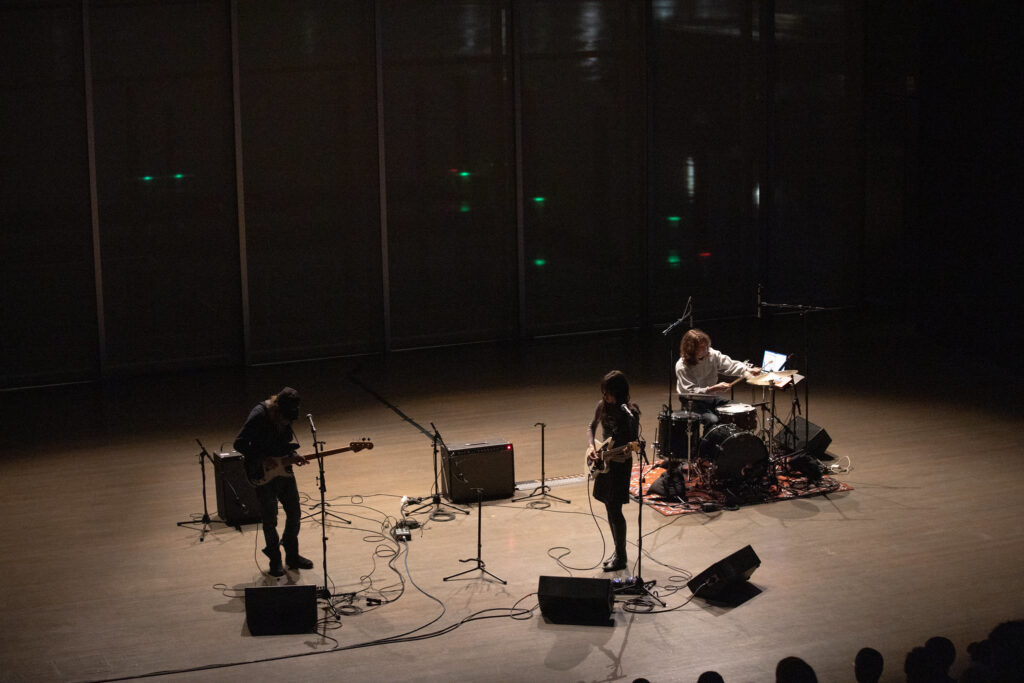
When Maria Somerville and her band came through Boston on a smoggy Sunday after a decent amount of rainfall, they didn’t shy away from delivering a sublime, majestic performance. Coming off of her 4AD debut from last year, Luster, Somerville continues to draw inspiration from her hometown of Connemara, coastal Western Ireland , its Atlantic climate and mountainous environment. These details have been at the forefront in Somerville’s artistic process long before Luster’s release: her youthful experiences in Connemara, the ambient sounds surrounding the region, and its rural quietness. These elements have informed her body of work, making Luster a modern benchmark that fits right in with 4AD’s timeless catalog. The album is an immersive hybrid of hushed ambience, dream-pop haze, thundering shoegaze, and the classically darkened 4AD sound. Four years after Somerville released 2019’s All My People, Luster feels patiently crafted and fully lived in.
As people wafted through ICA’s spacious 325-person Barbara Lee Family Foundation Theater, the audience made their way to their bright orange foldout seats. Colle, the experimental pop solo project hailed by New York singer-songwriter Maya McGrory who makes up one-half of Chanel Beads, started off the evening around 8:05 with a 30-minute set swarming with dreamy soundscapes, ethereal guitar tones, soaring vocals and trip-hop percussion. You can’t help but bop your head to the floating synth leads and relaxed, downtempo breakbeats Colle conjures up, as she wields her guitar strumming some gossamer chords that swell and vocal deliveries that soar. It feels like tunes you drift into the blurry night – fitting, especially when the night sky slowly dimmed to a hazy black in the middle of McGrory’s set.
While Ellen Arkbro’s CHORDS soundtracked intermission as peripherals gazed along the curtain-covered windows facing outward toward the Boston Harbor, Somerville and her band came on around 8:45 as the lights slowly dimmed to a barely faint white. What resulted was a 50-minute whirlpool of sounds that filled the warm acoustics of the wide theater. Playing songs mostly from Luster and a few earlier cuts, Somerville’s sound dynamics completely absorbed the audience. While a heaping murk of fuzz from Somerville’s guitar pierced outward from her amplifier, a deep basstone with the slightest cymbal taps is an example of how peculiar they are in experimenting with volume. Going from the overwhelming fuzz to a droning bass hum paired with a subdued synth pad and environmental field recordings minutes later feels like the giant release Somerville and her band are great at doing – playing with the space and acoustics they surround themselves in while balancing density and restraint.
The emphasis on space and environment resonated with me after Somerville’s performance. So much so, I allowed myself to feel the heaviness of the gusty breeze and rainy aftermath once everyone flocked out of the theater and went out into the dark, clouded climate. A dose of tuning into Somerville’s set never hurts, especially when you learn to appreciate the walk home ahead in a brooming rainstorm.
Check out all of Miguel’s photos from the show below.
March 21, 2026. Joyce Manor at House of Blues. Photo by Cam Cavagnaro.
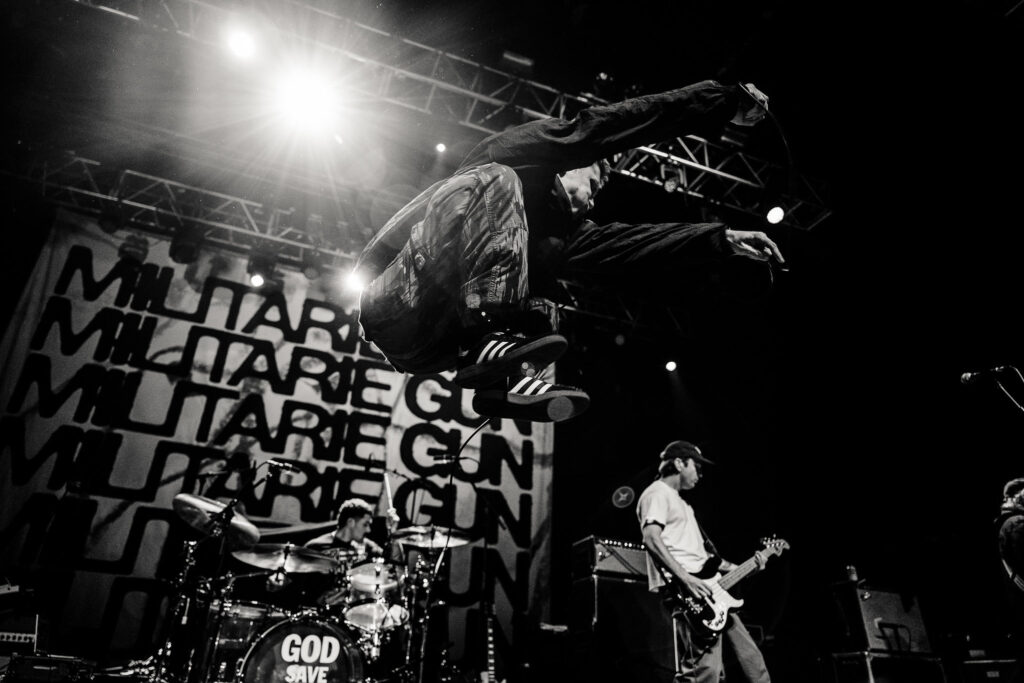
Joyce Manor stopped in Boston on Saturday for not one, but two performances – first to connect with the community (alongside Nate Ruess and Sam Means of The Format), and again later that evening to celebrate the release of their seventh studio album, I Used to Go to This Bar. Their new album was released in late January on Epitaph Records, and the band is currently on tour with Militarie Gun, Teen Mortgage and Combat.
Joyce Manor’s career has ebbed and flowed over their 18-year tenure; even their past three Boston appearances have fluctuated between Roadrunner, Royale, and now the House of Blues. Regardless of the venue, Boston shows up and supports the band as if they weren’t from the opposite corner of the country. It’s hard to deny the tenacity of a band that writes the music they want to write, even seven albums later. Joyce Manor has had plenty of chances to sell out over the years, but they have proven time and time again that they don’t care about the fame, they just want to play their music to the people that enjoy it.
For some bands, it’s a tough pill to swallow to return to your earlier catalog – not Joyce Manor. Their eponymous debut LP is often heralded as a fan favorite, so the band continues to play the songs they know people want to hear. They came onto the stage with minimal fanfare and immediately ripped into the album opener, “I Know Where Mark Chen Lives,” before traveling right back to their first two albums with “Falling In Love Again” and “Beach Community.”
Militarie Gun opening the evening at House of Blues. Photo by Cam Cavagnaro.
It’s hard not to notice the brevity of Joyce Manor’s songs, which lends itself to long setlists (on paper), but they truck right along in practice. Twenty-four songs may seem like a marathon set until you realize it’s only been 45 minutes! The band was able to play nearly every song from their new album plus 16 others from the rest of their discography – including a special live debut of “Angel in the Snow” from their 2016 album Cody, featuring a guest appearance from Nate Ruess, following their “Saturdays in the Park” event earlier in the day at Boston Common.
Joyce Manor continue their headlining tour across North America through May before joining Hot Mulligan on the road. The band will also be back in Nashua, NH on June 6th for a one-off show with Saturdays at Your Place and Koyo! Their new album, I Used to Go to This Bar, is out now on Epitaph Records.
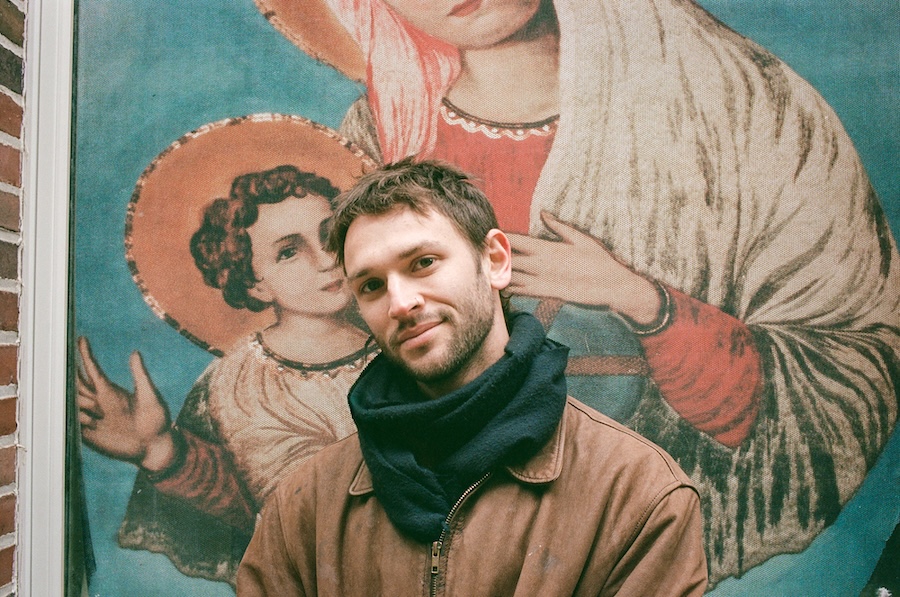
Singer-songwriter Cole Triedman, best known as the fronter of Somerville scallywags Fortuna 500, has released a new EP titled Breadt under his Mozz solo-shingle.
In addition to previously heard single “Another Day (of Heavy Rain),”the EP includes four tracks of painterly folk. Though on its face Breadt presents like a well-loved porch swing (indeed, its opening track “Oscar Nominated Short Film” was recorded on Triedman’s porch), the recording is of extraordinary fidelity—every banjo pluck and harmonica bellow from Mozz sounds as warm as a late-August night.
Recorded in a makeshift Brooklyn studio, the EP was mastered by Patrick Murray (Dogwood Gap) and Julian Snyder (Otis Shanty, Fortuna 500).
Breadt is available everywhere now. Find it at the link below or on your service of choice.
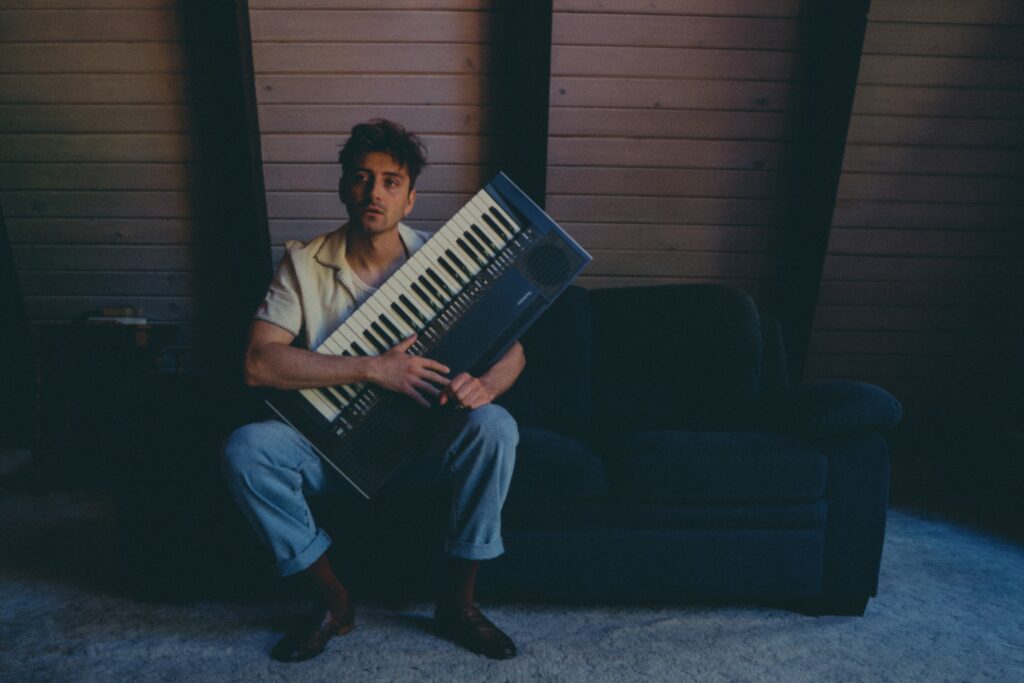
Mass indie rockers Spirit Ghost have been at this for a bit. Originally started as a bedroom-oriented songwriting exercise in 2012 by band principal Alex Whitelaw, the group has morphed a few times (across a few different area codes) into their current phase as of Boston’s must-see live acts. Psych rock, country, krautrock, surf: each and every Spirit Ghost could offer you a different flavor, but its Whitelaw’s playful-yet-exacting songwriting that binds it all. Now backed by members of virtually every other sick band in town, their third LP Ordinary People (out today via Austin label Happen Twice) is their strongest, most musically and thematically cohesive collection to date. We hopped on the phone with Whitelaw recently to chat about band history, basement recording, and the slow-but-steady unthawing of Boston’s icy cold heart. Hit play on the stream and read on for more below.
Allston Pudding: So this band has gone through a few different phases and locales. Can you give us a shortened history of what’s lead to here?
Spirit Ghost: So it started out as just me writing a bunch of songs in my room as an outlet so I didn’t have to wait for other people to teach drum or bass parts or whatever else, I could just do everything myself. I ended up really liking that process, but I still wanted to play live shows, so I met people in college out in Western Mass and eventually started playing house shows with them.
Then I moved to Austin, Texas and had a run there for like a year and a half, two years where we were actually able to play before COVID. Then COVID kind of shut us down so I moved back up here like three years ago, which kind of started the current iteration of the band, including Joey and Corey. I’m from Massachusetts originally though, right outside of Providence, but on the Mass side.
AP: So what is it about this particular lineup that you find inspiring?
SG: Everybody in the band now is really good at supporting the vision. I still do a lot of the main writing or the bulk of the songwriting, and then everybody is just really good at just like embellishing their parts, or coming along and making sure the live show is very fun and engaging and entertaining. Also they’re all just kind of a good time. They’re just really good, solid people who get how to just support a project and kind of bring it to life in a way that I could not do alone. So it’s very nice that I have them.
AP: Joey and Corey especially being in like a million bands makes sense, they seems like people you can lean on.
SG: Yeah, but they never let scheduling get in the way, like I’ve had people who are in a million bands, but then they’re like, I can’t do that one because I got another show that night. Whereas Corey’s will be like “I’ll play a million shows every day.” Which is huge and nice for me because I don’t have to miss opportunities.
AP: A Spirit Ghost set kind of falls into a few sort of distinctly different modes, is that something you find yourselves fitting around a bill or is it just a matter of how you’re all feeling on any given night?
SG: To be honest, it’s usually my call as to whether or not I feel like shouting and giving a bunch of energy or I feel like kind of singing or kind of doing a more laid back thing. I think it’s also just a function of us having a bunch of different influences. Sometimes I want to do like old country stuff and I don’t want to do the psych stuff anymore, or sometimes like right now I’m in like a big mood where I kind of want the live show to be a “live show.” So we’re doing like a lot of improvisation and a lot of embellishing on songs to kind of expand them out and make it more of like an event for people rather than just like a local band gets on stage, plays a song, stops, talks, tunes, plays a song, stops, talks, tunes etc. Like it’s been nice to kind of craft what you want a show experience to be for people in the audience.
AP: When did you start putting together the songs for this album and how much have they changed in the time since?
SG: The first single I wrote like in 2022. So that was like my first thing I think I wrote. I also kinda took two years off because of the pandemic and then some personal stuff kind of just really took it out of me, so I didn’t really care about music for a little bit. So all of these are like the songs about processing pandemic stuff and processing personal changes and things that have been going on in like my life. It feels good to be playing them with the band now, but they haven’t changed too too much.
I don’t know, I typically write songs over the span of a year or so and then I feel like whatever I have laying around, it’s time to shape that into something. It’s nice that this most of this batch happened to fall into a similar theme.
AP: Are you someone who puts things aside to revisit or makes older things fit into what you’re tinkering with, or are you more of a “I’m writing for a specific thing” type of songwriter?
SG: I can’t entirely control it. I have a practice in place where like I will definitely make an effort to grab my guitar and kind of strum it and then hum something and then typically if I like that thing and I want to have time to demo it out, I’ll demo it out, but that comes and goes in spurts. I’m trying to be better about doing it more often, but then I feel like I just end up getting frustrated because I feel like I’m forcing myself to do it and then it becomes not fun. I think you’ve got to like hold it loosely, whatever the fucking process is for writing.
But no, usually I feel like if I write something and I don’t like it, I’m pretty bad about coming back and tweaking it until I like it. Usually if I’m not excited about an idea I don’t want to finish it.
AP: Bedroom pop was sort of the jumping off point, but I feel like you’ve managed to slide a lot of different influences into this project over time. Is there sort of a conscious effort to progress, you know, on what the idea of a spirit ghost song is or could be?
SG: I’ve never really entirely been worried about that at all and I think I would get very bored if I only played a very particular type of music. Sometimes I want to write something that’s a little more punk-influenced, or country, or psych, or whatever else it might because it just feels fun to lean into the tropes of that style of music. An exercise that’s fun for me is asking myself how well can I imitate a songwriter that I love, and then inevitably you fall short of imitating that songwriter, and then you kind of just make something else entirely in that failure that’s maybe more interesting.
AP: That makes sense, Spirit Ghost is definitely not a “genre band.”
SG: For sure, which is sometimes an interesting challenge because it’s always funny to try to find people to play with. Like “could we play a show together that’s not totally disjointed?” I think it comes back to that thing of like tailoring sets. The set we would play with, say Balaclava is not necessarily a set we would play with like another band that’s like maybe a little more classic rock or garage it. We always have that heavier set in our back pocket for shows depending on the vibe of the night for that reason.
AP: There’s more keyboards and other richer instrumentation here on the new album than on your prior more solo-oriented efforts. Is that simply just a function of the types of songs you wrote for this, or is it more of a conscious desire to expand your sound palette?
Spirit Ghost Record Release Tour Flyer
SG: I think it was a conscious thing. I taught myself how to play keys over the course of these last four years kind of out of necessity. I was recording with my other band when I realized how crucial keyboards were in tying things together and making the music seem a little more connected. Also, I had been writing guitar music for a while and I was kind of getting bored of thinking of everything in terms of guitar lines, because there’s always like shortcomings to a guitar line. Things might sound better with like a string synth or something more robust. So I bought a string synth and became obsessed with it for a year and a half and I feel like I was writing everything on it for a while.
AP: Assuming you recorded this at the home studio from the video sessions and all that, how do you get such a rich sound from a basement setup like that?
SG: That’s all Joey. He has been doing it for a long time and is very dedicated to making stuff sound good and he has all of his tricks. If you ask him, he would probably say it doesn’t sound as good as he would like it, but I think most people who have heard it or who have heard things that he’s done in that basement will be like “it’s fucked up that it sounds that good” with his fucking mad scientist way of setting stuff up.
AP: Do you feel like you’re playing on the record is sort of influenced by that space?
SG: Yeah for sure. Again, just to like gush about Joey, it’s been very nice for the first time in kind of making music as a solo person, having a collaborator like Joey who also plays in the band. I can kind of hand things off to him and let him be creative on certain things, so it’s a luxury that he is in the band and he’s as good as he is at what he does because it just allows me to kind of be more nit-picky than I’ve ever when it comes to recording. Like “I just don’t like like my inflection on this one take of this one specific part, can we just do it like 20 more times?” much to maybe his dismay at times, but he will humor me.
AP: Would Spirit Ghost ever be a studio kind of band, or have you grown comfortable with how you’ve done this record and past ones?
SG: I don’t know. It’s one of those things of I’m always kind of weary of sounding too polished. So I don’t really see the point in a studio. Plus you hear stories of people getting advances and then spending like $10,000 to record a record and being in debt to the label for the rest of their lives. At the end of the day, I’d rather give money to Joey so he can buy more gear so we can do things on our own terms. Right.
At this point, Spirit Ghost feels very insular in a good way, we kind of have our own thing going on with our operation in that we feed off of each other and it feels very good. So we don’t really want to muddy that up with like other people.
AP: Happen Twice has kind of become a pipeline between Boston and Austin, then yourself also being sort of one in a way as well. How did they get involved in the release of this record?
SG: That was through Jon Wallis from Jonny Tex. I think he had been talking to Chandler (who runs the label) about us. Chandler also knew about us from when we were in Austin so there was some crossover. Joey and I had already decided we were going to record and release it ourselves, and I had honestly been on the fence just because I was in a really good state of being like “I don’t fucking care if anybody wants to put this out or cares about it. I just want to make and release this music.” Very much about getting back to the joy of making music, but then when Jon kind of talked to me about Happen Twice and encouraged me to reach out, and then Chandler was so responsive and easy to work with that it sort of changed my mind on the whole thing.
It was just a totally different experience compared to the last one where we tried to do the label thing, and nobody really gave a shit about it and I felt like I couldn’t get anybody to care which was the thing that just like burnt me out of music stuff for so long. So in that sense, working with Happen Twice was just like a breath of fresh air. While I love doing everything myself and have always operated that way, it’s been nice to have some people supporting for once.
AP: How does living in Boston, or least identifying as a Boston band, influence this project?
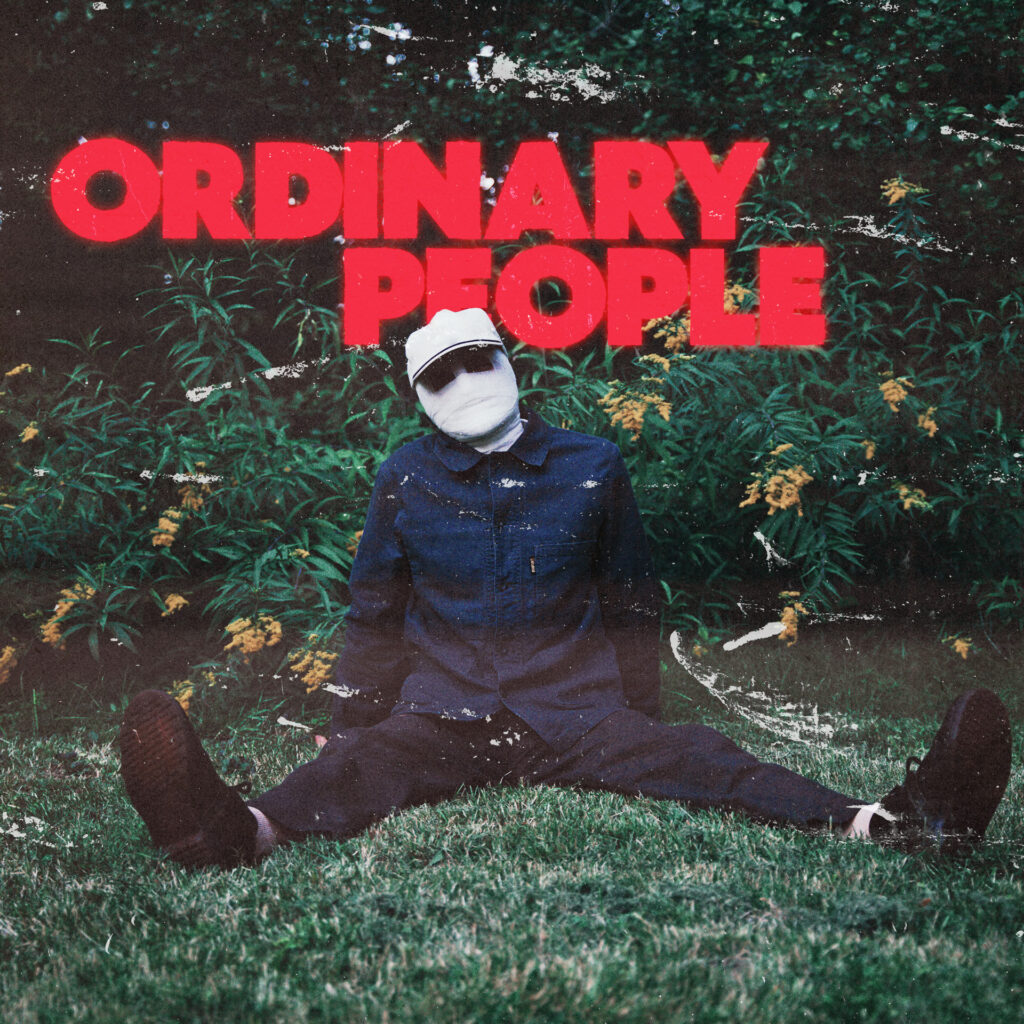
Ordinary People Album Cover
SG: I’m not entirely sure. I’m still kind of figuring that out just because I have my own misgivings about Boston and the Boston music scene in particular and how I kind of don’t think things should operate the way they do. Especially having gone to Texas and being like “cool we do actually operate in Boston in like a psychotic way.” That said, it’s gotten monumentally better, it feels like we’re getting back to something sustainable. But when I left, or really one of the reasons why I left is I just didn’t like feeling like playing one O’Brien’s show a month was going to cut it for me personally.
I think it’s one of those things where you have to build it and people will come. I think if more people would just play more shows and book at more venues and put on more shows and people would have more things going on, more people would be here who want to go to more things. But I think everybody’s kind of scared. There’s a there’s like a scarcity mindset in Boston that I think really hinders us. But again, that seems to be getting better. Winkler is awesome, all these newer bands that are here now are awesome. Black Beach has been here forever and they’re awesome. Deep Cuts is a great new venue. O’Brien’s has been holding it down for local bands for a long time, Brighton Music Hall even, I know you guys just did your thing there.
It feels like all this infrastructure is popping up again that did not exist before I left. And I think that’s why I left, because it felt the powers that be didn’t really have their fucking ears to the ground, and it seemed like all the same bands would get into the same things over and over and over again. ah So it’s like nice to have some a youthful vibrance in Boston right now that I think is really cool.
AP: Yeah, there’s definitely an upswing occurring right now that feels exciting.
SG: I’m walking around right now and it’s fucking freezing, so I understand that it’s never gonna be this cultural hub based largely on pure anger of the cold. At the same time, I went to Chicago and I feel like that was eye opening for being like “oh you can be like a cold, miserable city and still have like a thriving music community.” That said, Boston seems like it’s fixing itself, it seems like things have drastically improved, people are actually coming back and staying here.
AP: What’s next for Spirit Ghost?
SG: I’m not sure right right now. We’re just like going at a steady clip, we’re excited to host the release party at Warehouse XI, and then we’ve got a big tour in June where we’ll be going up to Canada, popping over to Chicago and hitting a couple of other places along the way. Hopefully from there we just keep building out and going on more tours. This next year is gonna be very busy for us, a lot of playing out. Hopefully I can write another album this year and get on a steadier release schedule than I have in the past, that would be nice.
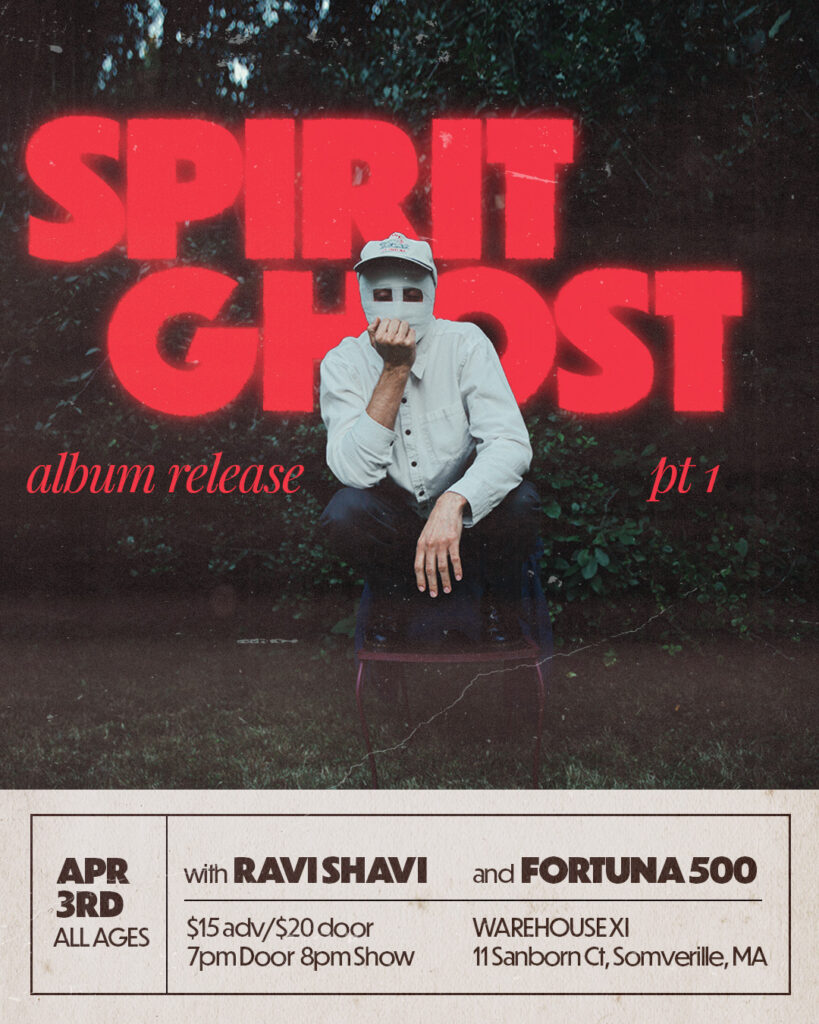
Ordinary People is out now via Happen Twice, you can get a copy here. Spirit Ghost’s record release show is at Warehouse XI in Somerville on Friday April 4th, tickets are still available.
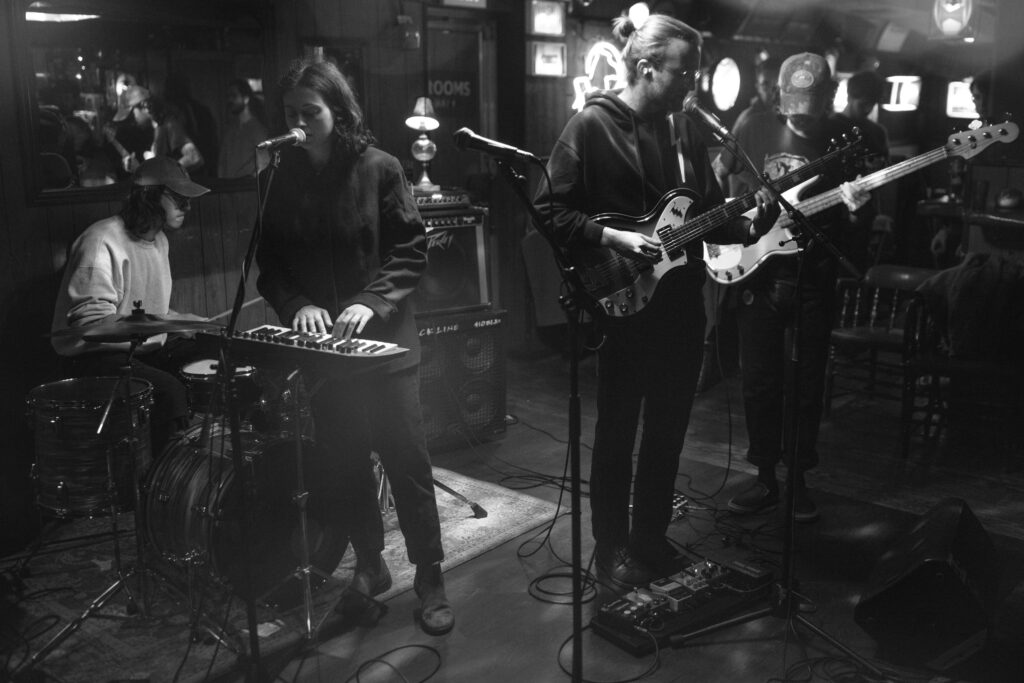
Originally a clearing house for former Squitch fronter Emery Spooner’s teenaged demos, Night Moth has since metamorphosed into a full band with its own sonic identity rooted in the group’s deep friendships. Joined by Squitch’s Denzil Leach and Kit Malmberg alongside Clifford’s Miles Chandler, Night Moth is something like a supergroup for people who religiously read this website, and their debut self-titled full length is out now on friend of the blog Worry Bead Records. Now split between three different cities (and two time zones), Night Moth is equal parts an opening salvo and also a bookend to a period both emotionally fraught and beautifully transformative. Putting aside (some) of the constantly shape-shifting musicality of their prior project for (somewhat) more plainspoken written and musical language, Night Moth is a heart-rendering step forward for one of our city’s finest songwriters.
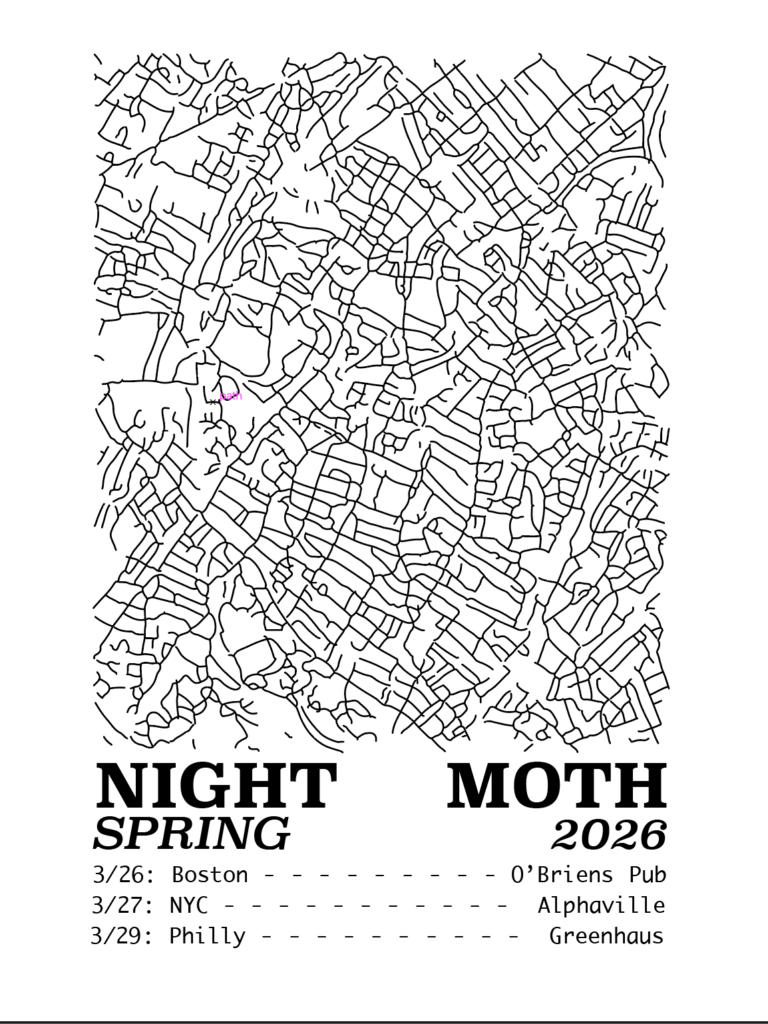
Night Moth heads out on a record release tour starting tonight, so we sat down with Emery ahead of that to get the scoop, hit play on the stream and read on for more below.
Allston Pudding: Night Moth existed concurrently with Squitch, do you see these songs as a continuation of the spirit of that project or something more distinct?
Night Moth: Night Moth started as really just a Bandcamp for my demos when I was 18-19, and became the project where I tried out new songs performing solo before fleshing them out with the bandmates.
The new record feels like a chapter in the Night Moth arc – a name and project that will stay with me through different iterations of bandmates, arrangements, fast periods and slow periods. That being said, of course this record would be nowhere near the same without the collaborations with Miles, Denzil, Kit, Seth Engel (Options), and in early demoing days, Will McGovern (of Ribbon/Tiny Deserts).
AP: How long have these songs been gestating, and how much have they changed in the time since? Both musically and to you personally?
NM: I wrote the oldest songs in Fall of 2022 while living in Western Mass and then with my parents in NH for a few months. I lost a dear friend during that time, and I also sort of hit mental rock bottom in a few ways. That’s when I wrote Truly, Nothing Left/Sun Tricks, The Game. You can kind of hear it in the lyrics – I was being extra hard on myself. Writing those songs actually kind of helped me see that – I needed to be kinder to myself to really move forward.
Hearing that inner critic come out in those songs was hard a year or two ago, but now in 2026 I have a lot of compassion for the many versions of myself that have existed since that time. The other songs are a bit more hopeful in nature and political thematically – those feel re-inspiring to listen to and reflect back on as time has passed (and share with the world, finally!!)
Night Moth tour flyer by Miles Chandler
AP: Tell us about recording the album/the space it was done in since it’s kind of a unique situation
NM: Yes! Seth Engel floated the idea of doing a recording tour in Dec ’24 and we jumped right on that. He had a few other bands interested in recording and we brainstormed where we could possibly post up for 4-5 days to track 11 songs. Luckily the sweetest people in the world Nico, Bella and others live in a loft space in Charlestown with big ceilings and the roomy sounds we were looking for. Seth packed up his mobile recording rig and drove all the way here from Chicago 🙂 Seth truly did an incredible job and re-amped all of our guitars in the big open space (and later, our vocals!) to really cement the live feel. Could not be happier.
AP: A lot of these songs reference labor/worker’s rights and I know you work in a similar vein, tell us about how your profession influences your art?
NM: I first started organizing in 2021, and in the last year I’ve become a staff organizer at a nurse’s union. I’ve always loved this kind of work, and doing it full-time is really really inspiring. I get to see regular ordinary people come together and accomplish seemingly impossible tasks, like striking 2000 workers, winning a union for the first time, and build a work culture based on solidarity and trust in one another. This work keeps me hopeful, inspired and staves off the depression that living among such division, racism, and austerity can create. I think it keeps me really grounded in what’s true and what matters. I hope that’s clear in the songs.
AP: It’s basically impossible to make apolitical art and anyone that says so is, to borrow a phrase from the album, a coward, but some of these songs are pretty succinct in their targets, how do you write in such a pointed way while avoiding being corny?
NM: Well I appreciate that you think it isn’t corny. I really just try to write from my own personal emotions. Whether it’s personal heartbreak or an expression of political hope or anger at a specific system or situation, if you access your own feelings and write from that place – I think it’s less likely to be corny. It’s a bit hard to describe. I also think, if you connect to and believe in your own songs, it comes across as more genuine and therefore less corny. That’s the best guess I got.
AP: Musically, this record is kind of simultaneously more and less complex than your prior work, (I’m thinking specially about that quick turnaround on “Like The Hills”), and more inclined to let one idea breathe. Is this a reflection of your progressing musical tastes or voice as a whole?
NM: Since we stopped trying to be or do a certain thing after Squitch retired in 2023, I think letting one idea breathe without forcing it to move into another part became easier. If the song has said and done what it needs to say and do…. Where else could I even bring it?
But of course some songs have more to say, and more twists and turns are appropriate to compliment the message and emotions contained within the song.
AP: How much do these songs change to you playing full band versus the solo shows?
NM: The core stays the same, the magic of my bandmates bringing the goods to life is just the best though.
AP: This now being a multi-city band how has your relationship to Boston changed?
NM: Miles and I are still in Boston, but I think this city has become a bit of a home base where we come back together. Kit and Denzil are both originally from within an hour of Boston so it only makes sense. Even though I haven’t left it feels more nostalgic of a place than it used to.
AP: What’s next for Night Moth?
NM: For now, this run of March shows! After that I’m just not sure… but I do love hearing peoples’ thoughts and connections to this record. It’s the happiest I’ve ever felt with a finished album before! I hope people find something in it they resonate with and find some joy in sharing it with the people they love.
There will certainly be more albums. Timeline, lineup, arrangement, genre… We shall see!
Night Moth is out now via Worry Bead Records, you can grab a copy here. Night Moth’s record release tour starts tonight at O’Brien’s Pub in Allston, tickets are still available.