INTERVIEW: Pinegrove

EAD_2245

Evan Stephens Hall is standing on top of America when he picks up.

“America” in this case might just be a painted map of the United States on a playground where his band Pinegrove is shooting their next music video, but the singer/songwriter recognizes the fitting setting in discussing the globetrotting year he’s had on the back of the band’s debut album, Cardinal.

I’m calling from the roof of my apartment, the neighbors’ azaleas staked out in a corner opposite a few yellowing bottles of beer that were emptied long before I moved in. It’s where I listened to Cardinal for the first time months ago and many times thereafter, yet it feels like the kind of roof that would weave itself into one of Hall’s stories after Angelina’s done washing her windows or when dancing in the living room dies down at the end of a night.

We end up talking a lot about the minute, yet sprawling details in Cardinal and the intentionality layered underneath, which Hall attests is something he’s had to think a lot more about since the album arrived. Pinegrove works best when the simplicities are addressed first though:

  • They’re alt-country or emo or some amalgamation depending on the listener.
  • They write about love, friendship, hometowns, and wanderlust like many before them, but with a level of detail that sets them apart from most of their peers.
  • They also write about toast like few before them, no question.
  • And sure, it makes little sense how New Jersey could be home to a singer with such a deceptively Southern twang, but there’s no way Pinegrove could work as well without him.

The seemingly mundane details are never a bore in the Pinegrove universe; it’s in these average frames where Hall creates compelling miniatures of America in a time where most would rather avoid analysis of their own country. Ahead of their sold out show at The Middle East on Sunday, we discussed all this and, literally, a bag of chips with Evan Stephens Hall upon his return from the UK after the band’s first solo tour abroad.

Allston Pudding: So how was the UK?

Evan Stephens Hall: Really good! The audiences were extremely attentive, maybe even a little quieter in general than American audiences. They were not singing along, which I kinda like!

AP: Why’s that?

ESH: I have a habit of going off-script melodically speaking live and one of my favorite things to do is to stretch out the parameters of the song with improvised melody. Maybe I had a bit more leeway over there… or also, since it was my first time out there, everyone was just shy?

AP: So in general, you’d prefer no singalongs at a Pinegrove set?

ESH: Well… I feel a little conflicted about it. With the full band, it’s pretty much fine because it’s louder, but I sometimes play a little quieter when it’s acoustic. On one hand, [singing along] is a show of support and community. When they sing the word “I”, they mean themselves; when I sing the word “I”, I mean myself. Logistically though, like I said, I just really like improvising vocally. When I do that, people are still singing along to the recorded version, which, yes, I acknowledge is the definitive version. But to me that’s just one iteration of it, the way I happened to sing it that take; the songs themselves exist in a little bit more of an abstract way. Which, by the way, is acknowledged in copyright law.

AP: [laughs] So it’s a matter of testing the boundaries of copyrights in that case?

ESH: Yeah! [laughs] In a way, it comes off as a slightly rude or antagonistic gesture to change the melody up on people when there are a couple hundred people that just want to sing this line with me and I sing it differently, but that’s not something I intend to do.

AP: I can kinda see both sides of it when you put it like that. In terms of the American shows, you guys got a lot of hype from SXSW. Would you say SXSW was more business or pleasure on your end?

ESH: [laughs] Well, SXSW is a maniacal clown car of rotating casts and it’s all crazy bullshit. Let me preface that by giving you a quick rundown of what our schedule was like. We were there for three days, arrived the first night at 5 PM, and then somehow proceeded to play four shows after that. Not even in a single day, just one night. That was wild and cool, but I was just so burnt out. And I’m really susceptible to sunburn, even though I prepared! I definitely lathered up, but no amount of sunscreen could have prepared me for what I endured.
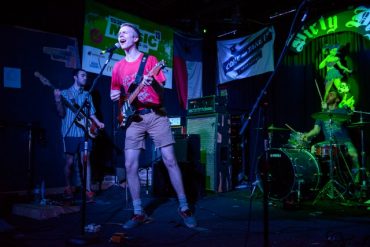
“I’m trying to capture the messy, emotional phenomena of being a human compressed in a simplified and engaging way. That’s sort of a mission statement for us, right?”
Jonah Rosenberg/Stereogum

Credit: Jonah Rosenberg/Stereogum

AP: I also heard you went around one of the days with a pizza box full of your records… did you sell any?

ESH: [laughs] Alright, that is a little bit wrong and a little bit right. The way our label [Run For Cover] packages the records, they’re in a big box in groups of ten and each group is housed in a small record box. So no, it wasn’t formerly a pizza box, but we almost sold one to a person at a bar! A total stranger! They almost bought one based on my persuasive reasoning skills, like, sight unseen. It turns out they didn’t have enough money, but they did buy me a beer!

AP: Okay, so there was some pleasure with the business! Let’s shift across the country and talk about Pinegrove’s hometown of Montclair a bit. Between you guys, Forth Wanderers, and Tawny Peaks, I feel like I’ve read a lot about Montclair bands taking emo and pushing it into different directions, but I just don’t view any of those bands in a strictly emo light. Would you say there’s a “Montclair sound” in any way or is it all diverse?

ESH: I think there’s been a big handful of skilled, melodic songwriters from Montclair, so it’s a honor to be associated with all those bands and bands like Cold Foamers too. All these bands are kind of from different time periods of Montclair, but a lot of our first shows were at this thing called The Serendipity Café, which was this monthly event that showcased local bands through an organization of students and one very helpful chaperone. Having something structured like that influenced the scene in a big way; there was a reason to rehearse, a reason to have band practices after school, and a place to play.

I think [the diversity in sound] is definitely true, but I also think there are common threads. [Songwriters out of Montclair] are pretty lyrically driven; they’re somewhere between happy and melancholy, between being kinda energetic and kinda stoney.

AP: I feel like Cardinal has a notably strong sense of narrative and detail while covering very familiar topics: friendship, love, death, struggling with things in a small town/bubble, and finding peace within it all. What did you want to achieve personally with Cardinal?

ESH: First off, I think people are down to hear a good story, no matter what format it’s in, so it’s not entirely surprising to me that people are responding to the more narrative elements of my songwriting. If you can write something that feels propulsive, then you’re going to be able to stow away the things you actually want to talk about. For example, friendship and compassion are some of the things I really wanted to investigate with Cardinal.

The more thematically coherent an artist can make a thing, the more that a listener or reader believes that it’s an intentional, thoughtful universe. They trust the author more and are more likely to follow them to the weird places that the author wants to go. That’s the reason why I try to write so texturally about location; it’s another way I think of encouraging trust between myself and the listener. If it feels familiar, it becomes inviting. 

AP: Would you say touring more since Cardinal came out and seeing the country has created a resolved/content feeling now that so many more people are listening? How has your writing evolved since?

ESH: Much of Cardinal was written when we went on our first full US tour three summers ago with Tawny Peaks. There was a lot of traveling, a lot of friends I had met and wanted to keep in touch with but were across the country, so a lot of it is about correspondence, placement, and displacement. Those were themes that I really feel emphasized a sense of home on the album because it’s tough to really know something unless you know its inverse.

Right now, I’m working on something where the entire album takes place inside a cube. [laughs] I think I’m trying to take what I learned about writing even more literally, you know, about place and geometrically abstracting it. I’m figuring out how to write compellingly about places that don’t really exist. I dunno; it’s kinda spacey and I’m still working the kinks out of it.
0005992463_10

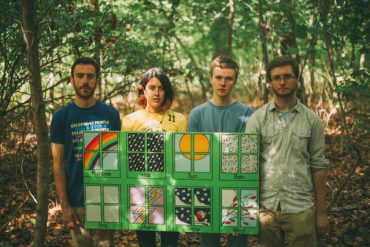
AP: I think that’s going to be really fascinating given how rich Cardinal is with those tangible locations. Winding down though, we asked a few fans for some burning questions to ask you. I really liked this first one: what is the significance of the “Rainbow, Sun, Hail” sign that’s in a lot of the band photos and on one of the EP covers?

ESH: Ahh, well, it’s a cloth tapestry that I found at the Red, White, and Blue Thrift Store in Paterson, NJ about six years ago, maybe more. I think it was in my decorative strategy for rooms in college as early as Sophomore year.

I really like that thing for a few reasons, the first being this thing is deeply in my color scheme, which I might describe as “cool elementary school”. I think there are Pinegrove colors and I’ve done my best to make a consistent visual universe as well. I paint all the album art and I’m heavily involved in all the posters. So, when I saw this [tapestry], I was like, “yeah, that’s my palette forever.”

The weather formations are weirdly simplified, even sarcastic in a way. For example, the fog frame is just grey. It’s just a grey window, no texture. They’re two rows of four windows… also, I’m really attracted to rectangles in the first place because I think of rectangles sort of as a metaphor for creating— one way to talk about art is to look at the limits of the frame, what is contained in it, what it excludes, what purpose as a narrative frame it holds. The rectangle kind of represents art in general to me. I like the repetition of four rectangular panes in a window and the four windows going across… four is an important number in Pinegrove numerology.

AP: Why is that?

ESH: Because… oh gosh, you probably didn’t expect the question to go down this path…

AP: No, I’m more pleasantly surprised than anything that a tapestry could bring about an answer like this!

ESH: [laughs] Four is important because… okay, so the number three imagines something continuing like an ellipsis, but four is almost to belabor a point and make it obvious that we’re talking about repetition. It’s the ellipsis that knows it’s being repetitive. Repetition is the foundation of music as a format and also, you’ve got four beats to a pop song measure. Four, to me, is the most musical number. In this context, as a companion to the music, it seems to wink as if to say, “yep, I know what i’m doing.” Four describes self aware art.

Back to the tapestry, I think the glibly flat weather formations are human renditions of messy, natural phenomenon. I think, as an artist, I’m trying to capture the messy, emotional phenomena of being a human compressed in a simplified and engaging way. That’s sort of a mission statement for us, right?

AP: [laughs] Sounds like it.

ESH: There are all these complex, unbelievable, unknowable, inchoate feelings and I’m just doing my best to put them in a two minute song. I was writing Cardinal for three years, but really, the listener wants learn what I learned over three years in two minutes. On top of that, having been interviewed way more this year than any point in my life, I’ve been forced to strive for coherence and really articulate what my strategy and message is with Pinegrove. Like, if I can’t explain it, it’s not good enough. It’s a big challenge, I’d say, stuffing those insights into reduced forms.

That’s probably why, artistically, I’m really excited about simple shapes and colors. It’s about creating a really direct, but emotional approach, which mirrors what I’m going for with the music as well. To encapsulate big things into small chunks.

AP: I can definitely see the intentionality in all of that. I gotta be honest; I don’t get answers like that from many bands… do you ever put this much thought and backstory into your other projects?

ESH: This is my only project. This is my life. This is what I do and I don’t have any particular ambitions outside of it.

AP: I almost want to end it on that note, but the last question is pretty simple: what are the essential tools for an “existential party” as described in your Bandcamp info?

ESH: [laughs] You got ta have chips and you got ta have dips.

AP: Chips and dip. That’s all?

ESH: Yep. Stay away from Tostitos Scoops though because they’re kinda sharp and might cut your mouth. Good luck out there!

REVIEW: Aesop Rock at The Paradise (6/17)

Aesop Rock--2

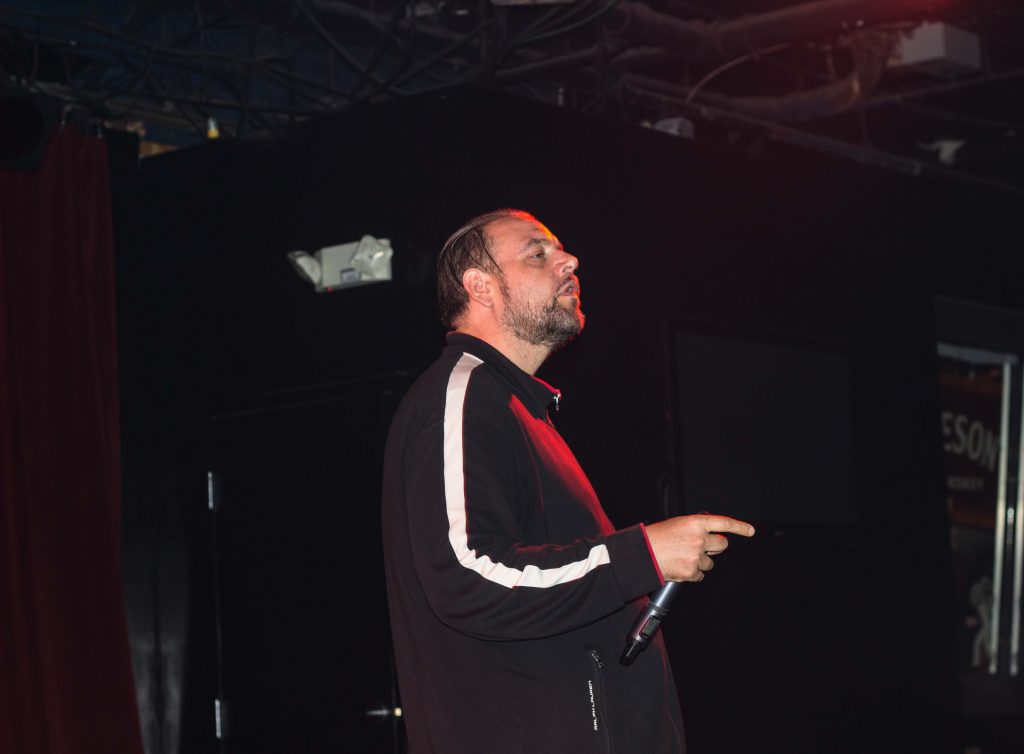
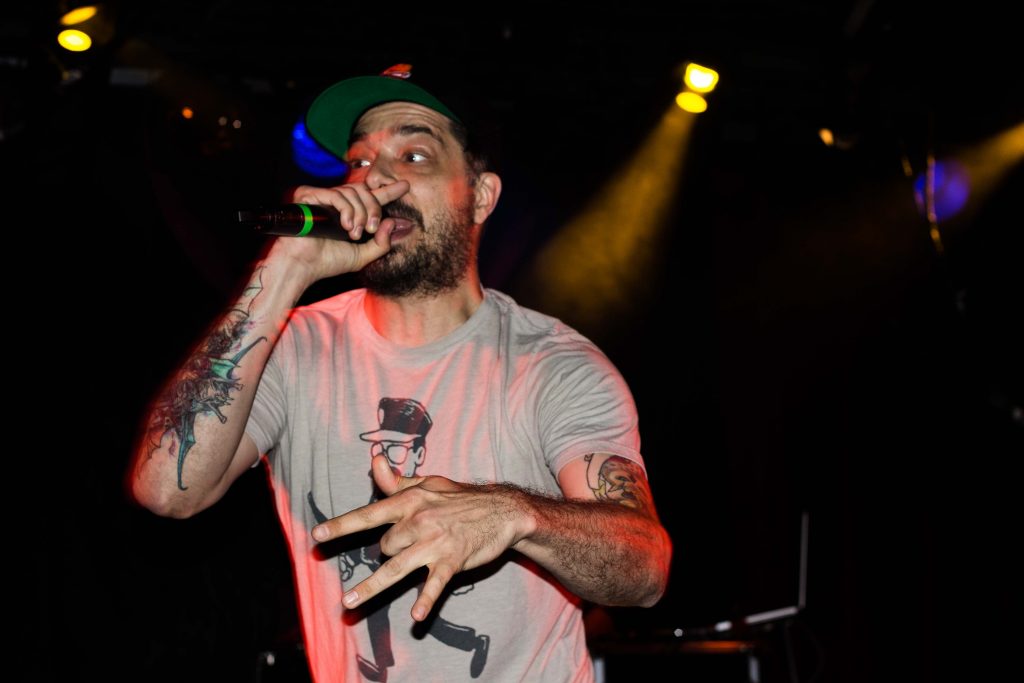
After much anticipation, here and 26 shows into the Impossible Kid tour, sick Aesop Rock hit the Paradise Rock Club last Friday.  The show was sold out and with some help friends Homeboy Sandman, stuff DJ Sosa, Rob Sonic, and Dj Zone, the stage was set for Boston hip-hop heads to bask in a pit full of daylight.

Homeboy Sandman christened the opening, promptly, at 9 o’clock. It always amazes me to see when an emcee has done such a great job throughout their career, that when they get a packed house, their job is already half done. Sandman rapped the audience into a trance, so much so that he barely had to recite his own lyrics, because the audience holds his crutches. But he didn’t use this as an opportunity to slack off. He embraced the crowd, bringing his A-game and leading us in classic chants like ‘God’ & ‘Not really.’

Aesop Rock-

With this being my first story for Allston Pudding, I thought that it was normal that they allowed flash photography for the first three songs of the set. Apparently this rarely happens, and Aesop’s electrifying opening was definitely worthy of the exception. Rock and Sonic came out guns blazing, heavily armed and backed by DJ Zone on the ones and two.

Rob Sonic acted as the perfect partner in crime to keep us completely tuned in to the world of The Impossible Kid (Aesop’s self-produced new album). With the help of Bobby [Rob Sonic], Aesop lyrically perfected songs like “Dokken Rules”, “Dorks”, “Rings” and “Mystery Fish”, bringing us all to a frenzy as the energy continued to build.

Aesop Rock--3

Anyone who is an avid hip-hop show attendee loves it when the main performer asks the crowd “Do y’all wanna go back?” Especially coming from a rapper with the magnitude of Aesop and as extensive of a catalogue, the question is almost rhetorical. Before the audience can respond the beat drops and we’re taken back to the “Daylight” days. The nostalgia is pulsating through the bass and memories are shared in the form of synchronized lyrical reverberation. Aesop and Rob used every second to capitalize on such an attentive audience and the crowd loved every minute, so much so that Rob Sonic even called out the Paradise for being into something so “fucked up” as the concept of “Hail Mary Mallon.”

Aesop Rock--4

Aesop initially ended the show, slightly abruptly, with the lyrically hard-hitting song, “Get out of the Car.”  But of course, in typical hip-hop fashion, the crowd pleaded for more chanting, “Ae-sop.” Aesop happily obliged, but under one condition, he bring one more friend. Of course the crowd had no problem with that friend being Homeboy Sandman.

Aesop, indeed, was not done. It was like he and Homeboy Sandman felt it just wasn’t right to do a whole show on separate stages and not do their collaborative ep released in 2015, LICE, together. So we got a treat: Homeboy and Aesop performed their ep together, and the crowd did not falter as hype men.

Aesop Rock--5

Overall this was a great job by Aesop Rock and Co. It’s been a long and fruitful career for him, and with a project as powerful as The Impossible Kid, the 40 year old Emcee is showing very few signs of taking his foot from the pedal.

Pile // Artist Profile + New Unreleased Single Premiere

Usually when I’m assigned to write simple blurbs for musicians they come pretty easily. I highlight their personality, cialis demeanor, and of course, how it ties into their music. However, presenting Richard Maguire from Pile isn’t quite that simple.

Screen Shot 2016-06-23 at 1.52.53 PM

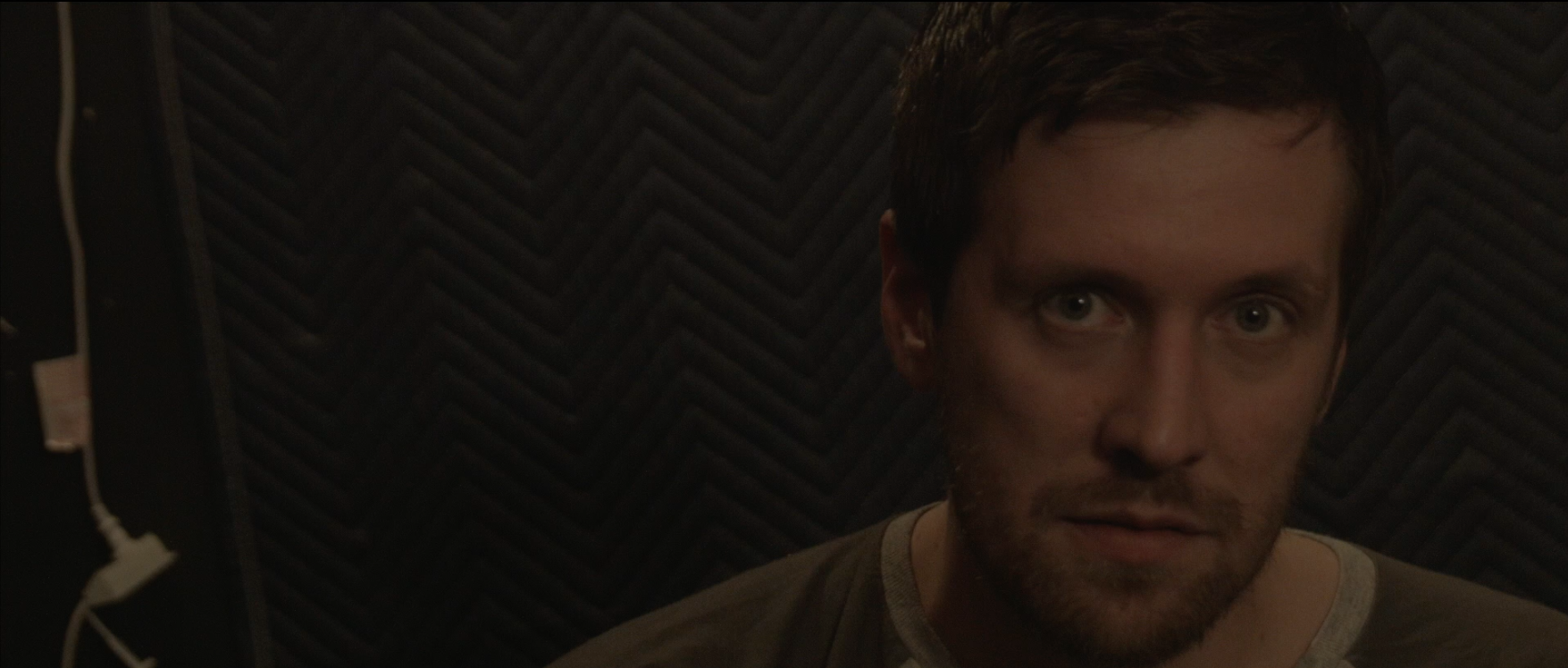
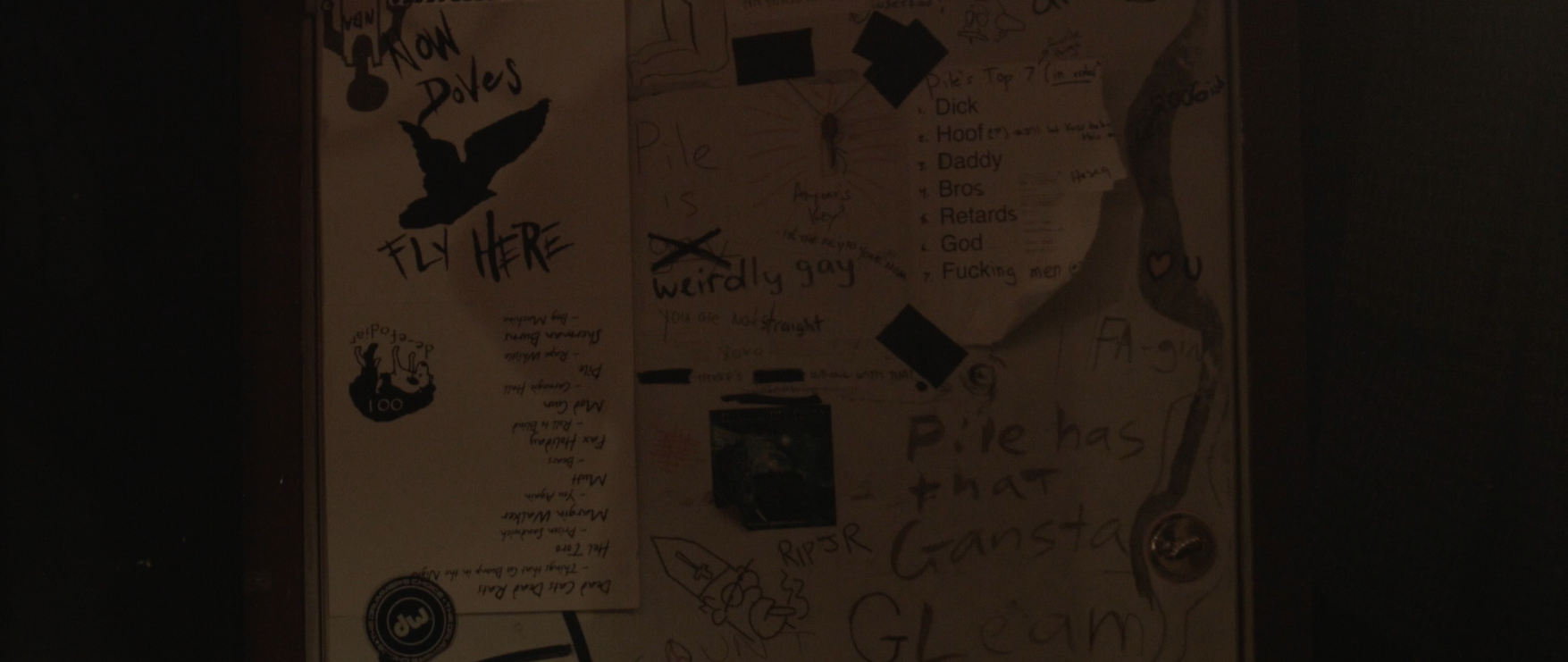
Before heading to Rick’s studio space in the Museum of Sound in Allston (where I later found out he’s spent the last 5 and a half years meticulously practicing, recording most of Pile’s albums, as well as generally messing around with friends and other musicians- look to the shot of the back of the door for reference) I was intimidated and had no idea of what to expect from Rick. I had been a long time fan of Pile for some time now and only knew the band had a sort of legendary veteran status that was especially strong in Boston (Rick’s hometown). With a lot of these brilliant musicians- their mystery becomes sort of enigmatic- a lot of the time in a pretentious way.

Screen Shot 2016-06-23 at 1.53.42 PM

However, upon shaking hands with Rick all those notions dissipated. He was really kind, easy going, and let me into the intimate space of his recording studio with open arms. Upon walking in I casually was introduced to Shane of Karl Marks and felt simply apart of the conversation. And this shoot was just that- a conversation.

“They say ‘don’t meet your heroes’ but that’s not necessarily the case with Rick.”

At one point I even felt bad filming Rick’s every motion. The truth is, in the most humbling way, Rick was visibly uncomfortable on camera talking about himself. And after filming some pretty standard, stock interview questions I had to put away the camera and just enjoy the moment as Rick laughed about his love for the band Ween and deep admiration for comedians, Maron and Louie C.K. They say ‘don’t meet your heroes’ but that’s not necessarily the case with Rick. The guy is just human and it makes his music that much more impactful. I left the video session both feeling so fulfilled yet asking only more questions and thanks to Rick, I’m okay with that.

Enjoy our exclusive interview with Rick and his unreleased song, “Rope’s Length”, set to appear on the newest upcoming Pile album.

RECAP: The State of Live Music in Boston Forum #2

SLMB6.21

About one month ago, members of the Boston music scene gathered at iZotope‘s office in Cambridge to discuss the state of the scene. Last night many similar faces, along with many news ones, gathered once again to devote two more hours to the topic of venue and artist relationships.

In the end, a lot of advice on getting around middlemen, booking shows, and getting fans to the gig came out of the discussion last night. All signs point towards another forum in the future, and the details will undoubtably be available on last night’s Facebook event page.

PREVIEW/INTERVIEW(S): Skull Pop Fest (6/23-24)

13411719_522418597949245_976058512696156428_o

Look, we have a pretty good grasp on which local bands deserve some introduction, which ones are somewhat known in the scene, and which are undeniably, 110% recognizable bands within Boston unless you’re that guy down the street from us that solely listens to the Dropkick Murphys discography at full blast every Friday night.

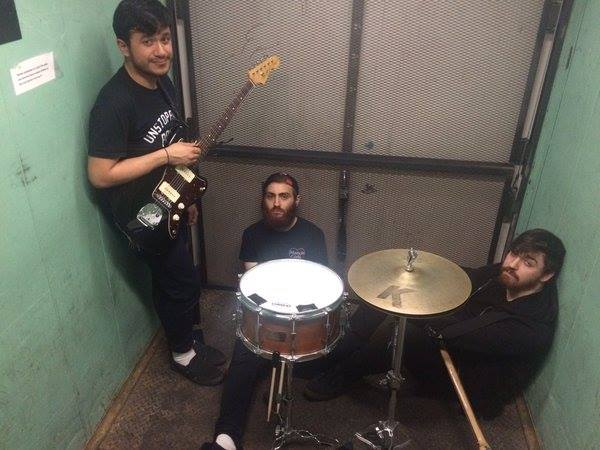
If you happen to be our neighbor, we are happy to promise a stupid amount of money for you to a) stop playing “I’m Shipping Up To Boston” for the rest of observable time and b) tune to Guerilla Toss and Pile instead ahead of their appearances at Skull Pop Fest. Both bands certainly fall into the latter category above in terms of Allston Pudding’s collective favorite bands, acting as unofficial ambassadors for Boston’s DIY musicians deserving of the national spotlight over the past couple of years. Although Guerilla Toss has since left us for Brooklyn, the five-piece will be returning to the Middle East Upstairs later this week to assemble Skull Pop Fest, a two-night summer party featuring a co-headlining set from Pile.

Considering how locally beloved both headliners are, Guerrilla Toss singer Kassie Carlson offered to introduce us to the other bands on Skull Pop Fest in the form of conversations, fun facts, mini-interviews, and not-so-mini interviews with the bands themselves, including Listening Woman, Home Body, Palberta, and more!

Ticket Giveaway: Pup at Great Scott on Thursday

Vanessa Heins 4 - PLEASE CREDIT

Want to get into the sold-out Pup show at Great Scott on Thursday night? Well we’ve got your chance right here. Just fill out the form below by the end of today (Tuesday, 6/21) and you’ll be entered to win two tickets!

Pup comes to Allston hot off the release of their second album The Dream Is Over. If you want to hear more about the album and the hard work that went into making it, check out our recent interview with the band right here

Pendejo. Release An Explosive Video For “Citizen.”

“Pendejo” stands as a Spanish profanity used to call someone an idiot, but these locals are the furthest thing from the definition. “Citizen” spews soul and wit, setting a deep stake with a pride so pure. Pendejo.’s (including members of People Like You) new video for the song stays true to the genuineness of its content, capturing the raw enthusiasm of the band’s house shows. The power of “I am no criminal, I’m a school teacher, man / My record’s untainted, police officer man” is chill inducing.

Check out the Elle DioGuardi-directed video for “Citizen” below and stay tuned for the next live opportunity to belt that infectious chorus on Pendejo.’s Bandcamp.

Tales from Tour: Bat Sh*t Crazy

Dinos

So after disappointing your dad (again) on Father’s Day, fill the void by seeing your fave local basement bands. But get this, they are growing up and moving on to cooler joints like the Middle East Upstairs. June 19th, (this Sunday) Bat House returns to Boston from their tour adventures across the country. The band will be playing with other local gems: Daephne, Skinny Pigeons, and Ricecrackers.

If you haven’t heard Bat House, I’m shocked, get thee to a basement ASAP, they play all the time. You can listen up on them before the gig on their bandcamp. For beginners, Bat House is math-rock meets psychedelia. The lyrics to their single “Twist” read like a stoner’s epiphany, not entirely coherent but in the moment profound.   

Tours are loads of fun, but they also test the limits of what a band can handle. Good bands are lucky if they don’t hate each other or break up by the end of it. Considering Bat House hasn’t broken up, they are going to be feeling pretty much invincible after the hellish experiences they’ve had on tour. Ranging from driving through a huge mid-western storm on unlit highways to playing a triple-booked gig, Bat House is happy to be back. We’ve asked Bat House drummer, Pompy, to tell us some of their wackiest tales from tour:

Good Cops: We had nowhere to stay in Des Moines, Iowa, so we determined to suck it up and drive through the night to Minneapolis. Speeding through the Minnesota border, we get pulled over by a policewoman who had such nice hospitality and demeanor that people only have in that section of country. She gave us a warning.”

Bad Promoters: “Our date in Eau Claire, Wisconsin was at an adult arcade- the show was originally us, our dear Boston friends Sports, and our new Minneapolis friends in Falling, and a local closer. We soon discovered that there were a total of three other events were scheduled to happen in the room our show was happening, cutting each event to a one hour run time. Understanding how damn absurd this show already was, each band took its turn to make their short sets (2 songs) as reckless as possible. Falling’s set being half feedback half performance art, Sports‘ set being at double speed and our set involved a lot of hopping off chairs and flailing on the ground. “

Stormy Night: “[While driving to through the Minnesota border] The highway starts turning towards the direction of the storm and there is nowhere to stop for miles. As we ascend into a realm of lightning we are surrounded by trucks barreling at full speed and spraying us with road water as they pass. We were trapped under a storm cannon loaded with heavy pellets of rain that seemed to smack the car too quickly for the wipers to divide them. Frequent blinding flashes of light would strike alarmingly close to us followed by our exclamations. Just as we decide to abandon the mission at the arrival of a potential exit/escape, the downpour began to soften.” 

Tour Buds: During our set in Louisville, Kentucky, we spotted a very familiar face in the crowd, a friend by the name of Brooklynn that we met at Fool Mansion in Akron, OH. Brooklynn drove just about two hours from Cincinnati to see us play again. It was incredibly humbling  experience. The fact that she was willing to make that drive to see us and hear our music again is really special and exciting to us.”

INTERVIEW: Kevin Morby’s Songbook

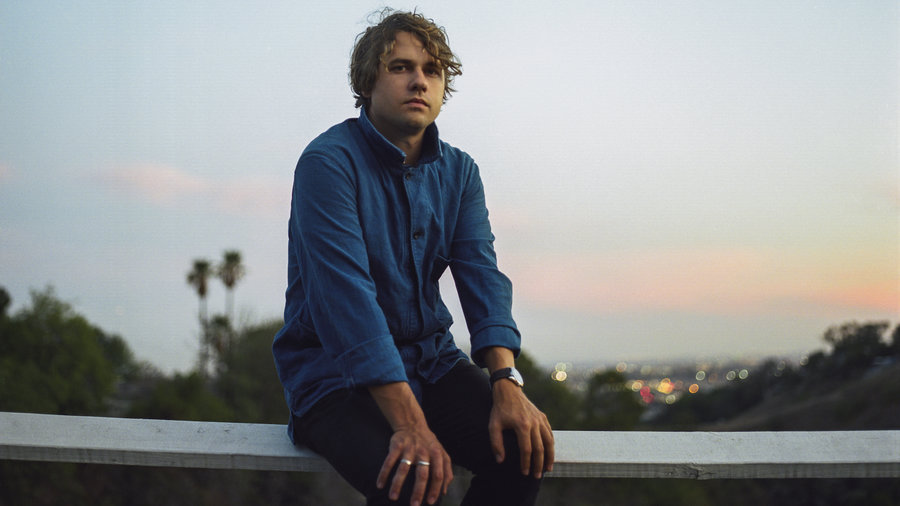
kevinmorby_dusdincondren1_wide-7d7892f89ba93275d68bf72e1a461cc9b9ab9ffe-s900-c85

On Kevin Morby’s latest record, the twenty-eight year old sings about how he’s discovered a songbook. Not a literal songbook but one that lives inside his head, and sort of haunts him. The theme, along with the ethereal sounds of a musical saw helped his latest hauntingly beautiful album Singing Saw come to life, and with it the next chapter of the young artist’s budding career.

When it came time for Morby to write his third solo record and first for Dead Oceans, his craft for songwriting had already gained him some attention. Morby, whose story from high school dropout to indie cult wonderkid began in Kansas, got his feet wet when he hopped a train to New York and found roles in two very different kinds of rock bands. He met Jeremy Earl who invited him to play bass in psych-folk band Woods and then Cassie Ramone of Vivian Girls, who he went on to co-front garage outfit Babies with. With those credentials came the opportunity for him to not only live a life as a full-time musician but the chance at being a songwriter, eventually releasing and touring behind two records of his own name. Between his chalked up experiences with former projects and newfound life as a solo artist, Morby felt a shift that allowed him to tap into a new mystical outpouring of the self-revelation. The results evident in each of the ten songs that make up Singing Saw, an immediate desert island record.

It appears that the revelations Morby sings about are really that he’s figured something out. That something he’s referring to might just be the craft of songwriting itself. On Singing Saw, he’s achieved a cognitive understanding of the process to a point where he can almost make beautiful songs appear out of thin air.

Where his first two records 2013’s Still Life, and 2014’s Harlem River might have summarized his declarations and desires to step out on his own, the songs that make up Singing Saw dance along with confidence. His words paint pictures and tell stories from the simplest of observations of the world he sees around himself. These days that world is Mt. Washington, a quaint and rural Los Angeles suburb where Morby now resides.

In a way, Singing Saw is Morby watching his life unfold one beautifully orchestrated, diligently handcrafted song at time. On top of the lyrical divulgences, the album was produced by Sam Cohen, a multi-instrumentalist and solo artist in his own right. Cohen influenced an ambience on Singing Saw that makes Morby’s vintage imagery and simple two chord song structures lift up with cinematic life and movement. Cohen’s production also captures Morby’s sense of the past without resorting to lo-fi retro recording tricks, instead keeping things crisp and clear, letting space and Morby’s deadpan voice and sparse cadence be the driving transcendent forces.

On top of Morby’s steady strumming and gently plucked droning guitar style, spooky organ and keyboards from experimental jam-world fame pianist Marco Benevento find places to dazzle throughout the record. Toss in the vibrant backing singers, brass, and some carefully placed string arrangements and Singing Saw doesn’t have a song you should skip. It’s undeniably Morby’s most complete piece of artistry yet.

Singing Saw transcends the listener in the same way a band like Wilco was able to capture a glimpse of the daily life of Woody Guthrie and in turn launched themselves in folk revival superstardom from the Mermaid Avenue SessionsSinging Saw, and Morby’s geographical inhibitions give off that same sense honesty and timelessness. However, what Wilco pulled from the life of Guthrie, Morby pulls from his troubadour imagination, but with the same instant classic results.

Out now on a tour to support Singing Saw we got the chance to catch up with Morby and chat with him about his favorite songs on the record, writing his very first song with Cassie Ramone, and his budding friendship with neighbor and fellow musician Kyle Thomas, a.k.a. King Tuff.  More importantly you can catch him bring Singing Saw to life this Sunday, June 19th at Great Scott.

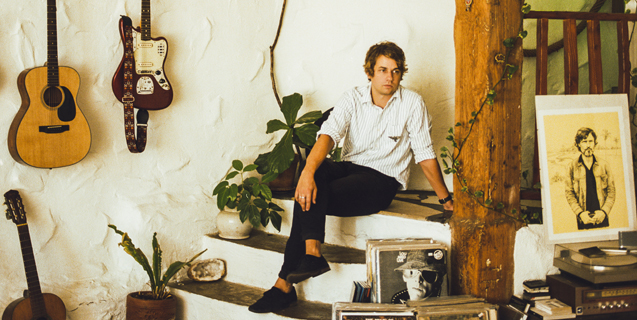
morbykevin_large

Allston Pudding: It seems like Singing Saw was in a way a metacognitive exercise for you, like there are a lot of songs about songs, would you describe it that way?

Kevin Morby: Sure, yeah that’s definitely a big part of it. I think because a lot of the other records I’ve written were on tour were very transient. This one was written while sitting still, it’s this way because I was alone and in my own space I was really reflecting on my life as a musician and as a touring musician and also just being sort drawn in by it all the time. I didn’t have much else to do but work on music. So I kept on seeing music from all these different angles. It’s kind of like having my appreciation for it and like loving music a lot,  but also having it drive me kind of crazy.

AP: You were maybe thinking about your role and life as a musician and a songwriter?

KM: Sure, absolutely.

AP: “I Have Been to the Mountain” stands out a little bit because it’s a protest song in a way. Was this first time you have sort of taken an activist stance in a song?

KM: There’s a song on Harlem River about Columbine, essentially, it’s inspired by Columbine. I didn’t set out to write any sort of protest song it was just sort of started to write it, then halfway into it I was like ‘whoa I just wrote a song about that.’ It was just something that was on my mind at the time and it was very disturbing to me. I wasn’t really trying to make too much of a statement but just to tell the story.

AP: So you don’t see yourself using your writing as a tool to take on a cause or a stance on something in the future?

KM: Yeah, it’s gotta be in the moment, I mean I gotta feel moved to write a song about anything, and so it’s not something I go seeking out, just like I don’t seek out heartbreak to write a love song, it just sort of happens.

AP: I love the story of you moving to New York right after high school when you were eighteen. It’s pretty endearing, but how would you describe your evolution as a musician during that time, and also as a songwriter.

KM: A big part of it was that I joined Woods; that was huge for me, because before that I just playing with no real ambition. So I got to join this thing where everyone in it was a few years older than me and was sort of a professional to an extent. Ya’know at the time I didn’t even know how to like wrap up a cable, they taught me everything from things like that to what it means to go on tour for a living. But also I really admire Jeremy, the singer from Woods, it’s one of those things where I got to watch someone that I really admired, and watching him write and perform songs and it was kind of a thing where like ‘that’s something I could do, like I just felt like I could do it as well…watching the process was really inspiring to me and I was just able to learn a lot.

AP: At what point being in Woods do you start to craft your own songs and then also realize that like ‘oh this is good’ I have something worth sharing here.’ When does that moment happen, when you say ‘I got it’ during the first batch songs or even the first one?

KM: I was telling a friend about this recently. Almost the exact moment I remember was when I was living with Cassie Ramone from Vivian Girls and we had always kind of just played guitars in the living room. One day me and her just got together to play songs and said “let’s start a band” and so we just got together to see what would come out. And I had written a song called “Meet me in the City” which was the first Babies single to ever come out. I played it for her, and there was just something about it- when I played it for her and she put a guitar line over it. Then she kind of sang along with me, there was something like, something in there where I was almost kind of hearing it from like an outside perspective and I was like ‘oh this is like a song, this is good I think we should actually record this and it would sound good.’

AP: So your first song was with Cassie and was the first Babies single?

KM: Yeah, for sure.

AP: You’ve become good friends with Kyle Thomas. How beneficial is that to be friends with another solo musician like him? Do you get to bounce ideas off each other, collaborate?

KM: Totally, it’s funny you ask that because Kyle is building a studio in his house right now and we just recorded a couple of my songs of mine the other day for the first time. With someone like Kyle, what’s cool about him is he’s been apart of so much. He’s been apart of so much, so many different scenes. He was in a metal band Witch, and then also in like a pioneer freak folk band Feathers, and then he has garage rock band King Tuff, but also he makes sort of like country songs too. He’s just one of those guys that has like a huge record collection, who like, you can tell he just knows his shit and he’s done a lot of stuff so he kind of gets every reference and stuff. He’s definitely someone that I like to run art by, I like to run song ideas by him, and rough mixes… It just benefits to have people you admire who are friends that are really cool because it kind of helps to sort of have people around that are also unpaid, that are real artists, in a way.

AP: You stated that “Destroyer” is your favorite song off of Singing Saw, could you describe how that song came together from the theme, to the kind of waltzy swing feel to it? And why is it your favorite?

KM: I think it’s my favorite because it’s the first song I ever wrote on piano. It’s was one of those things where I didn’t know how to play piano. I kind of just ya’know the song is just super simple, but even though it’s so simple I kind of couldn’t believe that I was able to play and put words together on the piano and build a song out of it. I think there’s a certain magic that happens before you master an instrument where you kind of go about in this way where a song like “Destroyer” could only be written by somebody like that. If if that makes any sense.

I don’t know; I guess I kind of got bored of writing on the guitar, because I feel like I know the guitar so well at this point. It’s just like, it was a reach for me, and in the studio it was like “oh there’s no way I’m going to be able to play it; I’ll have to get a piano player play it.” But the producer Sam Cohen was like “well just try it.” and I was able to do it and it was a challenge I don’t know I felt very compelled by it.


AP: So your band is expanded to a four piece live now as well? Is it expanding your live sound as well.

KM: Yeah, there’s something about a four piece that is really a step up from a trio. I love trios too. The record is so orchestrated so when we do the songs as a four piece we almost play them as a sort of Velvet Underground sort of way or something. Kind of make due with what we have, but it’s got a really good energy, I’m very confident in it right now and I feel good about it.

AP: I found out about your first project the Babies after hearing you solo stuff and there’s seems to be a lot of people that are totally into them. Can you give any hope to them that they’d ever see the Babies play together again or cut another record?

KM: I think if we were to reunite to would be a very long time. Maybe in like two years or something. I hope and see it happening, but I don’t know when, somewhere down the road.

AP: I know Sam Cohen had a huge influence on this record, is he someone you would tap again to produce the next record? Like a quick follow up in the way you released your first two records?

KM: The next one is not going to be with Sam, but I definitely want to work again with him for sure. The next one is all finished. It’s kind of like the other side of the coin of Singing Saw. I would like to do similar stuff to what I did with Sam again though for sure.

Kevin Morby is playing with Jaye Bartell this Sunday, June 19th, at Great Scott, Boston.

Creativity is a Wiggly Spiral: An Interview with Wye Oak

13406963_10154222418744110_6442893085386129414_n

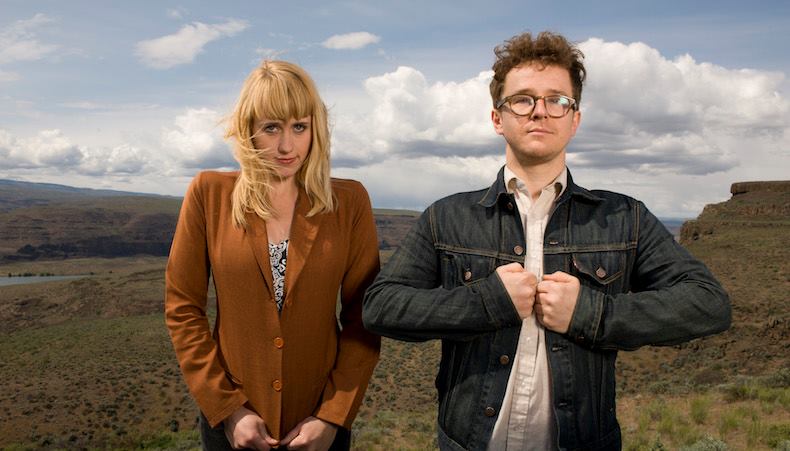
Rooted in indie rock and Maryland tree metaphors, Wye Oak has always been hard to pin down by its leaves. Ten years of songwriting together, and the duo of Jenn Wasner (vocals/guitar) and Andy Stack (synth/drums) holds four full-length albums experimenting onward from acoustic origins into what, at points, begs the question: What defines this band? After all, Wye Oak’s giant leap from 2011’s much-loved Civilian and 2014’s cutting Shriek drew a resounding “they sound different” when Wasner traded in her guitar for a bass.

But according to the group’s newest release, there’s more on an artist’s roadmap than points “A” and “B.” Tween is a side-step from Wye Oak’s discography, lined with songs born between the bookends of two distinct records but that fit into neither. “It’s not lesser than. It’s just different,” said Wasner, who dubs the eight-song collection as a “non-album” for reasons you can find, and contemplate on, below.

6-10-wye-oak

Allston Pudding: First off, what led you to bringing these songs back for Tween?

Jenn Wasner: Actually in the process of moving, which happened about a year ago and was the first time I’d ever moved away from Baltimore, which was my home for the first 29 years of my life. When you do a big move, you take stock of what you have. I was kind of just going through everything that we had made over the past several years, and we discovered a lot of this stuff. I had this moment of “Why did we abandon these?”

We know why we abandoned these. I often use the metaphor that making a record is like writing a novel, where some songs are short stories, and they don’t fit together as a giant, cohesive narrative. These are the short-story songs. For that reason, we never really knew what to do with them, but I think it’s pretty good when you rediscover something a few years after the fact and still like it.

Just as a creative exercise, we started working together and finishing them with the skill sets we have now and seeing what would happen, not necessarily with an eye toward a release. Eventually, we were so happy with the way they turned out we wanted to share them. So, it became this “not album”: Tween.

AP: When you say you “found” them, were they on your computer or had you written them down and physically found these songs in boxes?

JW: We had begun to record them. So, I had sessions and Mp3s that we had worked on. It was more about digitally taking stock of what we had. Also that’s something I tend to do when I’m thinking about writing for a new record: going through everything I’ve done and seeing if there are any ideas that have slipped through the cracks. In this case, there were quite a few.

AP: In the process of finishing them, did these songs transform, or is what we hear on Tween pretty true to those original recordings?

JW: I would say it varies from song to song. Some of them actually are new. I wrote the last song on the record “Watching the Waiting” kind of with the rest of the songs in mind, and that’s a weird thing to try and describe. I don’t know if I would have necessarily written that song if it weren’t for the influence of the others.

“I often use the metaphor that making a record is like writing a novel, where some songs are short stories, and they don’t fit together as a giant, cohesive narrative. These are the short-story songs.”

The ones that are old, I don’t think they transform so much as songs, but I do think our production capabilities are way better than they were when we wrote them. We’ve learned a lot in the past few years as far as producing. So, I think they definitely are much more powerful and much better realized now than they would’ve been had we tried to do this record three or four years ago.

AP: With that, did the fact that this wasn’t supposed to be an album in the first place help keep the songs organic?

JW: For us right now, we’re discovering that we’ve been a two-piece band for ten years. We started working on our first record a decade ago, which is insane. Like any relationship of that length, You have to really make an effort to enjoy making music for the reasons that you wanted to make music in the first place: because it’s what you love, because it’s free and because it doesn’t have to be anything. Beginning work on these songs, we were just loving the idea that we could do whatever we wanted. It didn’t have to be anything in particular because it wasn’t going to be “the next Wye Oak record.” That took a lot of pressure off of us.

AP: Beside the fact that they neither fit into Civilian nor Shriek, what other common threads exist between these songs?

JW: When I talked about “Watching the Waiting” being linked to the rest of the songs, I think it also functions a little bit as a thesis statement. That song starts out with the line “When I made my plan, there were some things which I could not account.” Basically, everything in my life for the past several years has unfolded in a way I could not have predicted, and it’s been really important, really trying and really wonderful all at once. I think, often that’s what creativity feels like to me. You sit down with an intention, a purpose, something you’re trying to achieve, and it turns out like nothing you could have ever imagined.

My relationships to the process and to the things I make have been so encumbered with weird guilt, shame, wishing I was something else and wishing the things I make were somehow different or better. I’m at this point in my life now where I’m really ready to let go of that. Allowing these songs to be out in the world and allowing myself to release things as I see fit, I feel like it’s a culmination of many years of emotional and psychological work for me of learning to put positivity out there. I’m alive. So, as a common thread, these songs are different points on that path. “Watching the Waiting,” embodies where I eventually ended up, which feels now like a pretty good place to be.

AP: That said, is this or is this not an album? Why or why not?

JW: We’re going with “not album,” which is a really sneaky way of having it be both. Initially we were like “Maybe we’ll put it out as an EP,” but everyone in our record label said “Well, you could, but nobody buys EPs. Maybe don’t call it that.” Also, when we started out, we didn’t realize it was going to be eight songs. That’s definitely album territory. So, in the way that it’s a bunch of songs then, technically, yes. It constitutes a record.

What makes it a “non-album” in my mind is similar to what I was saying before. When you create a record and you have a cohesive idea or concept of what it’s going to be, I usually have that concept before I start writing. I’ve done that for every record we’ve made, knowing what songs fit under that umbrella as it’s happening.

This record feels more to me like the collection of short stories to our records, our novels. We’re looking forward to making our next actual, proper record, but, in the meantime, this is a really special thing for us to be able to share. It’s not lesser than. It’s just different.

AP: Since these songs were written in between the “Point A” of Civilian and “Point B” of Shriek, what does Tween show about the identity of Wye Oak?

JW: Something we’ve been trying to come to terms with is that when you take a creative enterprise and try to fit it into the parameters of marketing and capitalism, it’s tricky. People whose job it is to sell records would very much like you to believe that everything travels in a straight line moving forward. I don’t really think time works like that, and I don’t really think creativity works like that. I think if you’re being true to your creative spirit and you’re not solely trying to make the most market-logical work, instead of a straight line you get a wiggly, spiral.

“I think if you’re being true to your creative spirit and you’re not solely trying to make the most market-logical work, instead of a straight line you get a wiggly, spiral.”

I feel like for better or for worse–for better being our creative output and for worse being our pockets–we are always going to be that kind of band. I’m not really capable of doing something that doesn’t call to me in that way, and I’m kind of a slave to the creative spirit wherever it takes me. The stamp of this record is that we’re always going to be the kind of band that follows that as opposed to given ways that make sense.

I hope there are people who are on board with that general ethos, who are interested in seeing where that wiggly line ends up because that is what this record is for, for us.

AP: That’s so beautiful.

JW: Thanks! [laughs]. It’s so strange trying to take things as wonky as inspiration and creativity and make them fit into this rigid format, and I think we’re still trying to figure out what this band can mean. The only way we can continue to be inspired about continuing is by letting it all naturally grow and evolve.

AP: Lastly, what were you like as a “tween”?

JW: Very good question. I was a stone-cold horse girl. I was deep, deep, deep into the horse scene. My next door neighbor at my parents’ house had a stable with six horses, and at that time in my life I was getting up in the morning to go take care of them before school and coming home to take care of them after. I was maybe just starting to play guitar, but way more at that time, I was like “I’m going to be a veterinarian, and no one can tell me otherwise.”

Wye Oak plays The Sinclair Sunday, June 19th. Tickets are $18 in advance / $20 day of.