Bronze Vases Breaks Down Every Track on Debut EP

 
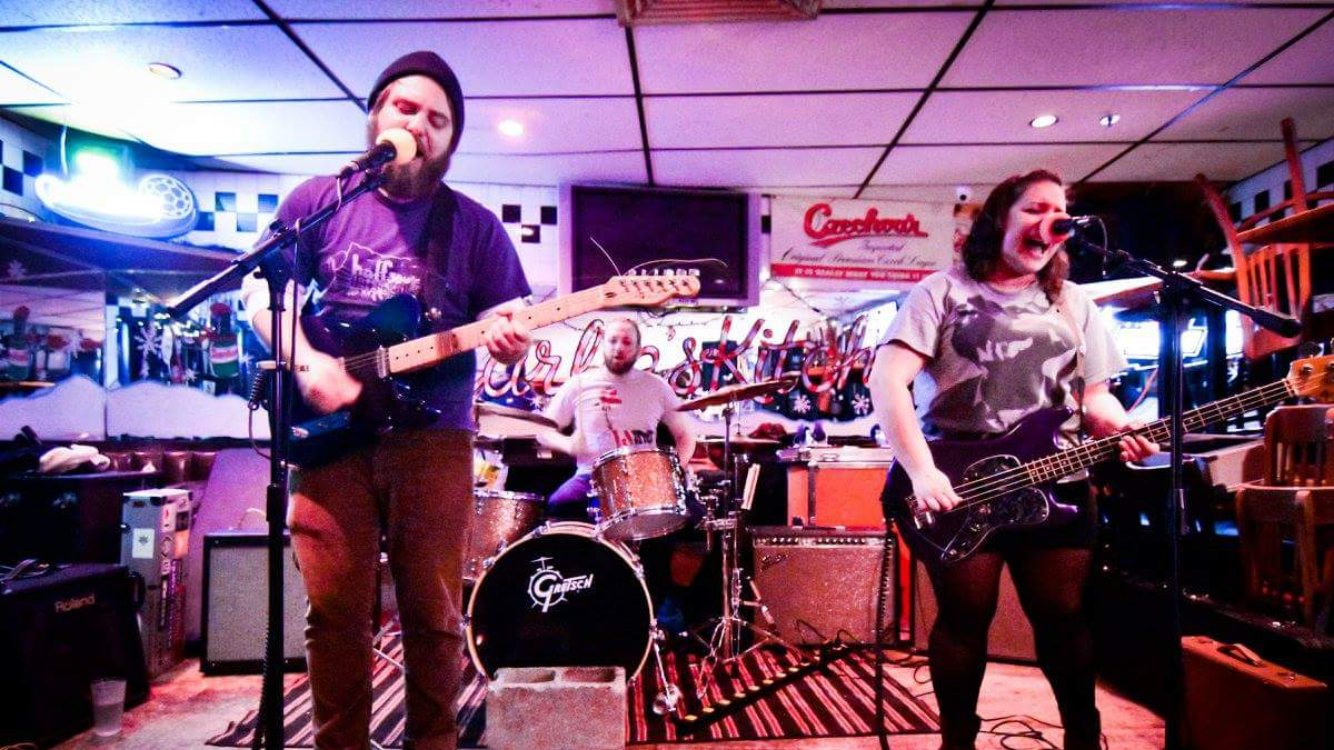
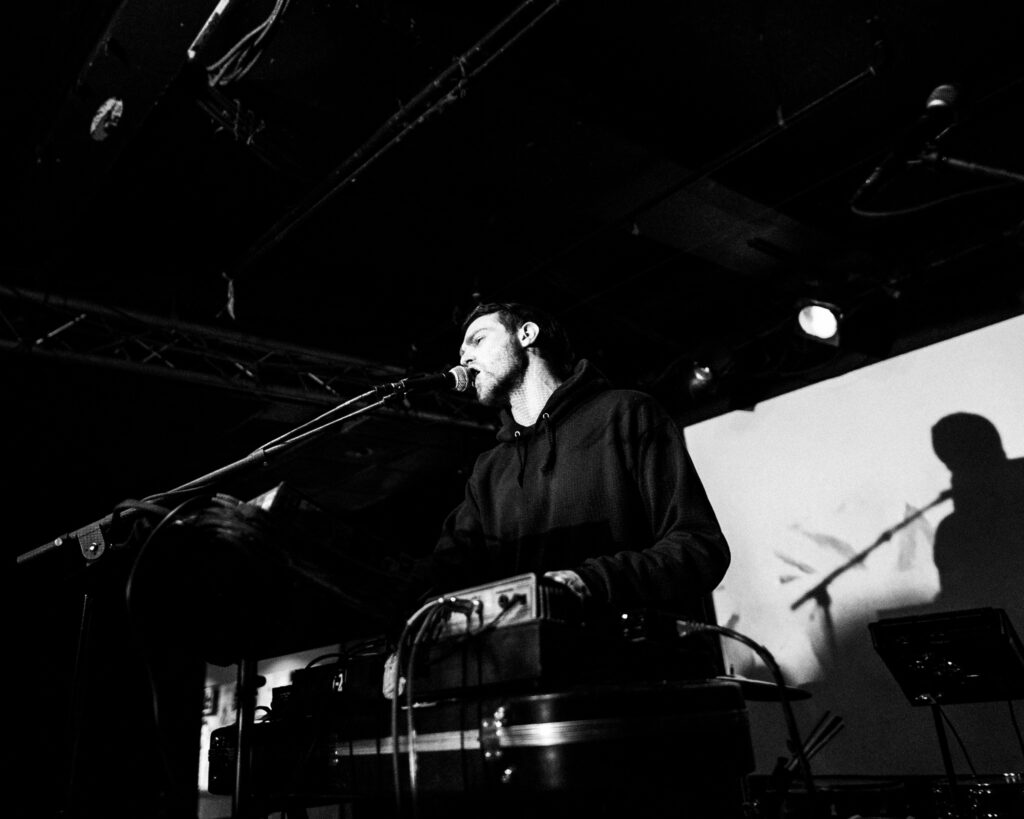
Bronze Vases performing at Great Scott

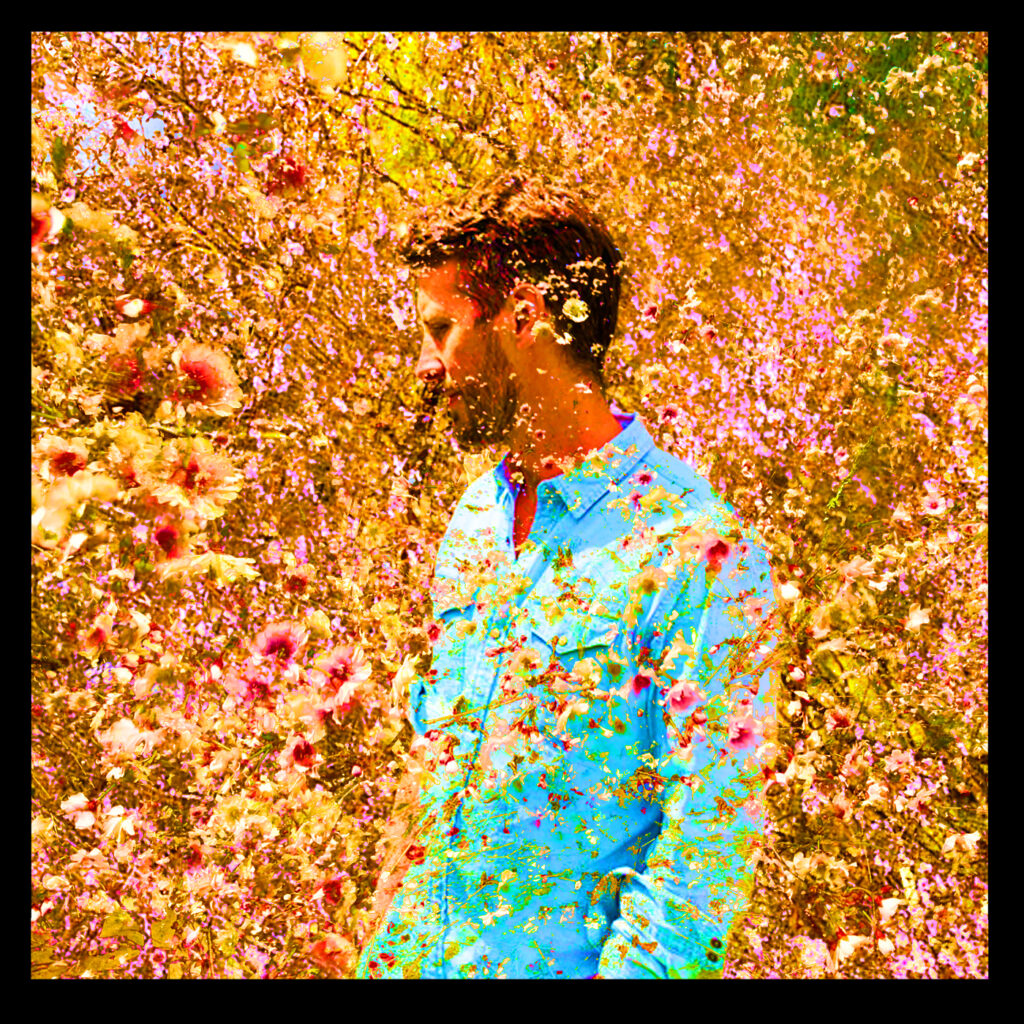
Bronze Vases Photo by Nick Dinatale
 
When it comes to music, Matt Politoski feels like a baby. The one-time erstwhile frontperson of beloved emo troupe Animal Flag freely cops to serious holes in his listening history. To wit, his band once opened for a certain hugely influential Long Island post-hardcore band (of whom we will graciously leave nameless), despite not having heard a lick of their music prior. Some light clowning from his bandmates ensued. Although creative in one form or another for basically his entire life, Politoski’s formative years were spent building a wide canon often at odds (at least at the surface level) with the heart-on-its-sleeve DIY world that embraced his mid-20s endeavors. In fact, his earliest forays into music making leaned much more abstract. 

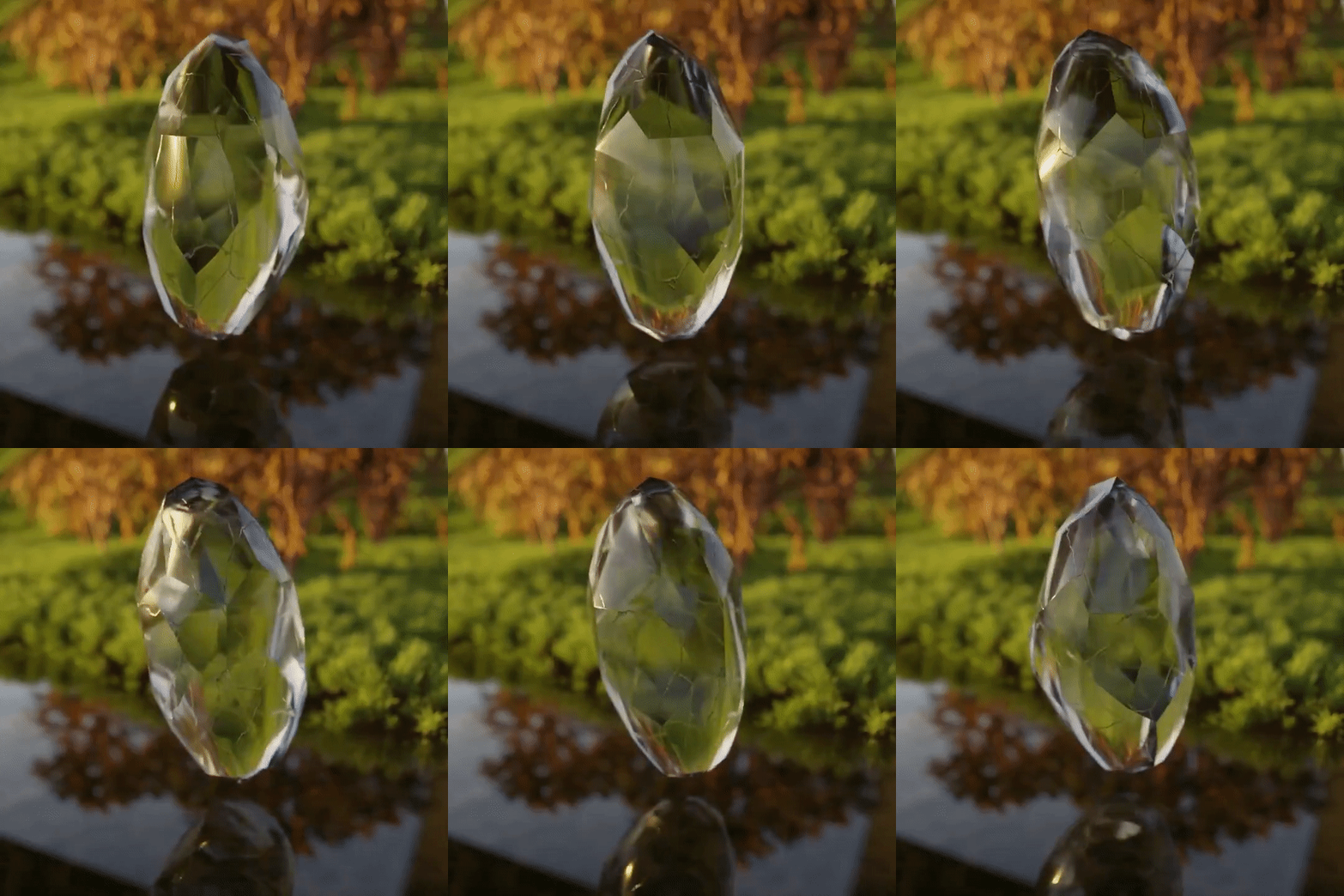
Animation by LaMonnet

Inspired in equal part by the nature-adjacent sounds of IDM mainstays like Boards of Canada and the approachable intimacy of Dntel, he took to making field recordings of his world. Captured on whatever tech at hand (laptops, flip phones, battered camcorders, an eventual upgrade to a zoom recorder) was the ins and outs of adolescence in a small New York town: nature and city both within reach. That initial spark, that love of pure sound design and composition, was what brought him to Boston (specifically Berklee) in the first place. That move eventually pulled him into the noisy orbit of Boston’s vibrant rock scene, as well as his future bandmates in Animal Flag.

While the loud racket Politoski kicked up in AF was far from forgery, the band’s quiet dissolution afforded him some time away from live performance to reconsider his relationship with sound. Bronze Vases then, could be seen as a way of returning to that childlike sense of pure joy, an attempt to reclaim the magic in music making. He claims it to be a “blend of natural organic sound and man-made machinery,’ and that feels rather apt.

Suffice to say we were pleased to get a chance to speak with him about the recording, as well as the meaning and feeling behind each song on his debut EP, Earth Sounds Volume 1. Listen in a day ahead of its release at the embed below.

Bronze Vases· Earth Sounds Volume 1

Geometry Mountain

I spent a lot of time outside during the making of this EP and I think that is reflected in the titles and album artwork (by LaMonnet). I hope it’s also reflected in the music itself. Electronic music is often perceived as inorganic or mechanical because it’s made predominantly with machines. I watched this Björk interview where she talks about how electricity has always existed on earth, and that just like wood or metal, we now harness it to make music. If you think of it that way, electronic music is just the most recent step in a long tradition that humans have of utilizing our natural world to make music. Every sound is an earth sound. That really changed the way I think about music. Thank you Björk!

Musically speaking this track is heavily inspired by “Light Through The Veins” by Jon Hopkins. I feel like I will continuously try to make my own version of that song throughout my life. “Geometry Mountain” is my first attempt.

Bronze Vases

Animation by Matt Politoski

Were You

Over the past couple of years I became more serious about making field recordings and actively listening to both the natural and industrial soundscapes that we are constantly immersed in. I discovered the work of acoustic ecologist Gordon Hempton and it really got me thinking about what it means to be a good listener. So naturally a lot of the field recordings I made over this time period made their way into these songs. In “Were You” the bird recordings are processed through Ableton’s “Beat Repeat” plug-in along with this super-stretched trombone sound. I wanted the birds to feel subliminal. Like you are unsure if they are coming from the music or from your actual environment.

This was the first song I completed for this project back in the summer of 2020. My friend Matt Lombardi who runs a label called Tower To The Sea Records asked me to make a song for a compilation album they were putting together. This song became the blueprint for the rest of the EP, so in a way Matt prompted me to make this whole project. Thank you Matt!

Running

The vocal sample from this song comes from a time I was on tour with VÉRITÉ in February of 2020. We were standing in this massive reverbant stairwell and I asked her to sing something into my phone so I could sample it. Months later as I was working on “Running” I pulled the recording into the session and realized she had coincidentally been singing in the same key and tempo as the song. I made some adjustments to it but the main idea was right there in the sample. Most of my favorite musical moments are complete accidents which is always a good reminder to myself to CHILL OUT 😎
Album artwork by LaMonnet

Ciervo

I started this song back in 2017 while staying at my best friend Sai’s parent’s house. (Go check out his incredible debut album: VIMS by Mercet) The song was called “Sai House Beat” on my computer for years LOL. Sai was my absolute guiding light throughout the making of this EP and it simply would not exist without him. Another one of my favorite people and closest collaborators, Zach Weeks, blessed this track with some beautiful sounds. He sent me this deranged piano, washy synths, and a toy piano melody (among other sounds) that I thought were just magical. Zach also mastered the EP which honestly feels like cheating because he made it sound so damn good. Sai, Zach, and I played in a band called Animal Flag for years and they’ve remained two of my closest friends and creative partners so it feels really good that they are part of this project 😀

This track also features a voice memo recording of my friend Alana recalling a dream she had. I was looking for some sort of audio recording to fill the space in the song and remembered this super intimate voice memo she had shown me years ago. Coincidentally the dream she was describing fit perfectly with the theme of the lyrics. Thank you for letting me use this Alana!

Ambrosia String

I made this song after obsessively listening to the album “Lunatic Harness by µ-Ziq for a week straight. Originally the music box sound came from a video I found on a Famous Band’s Instagram page. I couldn’t get the sample cleared so I had to recreate the sound from scratch. The same day that the sample got denied, my neighbor asked me to feed her cat while she was gone. I went over to her apartment to feed the cat and I saw a music box sitting on her piano. It turns out this music box was in the same key of the song I was making. So after a whole week of tedious audio chopping I successfully recreated the sound. I’m really happy with the way it turned out. The title “Ambrosia String” is an anagram of “[insert band name] Instagram”. Big prize to whoever can figure out what band it is. There is no big prize. That part is a joke!


Earth Sounds Volume 1 is out Friday, June 4th. You can get a digital copy on Bandcamp right here, with all proceeds going towards stocking a community fridge in Beacon, NY where the artist resides.

Proof is in the Pudding Ep. 4: Divine Sweater


Divine Eggplant Parm

1 reasonably sized eggplant cut into medium-thin slices

2 eggs

Breadcrumbs (your preference)

Olive oil

Pasta (preferably spaghetti or linguine)

Marinara sauce

Grated parmesan cheese

Shredded mozzarella cheese

  1. Beat eggs in a small bowl. Dip slices of eggplant into eggs to coat evenly.
  2. In a wide dish, combine breadcrumbs with a generous amount of parmesan. Season with salt/pepper unless your breadcrumbs are already seasoned.
  3. Heat a large pot of water to a rolling boil, season ~generously~ with salt.
  4. Coat the egg-covered-eggplant in your breadcrumb mixture.
  5. Heat enough oil in a large sauté pan to coat the bottom of the pan over medium-high heat. Fry your eggplant slices for a couple minutes on each side or until evenly brown and crisp. 
  6. Add your pasta to the boiling water, cook until al dente, stirring occasionally. 
  7. Remove the cooked slices from the pan and let some of the excess oil drain out on a paper towel/drying rack. Continue cooking the rest of your slices. 
  8. Once they are all cooked, return some slices to the pan, top with sauce and both cheeses. Heat until the cheese is melted and sauce is warmed through. Serve atop your pasta. Garnish with basil/parsley (optional).

Stay tuned for future episodes of Proof is in the Pudding and check out Divine Sweater on Facebook, Instagram, Twitter and Spotify now!

Crash Cadet Soundtrack the Summer on “Crash Cadet 3”

Roughly a year ago, Crash Cadet decided to trumpet the call of an oncoming summer with the release of their second album, Crash Cadet II. It landed on our laps during a time of great confusion, fear and denial as we all stared down a summer spent indoors binging TV shows and learning how to bake sourdough bread. The album reminded us what a proper summer feels like, and reassured us that a normality would again be achieved. A year later and we’re still not there, but we’re a lot closer, and Crash Cadet’s third album, Crash Cadet 3, provides some brief back-up comfort that we might get to enjoy at least some summer this year. Crash Cadet – the solo project of Josh Rathbun – gifts us with a sweet little release that acts as a well-rounded 21-minute album to guide the listener into a breezy summer mood.

Crash Cadet 3 is, intentionally or not, sectioned off into halves, with the first half graced by faster tempos and more determined music. The opener “Steps Never Taken” nails the album’s musical mission statement by combining groovy guitar licks and busy drums with a laidback feel, without having any element oppose another. The result is a fun song with a strong psych-influenced undercurrent to it, courtesy of some rhythm guitar from Tuan Trieu. The follow-up “Sick of the Dishes” leans far more into this, utilizing a heavy, fuzzy guitar and more of a straight rock rhythm. Rathbun has used some heavy guitar lines like this before, a great back-pocket card kept to diversify his music. Lyrically it’s not exactly upbeat, dealing with COVID and the ongoing demise of the planet with people too focused on minute politics rather than environmental issues, but musically it feels somewhat complemented, as the track is still very addictive. “The Lee of the Stone,” the third track, feels similar to the opener in that it matches some kinetic individual rhythms with a more relaxed, breezy tone overall. This inherently contradictory combination somehow works, as the song is both easily digestible and fun to pick apart piece by piece.

The album’s back half takes a much calmer approach than the front. The fourth track “Slow Down” takes the title literally, as it grinds the album down to a slower pace. It might be the biggest outlier on the album, with a more lounge-like rhythm and a heavier focus on the lyrics and vocals. It’s a bit of an abrupt shift, but it helps to keep the album well-rounded. “Real Thing Coming” feels prescient, with lyrics about the ongoing virus that is already affecting our summers. The addition of a ukulele and some woodwind help to make this a standout song, as well as some more characteristically fun guitar work and urgent percussion. The finale, “Summer Rain,” feels like a proper send-off for this album. With a spoken-word intro by Rathbun and friend Bethany Miner, it deals with the pains of a summer fling drawing to a close. It’s slower than anything that precedes it, serving as a way to wind down from the engaging, borderline psych-rock that dominated five songs.

As with his previous album, this collection feels like the entirety of summer boiled down into a brief runtime. The first half is the breezy, no-care attitude of early summer while the back half deals with the demise of the weather and the turn into the more challenging seasons. The closer, literally titled “Summer Rain,” acts as the nostalgia you may feel at the end of a great season, already longing for the carefree nights that have only just ended. And lyrically, this album holds a lot of frustration to it, especially at the current state of the world. But it also remains a very peaceful album, with many frantic rhythms and chilled vibes converging with each other instead of against. It’s the perfect album to fulfill any summer need. Crash Cadet 3 can be streamed below, and Rathbun hopes to play a show somewhere by season’s end.


Premiere: Wyn Doran Has No Cause For Concern

By Harry Gustafson

wyn doran

Photo Courtesy of Wyn Doran

In 2019, Wyn Doran had just embarked on her career as a solo artist, having bounced around a few Boston bands in the five years before that. After attending a songwriting workshop put on by Ben Folds, Doran felt like she had a grasp on what she wanted to do with her solo work.  While venturing off to blaze your own trail can be a daunting endeavor, she took the change in stride to great success, releasing a debut EP called Thick Of It in October of that year and pulling a nomination for “Female Performer of the Year” at the New England Music Awards. But in 2020, things changed rather quickly, and she couldn’t continue with the live performances she had started developing during those brief early days as a solo artist. 

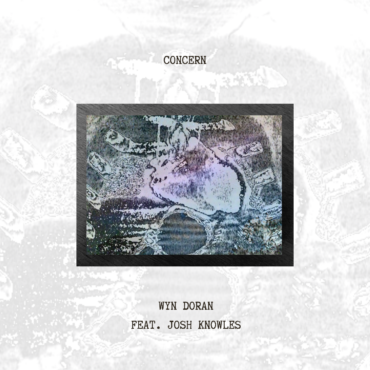
wyn doran concern

So the story goes of what being a performer has been like over the past year plus. But lockdown didn’t stop Wyn Doran from continuing her songwriting career. Linking up with violinist and composer Josh Knowles, Doran is releasing a new single called “Concern,” which combines her pop vocal styling with an orchestral, electronic instrumental. It’s haunting, ethereal, the sound of an anxious mind looking out at a rapidly changing world. 

The bassline that permeates at the foundation of the track hits and drones in a foreboding way. Knowles’ violin playing – which mixes legato playing and some plucking – lends the track a ghostly quality. For a song with the refrain “there’s no reason for concern,” it sure does leave the listener with an eerie, foreboding feeling. Perhaps the only real comfort is Wyn Doran’s vocal delivery: gentle, soft, but never weak. It’s as if she is trying to provide a comfortable shield without betraying the overwhelming sense of dread that surrounds. 


Premiere: Calo’s Beautiful, Terrible Mess

By Harry Gustafson

caloAs far as 2020 is concerned, saying Last year was a beautiful, terrible mess. might be one of the best summations possible for a year filled with intense isolation and (hopefully) equally intense transformation. While there are undoubtedly ways we’d rather have spent our time – not in loneliness, loss, and sheer existential dread – hopefully we were also able to take some small consolation in appreciating our surroundings, the relationships we strengthened, and the personal growth we put ourselves through. 

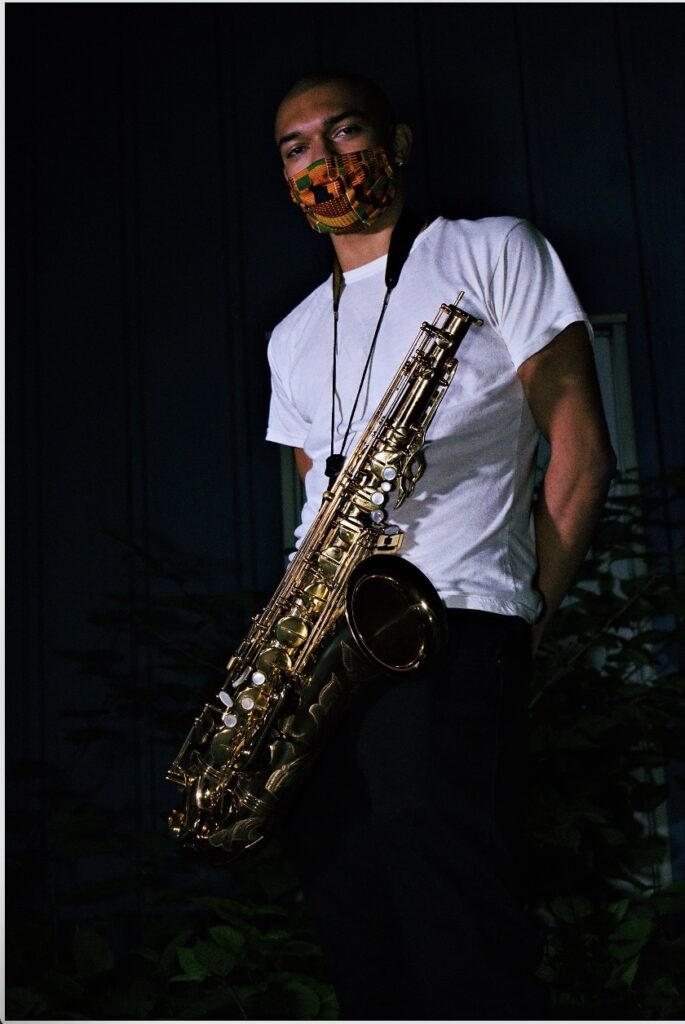
Well as it so happens, Joseph Borsellino – aka Calo – chose Last year was a beautiful, terrible mess. as the title for his new EP. A skilled saxophone player, Borsellino dropped the EP back in April. A largely hip-hop, electronic, and sample-based project that fits in with contemporary jazz efforts like Moses Boyd’s body of work, Last year features contributions from friends and collaborators Calo has come in contact with in Boston, New York, and Philadelphia, including Anjali Rose, JoiBeatz, and mitamu

 To coincide with the EP’s single “so many lifetimes,” featuring vocals from NYC’s Anjali Rose, Calo has released a conceptual video accompaniment. As the EP’s second track, the song serves to establish the mood and themes of the rest of the release. It opens with the lyrics, “How far can one bird go? How long can time unfold until the wings grow tired?” Delivered by Anjali Rose in a soft, smooth cadence, there’s a melancholic reflection on hope here, nearly defeated by the ironic knowledge that movement and activity is severely limited in the isolation of quarantine. “There’s so many lifetimes, so many lives in one,” we are reminded. There’s an audacious yearning, as if the singer is staring out the window at rain while thinking, “I’m going to do so much living once this year is over.” 

The video itself – edited by Anjali – features stunning, kaleidoscopic footage of microorganisms and cellular-level activity, all depicted in bright fluorescent coloring. This reminder of the microcosmic scale of life should be sobering: life goes on even without the obvious imprint of humanity. “Nature is healing” has become such a commonplace tagline for social media posts over the past year that it is easy to undervalue the beauty of that phrase. Life at all levels yearns to connect and interact with the world around it, even those little prokaryotes that we regularly fail to consider. After being collectively sidelined for a year due to a microscopic virus, it’s best that we don’t take for granted the impact such a small thing can have on the world-at-large. 

It’s not just Calo’s smooth sax performance that set this EP apart as a more-than-capable effort by a young, emerging artist; it’s also his ear for contemporary production. He’ll often eschew the front-and-center nature that saxophone often comes with. It’s a loud instrument, after all. Instead, he’ll often mix it down, allowing it to help contribute to the dissonant, airy atmosphere of the EP’s six tracks rather than rely on in-your-face sax solos that dominate the musical palette. Fans of breakbeats and glitchy synths will get pulled into the landscapes of tracks like “asmr” and “lone wolf.”

Watch the video for Calo’s “so many lifetimes” featuring Anjali Rose below, and listen to Last year was a beautiful, terrible mess. on Bandcamp

PREMIERE: SEED Merge Past and Present for Their “Seaweed” Video

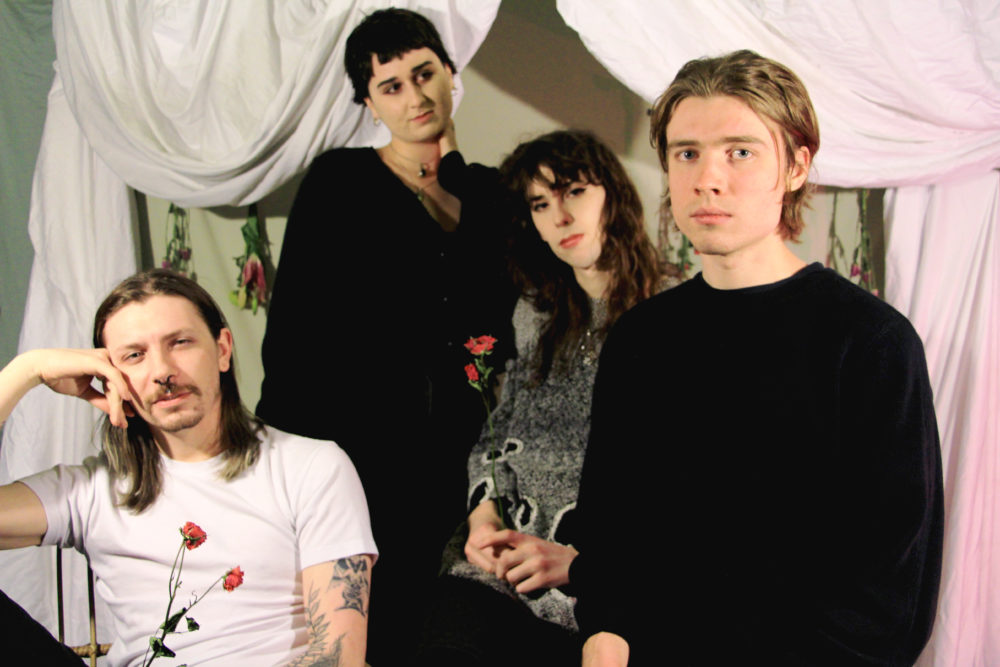
The doom metal band SEED are grouped standing and sitting together. Drummer Chelsea Ellsworth and bassist Jack Whelan are holding roses.Photo Credit: Hope Antonellis

Known for their experimental approach toward doom metal and their queer/trans-forward ethos, Boston band SEED delivered a powerhouse of a debut earlier this year with Dun Pageant. The record sees the group — consisting of frontperson Lux Lucidi (he/they), drummer Chelsea Ellsworth (she/her), guitarist Tony Tibbetts (he/him), and bassist Jack Whelan (they/them) — submerging the listener into nearly an hour of heavy atmospheric metal, weaving in elements of classical and queercore to make a sound wholly their own. Through it all, Lucidi’s vocals are a consistently arresting presence, shifting from chilling melodic singing to piercing screams over the course of a single track. With Dun Pageant now out for a couple months, the band has followed up on the record’s release by putting out a video for the powerful single “Seaweed” to mark Lucidi’s birthday.

The video for “Seaweed” overlays footage from both 2019 and 2021 atop each other in a haze of superimposition to create a captivating mood piece accompanying the chilling song. The base visuals for the video, showing Lucidi along a beach, were recorded at the Cliffs of Moher in Ireland in 2019, where he and Ellsworth were visiting the latter’s sister. Lucidi mentions getting inspired to film while there “to connect with the roots” of the song’s subject matter: “a killer mermaid that is waiting to lure a man to the water to get her revenge.” That element of patience toward a bloody finish is most felt in these standalone wide shots taken at the Cliffs of Moher, where Tibbetts’ clean guitar chords ring out alongside Lucidi’s haunting vocals, mirroring these sweeping oceanfront views.

But, for Lucidi, “the video seemed like something was missing,” and he knew it needed more than just the footage from Ireland. The result was Lucidi and Ellsworth going to Maudsley Park in Newburyport earlier this year for additional shooting. Beyond the park’s historic background, this location also held a personal connection for Ellsworth as the town she grew up in and for its ties to personal music she recorded there (including in a cave in the park, according to Lucidi). Lucidi felt a strong pull to Maudsley Park’s sense of place as well, citing how its “magical character just seemed to fit perfectly to what we needed” in the video. “I suppose the original footage felt too deliberately separated from our sense of home,” he continues, “without the connection to the contrasting area we came from.”

The resulting effect of this blurred pairing of past and present is a visual progression wedded to the emotional arc of “Seaweed.” As the song’s ethereally doomy structure builds itself up and comes crashing down, the superimpositions and cuts become more opaque, and the similarities between the shots from 2019 and 2021 overlap strikingly. Speaking on their intention for the video’s editing, Lucidi explains, “I wanted the video to have a sort of home video and nostalgia sensation, where the footage seemed like a memory or something easy to grasp as relative to our memories.” By the song’s climax — a thundering collective crash of instruments, vocals, and a barreling howl of noise — the video’s imagery evokes the track’s cathartic release via images of waves crashing, skyward glances, and gnarled tree branches capturing the ways the editing process entangled time.

Watch the video for “Seaweed” and stream SEED’s Dun Pageant via Bandcamp below.

Premiere: Janette King Channels 90s R&B For “You Don’t Love Me”

By Harry Gustafson

janette king you don't love me

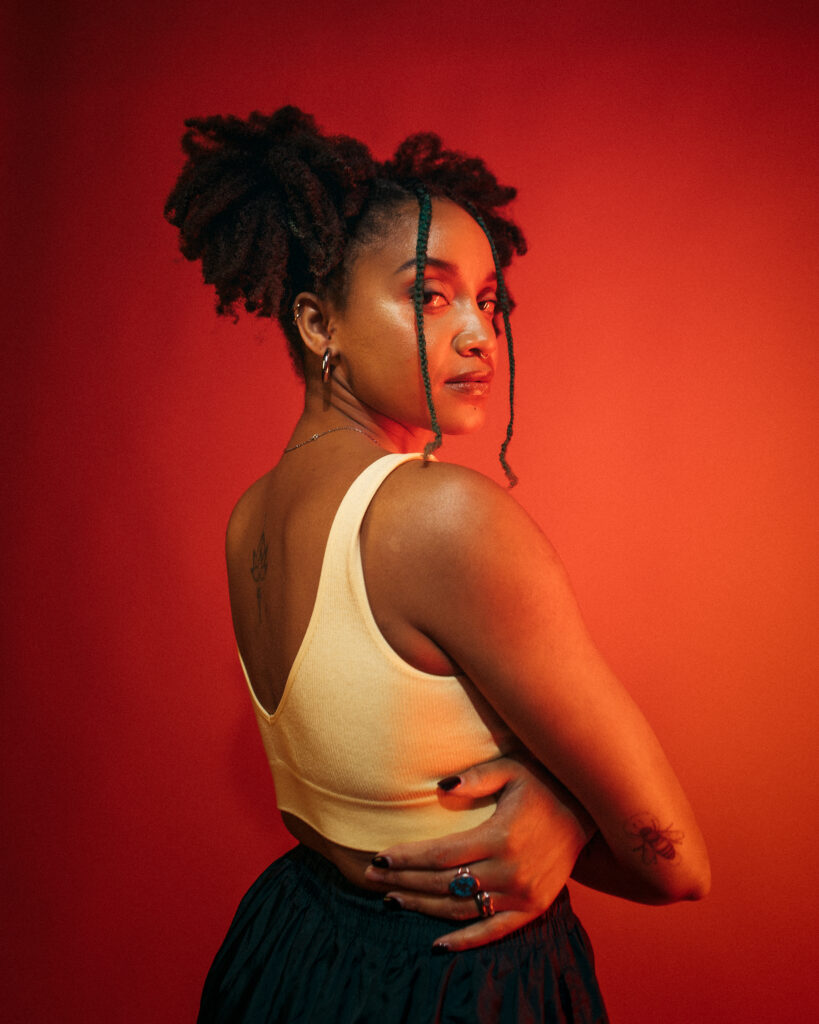
Photo by Michael Oyaro

One of my early quar watches was the classic Love & Basketball (2000), which combines two of my favorite things (those things are basketball and movies with impeccable soundtracks). So my eyebrow raised when Montreal pop-R&B singer Janette King tweeted out a few days ago that her upcoming single “You Don’t Love Me” was “a late 90s/early 2000s love song made to make you dance and be all in your feelings. Remember how Love & Basketball made you feel?” Not even taking into account the fact that Janette’s existing catalogue consists of some of the best examples of how to balance catchy dance tunes with emotionally impactful content about self-empowerment and navigating the minefield that is romance (c.f. recent single “Airplane” and her 2019 EP 143), well… that’s how you pique my interest in a track. 

On previous work, Janette has demonstrated a dexterity to pull in influences from R&B-adjacent genres like house, pop, and hip-hop, which grants her space to dynamically explore the grooves and rhythms of the music she sings over. It also allows her to veer into unexpected territory, like when she posted a beautiful, almost dream pop cover of Neil Young’s “Harvest Moon” on her TikTok back in January. Her recent singles – which include 2020’s “Mars,” “Airplane,” and “Cool Me Down” – have each had a unique tone about them, without sacrificing that thematic mood that lends a cohesive power to an artist’s body of work.

With “You Don’t Love Me,” she is looking back on a relationship that has lost its momentum. It’s not so much lamentful as it is an intuitive, objective observation of the way two individuals drift apart despite early attempts to grow closer. She isn’t saying, “alas, why doth thou not lovest me?” with rose-tinted glasses; King is expressing herself with much more self-assuredness. In the lyrics, she examines a relationship that was “just one of those things,” the kind that fizzles out into a whimper instead of ending with a bang, a mutual dissolution of that initial spark that brings two people together. 

janette king you don't love me

Photo by Michael Oyoro

These situations can be tough, and nowadays it seems that people are more willing to separate themselves rather than work on closeness and vulnerability. And that’s ok; if we try to attach ourselves to everyone who falls into our intimate space, that can be a slippery slope into codependency and toxicity. But at the same time, sometimes you do know how much more you both could give and express. And there’s nothing wrong with questioning why those situations don’t work out, or thinking that it could have turned into something more meaningful. Sometimes the timing just isn’t right. 

Musically, the track finds its influence in R&B from the late 90s and early 2000s, as well as a tinge of 70s funk, especially in its syncopated, funky bassline. Think Ms. Lauryn Hill singing over a Rufus & Chaka Khan instrumental. The song was produced by Jonny Tobin. 

Along with the release of “You Don’t Love Me,” Janette is also announcing the pre-order availability of her upcoming album What We Lost, which comes out on June 25th via Hot Tramp Records. The 12-track album will feature “You Don’t Love Me,” in addition to the other recent singles mentioned above. As the title suggests, the album is a reflection on loss, but those reflections will not be limited to solely the loss of romance. Much of the album was written concurrently with the Black Lives Matter protests of 2020 as a backdrop, so radical social change will be a prominent theme, in addition to the themes of self-empowerment and relationship difficulties that songs like “You Don’t Love Me” explore. 

So, uh, it’s gonna be good. You can pre-save What We Lost via your streaming service of choice as well as preorder it via Bandcamp. Stream “You Don’t Love Me” via Spotify below. 


PREMIERE: BIRDWATCHING RELEASES NEWEST ALBUM TO FUNDRAISE FOR GREAT SCOTT AND O’BRIEN EMPLOYEES

If you’re reading this, there’s a chance in the past year and a half you’ve passed by Brighton Music Hall, The Great Scott, or the countless other music venues that have closed their doors until further notice. The once flourishing music venues, now lay boarded up and empty. While the vacancy of these venues are physical representations of what Boston’s local music scene has lost, they’re also a symbol of hope. Many bands and artists across Boston have put on virtual shows or released albums and donated the proceeds to charities and funds across Boston to help support the underdogs of the Allston-Brighton community—the sound engineers, the stage crew, and other members within the community who are currently struggling. Birdwatching, a self-described nervous underdog pop band, is doing just that with their latest release. Their unique song titles and powerful, fast-paced guitar chords, make Birdwatching’s self-titled album a fantastic pop-punk renaissance piece for a great community cause. 
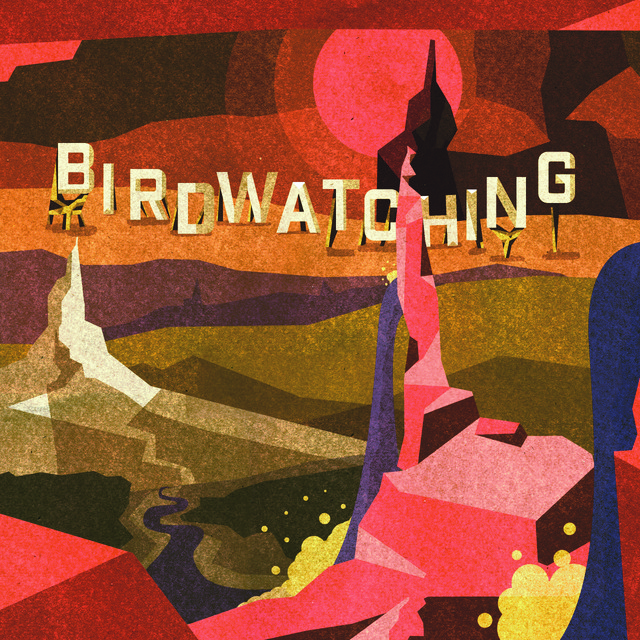
The first thing you’ll notice about Birdwatching are the quirky song titles, but behind each title, details stories and anxieties surrounding death. “The most interesting question anyone’s ever asked me was what my greatest fear was,” guitarist Al Zaniboni explains, “and I said that my greatest fear is that one of my loved ones will die because of my actions… Either I make it, and I have to make a decision, or I do something to cause them to die. So, Andrea [Lead Vocals/Bass], and I really wanted to explore those fears for this record.” While this album was recorded throughout 2018 and finished in 2019, the feelings around the anxiety of being the cause of a loved one’s death ring true for many people as we continue to live in this pandemic hellscape. 

Songs like “Behind The Hoodsie Cup” and “Softer Than Foreplay” immediately catch the eye, but the guitar hooks and the emotional lyrics will catch your ear, too. “Behind The Hoodsie Cup” is a particularly interesting song, telling a twisted story about how a 2am drive from Vermont to Boston could’ve ended. “This song, in particular, is about a time about 10 years ago, when I was in a different band. We had just played a show in Vermont and decided not to stay the night. So once everything ended, we drove through the night for 5 hours back to Massachusetts,” Al says. “I did all the driving, and we made it back fine and I even went to work the next day, but I had nightmares about it for weeks after thinking about all the things that could’ve gone wrong. That experience stayed with me, and so I wrote down these lyrics, and worked them into a song.” 

The songs on Birdwatching bluntly face mortality in the most pop-punk way possible—with catchy power chords and a heavy drum beat. Combine that with Andrea Neuenfeldt and Al Zaniboni’s dynamic vocal duo, and this album is the perfect way to cope with what the past year and a half have thrown at us. 

While Birdwatching isn’t planning on releasing music together after this release, they all agreed that as active members of the Boston DIY community, they wanted to do their part to help out their friends in need. “We’re all super close friends with the employees at these venues. Andrea has actually worked at O’Brien’s Pub and played at the Great Scott before the pandemic hit,” Al says. “We’re all in good shape, so we want to help our buds that aren’t as lucky.” 

If there’s one thing that living through the pandemic has taught us, is that Boston doesn’t just have a music scene; We have a music community. 

PRO TIP: Been in your feels lately, but still wanna rock out and pretend you’re at a basement house show? This is the album for you. Live (indoor) music is still a ways away, but that doesn’t mean you can’t party like you’re at a concert. Shut off all the lights in your living room, create a dance floor, grab your drink of choice, and rock the hell out to Birdwatching. Dust off that air guitar, grease the kink in your neck, and nod to the beat like your life depends on it—because this album is meant to be performed.

Listen below to Allston Pudding’s exclusive premiere of Birdwatching’s self-titled album on Bandcamp. Birdwatching will be released on Bandcamp on 5/7. All proceeds will go to the Allston-Brighton Mutual Aid and The Great Scott & O’Brien’s employee fund


You Oughta Know: Kaiti Jones

By Joey Del Ponte

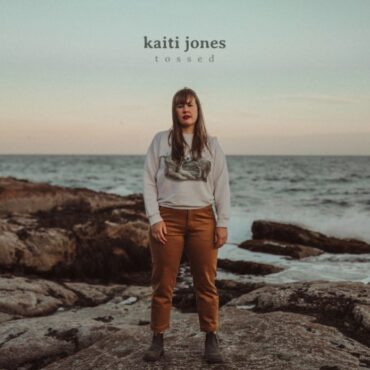
Photo Courtesy of Kaiti Jones

Through her confessional, heartfelt brand of folk, Boston’s Kaiti Jones is equal parts storyteller and biographer. Having already released two EPs and albums since 2009 Tossed is a deeply personal journey of resilience and reflection. What truly stands out in Jones’ music is her songwriting ingenuity. Tossed, released on March 5th, is Jones at her best as a songwriter, crafting melodies and timelessly intimate lyrics that invite the listener into her world and make them feel at home. 

Over the course of the stylistically diverse nine track album, Jones grapples with the news of her mom’s cancer diagnosis on the title track, questions a rigid evangelical Christian culture on the piano drenched ballad “Mystic,” and analyzes her own insecurities on “Gettin’ around to it.” While staying true to her deep storytelling and folk roots, Jones evolves her sound, touching upon rock and pop. 

Jones has spent the last month hard at work promoting Tossed. As most performers can attest to, being a musician during a global pandemic requires a lot of work. With venues shuttered, Jones turned to Club Passim to do a livestream album release on March 5th. “Passim is a venue and community that I have been a close part of for the last few years and [they] have been a huge supporter and champion of me and my endeavors. They’ve been amazing.” She told AP. Performing with a full band on stage was refreshing, says Jones, “It was awesome to not just be in my bedroom with my computer and me.” Another silver lining of online streaming shows is that she can share her music with people from all over the world. Jones’ Club Passim live stream saw viewers from South Korea, Hong Kong, Europe, and Brazil among other places. “That was kind of a trip.” Said Jones. 

Photo courtesy of Kaiti Jones

Jones’ songwriting process also plays into the intimacy and timing of her final musical products. “You can look at a process and think ‘this is very intentional’ or this is ‘accidental and unrefined’ and I think what I’ve talked about is I take a lot of time between records…  I take a lot of time in writing songs. Sometimes I’ll have a couple new songs in a month and sometimes I’ll have one new song in a year.” 

The album’s title track, Tossed tells the story of her mom’s cancer diagnosis and a formative trip to San Diego where Jones rented a surfboard and headed into the ocean; “three years ago, it was right about this time, spring 2018, I found out that my mom was sick and quickly we learned it was a type of blood cancer called Multiple Myeloma… I had just started a new job a few months prior and had already been assigned to go to a conference for my job out in San Diego and it happened to be the weekend that my mom was starting chemo in Portland, ME. So it literally felt as far as possible away from my mom in a particular time when I wanted to be right next to her…”

Jones headed to the beach with a rented surfboard and hit the ocean. “I don’t think the point of this outing was to hone my surfing skills.” She said, “The point was to be alone, to be able to feel all the things and to throw myself at the mercy of the pull of the earth, and the universe, and God, and all the things I have no control over. The actual act of being thrashed around by massive waves felt like a very visceral metaphor. That was one of the moments where the song just started writing itself while I was out there and I started chipping away at it until I had a story to tell.” 

Tossed is a visceral, personal look into where Jones was mentally and spiritually during that spring three years ago. As she sings, her lyrics sound like a voicemail from a dear friend, comforting and painfully honest: “As I tumbled to the bottom /I felt the ocean grip me tight / And the current like a tempest / Pulled me left and tore me right / And the undertow did take me / To the place where I belonged.” 

To support Kaiti Jones, you can purchase Tossed via the artist’s Bandcamp, Rough Trade Records, or in person at Vinyl Index at Bow Market in Somerville, MA.  


Premiere: Dutch Tulips Break Down New Album DOUBLE VISIONS

By Ben Bonadies

I’ll say it. Rock music can be a bit of a bummer. National mood aside, the rock landscape has been trending dour in recent years. With the inevitable bad-vibes fusion of pop-punk and hip-hop topping the charts and guitar music’s newest star firmly in the Sad camp, who will take up the mantle of the lighthearted rockstar? 

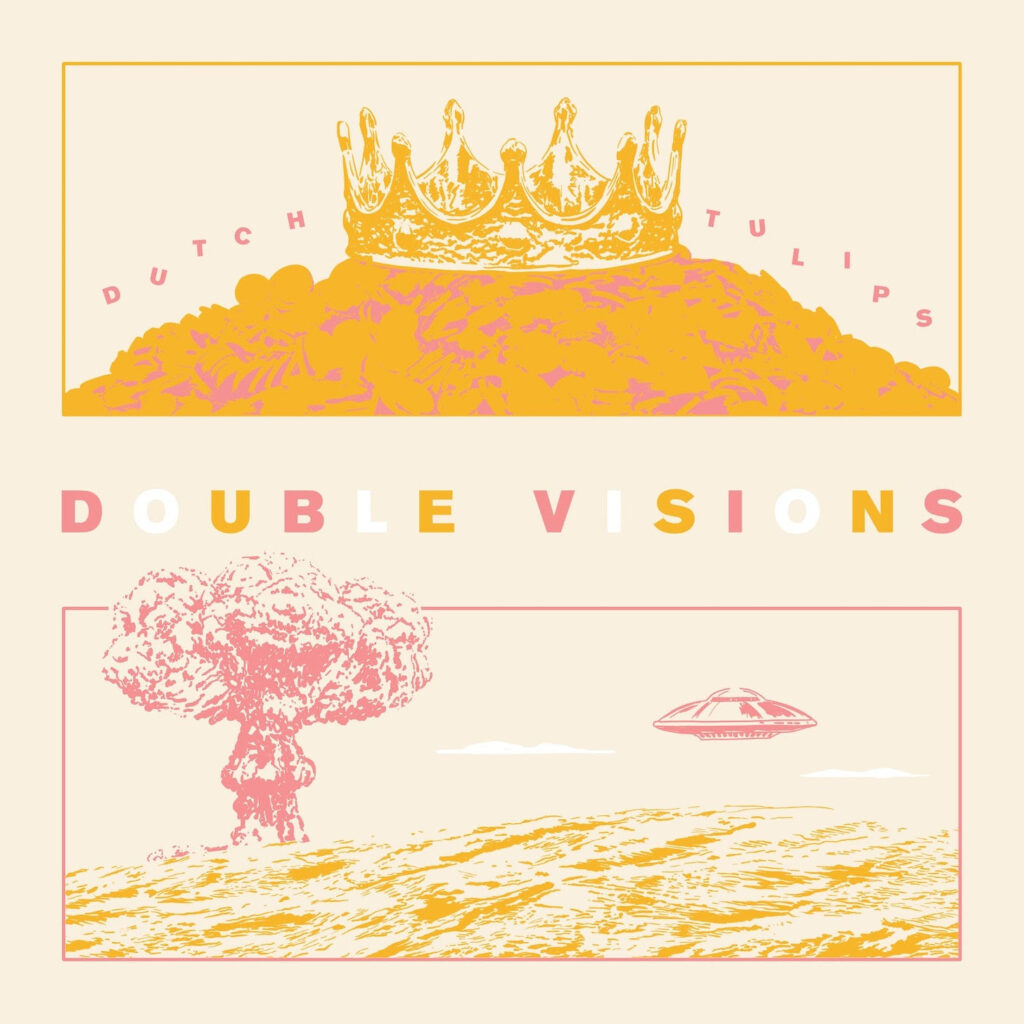
Dutch Tulips make a pretty compelling case on their new album, Double Visions, 12 tracks of fuzzed-out power pop, hooky melodies, and chords strummed with audible verve. It’s a blast to listen to, but that’s not to say the album doesn’t have anything on its mind. “It’s a little bit sneaky. It’s like a prank,” says Matt Freake, the band’s drummer. “The goal in general is to write weird music that’s also approachable,” Freake says. The Trojan Horse approach to songwriting is battle tested and effective and Dutch Tulips employ it to great effect on Double Visions. Lead singer and lyricist Jack Holland delivers anxious missives in an acrobatic yelp while the band behind him plays the musical equivalent of a summer kegger. Single “Tell Me Your Codes” has Holland running down a list of things in his life that should be helping but aren’t. “I water the garden, that’s doing nothing for me. I’ll swallow anything that’s doing nothing for me” he sings as a chorus of “Doo-Doo-Doos” and chugging fuzz guitar lift him out of his funk. 

Dutch Tulips by Stanislaw Nagiec

Freake’s answer to the spate of glum rock we find ourselves in is to take it out of the computer and into the real world. “I think music is fun when there’s a little bit of spontaneity to it,” he said. The prevailing wisdom when recording music is to err on the side of sterility. Tune your vocals perfectly, strap everything down to a grid, and let the computer do the work. “It sounds really good but it doesn’t have a soul to it,” says Freake. It’s this reason the band records live in the room, tracking bass, drums, guitar and synthesizers together. The resulting recording feels electric, alive with the energy of a pub band already three beers deep. It leaves Holland plenty of runway for finding inventive routes through a song, like his frequent trips to the high end of his register in “Frozen Orange” and tender cooing in “Better Than a Soul.” 

For Double Visions, the band decamped to Ghost Hit Recording, a converted church in West Springfield complete with a 1,400 sq ft apartment for artists in residence. The space was the missing piece the band needed to put the finishing touches on Double Visions. Freake praised the acoustic quality of the room and the abundance of gear to experiment with. After the bulk of the recording was complete, they began layering organ and fiddling with delay pedals and other juicy bits of hardware that are irresistible to bands like Dutch Tulips. “We’ve vowed to never make a record anywhere else ever again,” Freake said. 

Buy Double Visions on Bandcamp. You can also find the album streaming on Spotify and Apple Music.