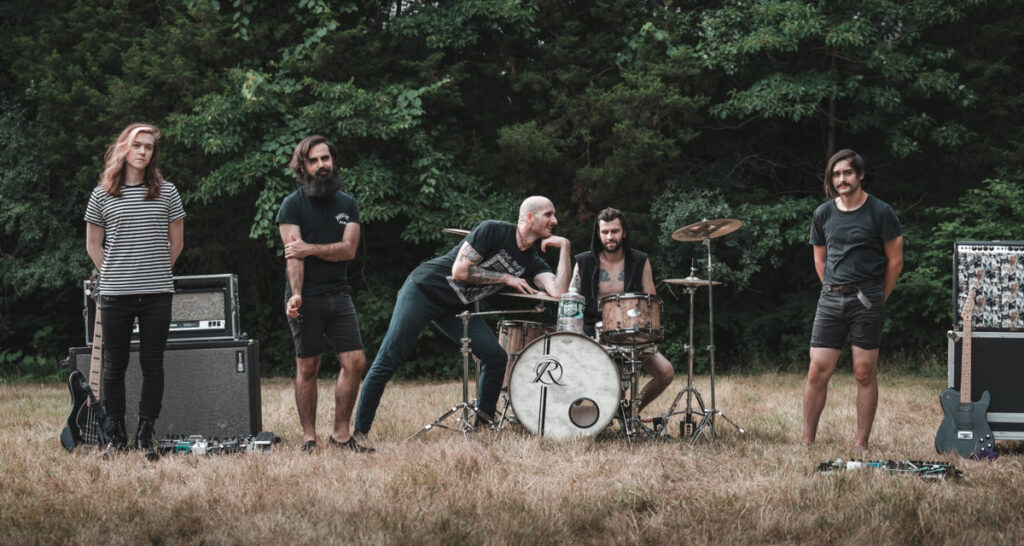
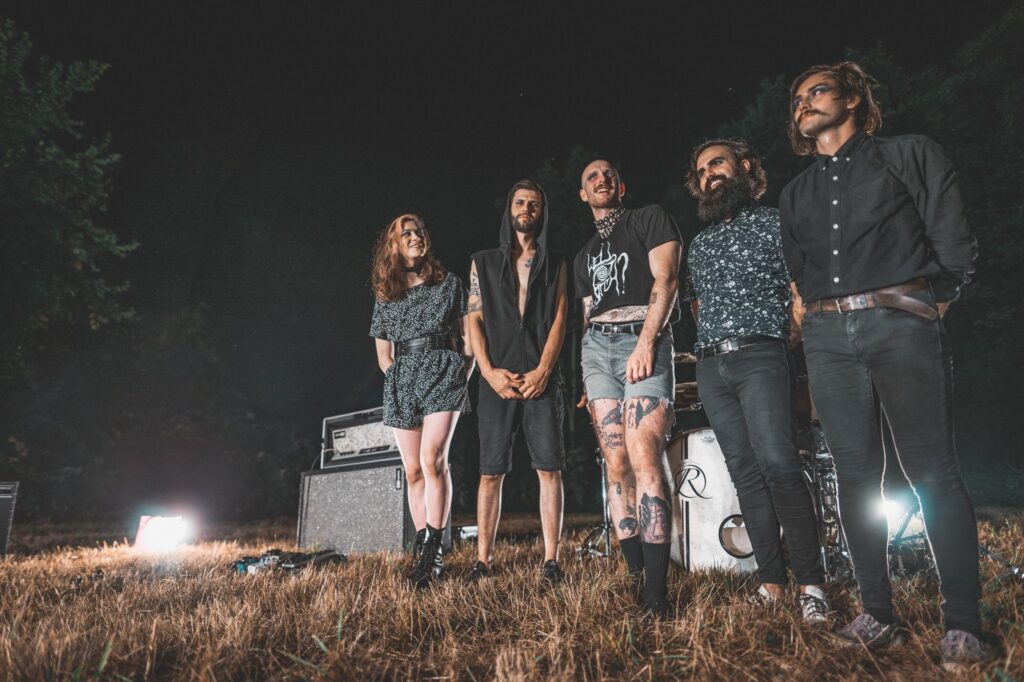
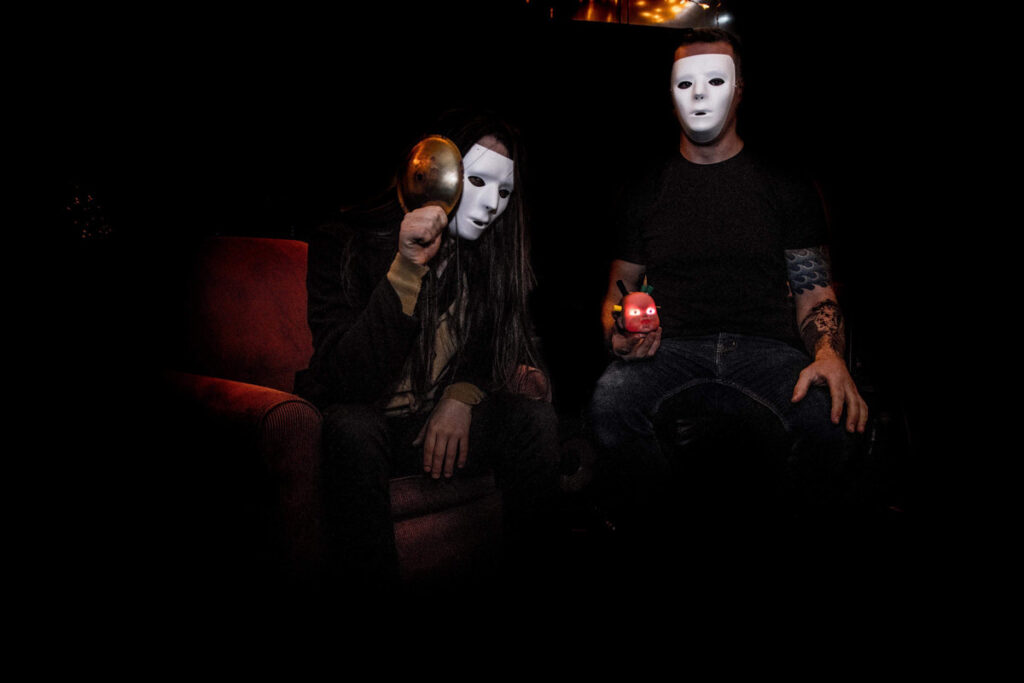
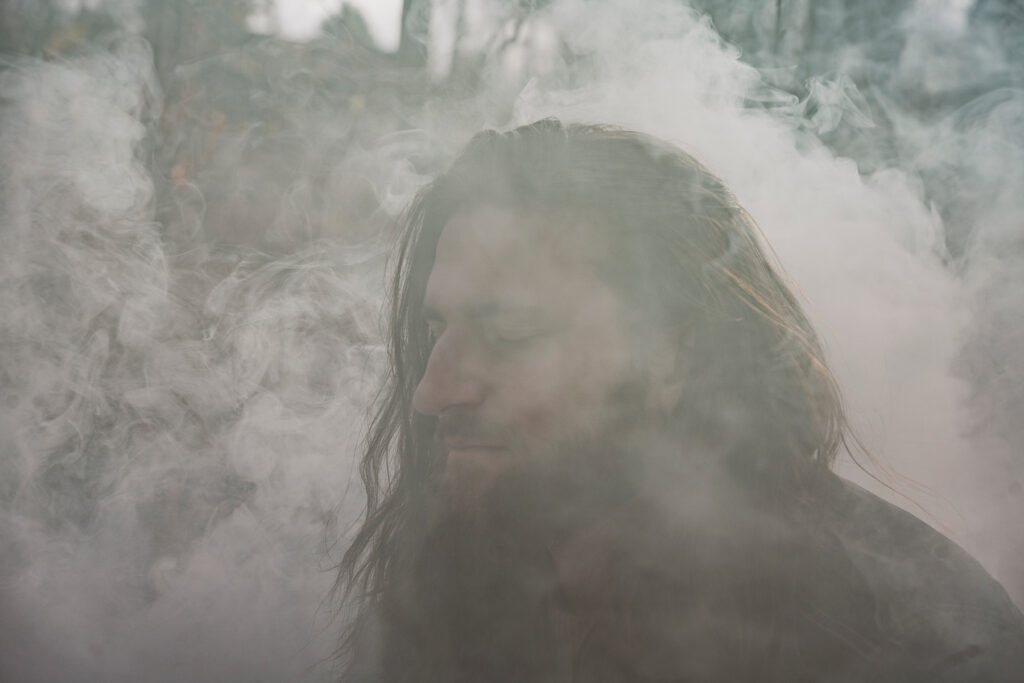
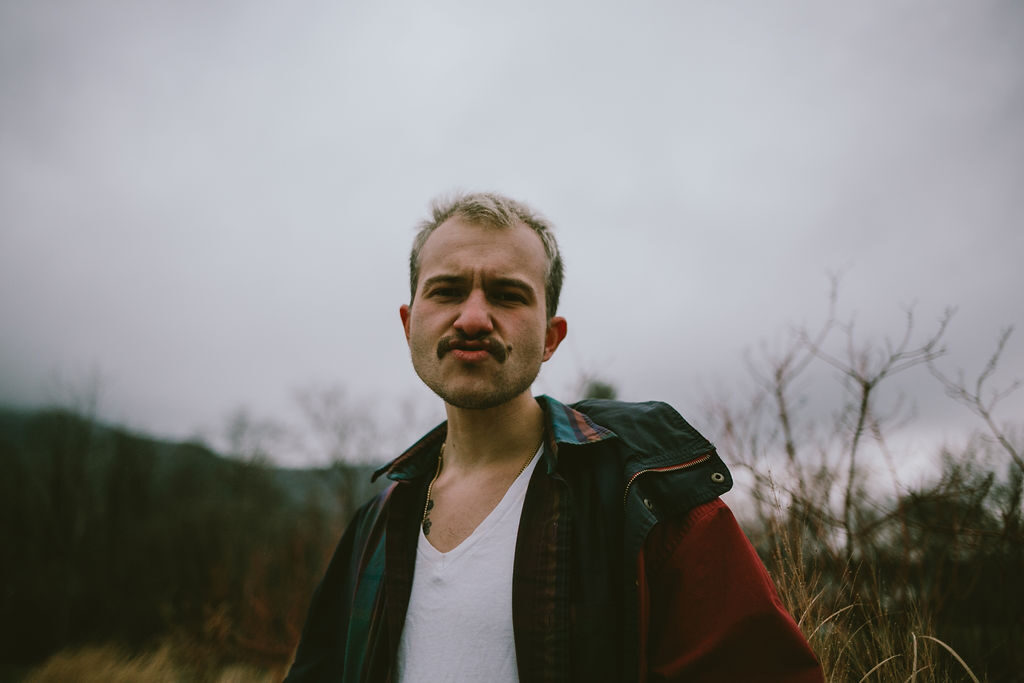
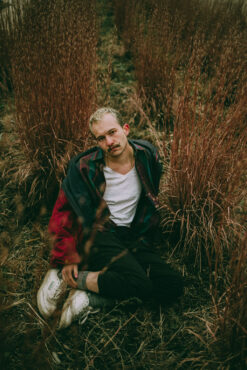
Trash Sun is the moniker of August Darula, working as a side project off their band 7/11 Jesus. Since starting the project in 2019, Darula has released a whopping six albums, an enviable work ethic for any solo musician. This may be due in part to Darula’s desire to self-record and self-produce albums, with a stockpile of songs dating back to 2015. The project is ultimately designed to be an experimental self-introduction into the world of production, a fun experience, and one that we delightfully get to partake in. Darula has called Trash Sun “guitar music,” but the six albums released all have their own individual identities. They contain a much wider influence of genres, crossing seamlessly through punk, shoegaze and dream-pop. The most recent, Besides, was released in February and showcases a new angle from previous works.
Besides is Trash Sun’s most ambitious release to date, but that’s not to discredit their older albums. The album is an ‘extension’ of the past works, which have been much more guitar-focused releases. Darula’s previous album, 2020’s Fried, plants its feet firmly in the camp of noise rock and garage punk, while past albums like Dust and Nowhere Is Everywhere have exhibited patient rock with bedroom-pop styles. As Darula accurately comments, each album is part of a wide spectrum of influence without abandoning its roots. Indeed, the albums all feel like pieces of a complete whole – each release is a small foray into a different avenue of noise rock, and makes the others feel more complementary to each other. Every one is worth a listen to see how Darula’s interests intersect and influence the other Trash Sun releases.
Trash Sun’s album Dust
Darula’s newest release is the biggest outlier in a rapidly increasing discography, but it shares the two simple things that unite all Trash Sun albums – distorted guitar and vocals. There is more of a focus on the production – improved from the early laptop days. The tracks are thinner, and the inclusion of piano and strings in some songs have provided a fuller sound. However, the fuzzy guitar licks and the vocals layered under distortion are as prominent as ever. Any attempts at lyric discernment are futile here. The end result is closer to dream-pop than anything else, which Darula hopes has a calming effect during these troubling times. And it succeeds! The opener “White Widow” sets an immediate hazy tone, even more muzzled than before. Late-album standout “Web” is particularly mesmerizing in a way that’s both relaxing and hypnotizing. Besides is actually a play on b-sides, as the album is more of a collection of loose threads rather than a straight focused idea, but the flow of it will deceive you into thinking it’s a proper narrative. The album ultimately fits in with previous releases, with a few tweaks and additions that chip away at the more chaotic tendencies to produce something similar but muted.
The natural progression of Trash Sun’s albums is something to behold. It feels like the way an indie band would evolve their sound over the course of a decade, but accomplished by a solo act and dashed across only three years. Besides is an important piece in Trash Sun’s music as it introduces new experimental elements and elevates the minor aspects of past albums without losing any focus of what the core of the project is. While the album was recorded early enough that it can’t be entirely reflective of the pandemic, these times have allowed Darula to increase an already hectic recording schedule; a new Trash Sun album should be on the way in the late summer. Truly, no rest for the weary. Besides can be streamed below, and all of the Trash Sun albums are available on Bandcamp.
A former resident of the beloved local queer party Houseboi, XMariposa (under their prior alias LUNAMARIPOSA) has long been a fixture in the Boston dance music scene, playing at hotspots like Middlesex Lounge, the Lower Level and even MassArt. They have since branched out into producing along with DJing, and adopted the new name along with another moniker called LUNÁTICA for their more “primal” and rave focused productions as well as for the DJ sets that fit into the ever-nebulous experimental club subhead. XMariposa says the differentiation comes down to the spirit of each project.
“XMariposa is mostly focusing on my love for all the forms of house music, which in the words of the iconic and legendary Frankie Knuckles, is disco’s revenge.”
With that in mind, XMariposa presents us with a finely tuned hour of house vibes of every flavor, dipping into hits from the the 90s, the 00s, and today, without a single blend that feels out of place. And so we are pleased to be hosting this mix they’re calling “A la XMariposa Flow” here at Allston Pudding. Read on for a bit more about XMariposa’s favorite dancefloor epiphanies and then get to dancing at the link below.
Allston Pudding: How would you title this mix?
XMariposa: “A la XMariposa Flow“
AP: Tell us about some of your gigs and/or other mixes and releases.
X: I used to be part of a group called Houseboi who had a residency at Middlesex Lounge, but my favorite part was when they first started hosting Houseboi at club OBERON. The DJ booth hovers over the dance floor, letting whoever is DJing witness all the magic happening from above. Another one of my fave gigs was playing First Fridays at the ICA in 2019 with longtime collaborator and bestie Earthaclit. I had just turned 21 the week before and had celebrated it at the ICA for the DISCWOMAN showcase so it was really dope to get a turn behind the decks a week after getting to see BEARCAT, Br0nz3_ g0dd3ss and SHYBOI. I hope that maybe one day I get invited again when this pandemic is actually over just so I can get my hands on 4 CDJS and relive that dopamine of happiness I first experienced. In regards to mixes I really love my mix I named “IN A WORLD FULL OF EVES BE LILITH” this mix speaks for itself and is part of a series I call O.E. (Oracle Energy) you can find it on my Soundcloud page. I also have a joint EP with my friend FIFI coming out through JEROME mid spring, which is exciting since I’ve been a fan of this label for a while and get to show a leveled up version of my production as LUNÁTICA.
AP: What’s the best setting/way to enjoy this mix?
X: I usually listen to mixes either when i’m cleaning or cooking in the house, or just when I simply wanna wiggle around in front of a mirror in my room. So my answer would be: wherever this mix finds you, if it moves you…let it move you.
AP: Is there any sort of concept to this mix?
X: Nope!
AP: Do you have a favorite moment in it?
X: I started off a little delicate and lush but from 27:30 – 29:50 and most of the blends after I favor cause I’m mixing into some more hard house.
AP: If you could describe this mix with one adjective or emotion what would it be? Why?
X: The adjective would be uplifting, but also I’m choosing to go with a color ~mauve~ and my reason why? Well…the mix speaks for itself.
AP: Is there a particular genre or label or tempo that you especially gravitate towards when mixing? Why or why not?
X: It depends on which project/persona I step into–anything from 100-150 for bpm–but for this mix it’s a good 125-130bpm since it’s mostly house music.
AP: What makes a successful DJ mix for home listening to you? What makes one successful in a club type setting?
X: As XMariposa I’m more of a Response over Reaction type of person when it comes down to mixing in front of a crowd/at the club. That means to me that if you have a good selection of music, people respond with the emotions those tracks make them feel as opposed to just reacting to some crazy percussion coming up or the bass leaving suddenly and coming back after a 4 bar count with a build up. I do think it’s a balance of both though. As LUNÁTICA I wanna have a reaction from people where they’re losing their minds and question what their ears are experiencing, but they’re still loving every second. However, every DJ knows about the “Flow” where you don’t train wreck from one track to another and land every blend cohesively or at least having a steady hypnotic rhythmic flow that won’t throw off the dancers/listeners. I do understand though as a performing DJ you have to have a clean mixing skill set that shows you know what you’re doing and you’re doing it well. I wouldn’t wanna perform for a festival of over 1000 people and trainwreck my entire set or blow up the sound system. That would be sooo bad and embarrassing omg!
Photo courtesy of XMariposa
AP: Do you have a favorite and/or formative dancefloor memory? What made it so memorable?
X: OKAY SO! I totally had to look up the flyer to get it right because I just had to: SUBLIMATE W/ BEIGE , silktits, Soul 2 Seoul and DEE DIGGS- FEB/21 IN a NYC warehouse.
I was with my absolute fave Libra that is Dee Diggs ❤️. She was on her double booked tip that day and I remember after her first gig at SOUL IN THE HORN hosted and created by Natasha Diggs, we went for some hotdogs and recharged up a bit before her soul-shaking, love-lifting set that night at Sublimate. I recall toward the end of Dee’s set I sat on one of the 2 huge subwoofers they had in the space and just felt the vibrations and was smiling super hard. I just remember how grateful I was that night (and still continue to be) to have such a loving person in my life after a series of down moments where I felt abandoned. I have these kinds of moments often of love and communion when I find myself on dancefloors where l remember and recognize that love is the message.
AP: How would you describe Boston’s dance music scene? What changes would you make (if any)?
X: How would I describe the dance music scene here, well I guess it has its magical pockets and what not but…
We need less DJs and venues where they only allow themselves to play top 40 songs.
We need more GENUINE collaboration between organizers and less egos.
We need better venues with efficient rules that don’t tolerate any form of hate or ignorance even within their own staff.
We need sober friendly venues.
We need safe drug usage venues.
We need sex positive and educational parties.
We need to acknowledge the racism and abuse of power within clubs and organizers.
We need more BLACK and NONwhite DJs to be booked.
We need more NON CIS MEN HEADLINING.
We need a law where we are allowed to dance and be loud till 4am or beyond.
We need more people in it for the culture as well and not just the money.
We need venues to pay more than $100 for a 4 hour DJ set.
We NEED to have more and substantial funding from the city.
WE NEED more day time functions.
We NEED more outdoor events.
We NEED more non white organizers given the funds and access to curating parties where it’s not mostly white people.
Shall I go on? LMAO.
AP: What inspires you as a DJ? And what do other DJs do that inspires you?
X: Part of it is the selections and what those songs make me feel–if a DJ can invoke something in me–I really respect that and aim to do the same to others. Also, just being authentic and humble, I’m not into a Diva without some drop of grace anymore.
AP: Are you someone that frequent(ed) clubs? Either way, how does that influence the way you DJ?
X: Literally was just DM’ing my friend Matheus aka MATH3CA about how we miss nightlife and the clubs, but are hopeful about people growing and changing in order for things to not be the same once they open back up. I especially just miss dancing to a good sound system and being with friends, and of course that experience influences my sound, from my mood to the type of music I’ll play.
AP: When you play/create sets do you play with an idea in mind or do you cater to the audience’s energy? How so?
X: Honestly I usually play whatever music I’ve been listening to and whatever makes me wanna dance. Yeah I might cater to the crowd but it’s not 100%. I like to remind people that they are paying to go see a performance, not put a quarter in a jukebox or attach their phone to an aux.
AP: How does DJing inform the music you produce? Dance music or otherwise.
X: I recognize that through DJing I’ve trained my ear on how to layer sounds and what not. I wouldn’t be the producer I am becoming without the DJ to producer pipeline. For some it’s different, I’m just glad I locked down the nonlinear style of mixing.
The release of Divine Sweater’s Ten Year Plan album has been on Allston Pudding’s radar since the indie dream pop sensations dropped their first single “Looking For You Everywhere” back in 2020. This long-awaited compilation combines Divine Sweater’s signature tight harmonies with synth, steel drums, and the beloved glockenspiel to create a meaningful album that will make any listener ponder about their own ten year plans.
Photo by Anabel Rios
Each song on Ten Year Plan has a unique story to it, but the same melancholic feeling of dealing with the harsh realities we face as we grow older is pervasive throughout the album. Lonely listeners can take comfort in tracks like “I Knew You Better” and “The Boy Who Went to Space”, which both outline what it feels like to have someone you were once close with become a stranger. “‘The Boy Who Went to Space’ is about when you think you really connect with someone in a relationship, and it ends so abruptly that you’re left thinking that they must have gotten abducted and brainwashed by aliens,” lead vocalist Meghan Kelleher says. “It’s similar to ‘I Knew You Better’ in that way. Having this closeness with someone that just disappears can be a really jarring experience.”
Photo by Meghan Kelleher
The musicality of Ten Year Plan is fantastically crafted, melding a powerful, silky cello and vibrant guitar chords with ethereal vocal harmonies. “Timekeeper” showcases the steel drum, a new instrument for Divine Sweater, to create the thick, airy almost electronic-like sound in the intro of the song. “‘Timekeeper’ was the first song we wrote for the album, actually, but we deliberately made it the last song on the album,” guitarist Sean Seaver says. Being the last song on the album, “Timekeeper” is a somber conclusion to an existentially hard to swallow, yet stunningly sonorous album.
Pro tip: This album is a great way to reflect on your own ten year plan. Sitting on your bedroom floor with your head resting on your bed is the best way to consume this album. The sun fading away in the horizon– the only light illuminating your surroundings– creates a fantastic headspace for self-contemplation about what the future holds for you.
Ten Year Plan is out now on all streaming platforms, and you can listen to it via Bandcamp below.
Dreamwell is quick to talk about how their latest album Modern Grotesque is cursed. “We had a plan in 2018 to finish writing the album that summer,” guitarist Aki McCullough tells us during our call with the band over Zoom. “We were just gonna keep writing and not play too many shows, and be done. It didn’t quite go that way.” Plagued by tumultuous lineup changes, workplace injuries, COVID lockdowns, and label issues, the Providence-based post-hardcore/skramz five-piece’s sophomore album took an arduous four year journey to get to its recent release. Though the road to bring Modern Grotesque to fruition was long and fraught with difficulties, the album itselfis an instantly gripping and cathartic experience, and one that makes Dreamwell an emerging band well worth watching.
Composed of McCullough (she/her), vocalist Keziah “KZ” Staska (he/she/they), guitarist Ryan Couitt (they/them), bassist Justin Soares (he/him), and drummer Anthony Montalbano (he/him), Dreamwell first came into form in 2016. “I had just moved to Boston,” McCullough says, “and hadn’t been in any bands in Boston yet.” She came across a post in a Facebook screamo group “looking for a guitarist for a band for fans of Touché Amoré, Pianos Become The Teeth, and Defeater,” and met with the four other members at the time (including the band’s initial vocalist Ramsay Young), who had formed Dreamwell after playing in post-hardcore and pop-punk bands with each other before. What resulted was their 2017 debut album The Distance Grows Fonder, a release written and recorded shortly after the band’s initial meeting.
And though the band had started writing songs for their follow-up and performing them at live shows shortly after that album’s release, Dreamwell quickly found themselves hitting numerous stumbling blocks on the way to completing Modern Grotesque. After Young parted ways with the band following difficulties with songwriting, the group took on another vocalist who “basically just ghosted us,” says Couitt, centering all his time with a different band instead. “It felt like someone was committing to a relationship with you and they’d been cheating the whole time,” McCullough describes. Luckily, Couitt had known Staska from their doom band Lymphoma Twins, and approached them in mid-2019 after Staska had expressed wanting to join the band previously. Staska showed up the next week with vocals already written (“Shocking for a vocalist to have it together,” McCullough and Couitt joke), and the songwriting process for “basically the entire album at that point” was completed “pretty fast.”
When it came to the recording and production of Modern Grotesque, however, Dreamwell still faced several uphill battles to turn their songwriting into a finished record. The problems started during recording sessions in early March 2020, when Montalbano accidentally stabbed himself in the leg at work with a box cutter and had to track drums with an infected wound despite being unable to stand or practice the week before. Thankfully, Montalbano powered through and completed his parts for the album. (“[He’s a] machine,” Couitt remarks in amazement.) That relief didn’t last long, as the pandemic lockdown in March stopped production in its tracks before McCullough or Staska could record their parts. Though McCullough was able to record her parts at her home studio (and narrowly avoided a session with COVID-positive recording engineer Ryan Stack) and Staska was able to provide vocals during a lull in COVID cases in July, Dreamwell hit one more challenge when their label bailed on them a week before the album’s release. Quickly working around that, the band took care of their own promotion, pre-order campaigns, and streaming licensing. “And then the singles disappeared on release day of the album,” Couitt notes as a consequence of label complications. “So that was kind of like the final ‘fuck you’ to the cursed album, because why would anything possibly go smoothly?”
A casual listener unaware of this background might not be able to tell that this much difficulty happened behind the scenes, as Modern Grotesque comes across as a wonderfully assured album of pummeling post-hardcore riffs and piercing screams, with its emotional and sonic intensity rarely relenting. That much is clear from the album’s opening three songs, all naturally segueing into one another despite being written as separate tracks over different periods of time. After a screamed prelude over clean guitars on “What Does It Mean to Live in a Grotesquerie?,” the album drops headfirst into the punchier screamo energy of “Painting Myself a Darker Day,” before guitar feedback whines directly into the foundational drumbeat that introduces the even more frenetic desperation of “Sayaka.” Refining that kind of tracklist flow is something that McCullough says she has an intuition for. “I’ve always been interested in more macro-level songwriting, or album writing, or even discography writing,” she says. “And I’ve always been interested in the idea of grabbing and letting go of the listener’s attention, sonically. I think it’s an interesting variable to play with because [the way] people listen to music is especially different these days.”
That sense of cohesion permeates Staska’s approach toward writing the album’s lyrics as well. Though initially tasked with simply writing lyrics in time for the band to play shows, Staska soon found that his lyrics often returned to the same themes and concepts. “It made me think this could be a good opportunity to not just be writing a bunch of disconnected songs,” she explains. “but instead really have a throughline, and it started to [affect] how I approached the rest of the songs.” That realization ultimately drove them to introduce snippets of lyrics across the record on the album opener, and turned the closer into a hopeful outlook that ties everything together for the characters across the album. What became the unifying lyrical factor of the album — and provided the record with its title — was Staska’s focus on fiction writing in a workshop with a professor who introduced them to Flannery O’Connor. “A lot of these characters she would write were these twisted versions of ideals and characteristics of Southern culture, whether it be their religious elements or their social fabric,” he explains, “showing how they failed to live up to the culture they’ve created for themselves.” Staska became inspired to make their own “modern grotesques” as an exercise toward writing more character-based lyrics, basing this concept on the lack of regionality that comes with living on the Internet and “looking at the broader culture we live as a part of.” What results are lyrics that span from the allegorically visceral gay narrative of “You Dreamt of Me. I Dreamt of a Mountain of Salt” to the direct reflection on abuse of “Plague Father; Vermin Son,” Staska adapting their style to fit what any given song or subject calls for.
It’s the band’s approach toward bringing the instrumentation and lyrics together, however, that makes each heavy, sprawling skramz cut land with thunderous impact. Often developing songs by building off riffs one member would bring in to practice or demo tracks that McCullough had made beforehand, Dreamwell has found that they’ve been honing their approach toward collaborating as a band over the course of Modern Grotesque’s production. McCullough and Couitt often see that dynamic develop between their own playing styles as guitarists, as in a “completely accidental” moment on “Mountain of Salt” where the two play the same riff in different orders. Elsewhere on the album, the band found themselves challenged by the rigorous demands of the music itself. The album’s climactic multi-part title track is one the band unanimously thinks was one of the hardest to pull off, due to the number of riffs and ferocity of blast beats McCullough had written for it — to the point that Couitt jokingly refers to it as a “high post-rock skramz epic.” Staska found their own difficulties in the late album cut “The Lost Ballad of Dominic Anneghi,” with the song demanding she write and vocalize “completely outside of my comfort zone,” almost giving up on the song entirely due to having to “first teach myself new ways of writing that I’ve never done in my 10 years of writing music.”
(Photo Credit: Jared Shute)
With Modern Grotesque out, Dreamwell now find themselves particularly excited about their video for “Mountain of Salt,” which was shot and edited by the band’s photographer Jared Shute, and is due to be released soon. The video was filmed with “an absolutely nothing budget,” with last-minute DIY fixes involving using car headlights for night shooting, as well as drilling and melting a candle into a Bible. As conceptualized by Staska and McCullough, the band aimed to capture their raw energy and passion in performing, while visually capturing the song’s allegorical lyricism about “gay stuff.” To fit that theme, McCullough notes how shooting fell a few months after she started transitioning, and that “it was the first time everyone saw me in anything feminine and with makeup.” Talking about the band’s written plans for the video, Staska adds that there was one note that the band had for themselves above all else: “‘Night scenes: dress gay.’”
With their “cursed album” finally out and catching the ear of new listeners, Dreamwell is already looking forward to performing songs from Modern Grotesque in a live setting once it’s safe to do so again. “Everything that I do musically is with the intention of being live,” Staska says. “I write based on how it feels to perform it physically, so I miss performing the songs basically the way that they were meant to be performed. Also, the live space has always been my one opportunity to be an unhinged maniac.” McCullough is particularly excited to return to performing live for another reason: “I’ve yet to play a show post-transition. Even before, it was one of the few times where I felt super in the zone and super confident and was like, ‘Yeah, this is what I should be doing.’ So I’m ready to just wear my most over-the-top clothes that I can’t really wear in any other setting in public. I’m ready to become too powerful for the universe.”
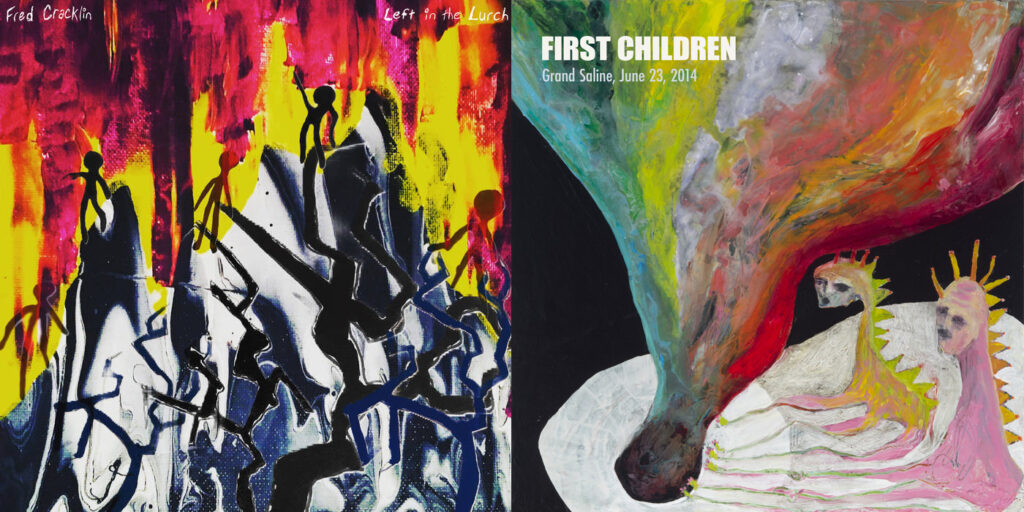
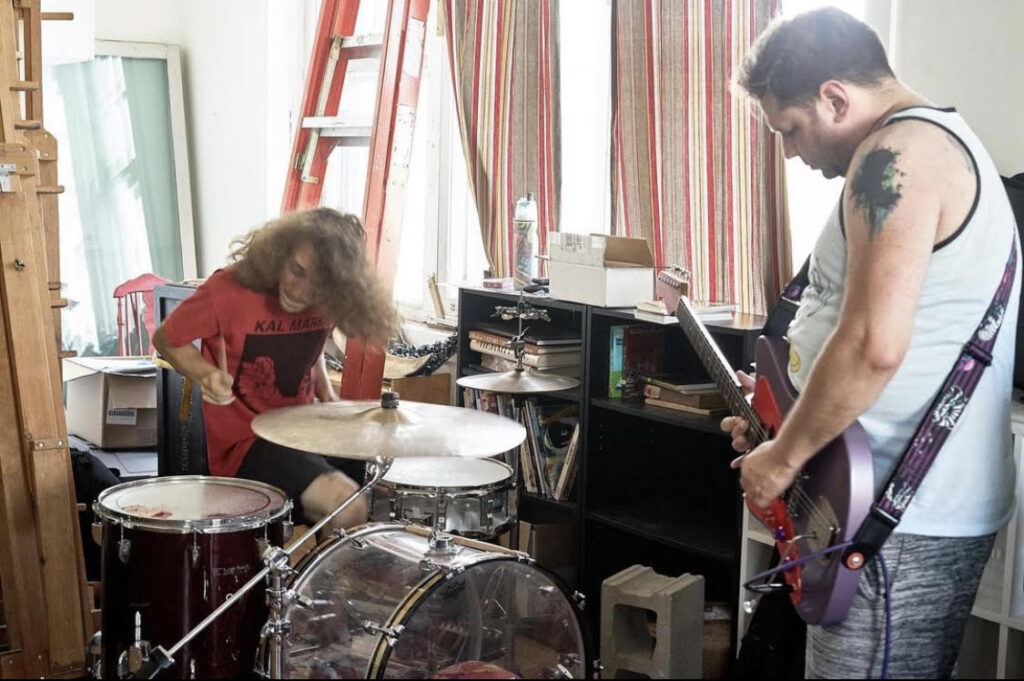
While the experimental rock duo Fred Cracklin were recording their second album, Anxiety Kinship, they were struggling with the placement of a 17 minute long song, eventually shelving it due to its length and instead shopping for a potential split to put it on. Around the same time, they caught a set on a joint show from First Children – two fifths of Landowner – who played a song that was similar in both tone and length. First Children had no plans for their behemoth of a song either, and through the sheer coincidence of timing and initialism, the FC split was born. The split feels very much like two sides of the same coin – two 16 minute tracks of free jazz and experimental noise that are as ambitious as they are riotous, and we’re honored to be hosting the premiere.
Fred Cracklin
Fred Cracklin’s portion of the album, titled “Left In The Lurch,” sounds like pure chaos to an untrained ear. The manic changes in volume, rhythm and prominent instrument allow “Lurch” to sound like a frantic nightmare, with the unpredictability and improvisation of one to boot. But there’s much more to this piece than just a free jazz experiment. Even though no idea in this song is settled on for more than a minute, the general tempo remains surprisingly patient, which makes the song feel half the length it really is. The volume and tonal shifts keep this piece exciting at every turn. The best example of this is around the ten minute mark when the rhythm is at its weakest, replaced by a dog whistle-like guitar freakout – and only 90 seconds later the song is back on tempo with a pummeling bass rhythm. Some other highlights include an early saxophone solo around the six minute mark and an absolutely roof-pounding rhythm at the 12 and a half minute mark, and even the inclusion of a musical saw! It’s impossible to tell how much of “Lurch” is scripted and how much is improvisation – which is a testament to the band’s eye for controlled chaos. “Lurch” exists on the fringes of bedlam for its whole runtime, but only strays into actual noise cautiously, allowing the semblances of rhythm and the bookended existential narration to give the song a much more sinister feel than pure noise would. The piece may prove to be a bit of an endurance test, but there’s a lot to pick apart and appreciate across “Left In The Lurch.”
First Children
In comparison to Fred Cracklin’s kinetic burst, First Children’s contribution “Grand Saline, June 23, 2014” feels like a proper piece, with three distinct movements. The first five minutes of the song are a punishingly slow complement to “Lurch,” centered around a dissonant guitar riff that comes within the first minute. There are also some vocals – sung tortuously and buried into the background of the song, making any attempts to decipher the lyrics futile. This only adds to the hellish and cryptic aura of the song’s first third. Right after the five-minute mark however, the tempo suddenly hurries like an unexpected anxiety attack. From there, the duo cycle through a number of different wild rhythms, from a guitar onslaught, to a pounding lower rhythm, and into a fun distorted melody that sounds like it came from a haunted circus. As unpredictable as this section is, it also largely maintains a central rhythm, and has the closest thing to any real structure seen on either end of this split. Just before the 11 minute mark, the song hits a climax with a wall of sound that is less carnivorous and more cathartic, the satisfying conclusion to a long musical journey. The song’s final minutes are the quietest across the album, with any proper melodies eschewed for an ominous drone and mysterious voices that sound more automated than human. In a way, the ending feels a cool down period after the 25 minutes of chaos that precede, but more than that it sounds like the final descent into a dark underworld with no happy endings. It’s a remarkably double-edged way to end the piece.
“FC Split” can be streamed below, and can also be purchased through a limited number of vinyl on Bandcamp. The bands plan to tour when it is safe to do so!
When COVID darkened our stages and disrupted groups all over Boston, including an untold number of bands, it seemed one of the most viable options to keep music going was to retreat to the bedroom and focus on solo projects. That’s what Greg Marquis of the Boston post-hardcore outfitActor Observer has done with the fantastic indie-folk outfit he calls Marquis Lavoie. With Actor Observer, the high-flying front man had cultivated a strong fan base over the last several years, screaming and head-banging around the country to support two full length albums via No Sleep Records. Now, with the music video for “Knowing You,” we hear Greg Marquis turning over a new leaf as he croons over acoustic guitar (with nary a power chord or a blast beat in sight).
Equipped with a mayor’s office grant via the Artist Opportunity Fund, Marquis and his team created the video for the new single “Knowing You,” a potent blend of both concept and performance. We have alternating shots between the outdoors at Herter Park Amphitheater and indoors at The Coolidge Corner Theater. The result is a playful mix of light and colors, bright snowfall on Allston and glorious gossamer in Brookline. Inserted within the ‘live’ footage is a sepia toned solo reel that looks like it could have come straight out of“Losing My Religion.” Finally, we have a romantic narrative featuring a love interest between Marquis and his actual girlfriend,Michelle Mee Nutter – although Marquis insists the song is not about them.
Marquis explains,“At first I was asking friends who might be interested to play that role, assuming Michelle would not be comfortable effectively standing in as my “ex,” but when I was having trouble casting, she nonchalantly asked, ‘Why didn’t you just ask me? It’s way easier and safer than bringing another person on set.’ I was a bit surprised and told her I was worried she’d feel weird/awkward being put in that position, but we’re both artists who support each other’s self-expression.”
It’s difficult and exhausting to predict the future these days, but when asked how he will maintain both Marquis Lavoie and Actor Observer going forward, Marquis says, “I think the hardest part to balance when shows come back is not wrecking my vocal cords screaming in AO before having an ML gig where I have to sing in a delicate falsetto. Don’t worry though, I have my vocal care routine down.”
“Knowing You” is the second single off Marquis Lavoie’s debut album “Something Like This, But Not This” out April 2nd, 2021. Pre-order now at www.marquislavoie.com and watch the video below. Read on for the full interview.
Tell me about yourself, where are you from? Where do you live? What do you like to do outside of music?
I grew up in CT, traveling to Boston for shows and eventually moving here in 2010 to study music business and psychology at Northeastern University. I’ve been an Allston Rat pretty much ever since. Music has always been my main focus, but this city hasn’t been the easiest place to pave an arts career, so when I’m not writing/recording/ planning/performing, I’m advocating for artist resources and affordable housing with an organization my friends and I started a few years ago called Boston Artist Impact. I’m also a big mental health advocate, teaching proactive suicide prevention classes with Hope For The Day a few times a week, often for folks working in the music industry. But if we’re talking hobbies, I guess I’m really into coffee, photography, and traveling!
How long have you been writing songs? Did you ever take a break and come back to it?
I’ve been writing songs since I was about 16 or so. Started on acoustic and was taught the basics of classical fingerpicking early on. I was always writing and playing gigs or open mics as a solo artist because I just wanted to play, but what I really wanted was to start a post-hardcore band, so once that became my main focus, the acoustic stuff sorta took a backseat. After three DIY solo EPs, I realized I just wasn’t a fan of the music I was making and felt pretty self-conscious about it, so I deleted it all off the internet (aka Myspace if you really wanna show my age) and took a break from the solo act around 2013 since I was more focused on my band anyway. Of course, I would dabble with my acoustic from time to time but didn’t fully pick it back up until 2017 when I felt like a huge part of my personal expression was missing. I realized I had grown a lot as a songwriter with the band and felt more confident in the style of music I wanted to make. Most importantly, I reconnected with my love for fingerpicking and covering my favorite folk songs as a form of therapy and self-soothing during a really depressive episode in my life, and it’s like the world opened back up for me.
What is the song Knowing You about? Can you pick one or two lines from the lyrics that are particularly meaningful and tell me about them?
This was one of the first songs that poured out of me when I got back into writing. I had just gotten out of a brief but intense relationship that left me confused and devastated. It started like any other, casual with no expectations, but became very serious very quickly. And just as suddenly as it started, it ended when the other person admitted they needed to move to another city to pursue their own music career, seeing as Boston just didn’t have what they were looking for. Who can relate? I tried to be supportive and understanding, but I was just so frustrated and hurt, not just because I loved them, but because that scenario wasn’t new to me. Between the rising cost of living, venues closing, and severe lack of music business opportunities, Boston has been pushing my creative friends out since the day I got here. Every time a friend or loved one has to move, it not only breaks my heart, but also leaves me feeling foolish for staying here instead of fucking off to LA or Nashville or New York or Austin like everyone else does. I mean let’s face it, this city has a reputation for its transient population, a revolving door of students and professionals getting what they need from our institutions and leaving, while the rest of us long-haulers try to retain some semblance of “community” in the place we call home. After a while, it’s easy to feel left behind or like you’re making the wrong choice with every overpriced lease cycle. I think I projected that feeling onto my breakup, which is why I sing in the chorus, “It’s like you always knew you would just be passing through.” In hindsight, I knew it wasn’t personal and wish I had been more supportive, which is why the song ends with, “It’s nice knowing you, I just wish I had a better chance at showing you,” because, despite the pain I felt, I do value and appreciate that person’s impact in my life and wanted them to know that.
How did you come up with a concept for the video? Can you walk me through the beginning stages of that and how you communicated that vision to your team?
Well, there are plenty of empty stages these days haha… ha… sigh… Really though, I wanted to convey the sense of what has been missing—the false hope or perception of something being there that isn’t or hasn’t been for a long time. The smoke imagery has been a major visual theme across all my artwork for this release, representing that faint reminder of what once was. I got fixated on the idea of projecting footage or memories onto smoke and did some test runs in my backyard last month before hiring my friend, videographer/director/producer Joshua Hand (birdtheory.) to shoot it for real. I didn’t want to just depict a breakup, I wanted to depict the increasing vacancy I have felt in the arts/music scene here since I arrived, well before Covid. The video sort of became more of a breakup letter to the city that I love but has repeatedly let me down. And now, the heartbreak I was already feeling for the music scene here has only been compounded by this pandemic. In addition to the collective trauma of all the lives we’ve lost and continue to lose, we’ve had to witness the leveling of our entire global live performance community (among many others) due to the cancellation of tours and shows, with no substantial promise that anything will return to even half of what it once was. The empty stages and seats in the video reflect those overlapping forms of absence. I was already contemplating leaving Boston for years, but now I’ll just be grateful to have any stages to return to once it’s safe to do so.
Beautiful set design. Can you tell me about filming at the Coolidge Theater? How did that come about?
I was SO excited to be able to shoot there. The Coolidge is my favorite movie theater of all time. I have so many great memories there and have missed it dearly for the past year. I had a vision of performing on a grand stage in a big beautiful classic theater with my ideal folk rock band, as if I had finally “made it” as a famous musician, but playing to an empty audience. “Lucky” for me, that’s the only scenario available right now, and I could think of no better location for it than The Coolidge Corner Theatre. I saw on their marquee (no pun intended) that they were hosting private theater rentals to help pay the bills amidst Covid restrictions, and I thought it would be a great way to capture my idea while also supporting a local theater during tough times. I didn’t know if they’d be open to it since it’s not exactly a performance theater per se, but they were super into the concept and very accommodating. I even got a grant from the Artist Opportunity Fund that I applied for through the Mayor’s Office of Arts and Culture to help pay for it! So that’s kinda cool, the city supporting an artist, supporting a theater, ultimately to make a video criticizing the city for not supporting the arts haha. The irony is not lost on me.
What kind of Covid related obstacles did you have to deal with during the filming?
Honestly, the only obstacle was making sure everyone in my crew was tested and safe and wearing masks when we weren’t shooting. We followed all protocols very seriously and kept the group small, with Josh being a one-man film crew. He shot, directed, produced, and edited the whole thing. The folks at Coolidge were also very clear and straightforward with their rules and restrictions, which we were grateful for and happy to follow.
How did you cast the love interest/woman in the video?
That’s actually my current partner Michelle who I love very much, and I promise the song/video is NOT about our relationship! Initially, I didn’t even want to cast a “love interest” because the whole “boy meets girl, boy loses girl” story is tired, but Josh and I felt like there was an emotional cue missing from the overall concept, so we decided to have this sort of smokey “presence” of a former love interest. At first I was asking friends who might be interested to play that roll, assuming Michelle would not be comfortable effectively standing in as my “ex,” but when I was having trouble casting, she nonchalantly asked, “Why didn’t you just ask me? It’s way easier and safer than bringing another person on set.” I was a bit surprised and told her I was worried she’d feel weird/awkward being put in that position, but we’re both artists who support each other’s self-expression and doing whatever it takes to realize our vision, so there was no emotional insecurity or discomfort for either of us. It actually ended up making more sense to have her in it. We really are a team, and we try to support each other’s art in any way possible. We even went as far as using personal footage from our actual relationship that I had on my phone for the projected “memories,” so the final piece ended up being more authentically nostalgic and meaningful to us. It may seem strange, but for us it was just another way to become even closer and help each other heal from the pain of past relationships.
Where is the empty outdoor theater scene shot?
That’s the Herter Park Amphitheater in Allston, tucked away in a patch of trees between Soldiers Field Road and the Charles River. It was another location I’ve always loved and wanted to do something with but wasn’t sure how. The idea of performing alone on a cold outdoor stage in the middle of winter felt like the perfect contrast to the warm and lavish aesthetic of The Coolidge. We were lucky it had just snowed days before, which really contributed to the overall mood. I like to think my whole album feels like a flicker of warmth in the middle of winter. My initial idea was to have smoke billowing up over the outdoor stage with the Coolidge footage projected onto it, but as it turns out, smoke is a pretty elusive canvas, and filming projections on it is no easy task. Just ask Josh. (He’s still trying to get that chemical smell out of all his clothes and equipment.)
The sound is decidedly acoustic guitar driven rock. I heard through the grapevine that you play electric/heavier/harder rock music as well. Can you tell me about that project? How does your time and energy for the Marquis Lavoie solo work fit with that — How do you balance the two?
It’s funny, this is actually the most “full band” song on an otherwise sparse acoustic album. But yeah, the post-hardcore band that I mentioned earlier and that most folks know me for is called Actor Observer. We’ve been part of the Boston scene for a while now, with 3 self-released EPs and one LP released through No Sleep Records. Our sound is way different than this project though, more in the vein of Thrice, Touché Amoré, Norma Jean, etc. I’m used to having a lot of irons in the fire, so I just sort of work on both projects alternately, using what I’ve learned through that band to inform this project and vice versa, but this past year obviously gave me way more alone time to get Marquis Lavoie stuff off the ground. This past year is actually the longest we’ve gone without a live performance since we started. I think the hardest part to balance when shows come back is not wrecking my vocal cords screaming in AO before having an ML gig where I have to sing in a delicate falsetto. Don’t worry though, I have my vocal care routine down.
Any advice for New England or any musicians working on material right now to release during the pandemic?
It’s a really difficult, scary, and unpredictable time, especially in music. But it can also be a great moment for self-reflection, new discoveries, and rethinking the way we do things. People are more hungry now than ever for art, for music, for anything to make us feel more connected, alive, and hopeful. Sure, I could go on and on about the hypocrisy of a society that turns to art in times of trouble without valuing artists, but I think the best thing you can do right now is remember why you started making/playing music in the first place. Try to reconnect with that love for yourself and share it with those around you. The music industry is already so fucked up and filled with so much uncertainty and pressure to keep up. Even during the pandemic, there’s pressure to use all this “downtime” to create, but that expectation is toxic and self-defeating when we’re all just trying to survive (For the record, I wrote all these songs BEFORE 2020). Times are tough. Don’t worry about keeping up with anyone else, just focus on taking care of yourself and those around you. Do whatever makes you happy, and if that’s writing music, covering songs, doing a live stream, or not even touching your instrument at all, that’s okay. Just go at your own pace. Nothing was ever guaranteed before, and this pandemic is just one big fat reminder of that humbling truth, so just make music you love and try not to get hung up on what other people are doing. Self-expression and self-soothing is the real gift, everything else is just icing on the cake.
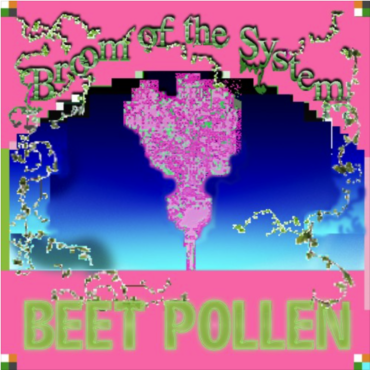
Fresh off Philadelphia’s resident underground tape label Super Wimpy Punch comes a new track from Boston local Broom of the System, also known as Persephone LiPuma. The dizzying, jangly bop “Water” is the single off the forthcoming tape Beet Pollen which is set for a March 31st release.
Gearing up for the tape’s release, Super Wimpy Punch and Broom of the System collaborated with Disposable America, Boston’s favorite cassette label (for true believers only,) for a livestream performance that took place on March 5th. The stream also featured performances by Community College, Erin Vadala, and Double Grave. Broom of the System’s upcoming project Beet Pollen was recorded over 2019-2020 with Brad Krieger at Big Nice Studio, who also recorded Horse Jumper of Love, Comco, Alexander, and other locals.
“Water” is a chaotic rock track with a crunchy drumbeat and restless cymbals that crash against swelling synth organs and horns. LiPuma’s vocals dart between chill croons and booming screams. A particularly compelling moment is a switch halfway through the song where everything but the vocals and a twisty guitar riff cut out, and LiPuma sings “Guess I’m just the kind to confuse, all I want in life is what’s actually reachable.” Another high point is the imaginative lyricism; towards the beginning, LiPuma sings, “Blood on my face on the train” a scene that a seasoned MBTA passenger may find all too relatable. The song comes in at just under 2 and a half minutes, leaving the listener wanting more. The song’s tumultuous energy feels fitting from a project that shares a name with David Foster Wallace’s debut novel, in which the main character deals with compounding crises that vary in absurdity.
The track is an indicator of Broom of the System’s ability to create dynamic, lo-fi soundscapes that take the listener on a woozy trip through the storyteller’s perspectives and anxieties. To hear the full Beet Pollen tape pre-order your copy here through Super Wimpy Punch.
Disarmingly charming with an air of sincerity and an ability to lack seriousness in all of the right ways, Izzy Heltai is a musician worth paying attention to. Fresh off of the release of his critically-adored debut album Father this past October, the indie artist is ready to continue on his journey, wherever that may take him.
Heltai welcomed listeners back with his first single of the year, “Day Plan” on February 5th. A folk tinged track inspired by the monotony of daily life in isolation accompanied by a lyric video (below) of the singer driving along scenic Route 2 in Western Massachusetts. A restless person at heart, yearning for road trips and tours across the country to undiscovered locales, the idea of living alone inside during a frigid New England winter was not one that Heltai necessarily welcomed with open arms. A self-described introverted-extrovert, Heltai admitted “I like being alone but there’s a difference between being alone and being as alone as I’ve been this winter, which is way too much.”
Being outside is one of Heltai’s greatest loves, whether that’s driving around, hiking, or just being active outdoors, something the winter had made virtually impossible. “For so long as a teenager, [I didn’t like] sports or being active, now as an adult I realize it was just so gendered I was traumatized by even the idea of trying it that I convinced myself that I just didn’t like it. But now I’m like, “I could just try a sport”, I mean I’m terrible [laughs] but I wanna play basketball!”
Feeling a sense of identity in his body is relatively new to Heltai, who is an openly trans man. “Growing up with a stable community gave me the confidence to be so sure in what my sense of self was… people weren’t telling me that they knew better than me,” says Heltai. Understanding of the opposite experience for many people who are/have transitioned, he adds “[people] want to tell you who you are and what you should be and if you’re told that enough it’s hard to trust yourself.”
Photo by Emma Kate Rothenberg-Ware
These stable communities that have influenced his growth both as an individual and musician are the basis for his latest single “My Old Friends”, released on March 12th. A jubilant bop that dances it’s way from introspective folk towards a more indie rock sound, the song illustrates the strange experience of figuring out where one’s home truly is. “My sense of home does not come from a location… it comes from people,” describes Heltai. On his Bandcamp page Heltai further explains, “It’s about realizing that the place I’d just left, the place I thought I was done with, was still where I wanted to be.”
This kind of back and forth of feeling is something Heltai grapples with a lot in his personal life. Having bad anxiety, the singer/songwriter confesses he hates feeling like he’s in an in-between sort of place. “I get so antsy so I feel like I have to keep changing.” Finding comfort in concrete lines, this has caused him to bolt from more tepid situations faster than he maybe should have. “Sometimes you have to stay in places of uncertainty.”
Able to relax and still find the silliness in a situation, Heltai has taken this uncertainty and anxiety from the inspiration of “My Old Friends” and gives it a joyous video treatment. Out today on his YouTube channel, the music video for this latest single is simple in the way that it shows Izzy dancing around while lyrics pop up on screen, but showcases the manner in which he can keep his head in the clouds, even when the whole world wants to ground us. “It’s important to not take a lot of moments too seriously in life. You should be able to have fun, life sucks for the majority of people.” Having described himself in the past as a sort of “grown child” rather than an adult, Heltai sees no shame in continuing to find pleasure in young adult fiction or even bubblegum pop music. Even as he continues down this path to being a professional indie musician he describes how he’s “too tired to judge people’s taste in music… if something brings someone joy, I don’t think anyone should be able to say it’s bad.”
As for the rest of this year, Izzy has plans to continue releasing singles until the mid-summer, with the goal of them coalescing into a new EP. Being fortunate enough to live near his frequent collaborators, continuing to record new music has been easier than expected given the COVID circumstances, with Heltai going as far as to say his creativity these past few months has been the most prolific he’s ever been. Between adding to his tattoo collection and trying, rather unsuccessfully, to break into the world of social media/Tik Tok, Heltai has found the time to give his listeners exactly what they want: more.
Stay up to date with Izzy Heltai on his Facebook, Instagram, Twitter and Spotify and check out the new video for “My Old Friends” below!
Big hair, big suits, big synths: the 80s are long gone, but there’s enough iconicism left behind from the era of Depeche Mode, Reagan, shoulder pads, and a whole host of other fads that serve as retro points-of-reference for contemporary artists trying to capture a sense of that 80s spirit.
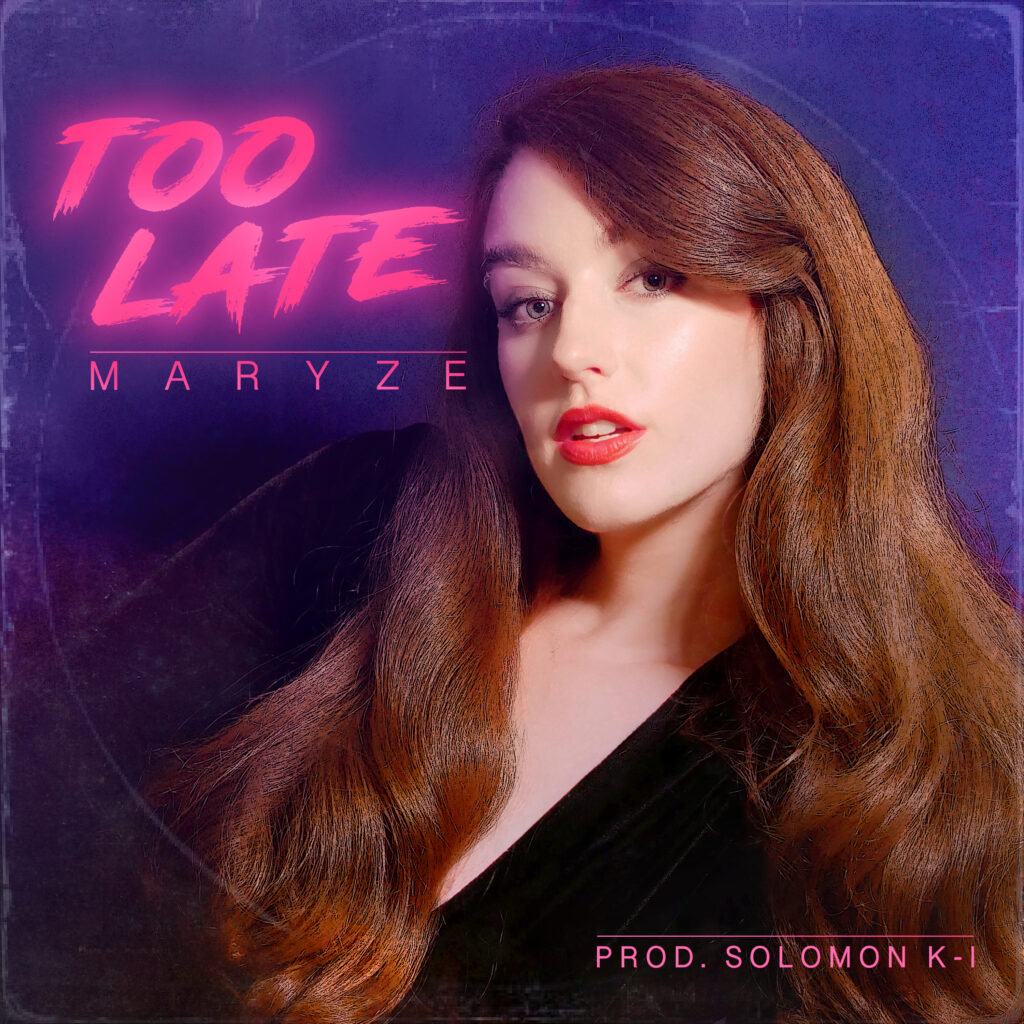
So if you’ve found yourself idling thru quar days by marathoning John Hughes’s filmography, then Maryze’s new video for their track “Too Late,” a catchy synth-pop tune that finds the Montreal singer expanding her sonic reach into some slightly unfamiliar territory. While her debut EP Like Moons certainly featured a lot of synth instrumentation, those sounds felt more in line with contemporary pop-R&B than the big, phased-out arpeggios and soaring melodies that define 80s pop balladry. This switch-up comes with an assist from Solomon K-I, their producer and longtime collaborator. On “Too Late” and other productions he’s done for Maryze, he’s proven more than adept at layering synth lines and syncopating drum machines to create wonderful chordal landscapes for Maryze to explore vocally.
Despite the 80s inspiration, Maryze is still keen to connect the song to their continued affinity for emo. According to their description, “I wrote this song when I was feeling both frustrated about wasting time, and also completely unable to motivate myself in the pandemic. I was kicking myself while I was down, which obviously isn’t helpful to get back up. For some reason, even if the lyrics are pretty depressing, the song came out upbeat and dancey. I immediately heard it with an 80s beat – the era of sad dancefloor hits.” The melding of emo attitude plus 80s production is a appropriate combo, as many of the catchiest pop hits of the 80s have such dark undertones (that Phil Collins song we all love is literally about watching a guy drown). “Too Late” is “an anthem for crying on the dancefloor.”
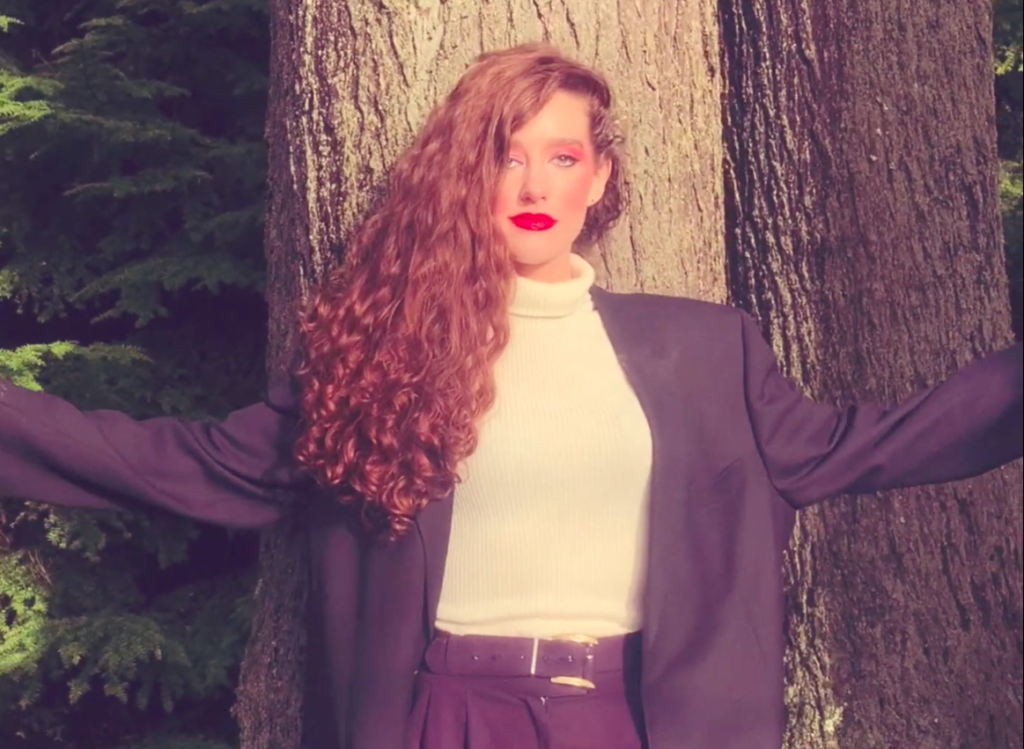
So this time around, Maryze tapped into that 80s nostalgia that a lot of contemporary artists love to tap into that vapor-heavy sound and crafting a video that sees the singer’s face superimposed over dreamy footage of a snow-covered recreation field. It’s meant to demonstrate our isolation over the past year: the cold snow, the vast and empty field that at another time of year might be full of soccer players or picnic-goers or a whole host of other attendees.
“Too Late” is Maryze’s first single of 2021. Since releasing “Squelettes” in the fall, a collaboration between the singer and Montreal’s Polaris winning Backxwash, Maryze has built a substantial viral following on TikTok for – among other things – ranking the deadliest icicles of Montreal. Keep an eye out for future releases from Maryze across 2020. Watch the video for “Too Late” below.
2 cups milk plus 2 tbls. lemon juice OR 2 cups buttermilk
1 tsp. pure vanilla
2 1/3 cups gluten free flour mix (i.e. King Arthur Gluten Free All Purpose)
2 tbls. white sugar
1 1/2 tsp. baking powder
1 1/2 tsp. baking soda
1 tsp. cream of tartar
3/4 tsp. salt
Butter/oil for greasing
Combine your dry ingredients in a one bowl and your wet ingredients in another large bowl.
Gradually add your dry ingredients into the wet. Whisking in between additions. Do not overmix.
Grease a frying pan with butter and/or oil and ladle even amounts of batter into the pan depending on desired pancake size. Cook for a few minutes on the first side at medium/medium-high heat until small bubbles appear around the edges and you can see browning on the bottom. Flip and cook for about the same amount of time on the other side. Serve immediately.
Bananas Foster:
2 fresh bananas
brown sugar/maple syrup/honey
2 tbls. butter
1 tsp. pure vanilla
chopped walnuts (optional)
Peel a thin edge of banana peel off of each banana. Leave the rest of the peel on. Slice down the middle of each banana and then cut in half so you should have four equal size pieces.
Sprinkle brown sugar on or drizzle the exposed sides of each banana piece with maple syrup/honey
Melt butter in a sauté pan and fry bananas starting with the peel side down. Add chopped walnuts (optional). Flip once the peel begins to turn black/deep dark brown and cook until bananas are soft. Remove peels before eating. Serve immediately.
Stay tuned for future episodes of “Proof is in the Pudding” and check out Lea Neu on Instagram and Spotify now!



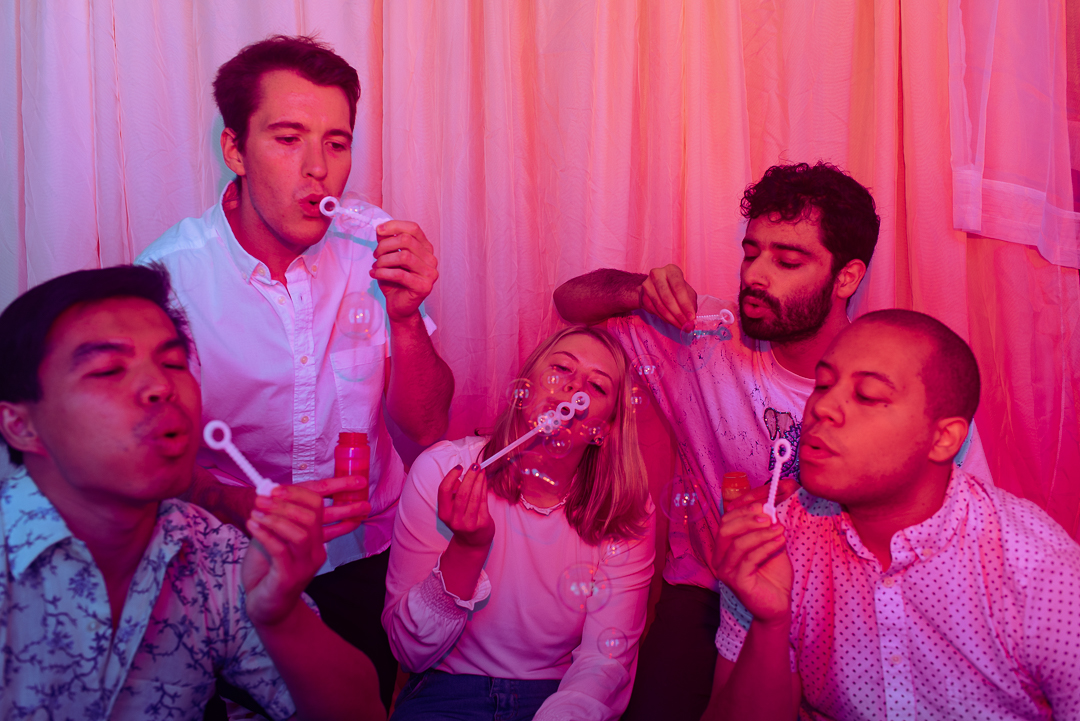
 Photo by Meghan Kelleher