UNPUBLISHED SHOW REVIEW: The Murder Capital/RUDE Make It Count at Once Ballroom (3/11/20)


This week marks the one year anniversary of the last gig I saw in person, and I wanted to share this unpublished review of Dublin post-punk rockers The Murder Capital playing their US debut show at Once Ballroom on March 11th, 2020. Looking back on this night I am reminded of the electric energy in the crowd in Somerville. Despite the creeping sense of dread about the pandemic, what I remember the most is the pure excitement from having taken a chance on a new band that none of us had seen before and having our expectations blown away. There is a sense of connectedness in collectively discovering music, not just in isolation, but among a group of people – a coven of active music listeners gathering together and experiencing fresh sounds. 

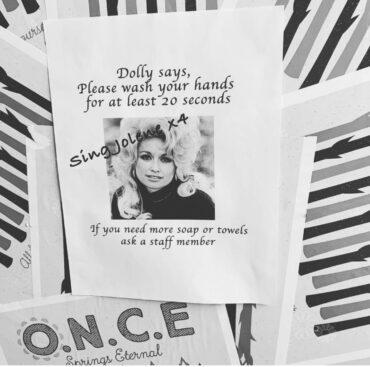
I remember being torn up about this gig and feeling guilty as I left my apartment and walked down Highland Avenue towards Once Ballroom. The opening band, as per usual, chided the audience for standing too far away from the stage, and I felt twice guilty for joining the cluster down front. The bathroom was plastered with Dolly Parton themed flyers – fast-forward one year and Parton changed the lyrics of “Jolene” to “Vaccine,” to sing on camera in a PSA to promote national inoculation while getting her shot. By the time The Murder Capital wrapped and I had left the venue, I learned the NBA had just been cancelled, and this was the tipping point. As we now know, not long after, Once Ballroom shut its doors for good.

The loss of Once Ballroom is catastrophic for the local community. The first line of their mission statement was “…to foster and support local artists and their art, to bring great events to the area, and to be a gathering space for [the] community…” It was evident in the way they loyally booked local acts to open for international/national acts, thereby giving them excellent exposure, held regular art fairs (where I purchased a rad vintage coat), and made a practice of seeking out diverse talent. Also, important, their sound system ROCKED, as opposed to the muddy audio and drowned out vocals that I hear at DIY shows and the like that try to make-up for lost performance spaces such as this one.

 In reflection of one year in lock-down without gigs, let us celebrate this storied club in Somerville. As for The Murder Capital, they announced a few days ago that they don’t plan on continuing the US/Canada tour until 2022, but I hope they return. In the meantime, check out this unpublished show review that was slated to be posted to Allston Pudding exactly one year ago today.

Proof is in the Pudding Ep. 2: Mallcops


Rainbow Salad with Balsamic Vinaigrette

1 Tomato

Carrot (2-3 depending on size)

Canned Corn (or fresh cut from the cob if it’s in season)   

Asparagus

Cucumber 

Edamame (shelled)

Red onion 

Avocado 

Scallions

Bell Pepper

Cashews or Almonds (or any nut/seed) 

Salad greens (Spring mix/Spinach/sliced Romaine/etc.)

Many other things (really any vegetable/fruit that you feel would work with the vinaigrette)

  1. Chop/slice each ingredient until they are roughly the same size. Separate into small bowls for assembly or just toss to combine with salad greens in a serving bowl. Top, but don’t overdress, with vinaigrette. Serve immediately. 

Vinaigrette:

3/4 cup extra virgin olive oil 

1/4 cup balsamic vinegar

Pinch of salt

Black pepper

2 cloves of garlic, minced

1 tbsp Dijon mustard

1 tbsp maple syrup

Oregano 

Red Pepper Flakes (to desired heat level)

  1. In a jar or container with a lid, shake to combine the ingredients. Taste before serving to see if added salt/pepper is required. Store leftover dressing in an air-tight container in the fridge.

Stay tuned for future episodes of “Proof is in the Pudding” and check out Mallcops on Facebook, Instagram, Twitter and Spotify now!

PREMIERE: Divine Sweater’s New “Space-like” Single is Out of This World

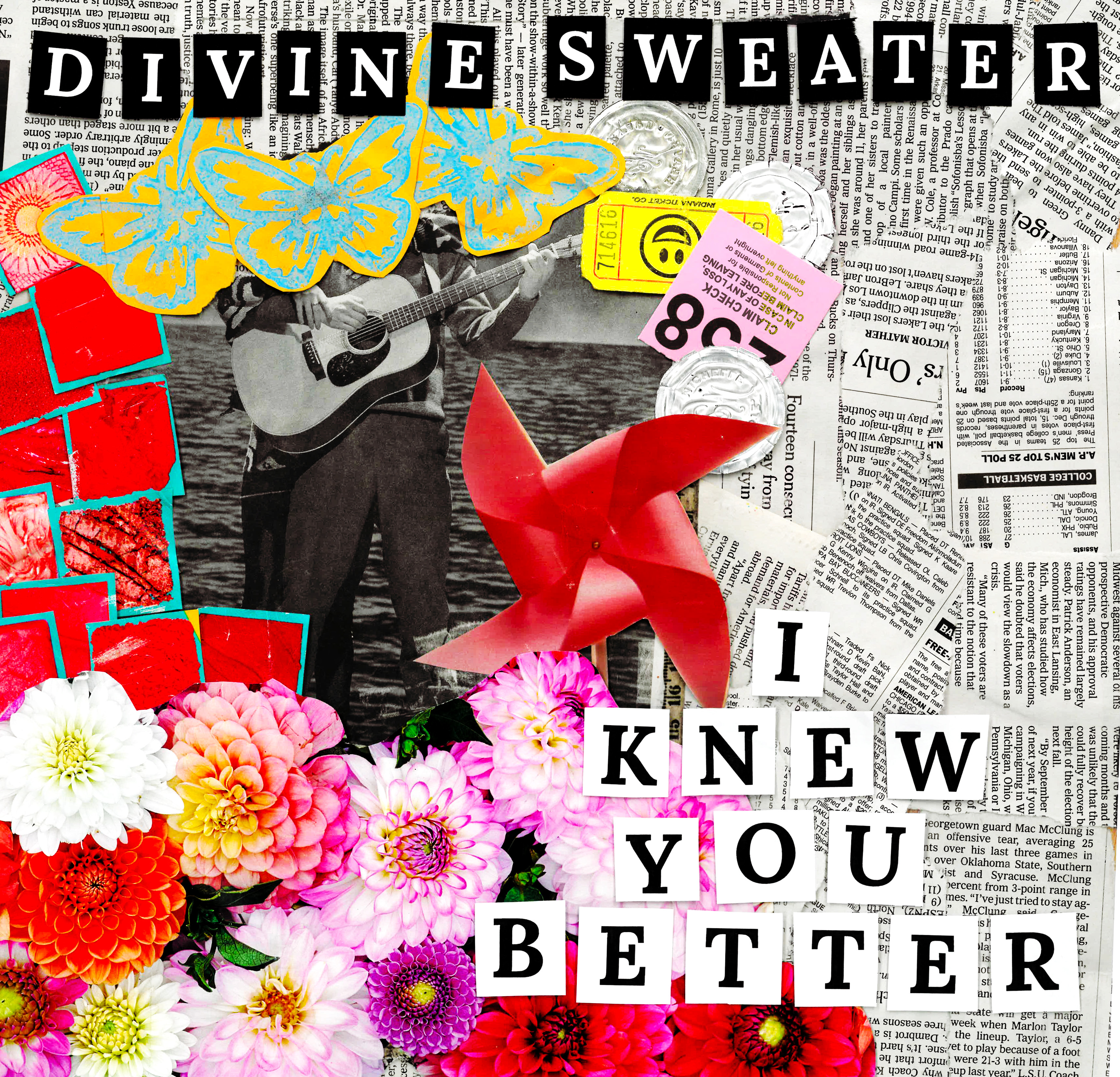
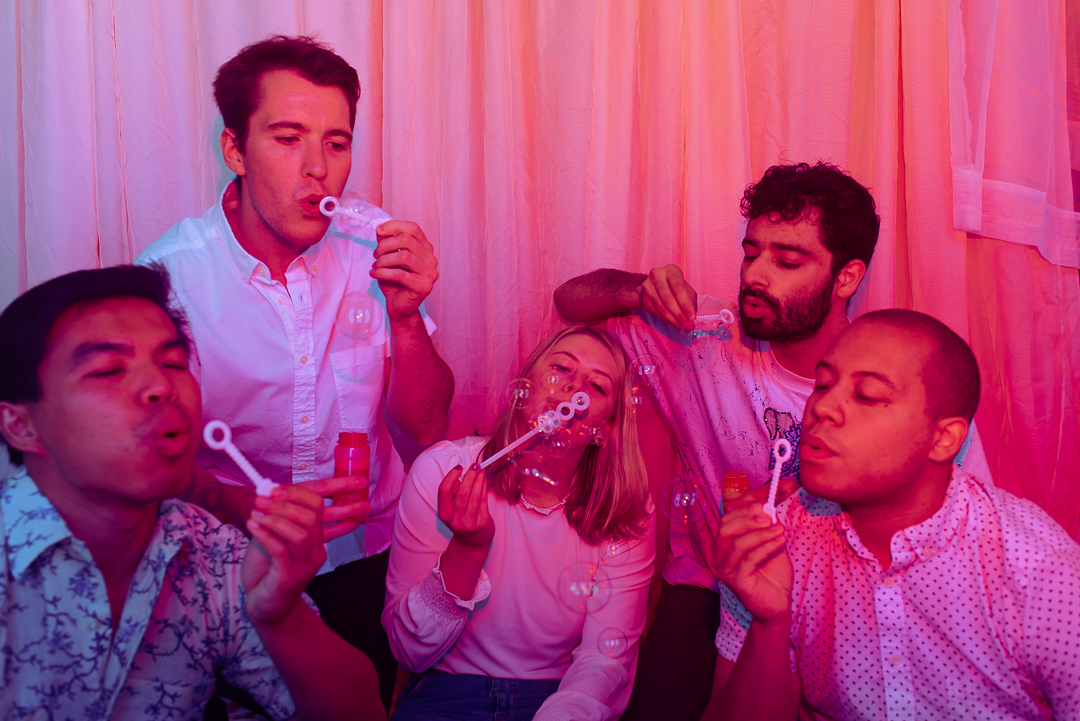
Gearing up for the full-length release of Ten Year Plan later this month, Divine Sweater released their latest euphonious single, “I Knew You Better”, teeming with their signature tight vocal harmonies and plenty of glockenspiel. 

While this song is quintessentially Divine Sweater, the band reveals that this song used to sound completely different before they recorded their version. “My brother, Brian, told me ‘I have this song, and I think you guys could turn it into something good,” guitarist Sean Seaver says, “‘I Knew You Better’ was more Oregon driven before we added synthesizers to give it a more spacey feel to it. It was funny taking recording this song that wasn’t originally ours and then turning into something that felt very much like ours.” 

While this song may sound cosmic, the story behind “I Knew You Better” is definitely more grounded. Divine Sweater’s latest single details the heartbreak of thinking about someone you used to be close with. “I Knew You Better” describes the subtle ways we remember old friends who are now perfect strangers and the melancholy nostalgia that it carries with it. Pictures, letters, and books become surfboards as we ride through waves of emotion when remembering lost confidantes. “The experience of having someone in your life that you once knew so intimately is something that I think a lot of people can relate to and tie to their own experiences– I know I can,” says lead vocalist Meghan Kelleher. 

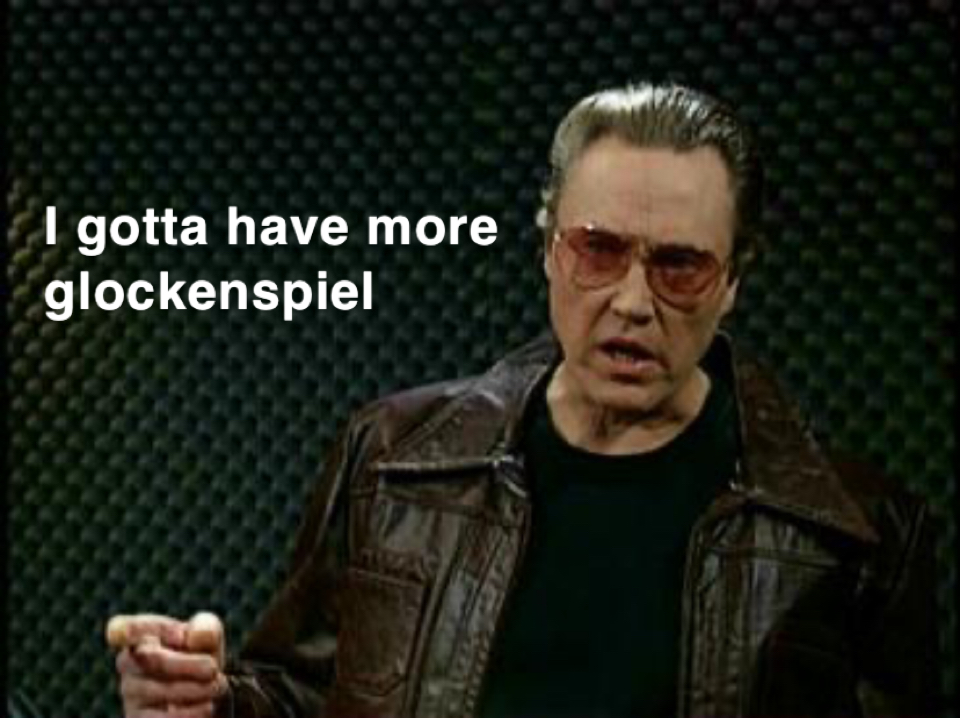
Divine Sweater delivers their relatable new single through synthesizers that propel you into space, a glockenspiel that shines through like stars twinkling in the sky, and Meghan’s celestial harmonies. This single leaves me with one lasting thought: I gotta have more glockenspiel. 

Pro Tip: This song radiates major main character energy– like ride-a-bike-through-the-streets-of-Allston-and-pretend-you’re-in-the-opening-scene-of-a-coming-of-age-indie-blockbuster kind of energy. Just in time for the release of the single, this coming weeks’ weather forecasts warm spring weather making it the perfect time to do the bike riding movie montage– provided that the grey slush we begrudgingly call “snow” melts. 


“I Knew You Better” is out now on all streaming platforms, and you can listen to it via Bandcamp below. Divine Sweater’s full-length album, Ten Year Plan, is out on all streaming platforms and Bandcamp on March 25th.

Premiere: Jymmy Kafka drops “Manna”

By Joey Del Ponte

Photo Courtesy of Jymmy Kafka

On his new album Manna, there is a clarity in Jymmy Kafka’s voice as he takes you on an introspective and philosophical trip through his mind. The seven track album follows the release of his last album Lil Nothin’, which came out in collaboration with Rilla Force eight months ago. Since then, with the pandemic still raging on, Kafka decided to begin recording at home. “I hollowed out my closet and made a studio in there and learned how to produce and started recording myself. I had never done anything like that until now. It’s completely changed how I’ve been making music,” Kafka said. On his instagram, he noted the sales of Lil Nothin’ on his Bandcamp went directly to helping him build his home studio.  

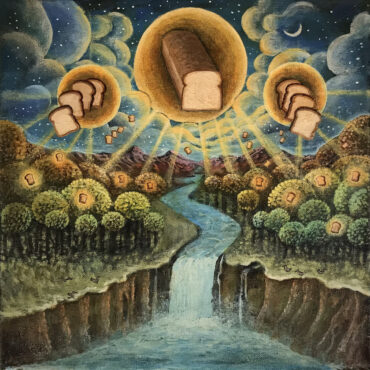
The album’s name (a reference to miraculous bread sent by God), feels fitting, as the tracks are healing and refreshing. Staying true to his eclectic roots, in his exploration of his own psyche, Kafka covers a multitude of topics ranging from the earth, to migrant children in cages, to Friedrich Nietzsche’s Thus Spoke Zarathustra, to Butoh, a form of traditional Japanese dance theatre. Manna’s laid-back beats are a different vibe from the bass-heavy, kinetic beats of his last album. Instead, chopped up samples, gentle pianos, jazzy drums, and wavy synths recur throughout. The instrumentation is restrained and downtempo for the most part, putting even more of an emphasis on Kafka’s interwoven verses. 

On his writing process, Kafka said he usually just starts recording. “There was no pen-to-paper for a lot of it. I’ve never been able to do that…. It’s really opened up a lot” he said. His lyrics are as free spirited as he is, bouncing between stream-of-consciousness and meticulously calculated, but they are not always positive. Throughout Manna, tension is palpable on many occasions. At one point in “The Dance of Butoh” Kafka says “They tell you pull yourself up by your laces. Amazing that it’s in the same country that’s putting children in cages.”

Artwork By Benjamin Styer

Manna is packed with collaborators handpicked by Kafka including AJ Lasalle, DJ Lucas, Southside Jonesy, Premises, Manolo Husk, and Dillon Zupp. “I produced two of the songs and then it’s a mix of good friends and people I’ve met along the way,” Kafka told AP, also mentioning German collaborator Knut Funk, who he met online years ago and finally collaborated with for this project. It was great to hear the subtle differences between each of the producers’ styles and how they fit into Kafka’s lyrical flow. Of the collaborations, the feature on “Aurora Borealis” from Southside Jonesy & Premises is a high point of the album.

The music video for High Tides, which has yet to be released, is a slice of Jymmy’s life, featuring him skating around New York City. In addition to being a producer and rapper, Kafka is an avid skateboarder. The video was directed by friend and fellow skateboarder Kyber Jones, who he skates with often and met through Oyster. It gives listeners a glimpse into one of the many facets that make up Jymmy Kafka. Manna is Jymma Kafka at his most confessional. Staring full force to the future, working nonstop to evolve his sound and share his mind with the world.

Stream Manna now.

PREMIERE: Linnea’s Garden Reconfigures and Breaks Norms on “Nowhere Friday Nights”

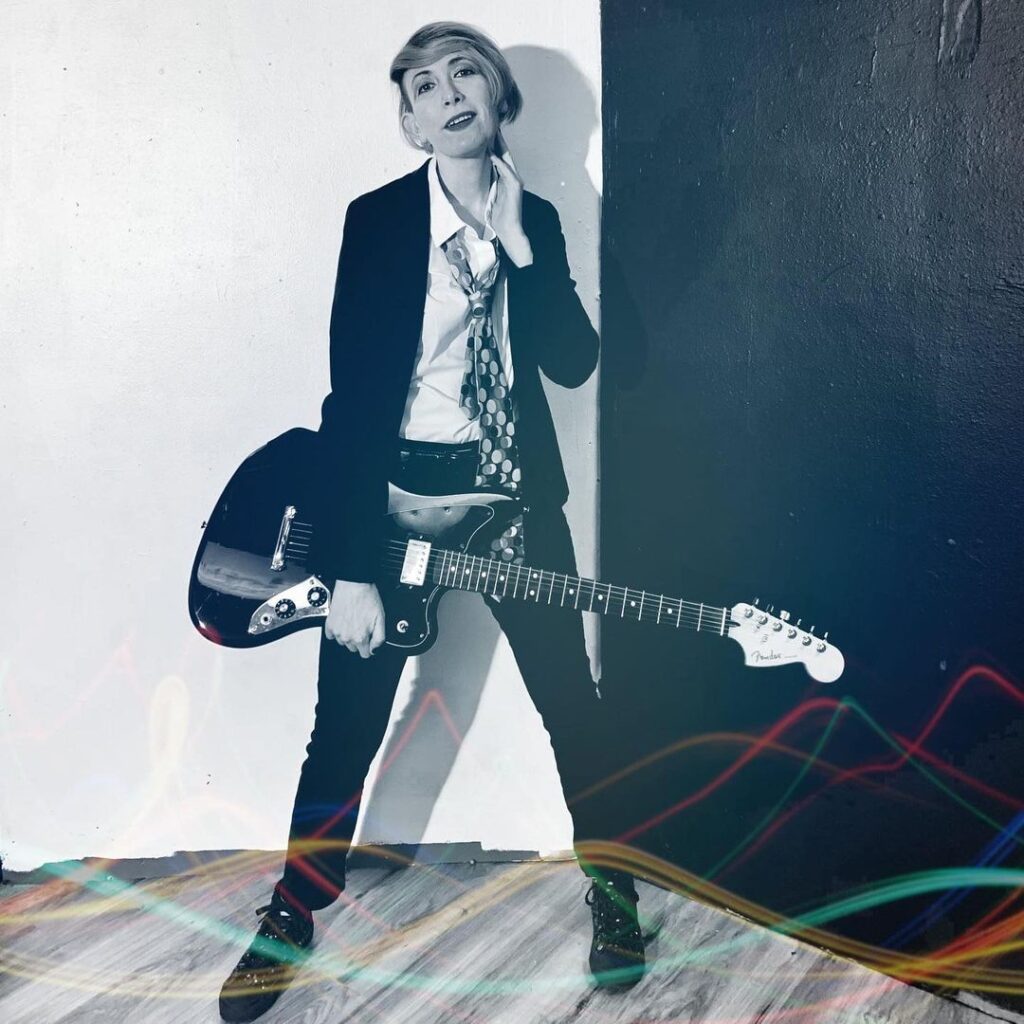
Linnea Herzog of Linnea's Garden stands in front of a white and purple wall holding her guitar

Two weeks before the COVID-19 pandemic shut the live music scene down, Linnea Herzog was getting things started with her new band. Herzog was winding things down with her previous sex-positive punk group PowerSlut, and the transition to her latest project Linnea’s Garden happened “pretty much immediately after the last PowerSlut show.” But, the band’s plans for practice, recording, and live shows were “dashed pretty much immediately” once lockdown took effect. The initial Linnea’s Garden lineup — made up of Herzog on vocals and guitar, Amy Galavis on bass, and Steve Nisotel on drums — changed with the pandemic, as Herzog adapted to jam and record with her quarantine pod consisting of her partner Hands O’d and Tom O’Donnell of Corner Soul over the summer instead. The result is Nowhere Friday Nights, a five-song EP premiering today with Allston Pudding.

Consisting of songs written after the inception of Linnea’s Garden as well as ones from years prior, Nowhere Friday Nights sees the band delivering consistently catchy and subversive takes on power pop and punk. Much of the EP’s sound and recording is tied to Herzog’s own DIY philosophy she’s carried through her approach to music, one that she developed while working toward a PhD in neuroscience. “I was combining techniques from two different labs I was in,” she says, “and I had to figure out how to write code that didn’t exist.” Linnea’s Garden gave Herzog an opportunity to develop that philosophy even further, from practicing as a lead guitarist in order to best perform older songs, to working with self-taught producer O’Donnell to bring the record to life. In each aspect of Linnea’s Garden, Herzog recognizes the ways in which her studies inform her mindset toward her music. “Like science, it’s a lot of teamwork. But it’s also a lot of believing in your own ideas and having passion and working hard enough to make sure it happens.”

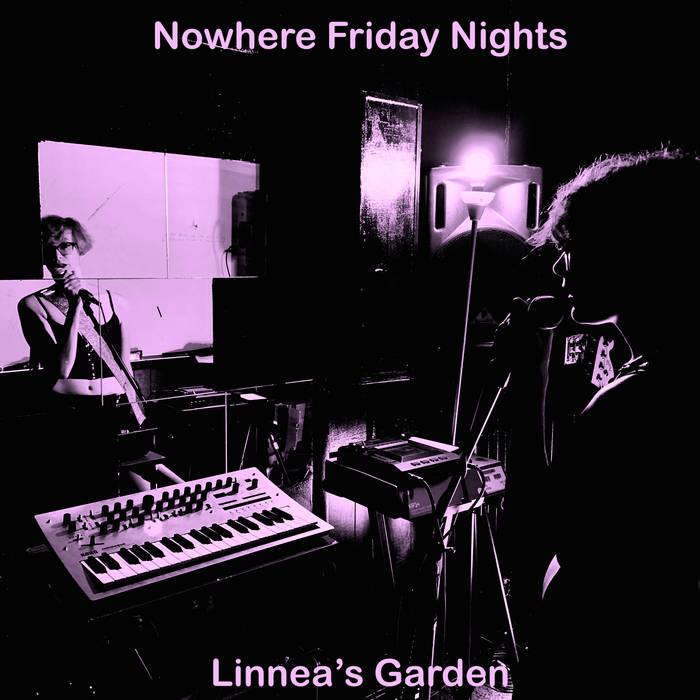
The album cover for Linnea's Garden's "Nowhere Friday Nights," which shows frontwoman/guitarist Linnea Herzog performing in front of a mirror with a dark purple filter over the image

That outlook applies to the holistic blend of genres and influences Herzog brings to Nowhere Friday Nights. Inspired by everything from girl groups of the ‘60s, to the glam rock of the ‘70s, to “all the alternative ‘90s weirdos” and pop music (“because [I] always want to be ahead of the trends”), Herzog specializes in synthesizing various differing eras to define her own sound and innovating in tried-and-true songwriting forms. In the case of EP opener “Nondramatic Breakup Song,” Herzog inverts the expectations of a ‘60s garage rock song to create a lyrically atypical track about an uneventful end to a queer relationship. Breaking the norms within these established styles is what Herzog believes is “part of any great artist,” stating, “you have to do stuff that’s a little bit crazy to make a mark on the world.”

“Science and You” and “Glitter” take similar approaches at reworking familiar song structures, the former a twist on ‘60s mid-tempo girl group songs and the latter being the EP’s most directly punk-oriented song, to subversively sex-positive and gender-inclusive effect. “Sexuality and queerness are part of who I am, [and] I really struggled with [it] for a long time,” Herzog says. “But to really live in it and express it was hugely rewarding for me with PowerSlut. And so, it’d be kind of weird if I didn’t continue that with Linnea’s Garden.”

The track that gives the EP its title, “Friday Night,” takes a different approach, though. Operating as a booming melodic power pop anthem, the song is an ode to the power of self-expression even when there’s nowhere to go. Built around the bombastic refrain “the music is our fight,” Herzog evokes the feeling of missing shows in quarantine and the strength in making music in those shows’ absence. “This was the last song that was written on the EP and we actually already started recording [before it was written],” says Herzog. “It really captured the vibe of the whole recording and tied together the theme, [so] that’s why I took the title from that song.” Herzog also sees it as a microcosm of how Linnea’s Garden has evolved as a project since its beginning: “The band evolved from trying to do the live show thing at first to finding meaning and recording even though [we’re] not performing it to an audience.”

One way Herzog is adapting to the lack of shows is in her newfound focus on the visual side of things. “I realized I actually really liked making [music videos] even though I’m kind of a beginner at it,” she says, expressing a strong interest in creating more going forward. Speaking of her current strategy of taking advantage of things she comes across, Herzog mentions how the striking purple and white wall the “Nondramatic Breakup Song” video was shot against came from a chance opportunity in the studio the EP was recorded in. “It was sort of the lobby, and an actor’s troupe was actually using this as a set to film these quarantine performances. But the thing is, in a week, it was gone.” Between that serendipity and editing the video in “a mad frenzy” over the course of two days (“I don’t remember getting that into anything in a while,” Herzog says), working on more videos has become a big priority for the future of Linnea’s Garden.

It’s an approach that Herzog plans to incorporate into Linnea’s Garden’s virtual EP release show at ONCE’s Virtual Venue on March 5th. “It’s gonna be a bunch of music videos [from other artists] and live performances, with commentary in between by me,” along with an interview between Linnea and Justine Covault of Red on Red Records. “And there’s gonna be a premiere of a live Linnea’s Garden video,” Herzog adds, “as well as two music videos.” Like “Friday Night,” the gig is expected to be a much-needed celebration of expression and music amid the pandemic, and a wholly unique show among the virtual concert landscape.


Nowhere Friday Nights is out now. Stream it on Bandcamp below, and tune into the virtual Linnea’s Garden show via ONCE at 8 pm on March 5th.

Bandcamp Friday Merch Roundup!


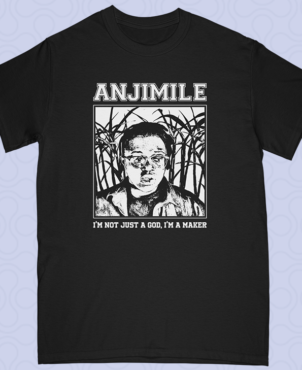
Anjimile

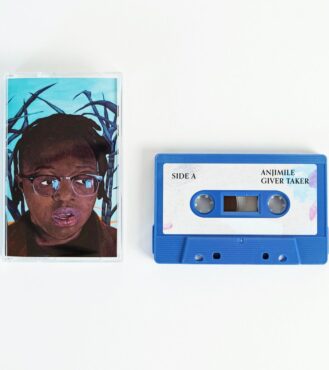
Feel like your best self in this tee featuring the cover art from Anjimile’s critically acclaimed debut full length Giver Taker, and the lyric “I’m not just a god, I’m a maker” from their inspirational single “Maker”. Available in several sizes for $20 from their Bandcamp page. While you’re shopping pick up Giver Taker on an adorable purple cassette for only $9! 

Billy Dean Thomas

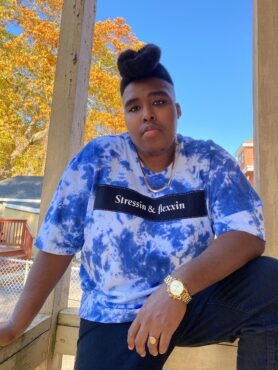
Be well and find balance in your new collection of official Billy Dean Thomas merch. Live your life “Stressin & Flexxin” in a variety of t-shirt styles (starting at $25) and adorn your favorite jackets/backpacks with one of BDT’s several iron-on patches (starting at $5). Round out your shopping cart with a signed copy of Thomas’ latest EP For Better Or Worse in a jewel case for $15. All available on their Bandcamp page

Carnivora

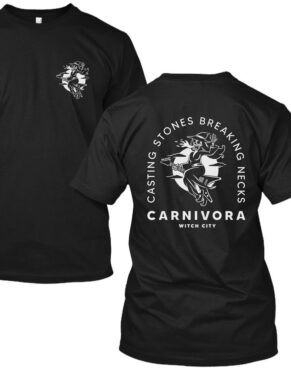
Rep your Salem witch pride in your new Witch City merch from Northshore metal group Carnivora, inspired by their recent single “Witch City”. Check out the killer music video for the track here. Available in a variety of styles and sizes starting from $20. Complete the look with a Witch City trucker hat for only $15. All available on their Bandcamp page.

DJ Whysham

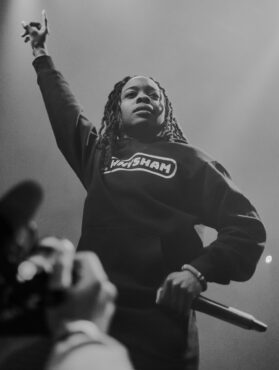
Get your virtual party on with a live streamed performance by one of Boston’s best DJs for your next COVID-safe event with a private booking from DJ WhySham. For a special Bandcamp Friday price of just $50, you can enjoy DJ WhySham’s stylings for one hour, redeemable through December 4th. Grab a ‘Boston Got Next’ tee for the occasion starting at $25. Available on their Bandcamp page

Eleanor Elektra 

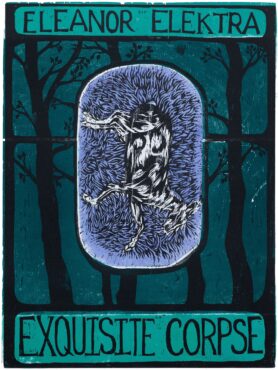
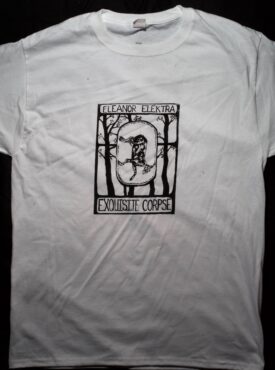
Elevate your style with pieces from visual artist and neo-folk/jazz musician Eleanor Elektra. Grab a silk-screened tee ($20) or a hand-printed poster ($50) both featuring designs from Elektra’s acclaimed album Exquisite Corpse. Add a handmade patch inspired by their EP Comet to your cart for just $4. All available on their Bandcamp page.

Future Teens 

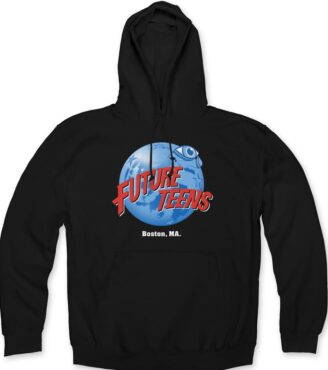
Play cool and stay completely warm in your new Future Teens hoodie! Starting from $34.99 these hoodies feature designs inspired by their recent single “Play Cool” and an original design “Planet Future Teens”. Keep the shopping spree going and check out a variety of t-shirt designs, color vinyl, cassettes and more! All available on their Bandcamp page.

Glacier

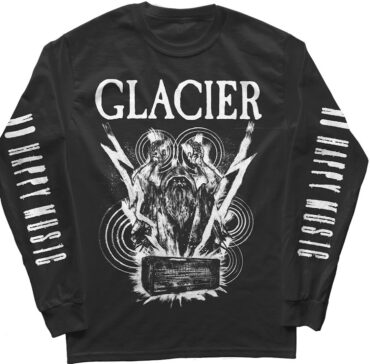
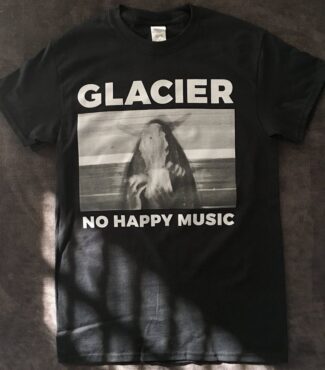
Your sins may be scarlet, but your style will be red hot in one of post-rock group Glacier’s t-shirt and hoodie designs. Positively dripping in dark intensity, their t-shirts range from $5-$25 with hoodies starting at $30 and are available in a variety of inclusive sizes. Also available are bandanas, color vinyl and cassettes all on their Bandcamp page.

Harborlights 

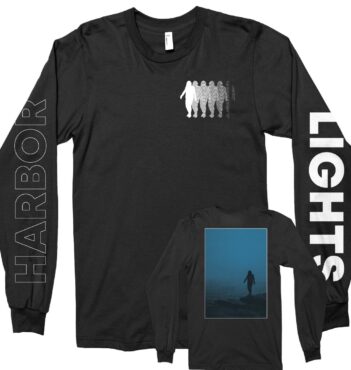
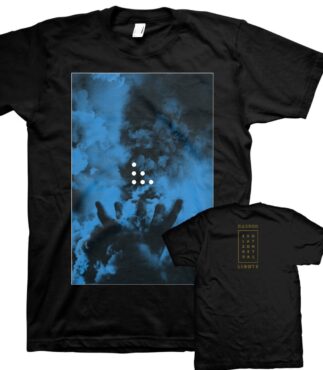
Look like a sleek rock god walking around the streets of Boston in your new Harborlights apparel inspired by their latest album Isolation Ritual. Available in a variety of styles/sizes starting at $7.50. While you’re shopping pick up Isolation Ritual on a gorgeous limited color vinyl ($18) and host a solo listening party (these are COVID times) while enjoying a cold one in your new Harborlights koozie ($1). All available on their Bandcamp page

House of Harm 

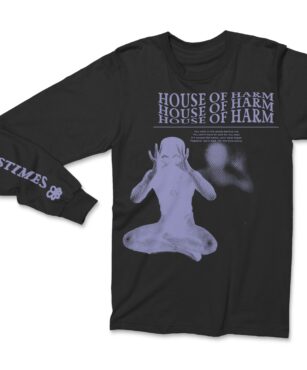
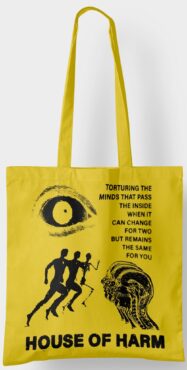
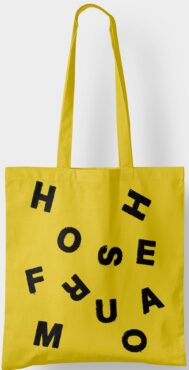
Dip into your vicious side with a slick new long sleeve from post-punk band House of Harm and spook the skeleton’s residing in your closet. Complete the lewk with this double sided alphabet soup tote (also available in black/white) and look wicked good during your next trip to the store (or wherever people are going these days). Available from their Bandcamp page

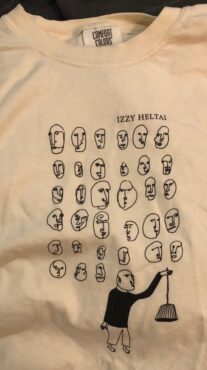
Izzy Heltai 

Whet your appetite with some common sense purchases from Americana artist Izzy Heltai. Snag a tee-shirt featuring a fantastic original design by Jake Klar ($25), and finish the purchase with a tote bag ($15) and some stickers (2 for $3). Stickers also included when you purchase other merch or one of Heltai’s CDs Only Yesterday and Father (starting at $10). All available on their Bandcamp page.   

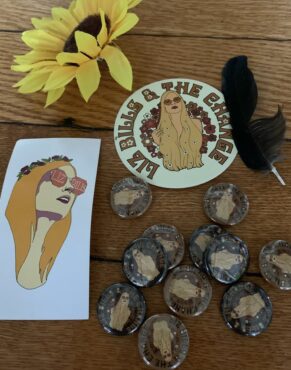
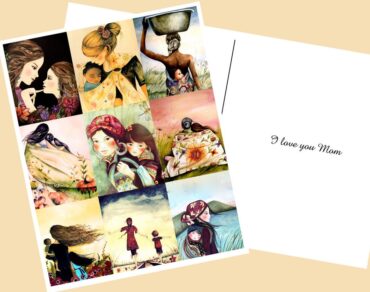
Liz Bills 

Get a jump on Mother’s Day shopping this year with an adorable print ($10) from folk rocker Liz Bills. Include it as the perfect Mom’s Day card or frame it as a heartfelt gift. Make sure you grab some stickers and pins ($5) before you checkout and bask in the Liz Bills energy. You gotta shop until you drop! All available from their Bandcamp page.

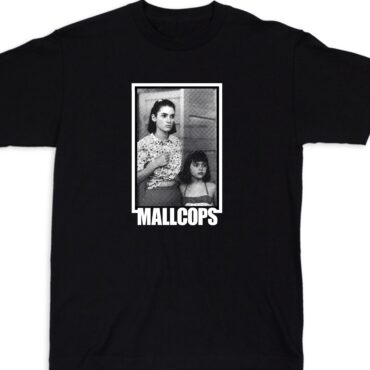
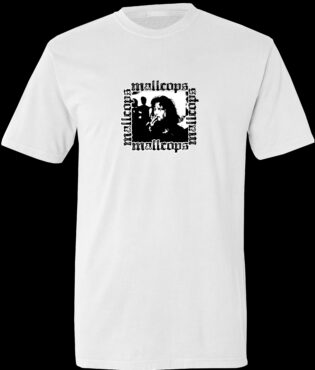
Mallcops

Winona Ryde-your way on over to the Mallcops merch page to snag one of these classically cool shirts inspired by the one and only Winona Ryder. Designed by the folks over at Farewell Division, these shirts are available on their Bandcamp page. While you’re browsing make sure to check out their Boston Music Award winning album We Made Plans to Self-Destruct and Return to the Stars on CD and their album The Funniest Joke You’ve Ever Told on baby blue cassette. 

Nova One 

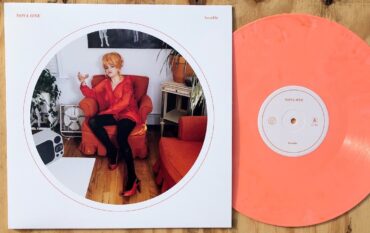
Let’s Party with some new purchases from Providence based, 60s inspired chanteuse Nova One. Make sure you look your best for your next Zoom meeting with an engraved wooden comb ($10) and introduce your wardrobe to one of their lovely tee shirts in a variety of designs (starting at $15). Take a pause to sound out their music before you hit checkout including last year’s dreamy Lovable on an irresistible swirled peach vinyl ($18). All available on their Bandcamp page

SEA  

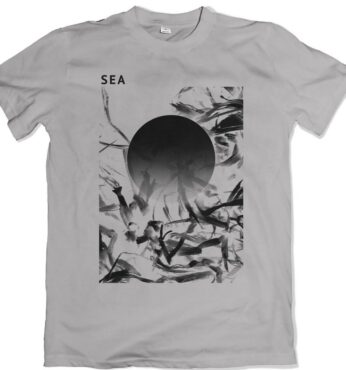
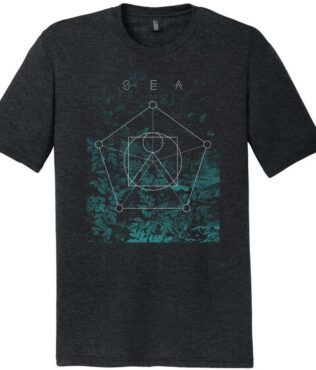
The waters may be rough, but the style is smooth with these original designs from atmospheric doom outfit SEA. Let your wardrobe ascend starting at $10 and be sure to check out their bundles and cassettes for their most recent album Impermanence. All available on their Bandcamp page.

Squirrel Flower

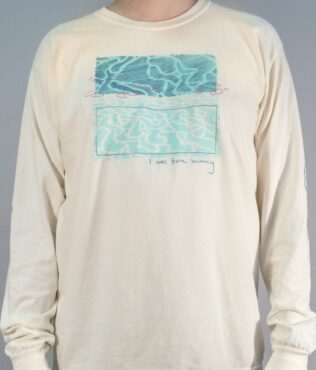
Showcase your aquatic side in your new Squirrel Flower merch inspired by their recent album I Was Born Swimming. Whether it’s the long sleeve with abstract arm designs ($30) or you’re dreaming of summer in a new tank top ($22) and UV Sunglasses ($10). Finish your shopping with I Was Born Swimming on colored vinyl ($19) and make your next trip to the grocery store that much cuter with a new Squirrel Flower tote bag ($15). All available on their Bandcamp page.

Uh oh! Didn’t see this before the end of Bandcamp Friday this month?? No worries! Bandcamp Friday will continue during the first Friday of each month, so come back then and see what’s still available! Happy shopping! 

Lubec: A Retrospective


Photo by Sam Reynolds

Ok, let’s get this story straight: Lubec was an indie rock band from Portland, Oregon. And a very good one at that. 

Like a lot of indie rock bands, they released some noisy, but hook-heavy tapes on a few small, but influential record labels, and played some gigs on both coasts. Like a much smaller subdivision of indie rock bands, they willfully embraced a strenuous, hard to pin down sound. Their game was one of cerebral discordance and chiming pop melodies in a constant, deafening battle, one that waged on for roughly three minutes and thirty seconds at a time (minus the breath-catching interludes). Slingshot guitar riffs, electric piano strikes and falling-down-the-stairs drum fills collapsing into moments of genuine awe. Honey and sandpaper in equal measure. A Lubec song is a lot like finding some great, life-alerting beauty laid just beneath the surface of swirling riptide. To love their music is to love that beautiful chaos. 

Their story starts, as band origins often do, on the campus of a small liberal arts college–in this case, William & Mary in Virginia. In fact, their roots date back to an open mic night at W&M where principles Eddie Charlton (guitar/vocals) recruited Caroline Jackson (keys/vocals) to perform some songs he had written as an undergrad. At this point, we feel it’s best to get out of the way and let the band and those closest to them do the talking. Flip through the digital scrapbook lovingly prepared by Caroline at the link below and then read on as we look back on the life and times of Lubec.

Lubec: A Photo History


Caroline Jackson: Eddie and I performed a couple songs together for a songwriter series at William & Mary in about 2008 that eventually became Lubec songs, does that count?

Eddie Charlton: I guess you could say we lasted for about ten years. I think of Lubec really starting up in 2009 with my friend Brandon Martin who played drums. It was just kind of an outlet more than anything else at first.

Jackson: I should say that Eddie started Lubec in Virginia right after college, and I played with them a couple times, but I was living in Pennsylvania then and not officially in the lineup.

Charlton: Things kinda coalesced once Caroline fully joined us.

Jackson:  I think we all had a sense that if we were given some huge opportunity to pursue a record deal or tour, that’d be rad, but it definitely wasn’t the point or even a primary focus at any point.
Photo by Joel Todero

Charlton: There were some other auxiliary members too at that time, and we made some music I’m very proud of. That first era of Lubec was an important time for me and Brandon and Caroline.

Jackson: I can’t speak for Eddie, but I was so stoked just to create art that I cared about and really be part of a music community.

Jay Breitling (Clicky Clicky Music Blog): Lubec even in their most nascent stages was pointed in a direction that I appreciated. And I eagerly followed along to see where it would lead.

Jackson: I had always wanted to be in a band and I was so grateful to be part of a project like this from the start. What we accomplished from there would just be icing on the cake.

Both Charlton and Jackson will claim however that Lubec didn’t really get going until they moved to Portland and hooked up with Matt Dressen (drums/vocals) and Nick Laurich (guitar during their first LP era).

Charlton: I see Lubec as having been like two or three different bands under one name. I had this thing where I was young and scared that if I changed the name the work that we had done [in Virginia] would be forgotten. I wanted a connective thread between what we had done and what we were planning to do, that was important to me.

Jackson: Eddie and I decided to move to Portland in 2011 and immediately restarted it back up here, although you could say the REAL Lubec started when Matt joined in 2013.

Charlton: I had always wanted to do the Lilys thing, but I’m not Kurt Heasley. That’s what I was after with Lubec though, especially once we moved to Portland. I was very into the idea of the journey and the environment we were in informing each chapter of the band.

Matt Dressen: Simpler times! I had just stopped playing in a band and had a lease expiring so of course I was on Craigslist and being bandless, wandered over to the musicians page and Eddie and Caroline had posted an ad looking for a drummer.
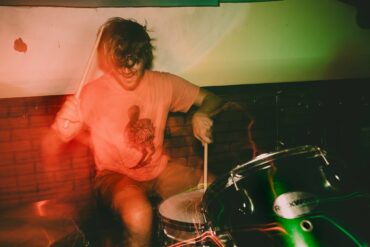
Photo by Joel Todero

Jackson: As a femme person whose primary instrument was keyboard, it seemed like everyone expected me to be a singer/songwriter type. But I was so excited to find out that I could play in rock bands, be loud, get weird, go on tour, be part of a supportive and dynamic indie music community. It was exciting.

Dressen: For Lubec, I left a pretty comfortable band situation with good friends prior to joining because ultimately it wasn’t the kind of music I wanted to be pursuing long-term.

Charlton: Once the lineup solidified around Caroline and Matt I realized that my favorite kind of music and my favorite kinds of bands were Unit Bands where every member contributes equally. The type of thing where everyone is so plugged in that music becomes about the interplay between the musicians, that’s what makes it special. I think we found that.

Dressen: I guess, out of happenstance, I found what I was looking for in Lubec pretty early on.

After some steady gigging and workshopping, Lubec mk. 2 went onto to record their first LP The Thrall. A few early songs caught the enthusiastic ear of Jordan Reidinger, then owner of the now sadly-defunct Indiana label Like Young Records, who issued the Thrall on tape.

Charlton: Once we decided on it just being the three of us we kinda got tired of the band being this sorta piecemeal thing. There was a feeling like we really had to put our noses to the grindstone.

Jordan Reidinger (Like Young Records): The way Lubec came into my life was through Brennan from another band I had worked with called Downstaaiirs.

Charlton: Those first years in Portland there was definitely a lot of growing up between the three of us, a lot of bonding. Through that experience we all realized that this was exactly the kind of band we were meant to be in.

Dressen: We pretty quickly started working on The Thrall after I joined and at the time, it was a huge dramatic endeavor that we put a lot of effort into crafting song by song.

Reidinger: I think I listened to “Local Celebrity” at least 25 times in a row. I couldn’t stop listening to it and wanted it to somehow expand in length with each listen, until it was this 5 hours sonic journey.

Charlton: To have received any recognition or label interest at all was really special for all of us, and I’m eternally grateful for all that Jordan did for this band, and for The Thrall as a record. His enthusiasm definitely gave us a confidence boost at a crucial time for us. It was thrilling to have people care.

Reidinger: I remember when we all first started contacting one another that it was something special. It felt like everyone was so excited about this record and putting it out there for the world to hear.

Dressen: At that time it felt like we and the album had the potential to be something pretty unique and special.

Reidinger: The Thrall has this power to it and this ability to hook you into the sounds happening that are unmatched by all other bands. It’s this powerful yet delicate collection of dreamy pop bliss that resonates with every feeling one could have.

Jackson: My fondest memories from that time are us just hanging out together — making dumb jokes during rehearsal or getting burritos during a recording session or sleeping in someone’s weird basement on tour.

Reidinger: Suddenly, people were just connecting with this tape on a level that was rare. I never had a tape come out where people were sending me emails about how much this record meant to them until this one.

After Laurich’s departure the trio found their way onto Dustin J.S. Watson’s radar, owner of celebrated Boston indie pop label Disposable America. DA put out their second LP Cosmic Debt and two follow up EPs on tape, cementing a fruitful partnership that operated much more like a friendship.

Dustin J.S. Watson (Disposable America): Lubec has always been a band that I felt really embodied a lot of what I was trying to do with the label at its most core level and I immediately fell in love the moment that I heard Cosmic Debt.

Jackson: Cosmic Debt means a lot to all of us, we worked super hard on it and had so much fun making it, and the final track “Ember” makes me feel both really proud and emotional.

Charlton: That record was sort of like the first time in my music career that I accomplished exactly what I had set out to do. Everything about it feels perfect to me. Up to that point, I guess I hadn’t considered what satisfaction would look or sound like. Cosmic Debt taught me to not discount my imagination in every aspect of life.

Watson: I’ve always aimed to release things through DA that first and foremost hit me on a personal level and that I am specifically proud to be attached to, then secondly hope they connect with others out there too. 

Charlton: So much of my experience playing music to that point had been defined by rejection, and I had made peace with that. But, Dustin’s interest in our band was a very reassuring moment for me, it helped me know that I wasn’t crazy for believing in this thing we were building.

Jackson: Disposable America was the perfect home for Lubec, and we had an amazing experience working with Dustin for many years. I’m so grateful for the support and enthusiasm.
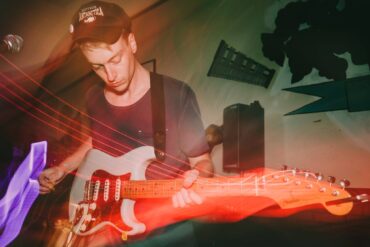
Photo by Joel Todero

Dressen: After getting to know Dustin a bit, our shared vision and all the rad stuff other bands on DA were up to, it seemed like a perfect fit.

Watson: We had built such a digital connection coast-to-coast over the years that when it came time to finally meet them on their East Coast tour, I honestly had sort of a meltdown in my apartment, like I was finally meeting my internet crushes IRL.

Jackson: What a gem of a human! I never got to know Dustin as well as the guys did, but was always extremely cognizant of his amazing support and genuinely kind nature.

Watson: The virtual to reality hurdle was huge and I built it up for absolutely no reason at all. It melted away the second I met them, the three nicest and most approachable people possible.

Charlton: Disposable America was the embodiment of everything I loved and respected about music and it was an enormous honor to be a part of it.

Jackson: Meeting Dustin in person on our east coast tour was such a treat — he was so incredibly welcoming, and made us feel like we’d known him forever.

Dressen: To have someone with amazing values and who is a gem of a human reach out from the east coast and offer so much support, I’m floored every time I think about him.

Charlton: One of the coolest things about indie rock is finding kindred spirits, I think that’s all I was ever really looking for in my pursuit of playing music. Dustin was absolutely my kind of person from the jump, and it was really gratifying to have his support behind us.

Dating back to their earliest days in Virginia, Eddie had also established an online connection with Jay Breitling of the esteemed  Clicky Clicky Music Blog (full disclosure, I was also contributor to CC). With a shared love of ‘90s under-underground sounds and a mutual admiration of each other’s writerly style, Charlton began contributing to the site, creating yet another deep connection to Boston, and the east coast at large.

Breitling: I think on MySpace I must have had Lilys listed as one of my primary interests.

Charlton: Jay and Clicky Clicky in general quickly became an important part of my life. We were essentially pen pals, but it felt like we had been friends for a long time.
Flyer by Clicky Clicky Music Blog

Breitling: Because of my dumb blog I actually know when things happened and I can tell you that 12 years ago on or around February 16, Eddie emailed me saying he was a Lilys fan, which even now when you say that to someone it’s like knowing the secret handshake or the address for the illegal rave in the disused railway barn.

Charlton: Basically all I had wanted for Lubec more than anything was to receive affirmation from people that I respected. When Jay and I first connected about the band it became immediately obvious that I also wanted to take part in what he was building with Clicky Clicky.

Breitling: Lubec was in its earliest iteration when Eddie emailed me, and were still operating from within the hallowed halls of a fine undergraduate institution in the great Commonwealth of Virginia.

Charlton: That Jay was willing to both say nice things about the band and also periodically check in on us as someone who had been through the scene as it were, that was huge for us.

Breitling: I think I asked if I could share the song [“Gang Knife Battles”] on the blog, and if the band was willing to answer questions for a feature I did about band practice spaces.

Breitling: Meeting Eddie and Caroline and Matt from Lubec was super fun and exceeded expectations. Not because I thought they were going to be jerks IRL, but because they were even nicer in person than in electronic correspondence, we had tons of things in common –these were my people.

Charlton: It’s funny now to think about how we got so much love and support from Boston, a city that prior to touring I had spnet a grand total of like three days in.

Dressen: While I wasn’t as close to him as Eddie was, I always appreciated Jay’s enthusiasm both for our band and music in general. I also really enjoyed doing the [Lilys covers] Clicky Clicky comp and can say now that we shared an album with Speedy Ortiz. Thanks, Jay!

With support from DA and Clicky Clicky along with a small network of friends and contacts, Lubec plotted a tour down the east coast in 2015, making IRL friends out of some long time pen pals. Doing so again in 2017 as well.

Jackson: That tour that we did together with Havania Whaal was particularly rad, the five of us (including Paul and Noelle from HW) had a blast.

Dressen: I just love traveling and am from Kansas, so anytime we could head out anywhere, I relished the chance!
Flyer by Disposable America

Jackson: Touring there in general was a trip for me because I grew up in the suburbs of Maryland and had no idea all this DIY & indie music was happening all around me — I just didn’t know about it, and my parents were really strict.

Watson: Finding bands to match Lubec sonically is hard enough, but finding those bands and then also trying to book them to play together is near impossible.

Dressen: I’ve always been super grateful for his support, because honestly, there wasn’t a ton of it from other labels/elsewhere so to have his genuine backing meant a lot, especially knowing how much he sacrifices for the bands on DA.

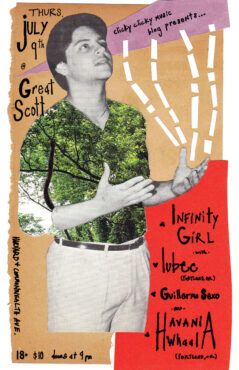
Breitling: For me, booking Lubec [in Boston] was a no-brainer, a foregone conclusion. It was something Eddie and I had talked about for a long time should Lubec ever get an east coast run of dates together.

Jackson: Our first night in Boston was kind of funny because we heard there was a big show going on at another venue right down the street so ours was a small crowd, but we loved the other bands we got to play with and had a great time hanging with Jay and exploring the city.

Breitling: The bill was a no-brainer because I was enamored with Infinity Girl from the jump, just blown away by their first full length and that the band at least from my vantage point burst onto the scene fully formed like Athena from Zeus’ head. Guillermo Sexo was a band I had admired for a long time, too. But that’s not why you called.

Dressen: I met Jay at Great Scott when we were on tour back in 2015. Another amazing person who just offers a ton of support for bands that he genuinely loves.

Breitling: I was an older guy vaguely participating in a scene that is basically perpetually 25, so most of my interaction with people was already electronic in the first place. Which made sitting on the [Great Scott] patio drinking beers with them an exceptionally fond memory: it was real. The beers were delicious.

Watson: I spent hours pacing Harvard Ave. building it up to be this big professional meeting that was about to happen and not what it really was, a coming together of some friends.
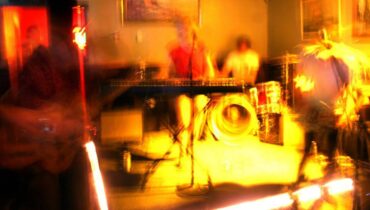
Photo courtesy of Lubec

Charlton: Getting to meet Jay and then Dustin as well after years of online correspondence was among the greatest moments in my life, no doubt.

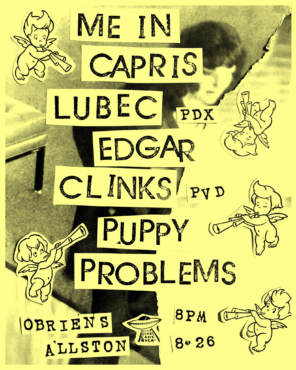
Watson: Me in Capris, Puppy Problems, Edgar Clinks, and Lubec is most definitely a legendarily wildcard line up and artifact of the time.

Dressen:  I loved our trips to Boston, Brooklyn, Montreal and Philly not just for the poutine and pizza but for the bonding and for all the amazing folks and family we met or reconnected with out there.

Jackson: It was a blast just to explore these cities together and share our music with new audiences. Eddie and I also got to meet up with many friends from the East Coast who we hadn’t seen in years which was special.

Dressen: I think we always got a pretty solid reception out there {on the east coast] plus, all of these support networks between DA and Clicky Clicky were amazing and led to some really fun opportunities and us meeting heaps of rad bands.

By 2016, Lubec had ingratiated themselves heavily into the Portland DIY by running a house show venue called The Boathouse. It’s there that they forged connections with some younger bands and writers still holding the torch for sounds outside the trendy and fleeting indiesphere.

Jackson: I get credit for finding that house! We were all planning to move in together in 2014 and our only criteria was affordable plus basement plus not a total shithole, and we super lucked out.

Dressen: The Boathouse was a house that we all lived in for a time (Eddie and I for like seven years) and practiced out of.

Charlton: The Boathouse thing just happened organically, I had been helping organize shows here and there, and it was clear that there was a real need for all ages shows and more DIY activity in general.

Delaney Motter (founder of the music publication Phluff): I met Eddie first at a house show in early 2016. We found out we had the same birthday (though quite a few years apart) and that same night we committed to having a joint birthday party.

Charlton: There was this amazing crop of younger bands on our side of the country that felt kinda underserved in terms of space to play, and platforms for them to get their music heard, and we were honored to be a part of that.

Motter: Eddie, Caroline, and Matt are all such warm, kind individuals and they always offered their unwavering support to me and all of my endeavors. Lubec hyped Phluff from day zero. They also helped usher me into a community that I now feel a huge part of.

Dressen: We had always benefited from a few of our friends throwing house shows, so at a certain point we decided to test the waters.

Charlton: That period of time was definitely the most fun I had ever had in music. The people we were playing with, the people we were hanging out with, the shows we were organizing at the house, it all felt very consequential. 

Dressen: Some of those shows were pure magic, though. Blue Smiley and Young Jesus were particularly impactful experiences down there and I think we all feel pretty honored to have provided the space for those moments.

Those within the Lubec orbit will look back on this band as a shining example of how to be a band’s band. Beyond the innovative records and superb live shows, Lubec leaves behind a legacy of shared compassion for each other, the music they made, and the community they helped foster (or at the very least positively influenced).

Dressen: I think we were a mainstay from a particular time that people may have appreciated to various degrees and hopefully we’re remembered favorably for our contribution to Portland DIY.

Jackson: One thing I always appreciated about the Portland scene in general is it has always felt less siloed to me than some other cities’ scenes. We could just be ourselves and, for the most part, feel welcome.

Charlton: I almost feel indulgent talking about the band and what we accomplished and how we saw ourselves within the scene or whatever, but it’s also very therapeutic. Things could have gone a little better in terms of recognition or whatever, but I’m immensely proud of the music we made together.

Breitling: When people think about the music of Lubec I hope they think of magic and awe and revelation and drama and romance. Of mapmakers and Magellan, Victorian paratextuality and Reepicheep the talking mouse.

Watson: Beyond any sense of large scale marketability or whatever things I’m supposed to keep in mind, they just purely felt like a band built for me.

Breitling: An ending is always inevitable. But it is an acute thrill to be able to support your favorite acts for however long knowing that it can’t last forever.

Reidinger: They continuously got better and better and to have the connection with such an incredible band as Lubec as I do, it makes me feel truly honored and humbled in every way imaginable.

Breitling: I hope when people look back on Lubec they marvel at how the nicest kids in the scene were able to make such fascinating music from within the gravitational pull of such profound niceness. I hope they think of talent and dedication to the craft too.
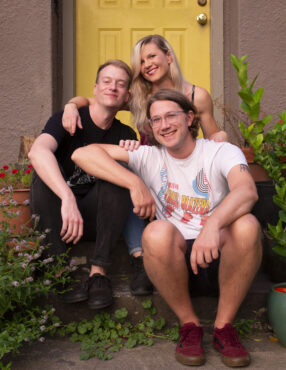
Photo by Sam Reynolds

Motter: I’ll miss Lubec so much that it hurts to think about. They were a formative component to who I have become in the music community, and I’m incredibly thankful to have crossed paths with and befriended such wonderful people.

Reidinger: I am convinced that these three humans are truly the most talented beings this earth will ever know and I love them so much and miss them so much.

Jackson: Matt and Eddie will always always be lifelong ride-or-die homies. We’ve lived together, we’ve experienced loss and joy together, we’ve impacted each other’s ongoing careers.

Charlton: What I learned from being in Lubec absolutely transfers over to the work I do now in organizing. I try every day to apply the principals I gained from our time in DIY as a means of reaching people who may not have any idea what unions do and why they’re important. Those lessons are universal.

Dressen: Being in Lubec exposed me to broader musical channels, experiences and friendships that I would have never had otherwise.

Jackson: It always meant so much when people at shows or music writers or other bands connected to our music, but the real goal was just to make stuff we were proud of and that reflected who we were as musicians.

Motter: They are just outright amazing human beings with an immense amount of talent that oozes from their craft, whatever it is they’re doing.

Breitling: The promise of Lubec, the potential that Lubec’s existence signaled and stood for, that is a true loss. I’ll feel that for a long time.

Reidinger: Thank you Caroline, Matt and Eddie for everything you have given me. I will always be the most thankful.

Dressen:  I have no regrets and we ended up forming way more valuable friendships along the way and that is worth more than any artificial success we could have had.

Jackson: It may sound super cheesy, but their friendship and support is the greatest influence in my life to this day.

Charlton: I don’t know, being in a band it sometimes feels like things are bigger to you than they are to people outside of it. I do know that I can’t imagine having done it with anyone other than Caroline and Matt. I hope that makes sense.


As its members say goodbye to the Lubec era we are pleased to report that Matt and Caroline are continuing to make music in a variety of configurations while Eddie is committed to fighting the good fight in labor organizing. All three stress how their time in the band positively effects every element of their lives: how they operate at their jobs, navigate other creative endeavors, even how they take up space as citizens of the world.
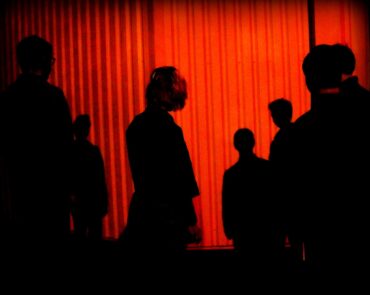
Photo by Matt Dressen

Like any band worth honoring upon its completion, Lubec was first and foremost an intense friendship. They were something like a syndicate, carrying a shared philosophy about music that informed their shared philosophies about life. That’s not something you ever truly walk away from unscathed, it’s the type of thing you build a life around. When you immerse yourself so fully in below-the-radar art like the beautifully composed chaos Lubec and their compatriots kicked up, a different–possibly better, but certainly less boring–world opens up to you in ways most people will never know.

Eddie, Caroline, and Matt will be the first to tell you how experiences collected inside the sweaty basements and tiny rock halls that dot our sphere are significant, life changing. The band saw themselves as part of a greater tradition, paying tribute to their heroes by making art for themselves that reflected who they were as people, without concern for fame or any other trappings. Loving independent music at that level isn’t a pose, it’s an alternate way of being. Which is to say, accolades and huge sales were never as important to the band as the real connections they made with the humble group of people lucky enough to call themselves Lubec fans. Now that’s an admirable feat.


You can find Lubec tapes and digital goods at Disposable America.
Premiere: Camp Blood’s Hell-Raising “Cenobite”

By Harry Gustafson

camp blood cenobite

“Cenobite” Cover Art

If one wanted to try to draw some silver lining around the absolute clusterfuck mashup of ineptitude, corruption, injustice, and sheer stupidity that was 2020, perhaps it’s this: in a more profound and prolific way than any year in recent many, the paltry bandage that is covering the the fetid, infected wounds of our society. You’d need to have been completely willfully ignorant to not see the way so many combined issues and frustrations reached a head. Racially inequality, healthcare, income inequality – to name a few – met at a crossroads. Many people recognize that it is well overdue for sweeping structural changes to address these societal imbalances. 

If you’ve been following Boston music closely for the past two years and change, then reading that intro should clue you in on what band we’re gonna be talking about today: it’s Camp Blood day, motherfuckers! The duo – who started by treading a line between industrial rock, metal, and hip-hop before grabbing that chalk and drawing their own line beyond what a simple combination of those elements could amount to – are back with “Cenobite,” their first single of 2021. 

For a quick profile, Camp Blood is the tag-team duo of Shaka Dendy and Haasan Barclay. With an EP and some singles out (including “Psalm 23,” a collab with Montreal rapper and recent Polaris Music Prize winner Backxwash), the band has been building a small-but-powerful back catalog of incisive, biting sociopolitical critique meshed with intense and experimental soundscapes. Never satisfied with clean, rounded-off sound palettes, Barclay is an avid scientist in the studio, keen to produce thunderous percussion sections, anvil-heavy guitar riffs, and feedback-laden noise. Shit can get harsh, but Camp Blood’s sound is at its most triumphant when it’s also at its harshest. For the brief period when they could still perform live, their sets were raw, energetic displays. It’s not hard to imagine that their first set post-lockdown will register on the Richter. 

With “Cenobite,” the duo continues to carve out their own unique space within Boston music. Opening with a tone that sounds less like an instrument than a civil defense siren, the jarring tone is met with an urgent kick drum. “I put these sounds together at a time in my life when I was feeling a sense of stagnation and looming peril,” says Haasan. “The dissonant synths and jangly guitars relate to the far away feeling I was dealing with personally.” 

For Shaka Dendy, the song was an opportunity to put words to that cross section of social issues mentioned above; chiefly, the intersection of racial inequality and class. “I was having conversations with peers about Black people’s relationship to Capitalism, and the purported ‘Black Capitalist’–if we understand Black people to be the foundation of Capitalism in the modern sense, how can we be expected not to participate, even when the game is so evidently rigged against us? Whether you’re the player or the ball, there’s something to be lost; innocence in a sense.” Dendy kicks the song off following that line of thought: “What’s the cost of your skin?” before delving into some lyrical wordplay around that word “innocence.” 

The title of the track itself is most likely a reference to the demonic characters from the now-iconic film Hellraiser and its ensuing franchise. You know, the guy with pins in his head (aptly nicknamed “Pinhead“). With that in mind, it might be easy to assume that Camp Blood are referring to themselves as cenobites, a demonic force here to raise some hell for the rest of us. But in that film series, it’s canon that the cenobites were once humans who transformed into extra-dimensional demons the more they pursued personal gain and gratification via sadomasochistic torture. It’s far more likely that Camp Blood are punching up the ladder, critiquing the capitalists who step over everyone else, their own people, just in the pursuit of that next dollar. 

Either way, it rips.  

Stream “Cenobite” below and buy to Camp Blood’s self-titled EP from 2019 on Bandcamp.


Premiere: MARI GETI Has Fun Getting “RISKY”

By Harry Gustafson

MARI GETI

Photo by Avery Jaysav

MARI GETI has been rapping and producing their own music since they were 11. Generally based out of the New York City/Connecticut area, they’ve been spending the past few months moving around (more on this wayward meandering in a bit).

 For “RISKY,” their latest single and video, they demonstrate their humorous sense of adventure. The video itself opens with the musician in a canoe on top of train tracks, an image that invokes a wandering spirit faced with the irony of immobility. It’s a funny image, but calls to mind that feeling of static that resonates with the position many of us have been in over the last year: a desire to travel, explore, expand horizons that is limited by the inability to really get moving. 

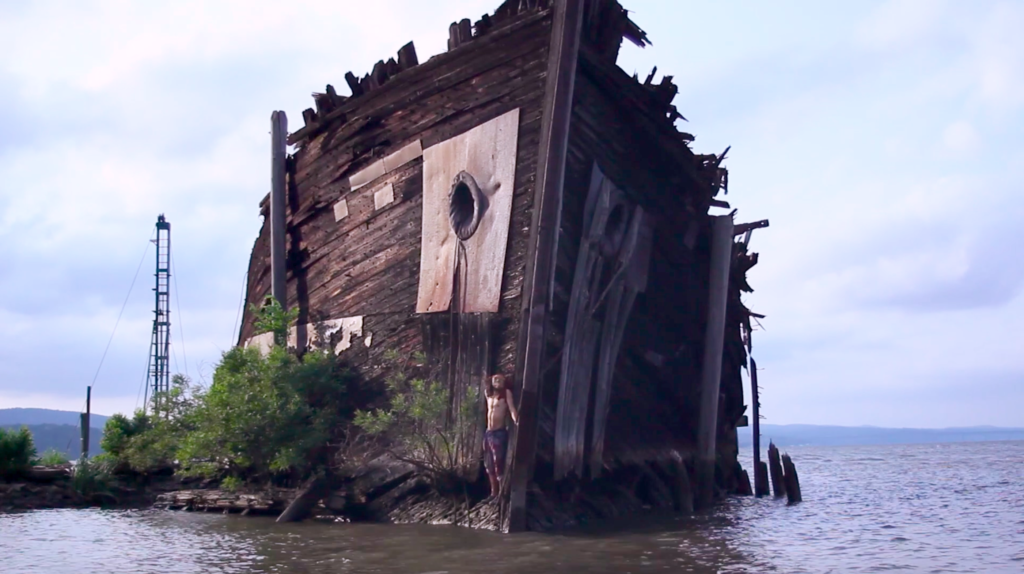
The song itself deals with the idea of resisting the impositions of someone else’s vision for what you should be and how you should act. “A lot of people tell me how to use my voices,” they rap in a frenetic tone. “I don’t really appreciate that.” The line is followed with footage of the musician washing themselves off in a woodland stream, perhaps cleansing themself of the burden of expectation that is projected upon them by others. The “risk” of “RISKY” might be just that: living your own truth and being fully yourself, unconcerned with the strictures imposed upon you by external forces that expect you to fit into the mold of some perceived status quo. Full of really fascinating locales and landscapes, undoubtedly the video’s coolest sequence comes towards the end, a shot that features the rapper standing in front of a large derelict boat that has been beached on the coastline. Looking at the image, it almost seems unreal, or maybe a lost animation from the Plastic Beach era of Gorillaz. But sure enough, there’s MARI GETI hanging off the ship’s bow. 

mari geti risky

Admittedly, MARI GETI’s vocal tone might not be for everyone: there is a frantic energy as they explore their range of yelps and yammers over a beat that sounds less like hip-hop and more like downtempo indietronica. But there is undoubtedly a talent here that will find a home in the ears and hearts of many listeners, a unique weirdness that is worth keeping an eye on. 

Watch the video for MARI GETI’s “RISKY” – directed by Edo Lee – below, and stream their album MANYVOICES via Spotify and Bandcamp


Chris Walton on Trust, ‘Fade’ and Racial Justice

Boston based neo-soul artist Chris Walton has graced listeners with a new EP, Fade. The three track collection was released on February 25th, and showcases Walton’s evolved style and buttery vocals. Inspired by love & relationships all around him, not just his own, Walton has written songs that can relate to everyone. 

Starting off in pure slow seduction, “With the Lights On” quickly shifts into a more upbeat jazz sound before returning to that groove from earlier in the track. Walton effortlessly displays the wide range in his vocals while paying homage to influences such as Sade, John Mayer and Lauryn Hill. “Before I could even remember, my mom said as a baby I would be moving around when she would play her Lauryn Hill records,” recounts Walton. On the second track “Whatcha Say”, Walton gets into his more Funk and psych-rock influences like Pink Floyd and Jimi Hendrix. Wrapping up with title track “Fade”, Walton brings us back to that smoky & sultry lounge vibe before sending listeners off with the lyric “I know I can’t make you stay, but I’ll be damned if I let you fade…” Described as “three songs in the key of loving someone”, this EP manages to showcase a rich depth of emotion in a short span of playtime. 

Beginning his songwriting career at seventeen years old, Walton eventually moved from Iowa to Boston for the Berklee College of Music. While in school, Walton found some trustworthy collaborators in CC Ellis, Nick Grout and Matt Daspit. “Without that trust you aren’t as open to trying something different,” explains Walton of their creative process. Since college, a couple of his friends have relocated to Nashville, and in late 2019 Walton joined them to record the EP. All three songs were recorded in one week in a makeshift studio in his friend’s house. In early 2020 Walton dashed his plans for more live shows due to shutdowns from COVID-19, but admits the added free time was beneficial to finishing up the tracks for release. “If we all hadn’t been out of work, I don’t know if we would’ve finished [these songs] in the time that we did.” 

chris walton

Photos by Jayme Ellis

However, these weren’t the only tracks on Walton’s mind throughout 2020. Amidst the many social and racial justice movements happening around the world, inspiration struck from within a dark mindset. In October, Walton released the single “Do Something” after dealing with the traumatic events surrounding people of color last year. “It’s about black people needing to be represented and heard and how black lives do matter. As a black person it’s not something I ever wanted to have to write.” Walton continues, “it was a hard song to write because I had to sit down and process these emotions. I would turn on the TV and see people marching and protesting for their right to live, which is a crazy idea in America that we have to do that.” Moving forward Walton feels a certain level of hopefulness in the country. “I err on the side of hope in general. It’s a lot easier to be hopeful with an administration that is interested in what people who look like me have to say, and are also interested in having people who look like me in the White House.”

Looking ahead now that Fade has been released into the world, Walton is leaving it open for plans of more live streams in the future and has a goal to move out to Nashville by the end of the summer to join his collaborators. Now having refined his jazzy, neo-soul and funk sound he says he has “settled into the style and vibe of music that I want to be making, at least for right now.”

Check out Chris Walton’s new EP Fade below and follow along with this other projects on his FacebookInstagramTwitter, and Spotify!