Natalie Joly on “Yours to Stay”, Rock Music and Italian Food

Raised on classic rock, 24 year old North Shore native Natalie Joly grew up believing everyone was a musician. “[I had] a warped perception that everyone was a musician which led to an odd realization in third grade when I tried to ask my friends to start a band and they didn’t know what I was talking about,” explains Joly. Coming from a musical family, the idea just came naturally to her. “It’s just what I do.” Spending her childhood listening to The Beatles, she fell under the impression that these four dudes from Liverpool were the only band that existed. However her horizons exploded upon learning of such legendary artists such as The Rolling Stones, Guns N’ Roses and Boston’s own Aerosmith. Entering her teen years, she began to absorb more pop adjacent artists like Bruno Mars, Lady Gaga, Ashlee Simpson and Taylor Swift, the latter she credits as being greatly influential in her songwriting. “At this point in my career I feel like I’m finally bringing all of these influences together,” says Joly. 

Now in early 2021, Joly is gearing up to release her third album, and first that will be released online for the general public. Following a tumultuous year of delays and tectonic shifts due to the ongoing pandemic where Joly made the decision to go solo from her band The Reckless Hearts, this new album is an opportunity for the singer to showcase “so many years of creativity bottled up [and to] show people what I’m made of,” Natalie describes. Both the title and release date for the forthcoming album are yet to be announced, but today Joly shares with listeners the third single, “Yours to Stay”. Following initial singles “Will You Ever Stop” and “Running Circles”, this new track is a sweeping ballad of love, uncertainty and desperation. “It’s a last ditch effort of putting myself out there… take it or leave it.” 

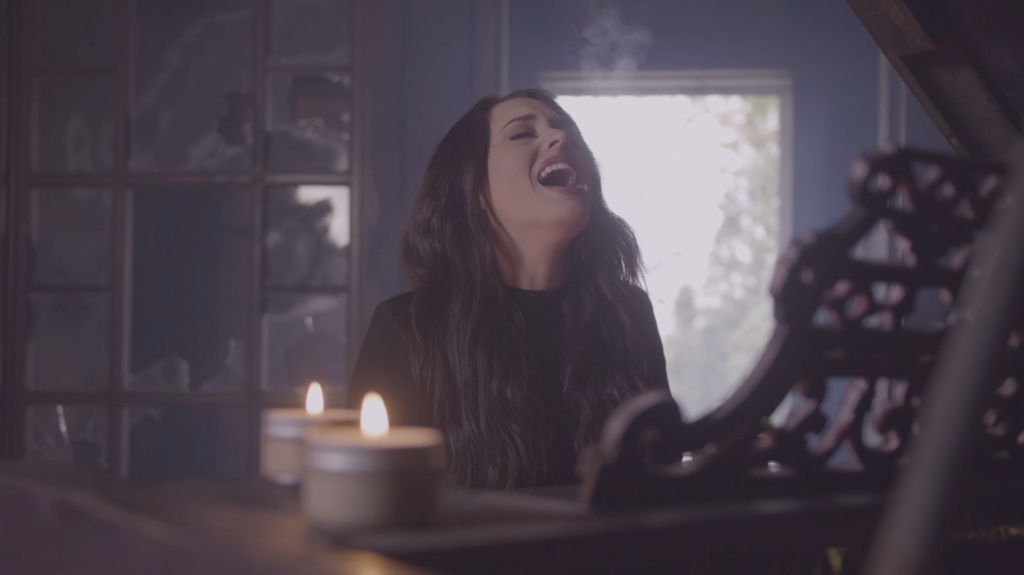
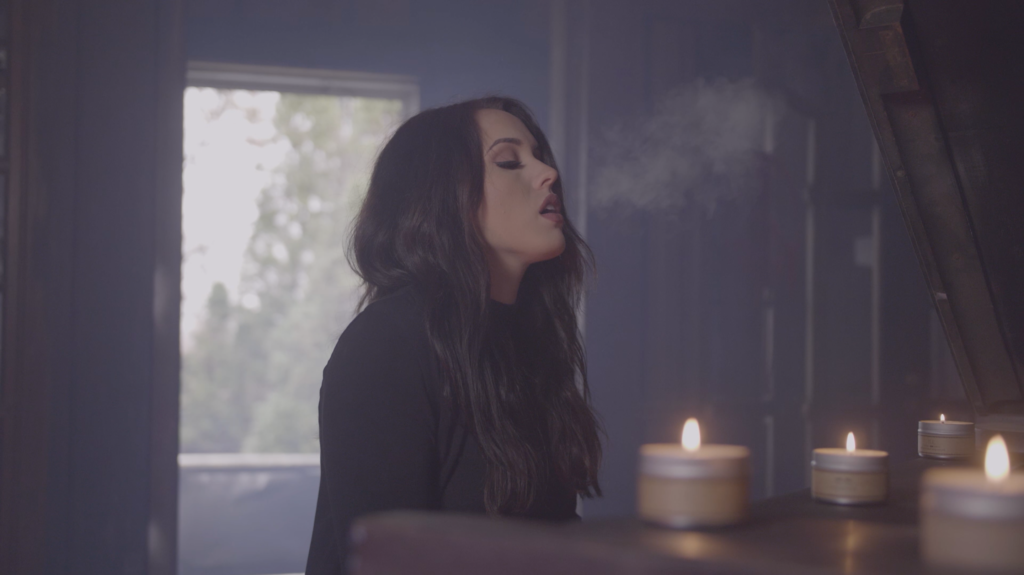
Wanting the story, song and music video to be as cohesive as possible, Joly found the perfect spot to shoot: An abandoned mansion in her hometown of Wakefield, MA, that has since been torn down to make way for future developments. A favorite place to drink for high schoolers, the derelict property served as a beautifully rough backdrop for both the “Yours to Stay” and “Will You Ever Stop” videos. Faced with bitter cold and unforgiving rain, the crew battled the elements over three days in late 2019 to get the footage they needed. Sleek in all black, Joly strolls into the house past broken windows and empty rooms to find a lonesome grand piano. Warm breaths permeate the frigid air around her as she fills the space with her rich vocal. She takes a drag of a cigarette leaning on a rundown pool table littered with solo cups and broken glass, as she grapples with invisible demons. Drones capture dramatic shots of Joly belting out from the rooftop before the song closes out as she collapses on a staircase, surrendering to the final lyric “maybe this will end today.”

Writing the lyrics, playing guitar and piano and handling the production for most of her songs, Joly admits to drawing the line at playing drums and mixing the songs. “[Piano] brings out a totally different side of me. When I’m on guitar I wanna be like Slash, but when I’m on the piano I turn into Elton John… I’m more emotional on piano.” 

When faced with comments from local critics about the alleged decaying state of rock music in Boston, Natalie had this response: “It’s an easy thing to say, but if you look for it, there’s a lot of people who still want it. [To] people who say rock is dead, I just say “really?” I don’t think rock is dead, I think it was sleeping for a minute but music is always transitioning.” Continuing on about the abundance of talent throughout the Greater Boston area, Joly had this to say: “Boston has so much talent, but I don’t understand why it’s so difficult to lift people up in this community. There are so many artists working in the cover scene, who aren’t given the opportunity to show their art. A lot of people around here don’t know that their favorite cover artists are actually writing behind the scenes and we would love it if people would pay attention to our original music.”

In between covering artists like Carly Simon, Janis Joplin and Norah Jones in her Instagram and YouTube accounts, Joly finds time to enjoy one of her other true loves: Italian food. “This is the most Italian thing I’ve ever said, but my favorite food is probably my mom’s cooking to be perfectly honest.” But when she isn’t enjoying her mother’s cooking, she frequents Sabatino’s in downtown Wakefield and Venetian Moon in Reading, MA (both spots that Joly has gigged in the past). 

As for when the pandemic is finally over, Natalie can’t wait to get back to playing more shows. Keeping her expectations in check due to the changing reality of what shows will even look like in a post-COVID world, Joly hopes for some intimate performances to showcase her new music. “Whatever way that looks like I’m fine with, as long as I get to go back on stage and connect with people. I feel like that’s what we all need right now, a little bit more human connection.”

Watch the video for Natalie Joly’s new song “Yours to Stay” below, and check out her recent singles on her Spotify now!


Premiere: Alicia Clara’s Dreampop Excavation “Outsider/Unusual”

By Harry Gustafson

alicia clara outsider/unusual

If the past year and change has been good for anything, it’s been introspection, the extra time we’ve been afforded with ourselves, to examine what we once considered “normal” so we can move forward with a better understanding of our places and roles in the world. Enter the curious and explorative dream pop of Alicia Clara, an indie artist based in Montreal, releasing her debut EP Outsider/Unusual

Led by the singles “Five,” “Hazemaze,” and “Stones Like Eyes,” the EP showcases Clara’s songwriting talents and ear for catchy, breezy melodies that match the current winter snow flurries that are currently making their way all over North America. It’s tempting to pop on Outsider/Unusual, wrap yourself in a blanket with a cup of cocoa, and stare out the window. It’s dreamy and contemplative like that, but never loses a gentle sonic comfort. 

Alicia Clara’s lyrics are deeply introspective, often efforts to make sense of personal habits, desires, inclinations that may or may not be futile endeavors. Kicking off with the title track, she sings, “Again I look away, I shed a bit of skin, once I own something it loses value, the stars told me it might just be a placebo… I don’t care, I’m happy if it is.” This works as a poetic way of questioning our tendency to seek for completion outside of ourselves, that hollow feeling when we realize that sometimes getting what we think we want doesn’t fulfill us as we’d hoped, and our ultimate choice of whether to stick with that or not. 

alicia clara

Photo by Tess Roby

We covered “Hazemaze” back when the single dropped, but hearing it as part of the full release gives it a fresh context, a reminder of the song’s fluid structure, shifting tempos and finding rollicking grooves with a focused ease. This makes it the most dynamic track on the EP, but not the only moment Alicia Clara is able to throw the listener a few curveballs to make the ears perk up. 

Lead single “Five” might end up being the favorite of any midwest emo fans that might pop this record on to hear what’s-what; that melodic guitar arpeggio builds so much moody energy. But the song’s refrain dissolves this tension away in what probably ends up being Clara’s most tender vocal moment. Her “oohs” and “aahs” are a great example of how a singer can convey emotion without needing to use words. Plus, the song’s instrumental section gets real trippy in the track’s second half. 

With all its imagery of watching, looking out at the world and observing, there is a certain sense of dissolution over the course of the EP that culminates in closer “Faceless.” That imagery itself – facelessness – feels like the ultimate result of all this introspection and observation, a temporary loss of some semblance of self. It’s a song about absence, and trying to regain some simulacrum of a feeling that’s gone. 

You can stream Alicia Clara’s Outsider/Unusual via Spotify below. The EP is the first extended release for Montreal’s Hot Tramp Records. Outsider/Unusual was produced by Michael Kalman. Instrumental performers on the album in Kalman, Patrick Drummond, and Luke Pound. 

PREMIERE: Meiwei’s Debut EP is Fingerpicking Good

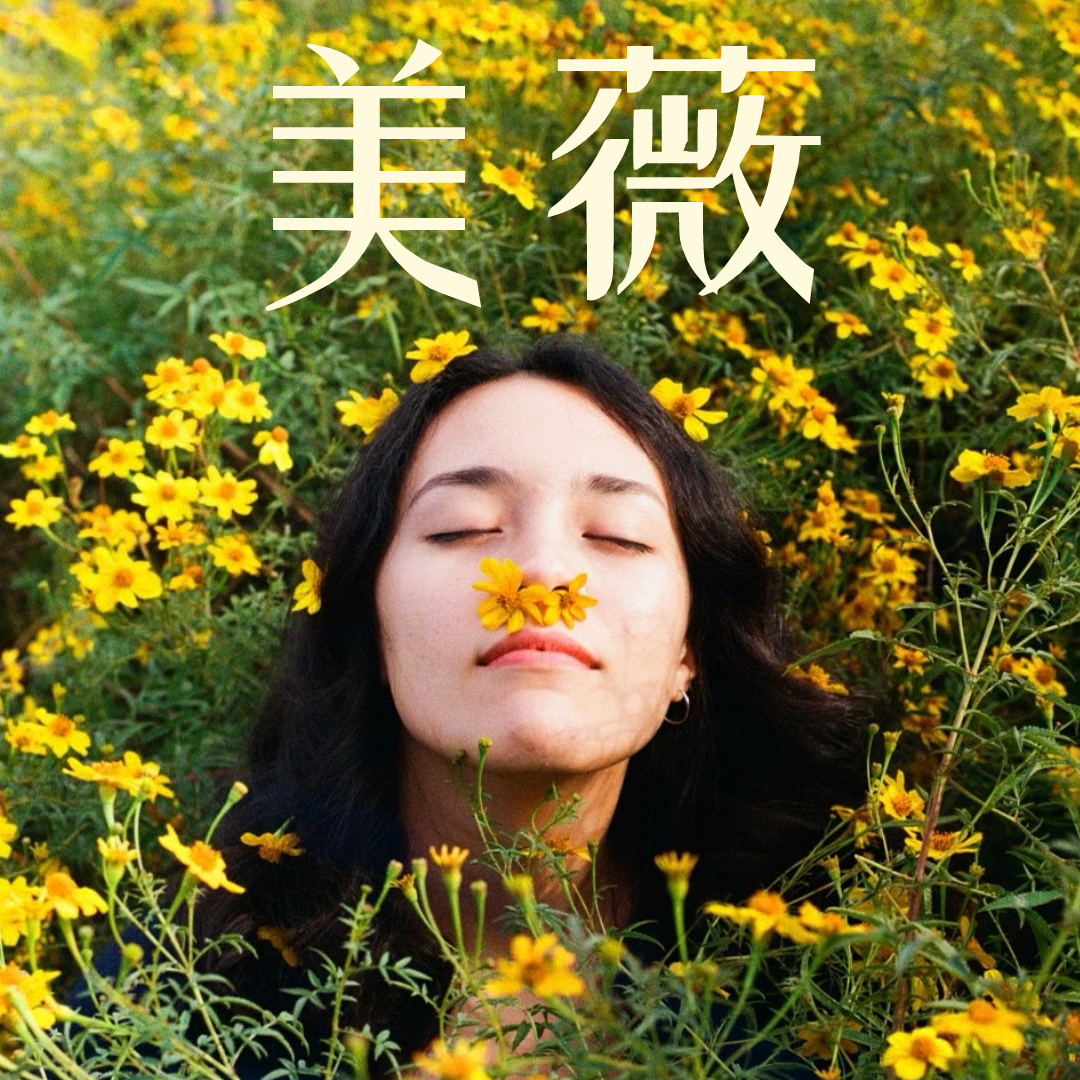
Michelle Mouw uses nature as a catalyst for discovering new parts of herself. When you’ve grown up in a city with a population of 21.54 million—and no squirrels—you kind of have to spend your college years seeking out thriving green spaces. Under the moniker Meiwei, the Beijing-born, Boston-based singer/songwriter is doing just that and writing acoustic, dreamy songs along the way. Today, she releases her self titled debut EP.

“I feel like a kid in complete awe of all this nature,” she says about living in the U.S. compared to China. “I had limited access to green spaces growing up and for most of my teenage years, the pollution was quite severe. In the U.S., not once do I think about the air quality and there are parks everywhere.”

Listen to Meiwei’s lyrics closely, and you’ll hear that sense of awe in her music, too. Over and over, she mentions rivers, water, trees, and other landscape imagery. That, coupled with her fingerpicking guitar style, make it easy to believe that she learned how to play “basically every Laura Marling song in my bedroom in high school.” Today, she draws more folk-spiration from other artists who lean on nature and the outdoors: Adrianne Lenker (of Big Thief) and Haley Heynderickx.

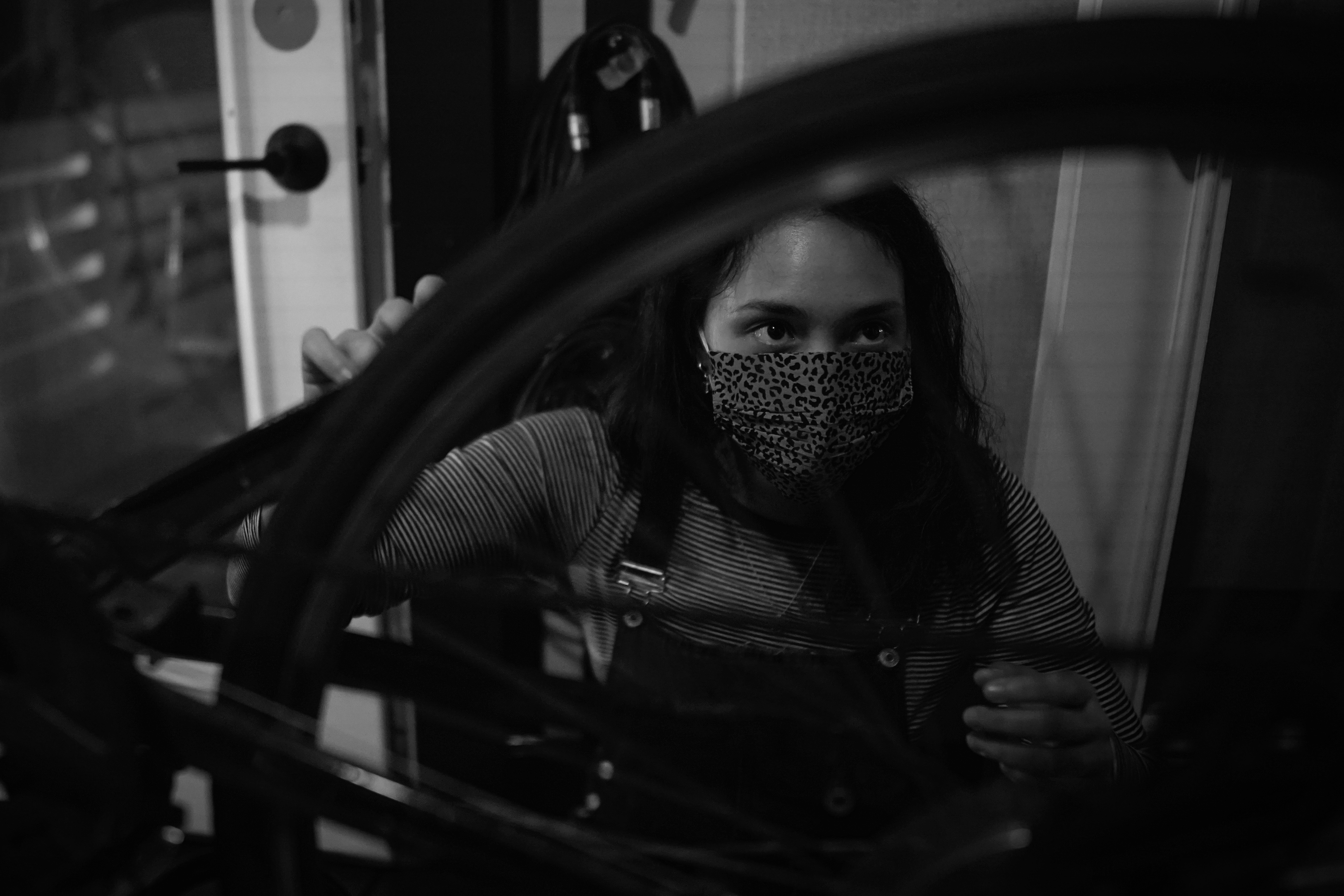
In stark contrast to the lush landscape imagery, Meiwei also writes about cityscapes. We can almost feel the bustling of gritty, grey city life in “Ring Roads.” First, we hear a 2017 field recording of a bus in Beijing; the bus is announcing its arrival at the stop that Mouw gets off to go see her grandmother. “I have no idea what compelled me to record it back then. Maybe ‘past me’ could sense ‘future me’ was going to write “Ring Roads” about Beijing,” she muses. Under Meiwei’s signature, gentle fingerpicking, we can also make out a second, more subtle sound: her rusty and very well-loved bike. “I played it by setting it upside down and spinning the pedals with my hands.” The idea was to make it sound like she was commuting on her bike the whole song. 

Throughout the tune, she describes city life—”The sun barely made it out that year,” “Cigarette smoke and AstroTurf,” “Spring would only last a week, and winter a year.” Just before the 3 minute mark, she opens up the song with open strumming. Finally, in a few lines inspired by Mitski’s Japanese lines in “First Love/ Late Spring,” Meiwei sings in Mandarin.

She goes on to sing about city life in “The Valley,” too. Again she uses field recordings to set the scene, this time over what might be rain sounds. She adds echoey piano notes and sings a refrain that any city-dwelling romantic can feel in their bones: “I know you hate this city, but goddamnit you love me.”

“Apples and Ginger” highlights Meiwei’s skillful, lilting vocals, while she gets more experimental with “Swing Song,” using harmonics while fingerpicking, and using the swing as a metaphor for a hot and cold relationship, repeatedly singing, “Pull me close / let me go.”

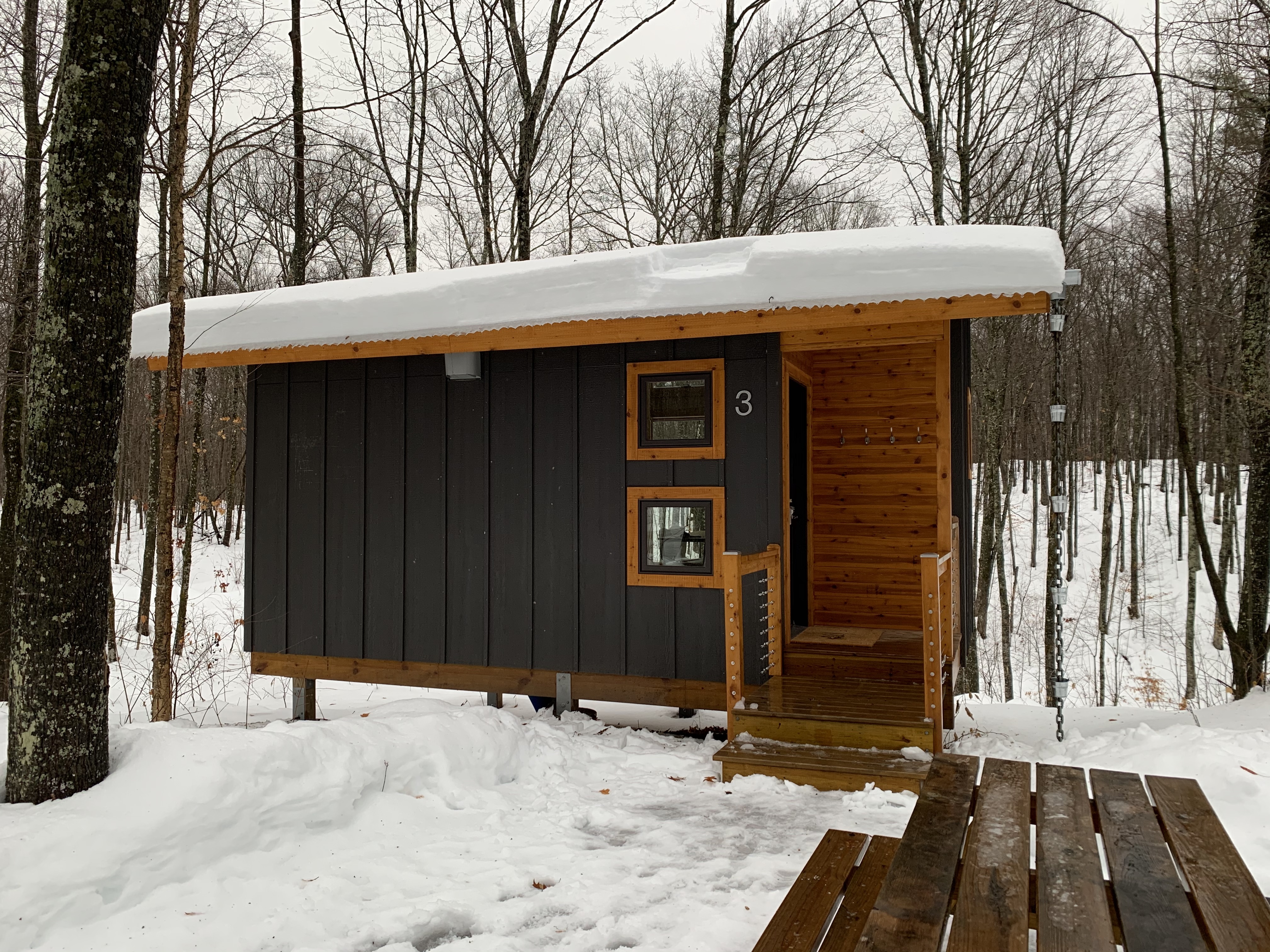
Mouw wrote those four songs in her Boston apartment while she was a student at Northeastern during the course of 2020. However, the first song on the EP (and the EP’s single), “December’s End,” was penned from a small cabin that her uncle built in the woods of Wisconsin around New Years of last year. Talk about big Bon Iver vibes.

One of Meiwei’s songs written during 2020, which does not actually appear on the EP, was “Unusual Spring.” She dropped that one as a single in May of 2020, at the height of COVID’s spring peak. Unsurprisingly, the song is much informed by the pandemic. “The other thing different about ‘Unusual Spring’ is that it was recorded in my bedroom under the virtual guidance of my friend and the wonderful producer Craig Short, who lived down the street from me, but because of the intensity of COVID in the spring, I couldn’t actually see in person.” The rest of the songs on the EP were recorded in a renovated barn-turned-recording studio in Weston, MA, called Nothing Productions, and were also produced by Short.

What’s next for Mouw is yet to be determined (as with most performers these days). She’s just accepted a job working at a farm in Washington in March. “I plan on being one with the vegetables for the next 9-months and writing songs in my cabin.” 

In 2021, she says she plans to write enough songs to put out a proper debut LP, and play with real-life human beings. “I saw an ad on a bulletin board the other day,” she says, “where a 65-year-old piano player was looking for someone to ‘play and share the joys of music with.’ I HEAR YOU my friend and I relate.” If that ‘missed connections’ moment doesn’t pan out, getting billed with any of her local inspirations (Anjimile, Carol, and Brennan Wedl) would serve us just fine. Let’s cross our fingers.


Stream Meiwei’s EP below via Bandcamp.

Proof is in the Pudding Ep. 1: Harborlights

Crispy Potato Tacos!

Crispy Potatoes:

2 lbs russet potatoes, scrubbed and rinsed
¼ teaspoon black pepper
1 tablespoon onion powder
1 tablespoon garlic powder
1 teaspoon chipotle chili powder
1 teaspoon cumin
3 tablespoons nutritional yeast
3 tablespoons all-purpose flour
2 tablespoons tamari or soy sauce
2 teaspoons rice vinegar
⅓ cup vegetable oil
Sprinkling of sea salt, to taste

  1. Preheat oven to 400 degrees F and line one large baking sheet with parchment paper. 
  2. Cut the potatoes into bite-sized chunks. In a large mixing bowl, combine the potatoes, black pepper, onion powder, garlic powder, chili powder, cumin, nutritional yeast, and flour. Toss and mix well. Pour in the tamari, vinegar, oil and continue to mix and toss until all the pieces are coated thoroughly.
  3. Spread the potatoes in an even layer on the baking sheet and cook for 25 minutes. Remove and give one piece a taste. Season with sea salt as needed. Flip with a thin spatula and shake the potatoes into an even layer. Bake for an additional 10 to 15 minutes, to get them crispy. 

Homemade Flour Tortillas

 3 cups all-purpose or white whole wheat flour
1 teaspoon baking powder
1 teaspoon salt
⅓ cup coconut oil (melted – or vegetable/olive oil)
1 cup warm water
1 teaspoon cumin

  1. In a food processor with a dough blade, pulse together the flour, baking powder and salt to combine, 2 to 3 pulses. (Alternatively, you can use a large bowl and whisk together, or a stand mixer with a dough hook.)
  2. With the machine running, slowly add the coconut oil and water until a cohesive ball of dough forms. Once the ball of dough forms, process (or knead) for 30 additional seconds. (If making by hand, use a rubber spatula to mix in the water, then knead by hand until soft and only slightly tacky.)
  3. Divide the dough into 12 equal pieces and shape into balls, then cover with a clean dish towel and allow to rest for 10 minutes.
  4. Heat a large non-stick sauté pan or cast iron skillet over medium heat. Meanwhile, working with one ball of dough at a time on a clean work surface, sprinkle a small amount of flour on top of the dough, then roll into a very thin circle, 8 to 10 inches in diameter. Place the rolled out tortilla into the dry skillet and cook for about 30 seconds per side. Since temperature can range from burner to burner, look for multiple small bubbles to form and the edges of the dough beginning to look dry, then turn over and repeat. Place the cooked tortilla on a plate and cover with a clean dish cloth to keep warm. Repeat with the remaining balls of dough.
  5. The tortillas can be kept in a zip-top plastic bag in the refrigerator for up to 5 days, or individually wrapped and frozen for up to 2 months. To warm, cover with a damp paper towel and microwave for 10 seconds.

Cashew Cheese Sauce

1 cup unroasted cashews, soaked in water for at least 2 hours, drained
1 cup vegetable broth
2 tablespoons mellow white miso
2 tablespoons nutritional yeast
1 teaspoon onion powder
Salt to taste

  1. Puree everything in a blender until absolutely smooth, scraping down the sides with a rubber spatula occasionally. This could take 2 to 5 minutes, depending on your blender. Remember to give the motor a rest every minute or so.

For Assembly

Shredded iceberg lettuce
Thinly shaved red onion
Drizzled cashew cheese sauce

Stay tuned for future episodes of “Proof is in the Pudding” and check out Harborlights on Instagram, Spotify and Twitter now!

PREMIERE: Orson & The Rosebuds Deliver Some Joy On “When Up Is Down”

2021 has already proven to be a kicker, but Boston-based indie group Orson & the Rosebuds are here to provide a dose of serotonin. Much like their legendary namesake, the band got their start after a theatrical production – in this case American Idiot. Roommates Christian DeKnatel (vocals/guitar/keys), Olivia Orth (bass) and Nick Smith (drums) met Tessa Berliner (vocals/guitar) after a production of the Green Day musical, and Orson & the Rosebuds was birthed. Longtime friend Miles Ragan was later recruited on keys for the live band after the release of their debut album, Friends of Friends, and has stayed on as a full-time member.  Friends of Friends was influenced heavily by the collaborative albums that Gorillaz have been dishing out, and featured guest spots from many local artists, most notably Sidney Gish. The follow-up, however, is an almost strictly in-house affair that showcases how well the band works as a unit. They prove no gimmicks are needed for their brand of bright pop-rock. Their second album When Up Is Down is out today and we are delighted to be hosting the exclusive premiere!

When Up Is Down is a musical delight. The album harkens back to the days of mid-2000s indie with its bouncy, quick music and uplifting lyrics. “Eleanora May” sounds like a throwback to the era of Cults and Givers with a catchy full-band rhythm and bell heavy percussion. “Trouble Trouble!” showcases a funkier side, while “Words We Don’t Need” has the slightest of island vibes and “Favorite Color” feels reminiscent of a great American songbook entry. But rather than feel like rip-offs of bygone eras, these songs feel fresh and comfortable in their mashing of influences. What the Rosebuds are able to craft across When Up Is Down is a shimmering collection of pop-rock that eases the listener in with eclectic, popping rhythms that give way to subtle complexities. The album is musically cohesive, as each of the ten songs are peppered with enough detail to stay unique from the rest of the bunch.

The album is also reminiscent of a former indie era with the deployment of dual-branded male and female vocalists. The vocals do play a key role in these songs – Berliner shines on “Trouble Trouble!” and “Words We Don’t Need,” where DeKnatel has his big moments on “Eleanora May” and “EchoState.” Most of the album’s songs have a distinct lead, but they are often backing up one another, which is most effectively showcased on opener “Little Late for Early.” The song starts off with a jangly and immediately infectious guitar rhythm, which sets the tone for the album that follows. It’s a fun and pure-hearted song that acts as the break of dawn across a sunny album. Rapper Joe Sung-Rae drops in for the penultimate song “YaMeanIt,” which also provides a burst of energy and freshness before the album’s finale.

The lyrics of the album match this sunny sentiment, with across-the-board optimism and joyous odes to sincerity. This was by design, as the album’s concept is that of finding the strength of optimism in an increasingly bleak hellscape of global warming and corruption. It’s the kind of uplift we need after the cacophonous year that has just passed. But the words and emotions never feel forced; the optimism comes from a place of sincerity, one that genuinely wants all listeners to take a few minutes to dance and enjoy the fine things in our lives. The album’s title mimics the feeling of confusion and frustration we feel day-to-day. But it also supplies the lyric “When up is down I still want you around” in the title track and closer, a largely acoustic and patient love song that’s arguably the best on the album. The lyrics across the album are often simple microdoses of love and hope that use their directness to great effect. There is only so much time for hope, and the Rosebuds deliver it in quick bursts. When Up Is Down is ten joyous earworms of endlessly hopeful pop-rock, begging you to put on a pair of headphones and disappear out of the current state of the world. And you owe it yourself to do just that. 

The album is out today, and can be streamed and purchased through Bandcamp and other streaming services:


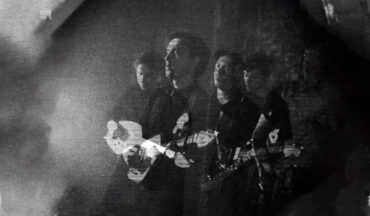
Premiere: Oddysseys melancholically rejoice with new single “Moaner”

by Joey Del Ponte 

Photos Courtesy of Odd Haus

Unless you haven’t been paying attention, it is almost inevitable that art created over the past year is a reflection of these difficult times. Not only are we living through a global pandemic– but constant political upheaval and disturbingly prevalent racial injustice has plagued our national conscience for months.  

So, if you’ve been doom-scrolling your timeline at all this past year, we implore you to tune into the brand new Oddysseys single. With their eyes set on evolving their sound and capturing the frustrations that have haunted us this past year, Oddysseys triumphantly announce “Moaner.” 

From Chicago by way of Boston, Oddysseys’s dreamy post-punk tendencies can be described as a “seductive mix of surly and breathy temper…” that bounce and echo over dreamy guitars. It’s easy to catch the influences of goth-pop and early post punk bands like The Cure and New Order but with “Moaner” odysseys take their efforts to the next level. Bellowing, melancholic vocals reverberate like hymns out of a cathedral, contrasting with the track’s sharp, restless bassline and driving tempo. 

This juxtaposition is reminiscent of Joy Division, however, such comparisons are limiting. Oddysseys bring their own Odd flair to everything they do. The new single is a fresh take, a modern interpretation of a beloved genre. “Moaner” is focused on capturing the energy and anticipation of the universally difficult past year, not only with the pandemic but with instances of  racial injustice and protests happening across the country. 

‘We wanted to develop a project that conveyed the reasons why we wanted to scream pretty much everyday this past year. Like many of the people in this country (though not nearly enough of them), we’re fed up with the amount of social and racial injustice that we see every single day, the lack of dialogue and blatant disregard of growing global turmoil, and the lack of optimism and progress that once seemed, at the very least, attainable”

The group released their EP “Odd” in 2016 with popular tracks like “A Book That Never Ends”and “Run Prophet” and in 2019 they recorded their first LP “Odd Behavior” a wonderfully balanced 9-track album that is consistently groovy and sullen, yet dynamically adventurous. The group are not strangers to using their musical abilities to build out their world, even in a time with no live shows: 

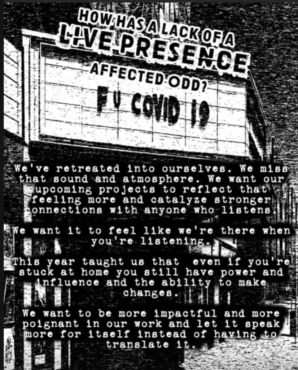
“…we want people to feel like they’re in the room with us when they’re listening to our music, especially these days where we can’t play gigs. The energy we’ve put into Moaner is a direct result of this suppressed expression and isolation that just started manifesting itself into more driving and dynamic sounds.” 


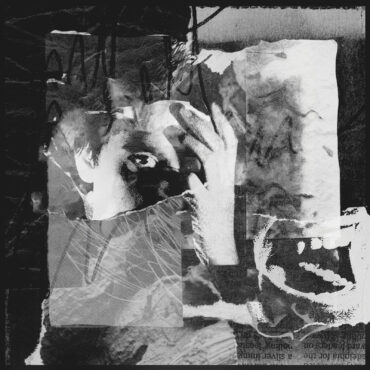
The band is part of the larger Odd Haus, a community of multidisciplinary artists that offer their skills to other DIY independent artists for everything from booking shows, to creating visuals, and branding and marketing. The jarring visuals in their music
videos for “Breathe With Me” and “Fever Dreams” equally set them apart from other artists. In their zines, which are available on their instagram, Odd Haus continue their community-driven nature, speaking directly to their fans through a mix of multi-media art, collages, recipes, manifestos, and letters, talking specifically about their desires to continue reaching out to fans and include them in their constantly enfolding musical odyssey.   

Be sure to pre-save the song on Spotify and Stream “Moaner” on Bandcamp now.


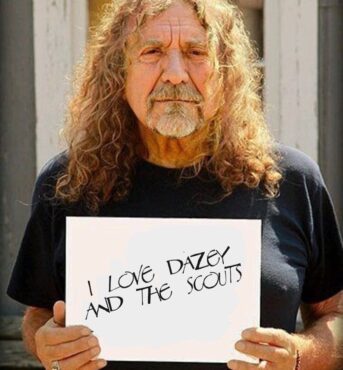
An Oral History of Dazey and The Scouts

 
Dazey and The Scouts in the studio

Photo Courtesy of Dazey and The Scouts

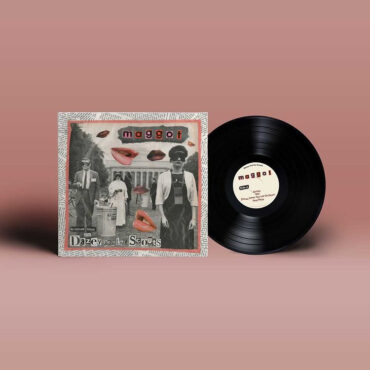
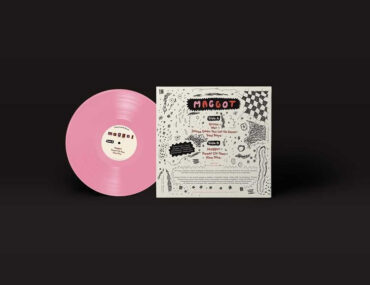
If you’re lucky, your late teens can be a gracefully fucked up time. Between the classes, the house parties, the gigs, the jobs: it’s a time when most of us really come into ourselves. Plenty of people have photos to hang onto and stories to retell, but it’s rare to have an actual document of that era that you can revisit at will–one that encapsulates your friendships and hardships and successes and failures so succinctly. Maggot, the sole album by Dazey and The Scouts (thus far) is that kind of memento. 

The Scouts were a (very good) band in Boston for just a few years, they played a lot of house shows, pissed off a small handful of DIY bros, released one record that had a little buzz around the area, and then quietly split up. A fun chapter in the lives of its creators to revisit, but a far cry from their present musical output collectively. However, as with some art that gets mistreated or misunderstood, The Scouts have seen a sudden and dramatic rise in popularity in quarantine, thanks in huge part to TikTok.

Seemingly overnight, an army of teens started making videos soundtracked by The Scouts, which quickly gave rise to a whole online community full of support for queer and trans kids struggling with their identities. They found some of solace in The Scouts’ mix of low-brow humor, wounded revelations, gang-like camaraderie, and sick fucking riffs. Those videos eventually led to some crucial Spotify playlisting slots and an added boost to the algorithm. These days, album highlight “Wet” [watch the wine-soaked music video right here] sits well above one million plays, not bad for a band whose sole purpose was just to make each other laugh, and uhh maybe open up for DENT.

However, it makes perfect sense that Maggot has found such a rich second life with teenagers on social media: it’s a record about coming of age and coming to terms with who you are from three extremely online people as brash as they are sentimental. It’s about staring down trauma in the face, but knowing you have friends at your side, and then laughing about ever being scared in the first place. It’s also uproariously funny and very approachable, the sorta thing you wish your little gang could make, if only you were musically inventive, had an obscene amount of charisma, and your inside jokes were actually hilarious. Maggot by Dazey and The Scouts is all of those things AND a kick ass rock record, the kind of totally assured first act Boston may never see again.

In order to commemorate this sudden explosion, The Scouts decided to finally press Maggot on vinyl for release on Valentine’s Day, exactly four years from its original birth. Preorders went up two weeks ago, and to the band’s surprise, the special edition pink records sold out in just 6 minutes, with the standard black soon following suit. With copies going out to places as far as South America, the UK, Indonesia, and Australia, The Scouts are now quite literally a band with global reach. Seems as good a time as any for its members to tell us their story from the beginning.


Dazey and The Scouts, like most bands, were started in a college dorm room

Brennan Wedl: I feel like we were just rocking, we were just like little wide-eyed and bushy-tailed young thangs just trying to let something out.

Otto Klammer: It reached a point where we had enough songs for an album so we were just going to do it.

Lea Jaffe: That was the first time I had a band that even thought in those terms, The Scouts were really like my first real band. We had seven songs and I was just so stoked to even have done that.

Brennan: It was very pure and from the heart. It was almost carefree you know? We were just friends in a band playing crazy weird shows and writing silly little ditties and I’m just so full of gratitude that it’s taken a new life. It’s a monster and it’s out of our control now.

Lea: The times when The Scouts were active before we recorded Maggot, and almost everything we did in that time we just did because we thought “oh that’s sick.” It was just fun to be with Brennan and Ottol doing those things, rocking. And it was fun to be with Sasha [Artifact Audio].

Otto: I definitely look back on that era and remember the purity and the joy. Everything happened really organically, going back to how we didn’t push the record that hard. It was just always a given that Sasha was going to record it, we’re gonna do it at The Record Company and that was it.

Lea: When I was thinking about formatting the album for vinyl I thought “Ok where should the break be for the A side and B side go” and it seemed so natural and even when I listened to the record before all this–because I do sometimes, I’m proud of it and it’s fun and good to listen to–there’s really that moment with “Maggot” and “Sweet Cis Teen” where those were two of the later songs we wrote and I hear them sonically both as being a little heavier and less funny and more personal.

Otto: When I look back on the record as a whole and with it now being on vinyl, it’s like one side is the fun stuff and then the b side are the songs that aren’t intended to be as humorous. Ultimately I think having it be heard and enjoyed by teenagers for the most part, it’s kinda like what being a teenager feels like: it can be so joyous and funny and kinda silly and it’s also extremely cathartic and hard.

Lea: Even though there are moments from that time I don’t like to revisit, Maggot still feels like a very pure time capsule of that time in our lives in the best way. But yeah there’s definitely a strong divide between the types of songs on each side.

Brennan: When we performed the B side songs in our sets there would be a mutual respect for those songs and it was just a nice feeling to share those moments with people.

Otto: Nobody tried to punch each other in the face or knock over our shit when we did those ones.


Humor was always going to be a part of the band’s sound, it was a means of processing the upsetting things in their lives at that time

Lea: I feel like the funnier ones are the earlier songs we wrote and I have very fond memories of for instance, brainstorming things we would do to [disgraced and repugnant porn star] James Deen and also sitting in our dorms going through all of our cringe Tinder messages. 

Brennan: I think we were just really nutty and the humor just came naturally in the beginning. We were all just hanging out, shooting the shit and memeing. The music came from that.
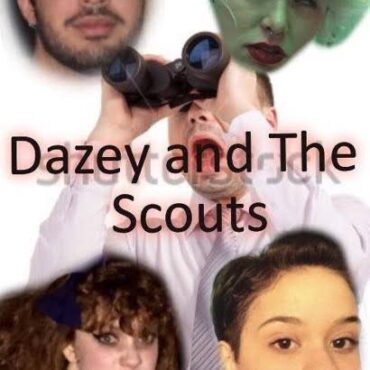
meme courtesy of Dazey and The Scouts

Lea: I’ve never really thought about why the humor felt important. To me it felt like a good way to talk about things that were bothering us. By making jokes out of it it took the power away from the subjects or the transgressive person that inspired them.

Otto: By the time I had gotten around to making the lyrics for “Sweet Cis Teen” the fact that I called it that is my attempt at matching their humor. I think I took it from a Facebook status I had made. I definitely tried to insert some humor into it in that way, but I guess I was just going with the voice we had established.

Lea: There’s nothing more core-shaking than being a jackass and then having the people you were a jackass to just point the finger and laugh at you.

Brennan: I like that every song on the album has some bits of playfulness to them, but not all of them had to be jokes for that to be true.

Lea: We were definitely trying to write “fun” songs. Wordplay and camp were absolutely a part of our whole thing and I’m still proud of that. Even though that song and “Maggot” and “Groan” aren’t funny songs, there’s still elements of those things in the lyrics.

Otto: To me it’s just kind of like reclaiming the situation, like whatever the topic is we’re taking control of it for a moment. Injecting a little joy.

Lea: The tiny bits of humor and campiness scattered throughout “Maggot” were definitely coping mechanisms, I wrote that song in the hospital. Like the joke about being allowed to have a bra goes back to how hospitals usually don’t let you keep things like bras. 

Otto: When I wrote “Sweet Cis Teen” my transness was very new to me, and while I didn’t go so far into campiness since most of the lyrics were taken from a poem I had written, the levity the band brought definitely helped me cope.

Lea: I’ve always used humor to cope and the way we incorporated it into the record was definitely therapeutic and helpful to me. I don’t think of the album having a lot of love songs, but there’s definitely a lot of self-love.

Otto: Playing shows especially helped offset the times when I was feeling too much, and I was generally feeling like I was just too much then, but our shows were so fun and we had props for a while and that helped me deal with those things internally. People were there emotionally for us too during the songs that called for it, just as much as they were for the laughter.


Like a lot of bands in that era, The Scouts looked up to other Berklee bands that had carved out some space within the tight-knit Boston music scene

Brennan: I felt like we were a part of things, although maybe there was a bit of daydreaming we were on the same level as like DENT and Bat House and other bands we looked up to. We were making some noise. We were just some boys making some noise. 

Otto: I feel like if we did [fit into any sort of scene] it was completely by accident.

Lea: I think about the shows at that time and I sometimes wonder if we were “in the scene” or if it was just a weird little Berklee bubble. But after Maggot came out that summer I definitely have a recollection of us hanging out at shows and people talking to us about the band. That was cool.

Otto: I definitely struggled a little with feeling like “do people who don’t go to Berklee like us? Or even think about us at all?” Which in hindsight is so funny, like who cares.

Lea: I got asked to fill in on guitar for some bands around that time because they liked The Scouts and they weren’t Berklee people and that made me feel very cool. Like “people who don’t go to Berklee like us!”
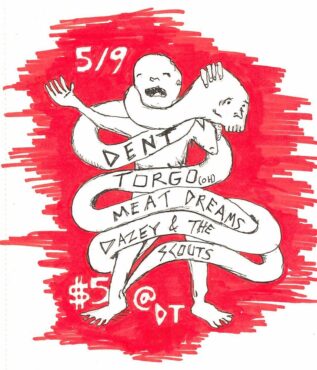
Flyer courtesy of Dazey and The Scouts

Brennan: I love DENT. Can we shout out DENT in the interview?

Lea: Being a freshman and getting to see DENT and Elizabeth Colour Wheel at shows every weekend and it’s all these Berklee kids in cool, heavy bands we thought we were so cool. Throw another one in for DENT.

Brennan: We worshipped those bands. They were like the older kids and we were just in awe.

Lea: It’s so funny to be talking about shows from our youth and how The Scouts fit into the scene when none of us have been to a show in a year.

Brennan: It’s incredibly emotional and really hard sometimes where I’m like “Am I remembering all of this correctly?” It was such an amazing time, a literal rush of serotonin to relive all of this stuff and kinda overwhelming at times.

Otto: Frankly some of my music endeavors after The Scouts just haven’t been as fun, and now not even having the option to play shows makes that even worse.


What The Scouts were listening to while making Maggot

Brennan: Mannequin Pussy.

Otto: Mannequin Pussy was huge for us collectively, and getting to play with them was so big for the band. Sleater-Kinney is always a big one for me too if I’m playing a bass or guitar at all.

Lea: Sleater-Kinney was definitely a big thing at the time in the scene in general, Sleater-Kinney culture was deep.

Otto: Again, we had all this pent-up weird energy that sometimes we would take online and those interactions would influence the music we were obsessed with at the time.

Brennan: We were listening to a lot of DENT, sorry about it, but we loved the band DENT.

Lea: At that time it was a lot of Birthing Hips too, who I haven’t stopped loving and everything all of them have done musically since then is still so good. That band was too good.

Brennan: I was listening to a lot of Liz Phair around that time too.

Lea: By our sophomore year I was getting way more into heavier music, more so than when The Scouts started and that’s kinda where I’m at now.


The Scouts’ earliest shows were something like summer camp theater, with Lea and Brennan bringing knick knacks and props onstage to do elaborate banter, and the whole band dressing up with sashes and girl scout accoutrement 

Otto: I don’t even know how it started. Lea and Brennan just had a bunch of random shit in their dorms one day.

Brennan: We were hoarders for sure and we just decided to bring some of it to a show.

Otto: We all just sort of went with it, like we just decided “yeah this is gonna be it” or whatever, like “this is what we’re doing.”

Lea: Wearing the scout outfit was just for fun. I remember for our first show I went way too far and designed this crazy backdrop that we ended up not being able to hang and this montage video we ended up not being able to project.

Otto: I can remember as clear as day in a venue I will not name, Lea scrambling to get the projector to work. I definitely feel like the campiness was intentional, but also I think it was natural when it started and natural we stopped doing that stuff on stage.

Lea: I wanted to make our first show to be like the fucking Monster Ball Tour.
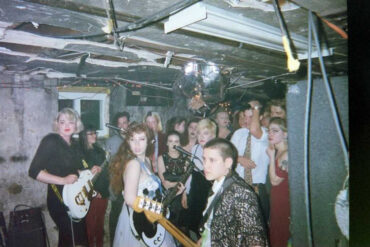
Photo courtesy of Dazey and The Scouts

Brennan: We got so much stuff that at one show we just felt it was too over the top. Like “let’s not do this anymore.”

Lea: I definitely still have like a good amount of those props just sitting around somewhere.

Otto: I still have my sash, that dies with me.

Lea: I remember hearing from some of the Berklee upperclassmen who saw the early shows that the take on us was sort of like “what are these kids up to?”

Brennan: A lot of like “who are these crazy kids?”

Lea: I was still a wildly insecure little freshman, so hearing that our little skits or our vibe in general was even a little intimidating, that’s so fun.


The original record release show was a prom-themed party in a basement near Ringer Park. Surrounded by all their friends dressed and dolled up, The Scouts see it as a crucial night in their history

Lea: If there was any show that had great pictures it’s prom. Makeoutpoint baby.

Brennan: When Austin [Corona, the band’s original drummer] was drumming, the song ended and then Lea turned around and shouted: “Austin, the song’s over!”

Lea: Prom was pretty stressful for me, I was having some sorta manic fit and I showed up really late and was being a drama queen. I remember trying to screen print t-shirts during someone’s set and I started freaking out.

Brennan: My friend Robby found some old ramen in the sink of Makeoutpoint and he took it to the table and ate it. Somebody got a film photograph of it. I only have very trashy memories of that night.
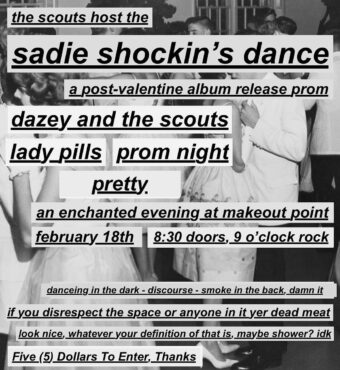
Flyer courtesy of Dazey and The Scouts

Lea: Everyone was so dressed up, looking so fucking good. It was like a scene from a movie, everyone just came to serve. It was sick.

Brennan: I just loved prom, one of my favorite times in The Scouts for sure.

Lea: Afterwards I remember the vibes being good, Ally and Emmett started playing like jungle and house and afrobeat and this insane dance party broke out in the basement. A total switch up from the music at the gig. 

Brennan: That dance party was small but mighty.

Lea: I think someone was painting too.

Otto: There was paint on my fucking cables forever after that, but prom was amazing.


Despite a few overzealous men, Boston was ultimately an encouraging and rewarding place for The Scouts

Otto: I guess some people thought they could assert themselves over us sometimes, maybe some people did think we were a joke to be honest. The incidents were rare but they happened.

Lea: It was like this weird combination, like pick one: do you think we’re a joke band where the sound doesn’t really matter so why do you care? Or do you think we’re a serious band, but then you’re treating us this way.

Otto: Some random dude deciding he doesn’t like the tone coming out of your bass pedal or whatever. And goes down to adjust it.

Lea: The dude who did that to Otto’s pedal, I would see him around, like he would come into Guitar Center [where I worked] sometimes and I would just be so hostile to him.

Otto: I think he got put in his place, but besides stuff like that I did find Boston at that time to be really inspiring.

Brennan: I came from Minnesota and I had never really even gone to shows before I went to college and so I was just in love and it was just the best during those years for me.

Lea: I definitely did not have anything like the scene in Boston in North Carolina. A community like that, the abundance of shows, all the different genres, people doing really freaky shit. Everything from really good, accessible music to crazy noise sets, it was very inspiring. 

Otto: Growing up for me [in Staten Island], there was little bit of a scene, but it was all like older metalcore dudes, it was quite a toxic environment. It would be a couple bands from New Jersey and they’re all like 40 and they’re flirting with teenage girls. That’s where I came from, so Boston in turn was fucking sick for me, so much less homogeny.


After releasing Maggot, The Scouts quietly came to an end sometime around 2018, as its members took on new responsibilities 

Brennan: I feel like we never put any labels on anything, life just sorta happened. People moved and I don’t know. But I am so open to going on tour someday. I would fucking love that.

Lea: We didn’t put pressure on ourselves. Like “this was the first album and the second album is gonna be like this.” There wasn’t any sort of careerist spirit to this. People moved or went abroad, we got involved with different projects. At a certain point it felt like I wasn’t really writing Scouts songs anymore, stylistically.

Otto: I think we all just got busy with other projects and bands.

Lea: There isn’t any resentment at all though, what we did was natural and I still respect all of our decisions, because at the end of the day I love Brennan and Otto and we get to share this thing now. It’s so meaningful to me.


With Everyone stuck at home, The Scouts were shocked to find that the record they left behind has suddenly exploded, birthing an online community that far extended their reach in its initial run

Otto: To see people as young as like 14 respond to the album reminds of how angry I used to be and how I didn’t know who the fuck I was, and how through music I was able to start piecing together my identity. Also how lucky I was to be in this band while doing it.

Brennan: This experience has been a way for me to see how far we’ve come as individuals and as friends and as people in general and that has been such a gift. It’s just been a gift.

Otto: I hadn’t checked in with my younger self in a while until this.

Lea: I’ve been very emotional through all of this because I was definitely piecing together an identity while in this band. Those first years of college are a tumultuous time for anyone in their life, and I owe so much of that wonderful experience to The Scouts.

Brennan: It brings a tear to my eye.

Lea: I can literally remember when and where these songs were written. I remember sitting in my room and writing “Nice Nice” or sitting in Brennan’s room and writing “Sweet Cis Teen.” I remember sitting my ass in a hospital and writing “Maggot” and both of them visiting. I can remember exactly where I was when we wrote all of these songs and it always makes me smile.

Brennan: Hearing from Lea about the record taking off online was shocking. I obviously believed in the music and still think it’s great, but I was initially so shocked, especially with the younger crowd. It makes sense though because we wrote those songs when we were that age.

Lea: I just laughed. I remember making a group chat and sending y’all a screenshot of the number of Spotify listeners we had and it was like 40,000 or something.

Otto: I thought for sure it was going to be a fluke thing, and to this day I wonder what the original TikTok is that started it all because the origin is unknown.

Lea: I’ve seen a lot of the TikToks and most of the popular ones are from the past couple months, so I think what happened is enough people listened to us on Spotify that the algorithm started putting us in playlists and artist radio and stuff.

Otto: It feels exceptionally important to me that young queer kids and young women especially have found something in our music.
via Bandcamp

Lea: There’s a lot of high schoolers on TikTok doing “Wet” inspired makeup looks and things like that.

Brennan: Bands that formed who I was at that age were so important to me, and to maybe be that band for someone else is just, wow. I don’t want that to sound cocky or be gross, but it’s very special.

Lea: I read so many comments from kids saying that “Sweet Cis Teen” specifically helped them come to terms with their gender identity and come out to their parents, or start going by a different set of pronouns. That song has changed people’s lives, which is crazy.

Otto: I haven’t seen many of the comments, but I know that’s something that resonates with queer people and with trans people, but hearing that it’s made such an impact, I’m just blown away.

Lea: I’m gonna start screenshotting comments and make a big Otto Love Folder.

Otto: When I wrote “Sweet Cis Teen” I felt like I had the weight of the fucking world on my shoulders, and when I realized I was trans it felt like just another way in which I was letting myself down. Obviously I don’t feel the same way now, but I think that’s the experience for a lot of people when they’re first figuring that out. One of the biggest obstacles when you’re a young person can be coming out to your parents and it’s nice to know that there’s something out there in the world that I made that shows people that they’re not alone in thinking that and feeling that. It’s truly special to me.


While each member has moved onto to different projects and different cities, they carry with them plenty of lessons learned from their time in The Scouts

Brennan: Thanks to this band I am always reminded to have fun and to hold onto humor and keep friends close no matter how grim things get.

Lea: It just reminds me how important it is to support the ideas from people you love. What we did with The Scouts was just so real and natural and fun and nothing felt out of place. Being in this band taught me to focus on what feels right.

Otto: This band for me was often about unlearning all the weird rules that come with having professional training in music. That thing where you’re so in your head about how things sound, and what the music is, or who it’s for.
meme courtesy of Dazey and The Scouts

Brennan: The Scouts gave me the knowledge and the confidence to continue playing live music solo. At that time I would have Lea set up my two pedals on stage because I didn’t know the in and the out.

Otto: Every year since this band started I’ve gotten better at tuning the internal voices out, and it’s led to me having a more pure relationship with music. That started with The Scouts. While I’m much less angry and I put a lot less pressure on myself now, I still like to look back on the person I was in the band to find the fire in my belly when I feel like I’ve lost it.

Brennan: I learned so much through The Scouts and through playing with Lea and Otto and the band really put a fire under my ass and really made me wanna play more and explore what I can do in other bands and in other genres.

Lea: The Scouts taught me so much about being a performer and also about being a member of a music community. It gave me the confidence to keep pursuing the guitar and everything I’ve accomplished now within music now is due to my time in this band.

Brennan: I’m a lot more myself these days. When I was in The Scouts I loved this part of me, but I was just like all over the place. I dressed really eccentrically and was really loud, but I’m much more comfortable in myself as a human being now than I was then. That said, I wouldn’t trade it for the world. I loved that time in my life.

Lea: I just had these ideas in my head and I simply had to get better at playing to make them real or they weren’t going to happen. That applies to pedals and amps and other gear as well, which has sorta become my career. I very much owe that to the Scouts.

Otto: Being in The Scouts was me relearning what made me fall in love with playing music, and I’m so grateful for that experience.

Lea: There’s no rule book to being in a band, but being in The Scouts changed not only how I am as a bandmate, but also how I am as a friend. 

Brennan: I have nothing but fond memories of that time, I feel so very lucky.

Post-punk Virtuosos, Sick Electric, release their introspective new EP, Tiny Invasions


After a 6 year hiatus from making music, Providence post-punk virtuosos, Sick Electric, release their newest EP detailing introspective observations on the world, the ubiquitousness of smartphones, and the commercialization of data. Tiny Invasions is a thoughtfully crafted, bold compilation that skillfully incorporates intense vocal harmonies with thought-provoking themes that’ll leave any listener in deep contemplation.


Sick Electric grew up together in one of the last generations to come of age without the internet, and have been slowly observing their surroundings. A parent himself, guitarist and vocalist Jimmy Poirer has been observing the effects of the digital age in the younger generation. “I feel bad for kids now that don’t know a world pre-internet,” Jimmy says. “It’s done a lot of really great things for us as a society but the unintended negative impact has been almost equivalent.” The infinite scrolling of social media and the constant inundation of information can be truly exhausting. Smartphones and apps have even gotten so advanced that it seems like they know more about us than we know about ourselves. “A Window, Not a Mirror” on the EP alludes to that—As we slowly grow accustomed to the digital omnipresence, we often forget about the tiny invasions of our privacy.  How with every Google search, every individual scroll on TikTok, every “like” on Instagram, our data is cataloged and used to learn more about us. “I look into my phone to see myself, but really, it’s a two-way street,” Jimmy says. “You can present yourself on social media the way that you want to, but people can see through that. Your presence online is always visible to anybody that wants to find out.” 

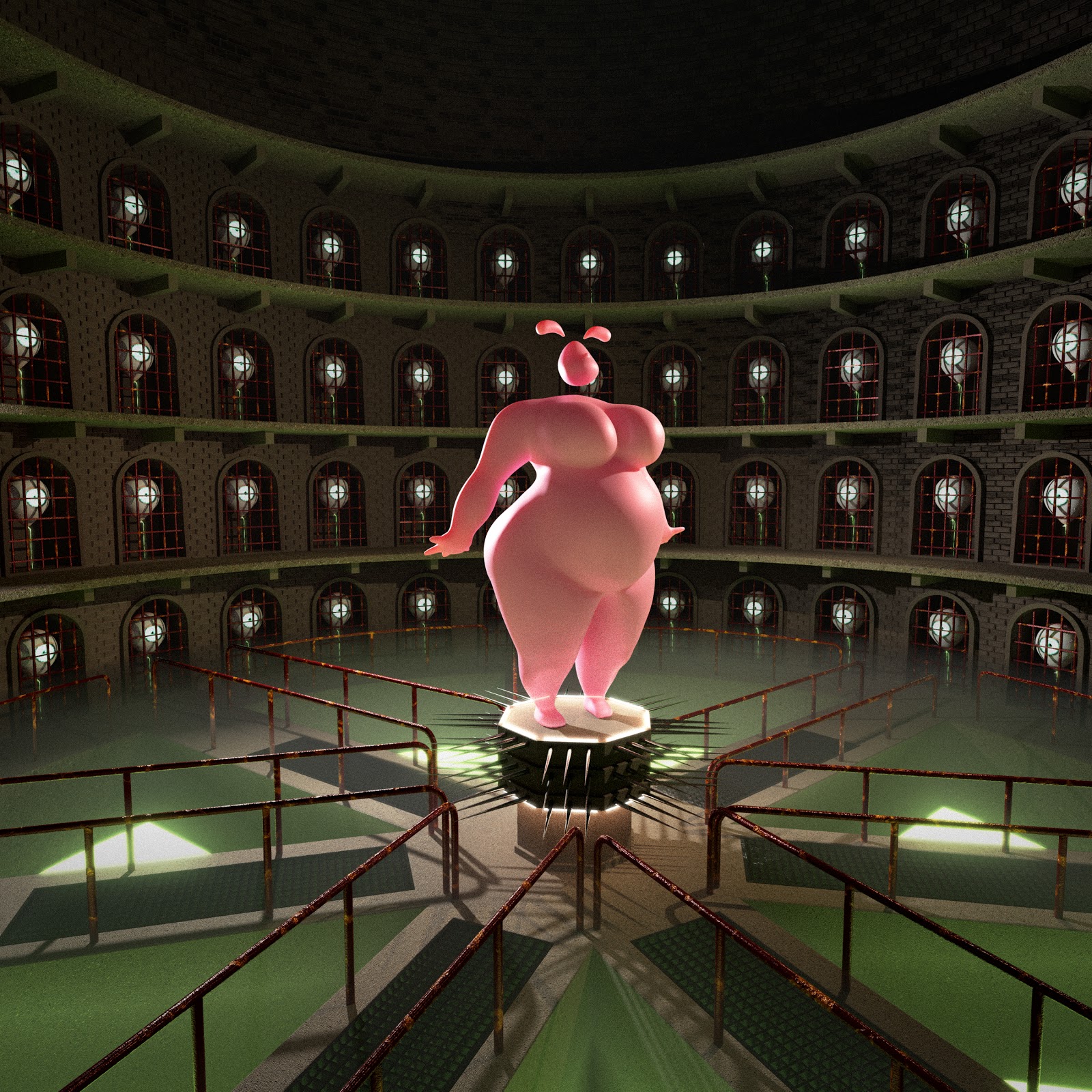
While the music on Tiny Invasions is stellar, what truly brings the EP over the top is the artwork. Jimmy, a visual media artist himself, wanted to visualize the concept of what it felt like to be constantly being watched by social media while also resembling the first track off the EP, “Young & Dumb (and Chewing Gum).” Through that, the “gum girl” in the panopticon was born. The panopticon is a prison design with a 360-degree view of the prisoners, unseen by them—never really knowing if they’re being watched—resembling how it can feel during the digital age with the surveillance of technology and data tracking. Putting a girl made of gum in the center is symbolic of how fast we consume content on the internet—figuratively being chewed up and spit out in mere seconds. 

The EP as a whole will not only make you examine the digital world, but it’ll make you think about current issues that affect us and our communities as well. From examining global warming while listening to “Shoebox Terrarium” to examining communities affected by the opioid epidemic in “Detergent,” Tiny Invasions combines contemplative metaphors with perfected dual harmonies to make this EP a philosophical, musical journey.


Pro tip: Do you remember the scene in Lilo & Stitch where Lilo is lying on the ground listening to Elvis Presley? Eyes open, staring at the ceiling, and deep in thought—That is precisely how this EP should be listened to. This EP is not a casual listen—it needs to be consumed and digested with your full attention. So turn off your phone (or maybe on silent if you’re streaming it from your phone), unplug, and listen to this post-punk paragon. 


Tiny Invasions is out now on all streaming platforms, and you can stream it via Spotify below. You can watch the album visualizer here.

PREMIERE: Jason Ebbs Sweetens the Season with “Clementine”

Snow may be falling and the winter air is bitterly cold in Boston but for Jason Ebbs, summer is a year round feeling. The beach rocker is back with “Clementine,” a new single off his forthcoming second album, The Deep End, due February 26th. Like a fresh breeze of warm ocean air, “Clementine” warms you up with it’s infectious melody and Summertime spirit. Striking a balance between hopeless love song and anthem for your next bonfire on the beach, Ebbs crafts a whimsical track that is both endlessly joyous and full of yearning. 

Starting off as a melody that needed a story, “Clementine” was nearly thrown out entirely until inspiration struck. “So disappointed, I had this instrumental that I really loved and I felt like I ruined it,” explains Ebbs. It wasn’t until he was discussing music with his girlfriend, that the vision for the song took shape. “I’m very comfortable writing about love and the struggles that come from love. I know it’s very high school angst, but that’s just what I’m familiar with and what made me want to make music in the first place.” Now, having worked on the track with Boston based artist Gatch, “Clementine” is ready for it’s moment in the sun. 

Beginning his musical journey by playing guitar in the fourth grade, Ebbs eventually began writing his own songs in High School. Drawing influences from The Strokes, Oasis, The 1975 and Hippo Campus, Jason crafted a sound that reflects his easy-going personality and desire to be by the ocean. However it wasn’t until he released his debut EP Familiar Villains in 2018 that he found the confidence to start performing and writing in a bigger capacity, with the intent of sharing more of his original work. 

In 2019 Ebbs released his debut full length album Superego, a sonically varying collection of tracks that saw the artist experiment with subgenres of rock, while still finding time to ground itself by the beach. Fast forward to the beginning of last year when the world of live music was entirely shut down while Ebbs was trying to work on his second album. Like many artists, the sudden abundance of free time felt like a blessing, but in a troublesome context. “At first I almost felt pressured. I had all this [open time], I felt I should be writing new music. I kind of forced myself to be like, “don’t write just because you feel like you have to. Take a step back and just play music that you enjoy”, and once Summer came around I really felt within my element and inspiration started coming back,” describes Ebbs. 

In between writing new material, Jason found ways to continue to be a musical presence online. In addition to his many covers shared on his Instagram, Ebbs began participating in live streams with his band. Composed of Johnny & Patrick Dalton on the bass and drums respectively, and Eli Olsen on backup guitar – the band made the best out of a tricky situation. Fortunately, Johnny has a studio in his basement, so when it came time to perform – virtually that is – the band wasn’t left desperate in search of a safe venue. Jason and the band even had the chance to open for Hippo Campus during a live stream over this past Summer, an opportunity Ebbs admits would have been much harder to come by pre-pandemic. 

Now, with his second album in the bag and on the way, Ebbs reflects on his growth as a musician. Especially with how he approaches the conceptualization of his songs. Since releasing his early music and becoming more of a public figure, there is a focus on how songs will translate in a live setting. “Is this song going to sound great coming through your car radio as well as live? Songs that you’re gonna want to turn up in the car and songs that you’re going to want to jump up and down to when you hear them in person,” Ebbs explains. 

Sailing onward, following the release of The Deep End, fans can expect Ebbs’ first official music video for last year’s single “Not Even Over” in the coming months with more live stream performances in the near future.

You can follow along with Jason Ebbs on his Facebook, Instagram and Twitter accounts and check out his full discography including “Clementine” on Bandcamp, Soundcloud and Spotify now! 


Allston Pudding Guest Mix #03: DJ Poke Smot

By Dillon Riley

Photo Courtesy of DJ Poke Smot

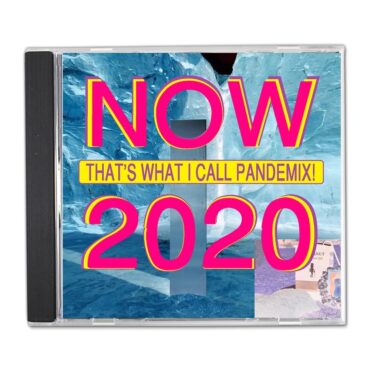
A long-running veteran of the New England dance music scene, DJ Poke Smot (under various aliases) has played at nearly every club you’ve ever stepped foot into. As a longtime resident at famed weekly and monthly parties in Boston, DJ Poke Smot (as Coralcola) opened for dance music royalty like Ron Morelli, Derrick Carter, and Andrew Weatherall, often taking punters through journeys drastically unlike the rolling club thump typified by most nightlife in this city. A voracious listener (and wrestling fanatic) capable of talking shop about virtually any genre of music, he’s graciously given us a review of virtually everything that was in his headphones in 2020. That’s right, this mix isn’t just one hour, but four (!) and goes from indie rock to ambient to hip hop to hyperpop to techno to…you get it. Strap into Now That’s What I Call Pandemix 2020 at the SoundCloud links below and read on about what DJ Poke Smot learned warming up for all those legends over the years.


Allston Pudding: How would you title this mix?

DJ Poke Smot: Now That’s What I Call Pandemix 2020

AP: What’s the best setting/way to enjoy this mix?

PS: Quarantined?

AP: Is there any sort of concept to this mix?  

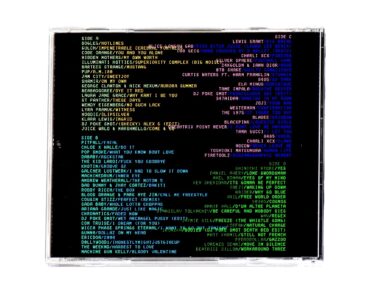
PS: Well it’s almost every song I loved in 2020 and a few homemade edits thrown in for good measure. Side A is a lot of guitar stuff. It started getting kinda sad/mopey towards the end, but I’ve been getting better at not wallowing in that shit lately, so I attempted to pull myself out of it. Side B leans more towards the rap side. Side C leans more towards the pop side. Side D is the afterparty. The club shit. I definitely didn’t cry during making this at all. I definitely don’t miss DJing at all. 

TLDR: This is MY “Best of 2020”, not yours. Also, this mix is dedicated to Cloris Leachman.

AP: Do you have a favorite moment in it?

PS: There’s a lot of songs on here that instantly remind me of a few particular days with a few particular people.

AP: If you could describe this mix with one adjective or emotion what would it be? Why? 

PS: “Yikes.” It’s a lot to absorb. A big ol’ mess. Just like 2020. Just like me.

AP: Is there a particular genre or label or tempo that you especially gravitate towards when mixing? Why or why not?
PS: Well, obviously not a particular genre. I do have an affinity for 100 beats per minute thanks to years of building warm up sets in empty rooms.

AP: What makes a successful DJ mix for home listening to you? What makes one successful in a club type setting?  

PS: I rarely listen to DJ mixes at home, especially club type stuff. Without the loudness, the bass hitting your chest, the darkness, the warmth from the bodies… it’s like listening to a movie without watching it. I always knew I had a successful mix in a club type setting when Karen would come up and yell at me to “play something we can dance to!”

AP: Do you have a favorite and/or formative dancefloor memory? What made it so memorable?

PS: Andrew Weatherall in Brooklyn at Resolute, October 2016. Got there right when he started at 11:11 with some good friends and some good pills. Last time I took one actually… I don’t think he hit 110 bpm until 6 A.M. I remember wearing an nWo shirt that must have been soaked with at least a pound of sweat.

AP: How would you describe Boston’s dance music scene? What changes would you make (if any)? 

PS: Can I use “yikes” again? It’s a great place… to relocate to New York from when you wanna “make it”. Have the headliners start when doors open and have locals play till close? Have the club owners pay DJ’s even if they don’t sell $2000 worth of booze? Elect a Night Mayor? Make Allston basement parties cool again? Call out creepy promoters?

AP: What inspires you as a DJ? And what do other DJs do that inspires you? 

PS: Playing music that means something to me and not playing music I don’t give a shit about. Learned this all from Mr. Weatherall.

AP: When you play/create sets do you play with an idea in mind or do you cater to the audience’s energy? How so?  

PS: I used to spend the entire night before a gig planning and prepping and playing through what I thought/hoped would “the perfect set”. But the instant people walk onto a dancefloor that’s all out the window.

AP: How does DJing inform the music you produce? Dance music or otherwise.

PS: I only ever really produced music for myself. I never made it for the purpose of playing it in a club. The only reason I started taking DJ gigs is because I wasn’t getting booked as a live electronic act, and when I did, I put an obscene amount of work into a set that nobody but the venue staff heard. People actually wanted to book DJs and it wasn’t as difficult as a live set. At this point I almost wish I never uploaded that damn song to Myspace.

Follow Allston Pudding on SoundCloud


TRACKLIST

side a

dogleg – hotlines 

gulch – impenetrable cerebral fortress

code orange – you and you alone

hidden mothers – my own worth

illuminati hotties – superiority complex (big noise)

bartees strange – mustang

pup – a.m. 180

jam city – sweetjoy

shamir – on my own

george clanton & nick hexum – aurora summer

beabadoobee – dye it red

laura jane grace – why kant i be you

st panther – these days

wendy eisenberg – no such lack

lyra pramuk – witness

hoodie – slipsilver

klara lewis – ingrid

dj poke smot – (shecky) alex g (edit)

juice wrld & marshmello – come & go


side b

pitfall – fatal

chloe x halle – do it

pop smoke – what you know bout love

dababy – rockstar

the kid laroi – fuck you, goodbye (feat. machine gun kelly)

khotin – groove 32

galcher lustwerk – i had to slow it down

machinedrum – inner eye

andrew weatherall – the moton 5

bad bunny & jhay cortez – dakiti

roddy ricch – the box

blood orange & park hye jin – call me freestyle

cousin stizz – perfect (remix feat doja cat & bia)

sada baby – whole lotta choppas

ariana grande – just like magic

chromatics – faded now

dj poke smot – wet arcangel pussy (edit)

com truise – i dream (for you)

wicca phase springs eternal – i want to go out tonight

gunna – dollaz on my head

ericdoa – 2008

d0llywood1 – ihonestlymightjustgiveup

the weeknd – hardest to love

machine gun kelly – bloody valentine


side c

lewis grant – big break

alice longyu gao – rich bitch juice (laura les remix)

100 gecs – hand crushed by a mallet (remix feat. fall out boy, craig owens, nicole dollanganger)

charli xcx – forever

silver sphere – football game

24kgoldn & iann dior – mood

070 shake – guilty conscience

curtis waters ft harm franklin – stunnin

8485 – so dark

ela minus – dominique

tame impala – breathe deeper

dj poke smot – promiscuous gec (edit)

347aidan – dancing in my room

joji – your man

westerman – confirmation

the 1975 – if youre too shy

bladee – rainbow

blackpink – lovesick

oneohtrix point never – i dont love me anymore

tama gucci – i let you

8485 – 4real

charli xcx – claws

nocow – never leave me

toshioki matsumura – human life

firetoolz – screamographic memory


side d

shinichi atobe – yes

daniel avery – lone swordsman

axel boman – eyes of my mind

kev sheridan – it’s gonna be perfect

yaeji – waking up down

haider – why so blue

vril – free world order

30303 – cosmos

annie hall – d’un altre planeta

stanislav tolkachev – be careful and nobody dies

wav – regex

jaymie silk – freeze (the whistle song)

loefah – natural charge

ikonika – bodied (dj poke smot death bed edit)

matt karmil – still not french

pedrodollar – gazzoo

lorenzo senni – move in silence

beatrice dillon – workaround three