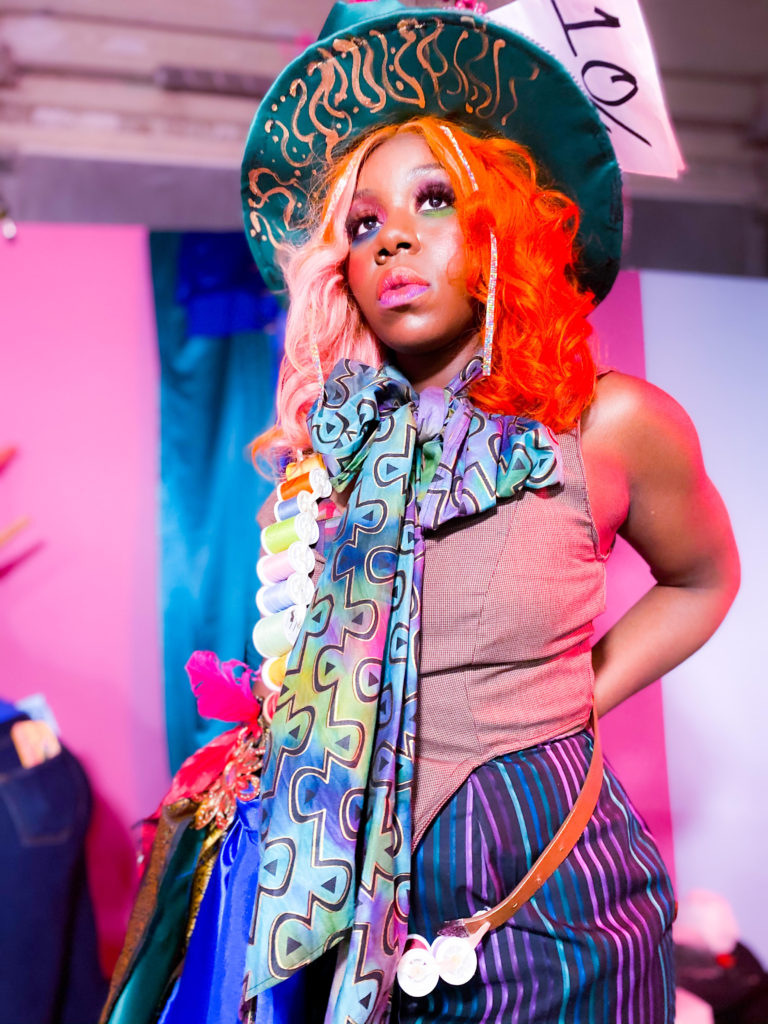
Rapper and lyricist Cakeswagg is on fire in 2020. After she released her Candy Cake Season EP last fall, the Roxbury native performed at the #HellaBlack femcee show at Boston Center of the Arts, churned out a WAP remix with Brandie Blaze, and collaborated with the likes of Red Shaydez and DJ WhySham. Now she’s out with a new single “Ferb & Phineas” that not only shows how hard she’s willing to go, but also her playful, “not serious” side.
ALLSTON PUDDING: When you started writing this song, did you know you wanted to experiment with your style? Or did the new tone and flow come naturally? CAKESWAGG: The new tone and flow actually came naturally. I’ve always wanted to lyrically and theatrically stretch more on my tracks, I just didn’t have that comfortability quite yet.
AP: There are a lot of fun references in “Ferb & Phineas,” why did you decide to make those two the focus? CAKESWAGG: On the show everyday, Phineas and Ferb wake up and they decide what they’re going to do that day no matter how big or impossible and they get it done. Sometimes I feel that way in my own life, like if someone had told me I’d be answering questions for Allston Pudding 3 years ago, I don’t know if I would’ve believed them. There’s so many things I’ve done now that I could never imagine doing, yet here I am.
AP: Was this project born out of one of your #TalkThatTalkTuesdays? CAKESWAGG: This song actually was born out of a few free styles: I did two Missy Elliot beats and a Jack Harlow cover where I experimented a tad bit with my theatrics and people really enjoyed it and it gave me the encouragement I needed to do more.
AP: Can you talk more about how your freestyle Tuesdays got started? CAKESWAGG: So when I first started rapping as a child, all I did was freestyles and covers and it was a lot of fun for me. When I started putting out music I needed to find a way to still keep it fun for me, so I use my Talk That Talk Tuesdays as a way to bring it back to the essence of why I started rapping in the first place.
AP: What about your songwriting process as a whole? At what point does the beat come in? Are you drawn to certain subjects or do you talk about what’s on the top of your mind? CAKESWAGG: The beat is always first for me, different beats make me feel different things. Some beats make me feel vulnerable, while others make me feel like I need to “boss up” so to speak. I find that my best writing comes from what’s on my mind right at that moment.
AP: What was it like working with DJ Whysham and Kay Wattz for “We Run The City”? CAKESWAGG: “We Run the City” was so much fun because Sham literally let us get in there and do our thing, Kay and I got to feed off of each other’s energy and come up with a dope hook. It was actually kind of funny because I wrote a 16 and Kay wrote a 20 so I wrote my late 4 bars right there before I went to record. In fact the whole part where the beat cuts out and I’m rapping over silence I did that day on the spot and it was fire!
AP: You’re also on Red Shaydez’ “We Got it On” with Brandie Blaze, what was that collaboration like? CAKESWAGG: Red and Brandie are like the older siblings I never knew I had. Out of the majority of the femcees in Boston I’m the “baby” in the group, so they put up with a lot of my shenanigans. Like, I’m usually really silly, making jokes and keeping everyone laughing while we work. The session was so lit that day. Red and I are one and the same, where we just keep writing and writing, ending up with super long verses. Whereas Brandie is like, “Listen, take this 16 and do what you gotta do.” It’s the perfect balance.
AP: How did you get started with music? CAKESWAGG: My METCO peers and classmates in Natick are actually the reason I started doing music. In school, I often would freestyle on my school bus or rap my presentations in class and my classmates and teachers supported me. Still to this day, some of my classmates who live all the way in Natick travel to my shows in Boston, no matter how big or small.
AP: I read that you’ve been rapping for a decade, so I’d love to hear how your 2018 record Cheesecake eventually came together. CAKESWAGG: My 2018 record Cheesecake actually came together out of frustration. I’m a pretty well known bartender in the city and because of that, people tried to put me in a box and make it seem like I couldn’t be anything else. So I dropped Cheesecake, which ended up doing rather well, just to pretty much say: “I don’t give a fuck about what he say or she say.” I’ve always been very direct and even a little confrontational in my music just because I know lyrically, I can back it up. Here I am 1 mixtape, 1 EP and 120+ freestyles later, unscathed.
AP: How have fans responded to Candy Cake Season? Did the pandemic interrupt your plans to promote that EP? CAKESWAGG: Fans loved Candy Cake Season, you can hear my growth a lot from my first project into my second one. For me Candy Cake Season was about making actual records. I felt like I already knew I could rap really well, but people needed to know I could make songs too — which in some cases don’t always go hand in hand. Not every good rapper can make good songs. The pandemic definitely interrupted things for me, but it also gave me the time to start other things I’ve wanted to do to grow like voice speech and production classes as well as vocal lessons.
“Ferb & Phineas” is out on Spotify and Amazon now. Cakeswagg will be performing virtually with Brandie Blaze, Red Shaydez, and The Misfits Club on Saturday, October 24 at 8pm. More information and tickets here.
By now, the story is familiar: a talented artist spends a great deal of time, effort, and creative energy to record new music; they get excited to release their new project and share it with the world, not just in the digital sphere, but by feeling the pure rush that can only come from performing live. But 2020 had different plans for us all, throwing a wrench into any idealized version of how we meant to spend this year and leaving us ourselves up and make a new plan.
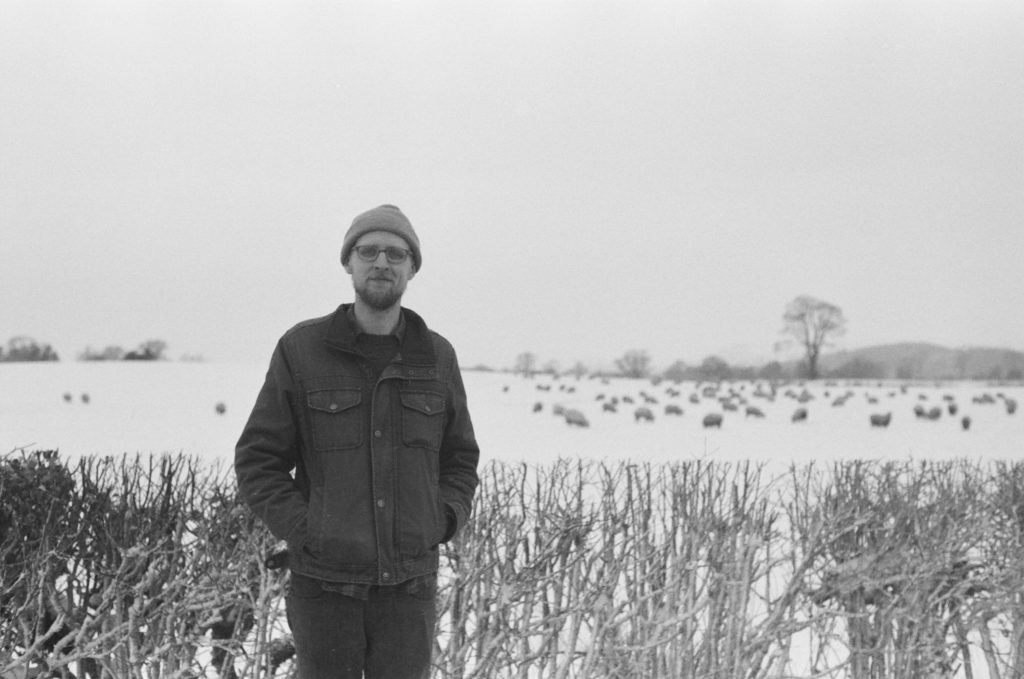
That’s the story for Sam Moss, a balladeer who’s established himself as a local staple around Boston and Camberville’s folk scene. With a slew of albums and EPs already under his belt since 2011, plus regular appearances around area’s most intimate venues – Atwood’s, The Lizard Lounge, etc. – he spent the bulk of 2019 writing and recording his new album Shapes, as well as planning a tour across the country once he released the album. Once quarantine took touring and live performances off the table, Sam felt the need to rethink his release plan.
Although Moss wrote and recorded Shapes months before the COVID pandemic reached a head and a necessary quarantine went into effect, there’s a nigh-prophetic poignancy to the album’s opening lines. “You were unprepared for the way the world came down on you / with a dull, heavy blow, that youthful glow was knocked out of you.” This is the start of opening track “Shapes In The Dark,” a title that feels simultaneously ominous and comforting.
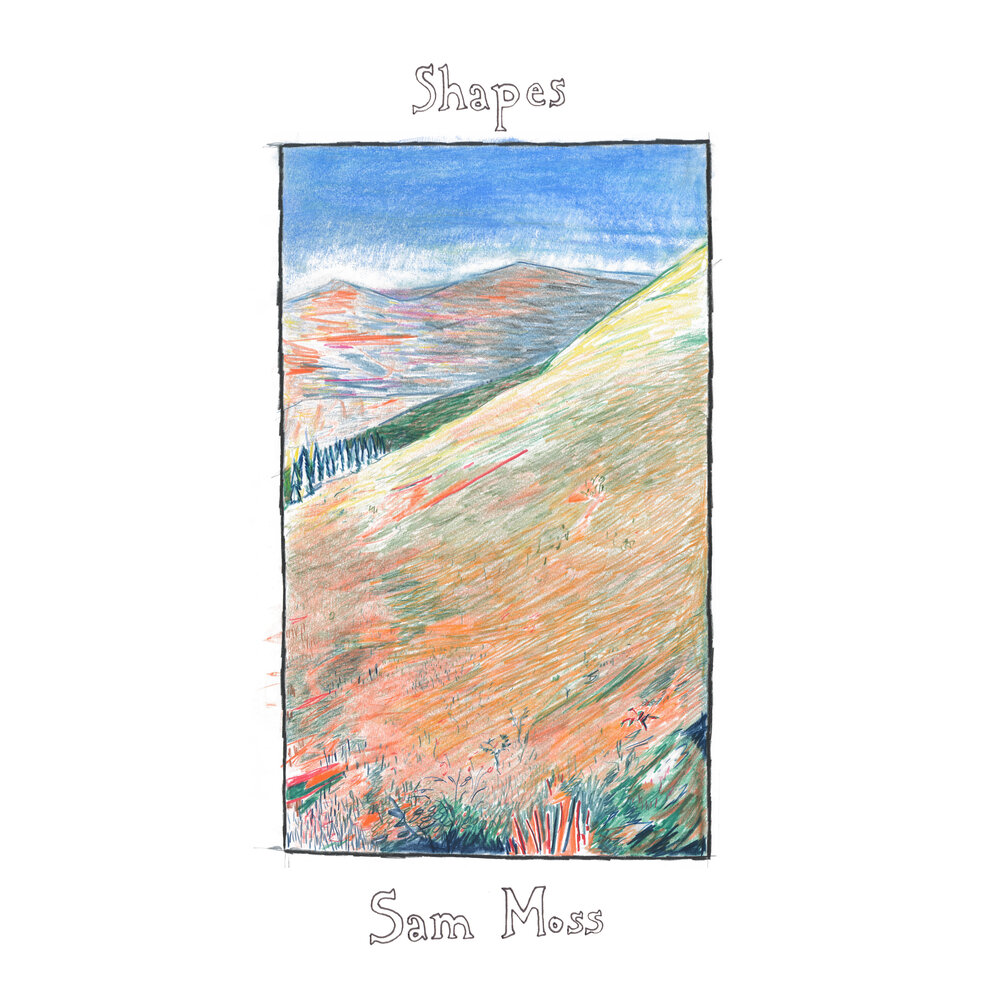
Cover Drawing by Will Moss
Shapes marks Moss’ fourth LP and operates as a showcase of his sharpest skills: his deft finger-picking guitar style and his gentle, soothing vocal delivery. There’s a purity and honesty in his voice; at certain points – “Opening” for instance – you can hear his voice start to creak at the edges. This isn’t a bad thing; in fact, it’s quite lovely. There’s no standing on ceremony. When he breaks, we break. As the LP winds on, Moss paints melancholic pictures that evoke strong nostalgia. Take “Sunday People,” that paints a picture of an intimate memory among the changing leaves of Fall: “You spoke loudly in my ear, in a melody so gentle / It was a timbre I had known, and not so well forgotten / A space that made less house than home, with warmth and crackling of the autumn.” There is a searching quality to Sam’s lyrics that feels universal, a troubadour seeking some unknown truth coupled with a hope that he has the awareness to recognize that truth when he arrives at it.
With help from talented backing musicians – Stephen Ambra on cello, Michael Siegel on bass, and Benjamin Burns on drums – Moss and Co. deliver a collection of calming and emotionally affecting tunes. Ambra’s cello work especially adds a warm tone to the low end of these tracks, operating effectively as this album’s bass, blending and weaving its way delightfully with the rest of the band’s harmonic elements.
With a firm knock on the nearest wooden object, whenever live performance can return to some semblance of normalcy, it will be enticing to head to a dimly lit bar like Atwood’s to sip on a warm whiskey drink and hear Sam Moss croon away at these new tracks. Moreso, it will be an opportunity for him to bring this music on the road. That’s the folk spirit after all: passing through an ever-changing landscape while gently-plucked guitar strings reverberate into the open air. Moss will be ready, and more deft and adept at his craft when he can get back out there.
You can purchase Shapes via Bandcamp below and stream on your service of choice.
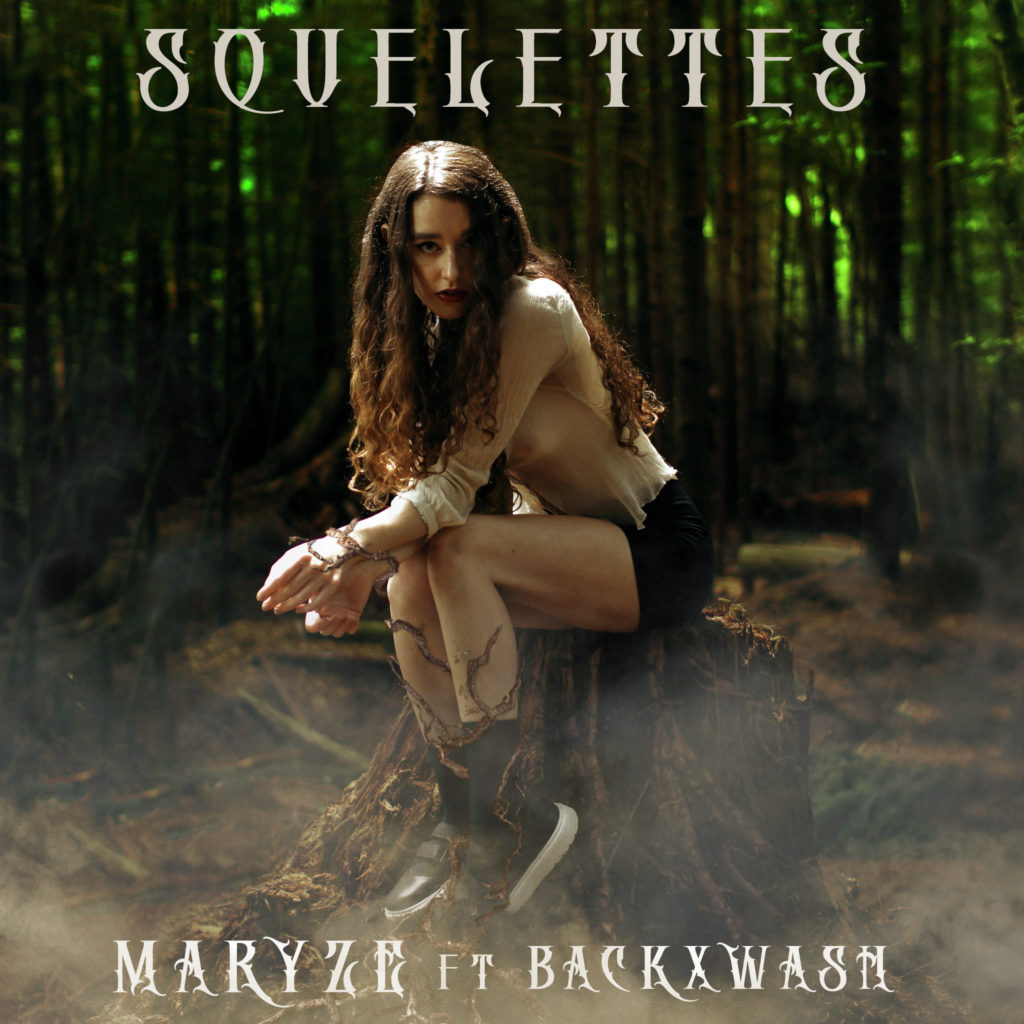
Now that we are fully in the heart of Spooky Season (perhaps the spookiest yet), it’s high time to get in that Halloween spirit. Maryze, Montreal’s resident pop-witch, is no stranger to the horror aesthetic. In past music videos, she has dipped a toe into occult imagery like on the “B.O.Y.” and invoked the vibrant technicolor set pieces of 70s horror classic Suspiria on “Dis-Moi.”
“Squelettes,” Maryze’s new single, is a collaboration with metal-influenced Montreal rapper Backxwash. Earlier in the summer Backxwash forged her own connection to Boston’s local music scene by releasing a collab with CAMP BLOOD. CB’s unique blend of hip-hop and industrial noise was a natural home for the rapper; on her partnership with Maryze, Backxwash is able to carve a space in a different sonic landscape, albeit one she finds herself occupying easily, even while delivering verses that explore the cycle of substance abuse.
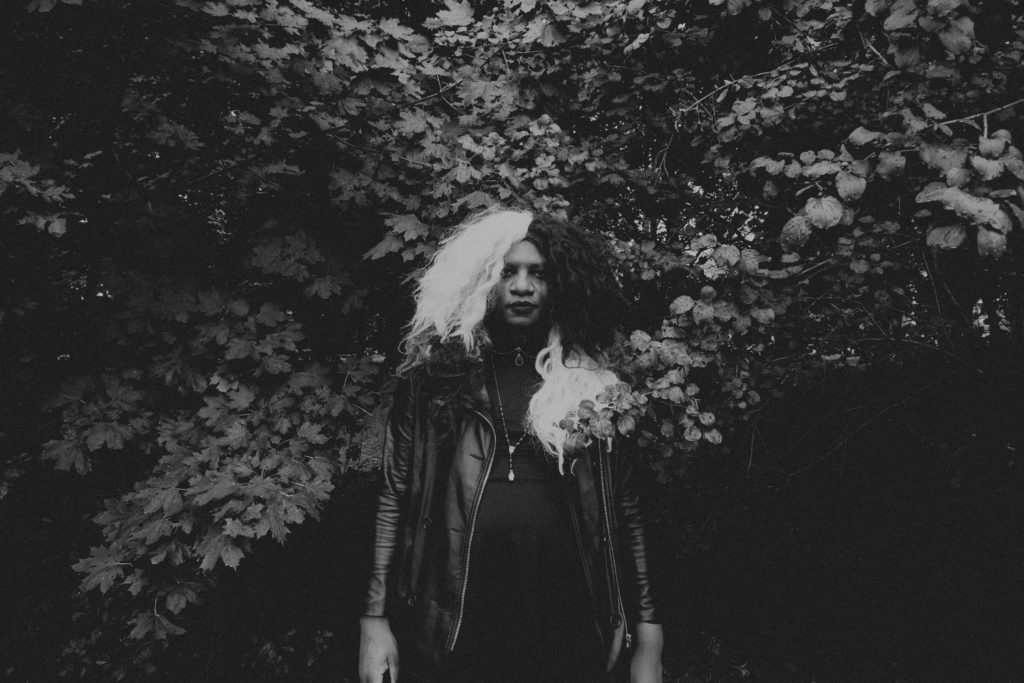
Backxwash by Merchant Vaporwave
“Squelettes” sounds like a sonic evolution for Maryze; while it certainly fits in line with her previous synth-drenched R&B, the new single veers into the waters of hyperpop with its cascading melodies, fluttery percussion, and cold production. There’s a certain industrial feel to the instrumental track, which works as a perfect way to pull Backxwash’s explosive style of lyric delivery onto the track.
The track has a heavy, dissonant synth that sounds like a gothic church bell letting out a cryptic din through a foggy night. This leaves room for Maryze’s haunting vocals – sometimes delivered in a dark whisper – to float above the mix. Add a jittery backbeat and some fuzzy layers of synth melodicizing and “Squelettes” makes an excellent addition to your October playlist.
Stream “Squelettes” below via Spotify, and keep an eye out for a full-length release from Maryze due in 2021. The album will continue to explore the sound that Maryze has laid down with “Squelettes.” The song is Maryze’s first release on newly-established record label Hot Tramp Records.
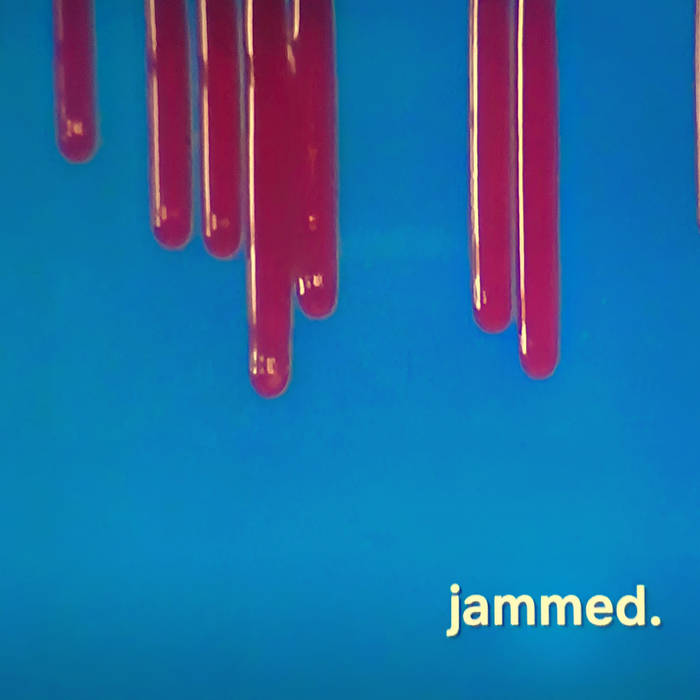
nono.stalgia Jammed. single artwork by Justin Ferrullo
Justin Ferrullo knows his new EP might not be around forever, and he’s okay with that. The three songs that make up the producer’s new release, titled Jammed., are built around samples cribbed from an MP3 blog — the blogger’s entire personal vinyl collection of obscure Japanese pop committed to digital file. For an electronic musician like Ferrullo this is a goldmine for the creation of outré samples. But at this prospect, the producer, who works under the name nono.stalgia, faces a problem: mine this stuff for all its sample-able glory but risk facing the wrath of a DMCA strike. Ferrullo knows that our current digital media landscape frowns upon this kind of line-skirting, but it’s part of what made it appealing to him.
The fact that this collection of songs exists at all is a surprise to its creator, who normally does not incorporate sampled sounds in his music. The discovery of this large, free library of music was reason enough, but the EP also serves as a statement on sampling itself. “Sampling is supposed to be a form of art that comes from having nothing to create with,” Ferrullo said. “What was once the cheapest form [of music making] is now the most expensive,” he said, referring to the high licensing fees required to clear a sample.
Frustrated with the difficulty of creating music through the proper channels, Ferrullo went ahead and did it anyway. “I was like ‘I’m going to put this out there with the full intent that I’m going to have to remove it,’” he said. The legal gray area these songs inhabit — illegally sourced but not yet found and removed by some authority — is the reason why they exist. They are the product of a liminal space. “It’s not something I’m trying to keep secret,” Ferrullo said. “There’s a very specific kind of openness I want to have with this usage of sampling.”
Beyond the Borgesian-as-fuck premise, the songs are actually really good. It sounds like chopped and screwed Bee Gees, or 70s night in Neo Tokyo. Action Bronson would say some really filthy things over these beats.
In regards to the moniker he’s chosen for himself, Ferrullo told me about the conception of “false nostalgia.” He explains: “It’s this idea that you may experience a fondness for a piece of culture that you have never experienced.” It’s sort of like nostalgia-by-proxy, basking in the warmth of a memory you never had. It is both chicken and egg. It’s feeling everything and nothing.
Jammed. is available now unless it isn’t. You can stream it on all major DSPs unless you can’t. You can find nono.stalgia on Twitter and Instagram unless you don’t.
Take a second look at the buildings that constitute our city’s urban fabric. Their past lives might hold unexpected histories of art and culture. If you’re eating chicken and biscuits at Sweet Cheeks— you’re also in the place of some of Boston’s greatest countercultural moments.
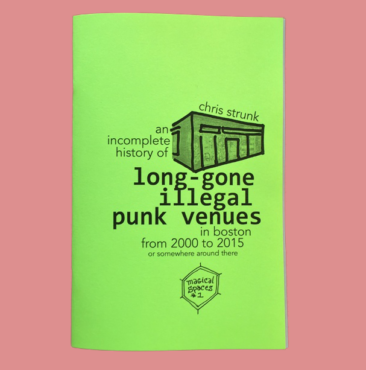
In the zine “Long-Gone Illegal Punk Venues,” written by Chris Strunk (musician/show booker/librarian), the reader is walked through over 40 warehouses, basements, garages, and studios that hid the DIY punk scene between 2000-2015. From the Polish Social Society in Dorchester to nondescript warehouses, you probably wouldn’t guess that these spots housed Boston’s evasive but raucous punk scene during 2000-2015. When attending one of these shows, a frozen turkey might’ve hit you in the head, a cloud of industrial dust could’ve enveloped you, and there was always the chance of a police run-in or two.
Strunk specifies that this is an incomplete list and that he specifically chose “long-gone notable illegal venues” (there were legal spaces too). Dispersed on both sides of the river, these spaces comprised a map of punk illegality. Behind walls and underground, there was once a world of noise.
The zine is important for many reasons. It serves as an incomplete record of the punk music scene while telling a larger cautionary tale about how subcultures are forced to create worlds behind walls when authorities are always shutting them down or silencing them. In the face of disinvestment, gentrification, and the pandemic, we’re losing countless venues and creative spaces with closure after closure. These spaces (which serve as cultural monuments) are built over, forgotten, and constantly threatened. According to Strunk, these stories need to be told before their memories and physical remnants disappear. If histories are preserved and fought for, maybe these subcultures that get pushed out and shut down can fight for their right to the city.
The first thing Strunk said when he picked up the phone was, “One second—I have to turn down the music.” That sentence alone set the tone for our conversation about a scene that’s constantly told to turn down the noise.
Allston Pudding: How did this project come about and develop over time?
Chris Strunk: I wrote it but it was a collaborative effort. Gilmore Kamney organized a Girls Rock Boston punk rock trivia night two years ago and asked me to write something about the punk scene. I thought to myself, what can I do that isn’t a big research project? I wrote the history of these spaces for that trivia night. That was the genesis of this zine and I guess it got put into Girls Rock Camp storage! Tim Devins had a copy and asked to re-publish. I added a bunch of stuff and re-wrote it.
When I started writing it, I thought it was good because these counterculture histories are important. It was good to do it now, as time goes on memories fade.
AP: Does the punk scene as you wrote it feel like an ephemeral chapter or something steeped in culture that will continue in different forms?
CS: The punk world directly ties into the past, what was happening before wasn’t different. The music and attitudes and trends changed but it is ephemeral in that there’s a lot of transience in Boston, more so than other cities. In terms of DIY music, it will continue. But now, during a pandemic and economic collapse we’ll have to see what the future looks like.
AP: The police and authorities are a huge part of the narrative you share. When thinking about ordinances and attitudes from the city there are serious implications for the survival of art and culture. How can scenes carve out space if the city doesn’t support them?
CS: That’s the million dollar question. No one really knows. Now we’re seeing not just illegal spaces are drying up from ordinances or gentrification, but the legal spaces are closing too. I’m optimistic that music will continue but I’m not sure what it will look like. If cities could provide spaces for people, that would be great, but the city doesn’t seem interested in funding DIY arts as we know them. They say, “What do you mean there’s no art scene? There’s Boston Calling; what more do you want?”
AP: You also talk about corporate approaches to house parties and underground music scenes, specifically places like Sofar Sounds. I hate to think startups are co-opting the idea of DIY and house shows.
CS: When SoFar came on, I thought it was my worst nightmare—The tech industry co-opting house shows for profit. But that will continue. People were still doing house shows all the way through the beginning of the pandemic—not as many, but they were still strong. I think of how these art communities can carve out space in Boston and, like I said, that’s the million dollar question.
AP: Right, especially with closures of studio spaces like the EMF building and Green St. Studios in Cambridge. There was a backlash of noise and movement surrounding those closures. There’s also the reality of marginalized communities getting pushed out; it’s all under the same systems.
CS: It seems like with EMF and in Cambridge, there were protests and meetings, but the city was like, “Maybe we’ll intervene… but no, we won’t.” Marginalized communities—that’s a whole other topic that I didn’t get into. That’s one of the problems. The scene I was involved in didn’t really reach out to marginalized communities. That would be an entirely different avenue to explore, especially in Dorchester and Mattapan. The history of that would be incredible.
AP: Can you explain how the outsider gets in? How did information and knowledge spread?
CS: Social dynamics changed depending on the venue, who was involved and how welcoming they were. Up until Operation Rolling Thunder, you could put the address on a flier and post it up around town and it would be fine. That’s how I started going to house shows. Over time, it became much more secretive and harder and more word-of-mouth. Show notices moved on to internet message boards. We had to be careful because cops made fake Facebook accounts to post in boards. When I was booking shows, if I got a message that seemed off asking for an address, I just wouldn’t respond to those.
There was one show when someone got hit in the face. The incident turned into this giant controversy that spilled into the local internet. Things became a bit more exclusive after that. I’m a librarian and I don’t “look punk” or anything, but since I was booking shows, I think I got a pass. There were some locations where people threw bottles at me and tried to weed out people that didn’t look punk. There were times it was open and welcoming, and others when it wasn’t.
AP: You talked about the tension between the mainstream and underground, how bands created their own performance spaces out of necessity, but also had to conform to industry demands at times when bands had to get booked at “legitimized legal spaces.”
CS: It did turn a corner at some point. Here’s one example: I was involved in booking a show in 2012. When I looked at the lineup, it was so great and everyone wanted to be a little more famous. The whole set happened because we had to go through their booking agent. There was a turn when things got more professional around that time.
AP: That’s pretty ironic and contrary to how the scene formed against the mainstream initially.
CS: Right. At first, you couldn’t book a punk show with a club if they weren’t interested. The only way to pay touring bands was to have it in a house.
AP: What about cover charges? Did it vary by location? How did it hold up economically?
CS: *Laughs* A cover charge depended on how adamant you wanted to be about charging. For the most part, sometimes houses took a small cut. You would try to collect as much money from people at the door as you could but people weren’t always cooperative with paying. Most money went straight to bands. It wasn’t that complicated.
AP: It’s interesting how the experience of a punk show is so different from other live music experiences. Like being against stages.
CS: Sometimes there were small stages in the basement, but basically everyone was on the same level. In the early 90s people thought bands shouldn’t play on stages because they shouldn’t be as “above.” Everyone is on the same level. But of course you couldn’t see everything.
AP: You also bring up the Ghost Ship fire in Oakland, CA and how that changed people’s perspectives in thinking about danger and risk.
CS: When Ghost Ship happened, everyone who was spending time in these spaces thought, “Oh my god. I could have died or killed someone.” It was a real ‘woah’ moment that people hadn’t thought of before.
AP: Who have you distributed the Zine to so far? What’s the plan?
CS: Tim Devin will handle most of the distribution. You can order the zine from Tim and it’s distributed by Printed Matter.
Lastly, I encourage anyone involved in counter cultural arts and music scenes to document the scene as it’s happening or in its recent past before someone from outside documents it and gets it all wrong or memories fade.
[Long-Gone Illegal Punk Venues by Chris Strunk is published by Somerville’s Free the Future Press and available for purchase through Printed Matter.
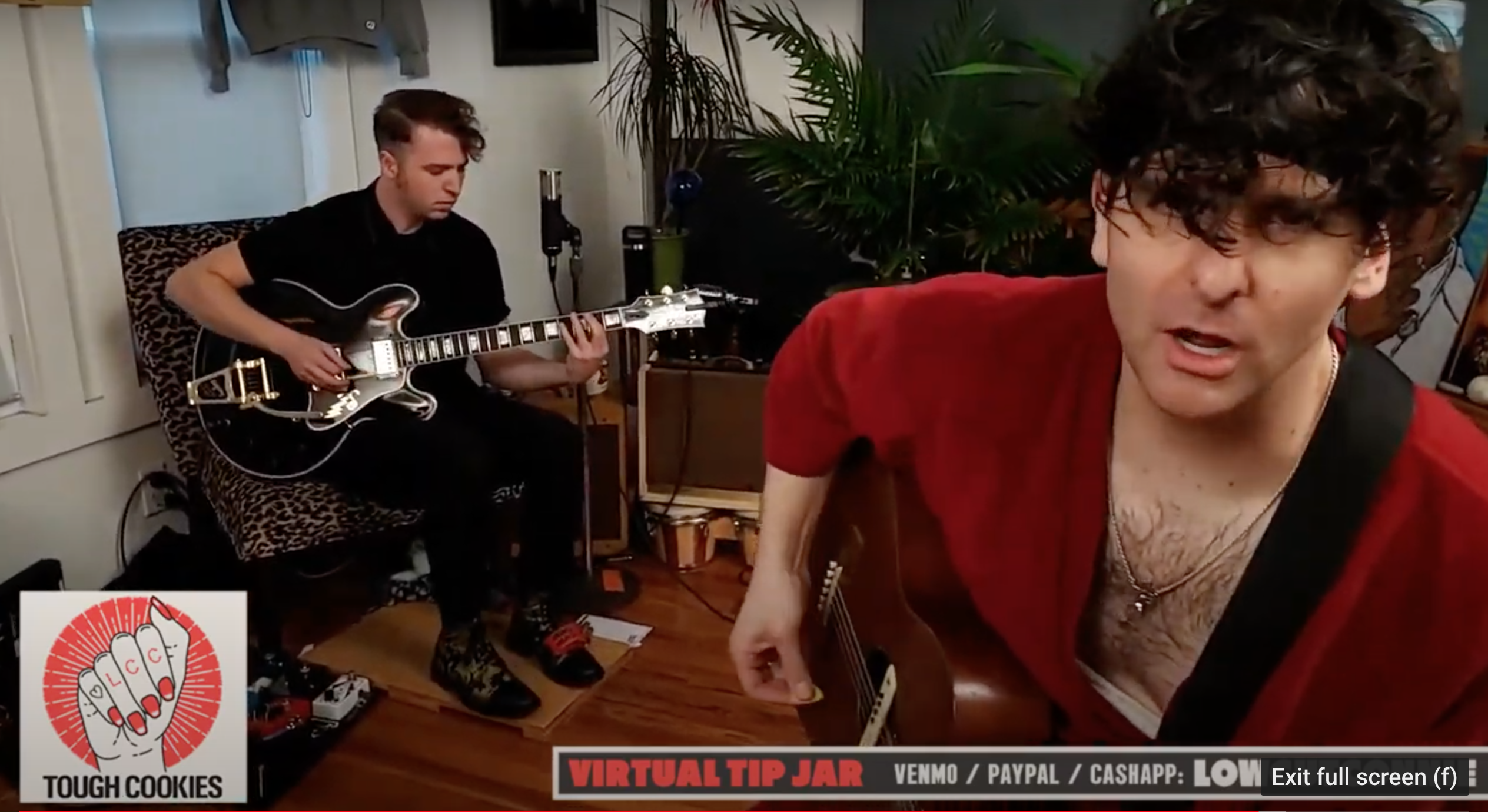
Adam Weiner is working a full time job plus overtime. Between releasing new music with Low Cut Connie (their sixth album Private Lives dropped yesterday), interviewing others – like Beyonce’s dad – and hosting his own livestream show “Tough Cookies,” he’s on the pulse of the momentand rolling with it.
Listening to Private Lives and watching “Tough Cookies” is like entering a time capsule, every lyric and word pulls you into a rich history. The band’s style of Rock’n’roll comes from sounds spanning the last hundred years with a heavy influence on the 1955-1964 pre British-Invasion years, one of many moments in rock history Weiner is “obsessed with.”
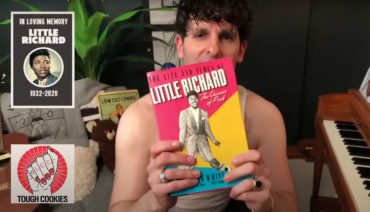
“Tough Cookies” and Private Lives entertain and educate, challenging us to question the history we’re given about music and culture. In the show, Adam interviews cultural icons that speak to homophobia, racism, and sexism in the music world and performs songs in tribute to those icons (with a torn tank top stripped down to his underwear). The album tells honest stories of the way people live in America today. Both cast a light on those who are overlooked, silenced, and excluded from society then and now.
When I caught up with Adam we didn’t just talk about history and music in the lens of the past, but what this moment means for the present and future of media, entertainment, and Rock’n’Roll.
Private Lives and “Tough Cookies” are like conceptual A- and B-sides of this 17-track double album. Unlike the traditional sense where the B-side is secondary, they go hand in hand. With stories of the unspoken, neglected, and hidden, both sides take us into the world of our private lives.
When I was 13 I got a record by Leadbelly and got obsessed with music from the ‘20s ‘and 30s – mostly Black music from the ‘20s and ‘30s. I was always out of my time. On “Tough Cookies” I’m doing a segment called “Songs from 100 Years Ago.” I happen to know a lot of music from then. I’m kind of obsessed with the history of the beginning of the entertainment business. 100 years ago was the beginning of the record business, the film industry, broadway, and radio. Television came later but we have a lot to reflect on. Because my show, “Tough Cookies,” is what I call a “Soul Music Variety Show,” it’s not a straight concert. It’s music, performance art, support group, all these things.
It’s the resonance around music. Early in the show, back in March, I started performing songs from the pre-Rock’n’roll era that had some bearing on the COVID crisis, the feeling of isolation. I noticed a really interested and curious response from viewers when I would do a song by Sister Rosetta Tharpe or Mississippi John Hurt or Bessie Smith. A lot of people had never heard the music, hadn’t heard of the artists, and because I am known as a Rock’n’roll artist and performer, I started to think from a musicological standpoint, it would be good if the people watching had a sense of where the music we play and perform comes from.
Once I started doing interviews and having conversations with people who have worked in the entertainment business, most of whom are Black, not all but most, I realized there was a bigger narrative here that we were putting together with the show about race in the music business.
That ranges from me talking to Darlene Love (of The Blossoms) about appearing on television in the early ‘60s, when The Blossoms had to wear this light shade of make-up, to my buddy Bobby Rush, who’s 86, about performing in the early 50s behind a curtain in a blues club in Chicago because the white patrons didn’t want to see a Black person. They wanted to hear the music but they didn’t want to see his face.
I started having these conversations and realized that we can entertain as much as we can educate. We can make musicological aspects entertaining for people.
…On Creating a Series where Entertainment Meets Education
After the murder of George Floyd, the whole format of the show changed. Up until that point what had been a “let’s all get through [quarantine]” performance, became a more activated experience. I switched the tenor and started to perform songs and speak more explicitly about issues in the country. I began to have more open conversations with some of my guests about racism, sexism, and homophobia in the music business of past generations.
Today I had a fabulous conversation with Jake Shears about homophobia in the music business and his experience. I had another great conversation two weeks ago with Beyonce’s father Mathew Knowles who grew up dirt poor in a shack in segregated Jim Crow south Alabama. He was driven to succeed and pass that drive along to his daughters.
I want to have these conversations so that the viewers are getting something active out of the experience. They’re learning, questioning their beliefs, and questioning the media and the history that they’ve been giving around music. Maybe, just maybe, they’ll enjoy music in a different way.
…On Segregation in The Music Industry and Rock’n’Roll
(in reference to the Hank Ballard and Etta James 5-track medley dialogue which Weiner performed in “Tough Cookies”)
There’s a few artists I’ve done a lot of songs by, but Etta James is one of my favorite singers of all time. With The Hank Ballard and Etta James piece, we’re talking about the early ‘50s. There’s two things that are interesting about this. 1) Supposedly we’re told Rock’n’roll started in 1955. Sometimes people are more generous and say ‘54, when Elvis broke through regionally with “That’s Alright (Mama).” Now I love Elvis but I would like to point out that records like this existed in the earlier part of the ‘50s.
Those records were called “race records,” a segregated part of the business. Black music on Black radio stations and Black stores for Black customers. Those artists, (and some of them were massive stars), didn’t have the opportunity to cross over to the top charts. It wasn’t a matter of taste. It was a matter of systematic segregation and censorship.
I like to shed light on people like Hank Ballard and the Midnighters and the early part of Etta James’ career. They were big stars in the R&B charts, in Black clubs they were legendary. They didn’t have the same level of ability to hit with the white masses as the white artists did—that came a couple years later. It also gives you a real appreciation for this period of music between 1955 and 1964 before the British invasion—these 9 years that I’m obsessed with.
Within those 9 years, you get this kind of coming together. White and Black kids were suddenly listening to the same music, they were listening to the same radio stations. Everybody loved Motown. Everybody loved Little Richard and Chuck Berry and Elvis. Chuck Berry got played on every radio station, Elvis got played on Black radio stations. There was this blend. We think today that we have a fully integrated situation in our entertainment and I seriously beg to differ.
…On How Genre Creates Barriers
The new kind of segregation is more about genre and corporate-mindedness. There isn’t a big mix of people all listening to the same music. It’s getting re-segregated. I’m trying to get people to look at things from another angle. If you’ve seen some of my interviews with these musicians, I ask a lot of them a very weird question. It always takes them by surprise and it’s somewhat awkward. I ask, “What genre of music do you feel like you were or are performing?” Seems like a simple question, but I always get a weird answer.
I asked this question a couple weeks ago to Dan Penn, a white country songwriter who wrote all these songs for Aretha Franklin and Wilson Pickett and Otis Redding. Everyone refers to him as a soul music songwriter. He told me, “I never heard the word soul until I was already 5 or 6 years into my career.” I said, “What kind of music did you think you were making?” He said, “I guess I would have called it rhythm and blues.” R&B. Sometimes I get the answer Rock’n’roll, sometimes rhythm and blues, or soul, or pop. These genre words that we live and die by now, they didn’t mean anything back then. It was just music. It was just music and it was good, that’s all people cared about.
The best example I can give you, and I said this on “Tough Cookies,” near his birthday in July – (he would have been 120 years old) – is Louis Armstrong. He’s one of the most important entertainers in entertainment history. He was not just the first Black international music star, he was really the first American international music star. There was no bigger star in recorded music before him. This is all the more striking because he was Black in the 1920s.
Musically he’s always referred to as the “father of jazz.” He would say “I never heard the word jazz until I was already famous.” They didn’t think what they were playing was jazz when he was coming up. They just thought it was music. He grew up in an orphanage in Louisiana with a mixture of Black, Haitian, Caribbean and white kids. They were taught songs from France. He learned to play his horn and all these French classical pieces from the 19th century. At the same time, he’s in New Orleans so he’s getting all this Caribbean and Haitian rhythm. Basically he took these beautiful lyrical French classic melodic styles and played it with a completely syncopated polyrhythmic Caribbean style. What he and his peers created is what we call jazz. It was a little bit classical, it was a little bit pan-african, to him it was just music.
[Armstrong] played his horn on some of the earliest what we now call country records, but at the time they were called hillbilly. He was friends with this guy Jimmie Rodgers who was the father of country music; he played his horn on his songs. Jimmy Rodgers’ first hit is called “Blue Yodle,” and he was yodeling over a guitar. So you’ve got this yodeling thing from the Swiss, with an Irish Scotch folk guitar thing, in a Mississippi blues format, with a white guy from Tennessee singing it, and a Black man from LA playing horn in it. I don’t know if you want to call that country or jazz or what, but to me it’s just revolutionary.
…On The Role of Music Today in America
There’s less of a public culture than we used to have. Our music industry is different than other countries in that we very much developed a ‘ticket purchasing culture’ over the last 15-20 years. There are very few places anymore that have a scene where people show up to see what’s going on musically.
If you could go back to previous generations, there were clubs, theaters… you just knew whatever was going to be there would be great. People would go on a Friday to dance. That’s what my parents’ generation did. Whether it was the Apollo Theater or some little divey bar in Philadelphia like the Uptown Theater, or a casino (say what you want about the improprieties of a casinos in Vegas or Atlantic City, but they used to have a great music culture).
We don’t have that as much anymore. I’ve been touring with Low Cut Connie now for 8/9 years and we have to build a fanbase. Then we try and get that fanbase to come and buy a ticket for the performance. There’s another show before or after us and their fans come in and leave. It’s a different kind of corporatized version of entertainment. It doesn’t inspire a lot of mixing of demographics or musical genres.
…On the Current Shift in Media and Entertainment
People ask me, “How is it going to be when you get back to doing your job?” I say, “I’m doing my job right now. I’m doing 2 shows a week, I happen to be doing them in my bedroom in my underwear, but I’m doing two performances a week.”
We have viewers in over 40 countries. It isn’t a full 7-piece band on a stage with lights and sound in a sweaty club, sure. The format of live streaming feels like the beginning of when radio showed up. People thought radio would be bad for the entertainment business because if you could turn on the radio and hear music for free, why would you buy it? That was the idea. A lot of musicians, especially jazz musicians, who were very famous in the 20s and 30s refused to appear on the radio or be recorded for a record because they thought people would steal their music.
It’s kind of crazy to think about that because radio really created the music business as we know it. It was a sea changer. There were people all about it and people skeptical of it. Live streaming is a similar moment. There are people who grab it with both horns and try to turn it into a new vibrant entertainment medium, there are people skeptical of it as a business, and there are people skeptical of it as an artistic form. They think it’s boring.
We hear this kind of debate every time a new shift happens in media. People thought films were a fad, and said “why would you want to see that when you can go to the theater and see real people?”
You get entrenched in a way of thinking about art and performance. When something new comes out it feels like a challenge, either people are up to the challenge or they feel like they are being challenged for their livelihood.
I’m totally inspired by the live streaming format. I don’t see it as a rival to live touring at all. I hope one day I do both.
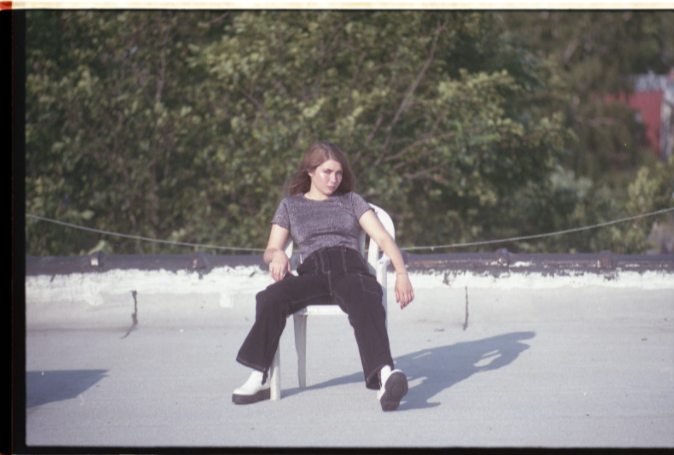
This year has seen a lot of us doing some surprising things with our spare time. Whether you’ve begun foraging for local fungi, dedicated weeks to perfecting ideal homemade kimchi or you’re just one member of the growing sourdough legion, we have all found ways to pass the time. If you’re 21-year old Lea Neu, you discovered a passion for embroidery. In between crafting memorable pieces such as an embroidery hoop stitched to read “Kill All Men”, the Emerson student released her debut EP Nostalgia on September 18th.
Lea released the single “Messy” – a late night booty call bop – last October with the next single “Dizzy”, a synth-pop infused track that almost sounds like Lorde in another life, on February 13th. The EP was initially slated for a March release, however an ensuing global pandemic and eventual civil unrest delayed plans by a few months. Taking the summer to re-center herself creatively, Lea launched an Instagram account (@Neudlepoint) for her spare embroidery pieces. “I have to be busy, and I pick up passion hobbies all the time and stick with them for a couple months,” Lea explains before citing the Cello and Nail Art as previous examples.
Approaching September, Lea began to find her creative stride yet again. Returning to school in Boston gave her the space she needed to start writing again. She also found the time to release her EP. “Back to school seemed like the time to do it,” she says. And so on September 18th, Nostalgia was released. A collection of seven songs, Lea says are all connected by the “common thread” of the idea of Nostalgia. “There was never really another name I considered [for the EP],” admits Lea. The release includes singles “Messy” and “Dizzy”, as well as remixes of her first ever single “Cobwebs” by Berklee sophomore Max Harris and a mix of “Messy” by Everett Ave. Writing the lyrics and melodies herself is something Lea is quite familiar with, having started songwriting at 11 years old, about fictitious boyfriends or apartment paradises.
While back in her creative space in Allston, Lea admits to still be suffering from a “Quarantine Brain”. Like many others, looking into the future can seem trivial at times but she hopes to finish up and release two new singles soon and to keep advocating through her music. “I never want to not be political with my music”, explains Lea. She is donating all proceeds from the track “Bloodless Heart” to the organization RAINN.
______
You can follow Lea on Instagram @leaneu and @neudlepoint and you can stream Nostalgia on Spotify
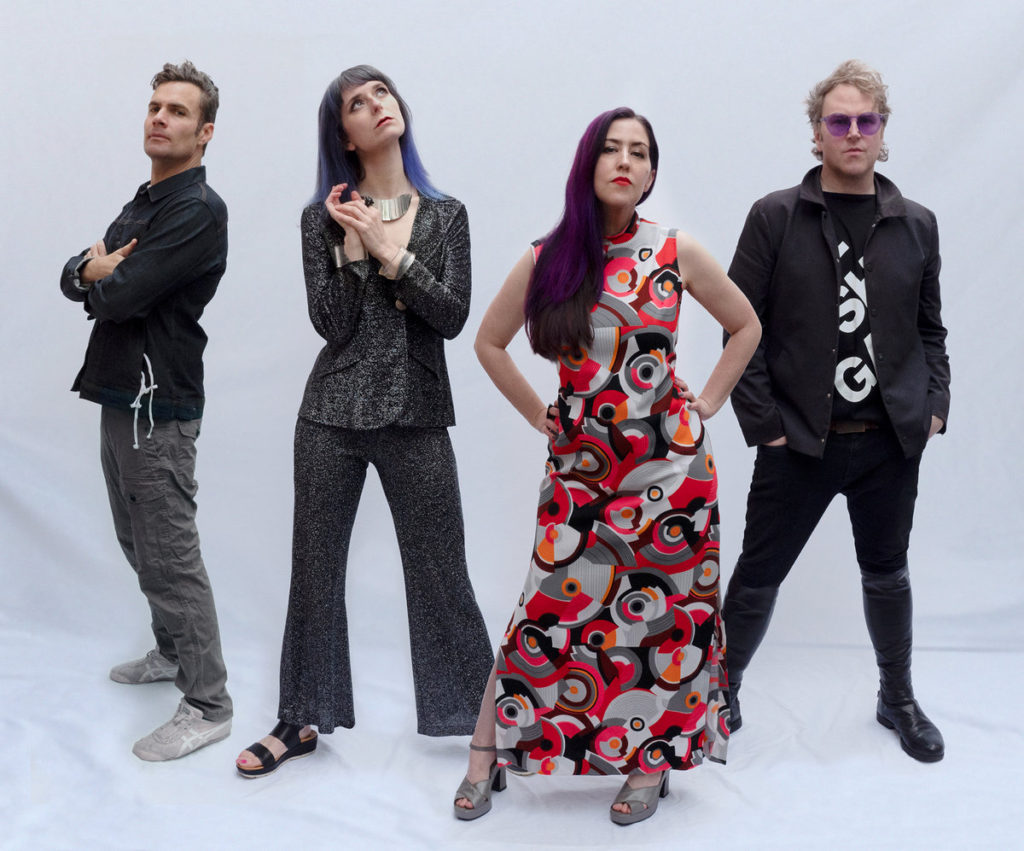
For over 20 years, Boston synth-pop band Freezepop has left quite the mark on the local scene and beyond. Over the course of four previous albums, a wealth of remix EPs, and appearances in video games and TV, the group has been considerably prolific in mixing infectious choruses with energetic synth melodies.
This week, Freezepop released their fifth studio album Fantasizer after a successful Kickstarter campaign in 2016. Coinciding with the album’s release are the visually inventive music videos for the silent-era-inspired “Anchor to the World Below” and the green screen antics of the title track, along with Maxi-Singles for each song that include remixes and B-sides.
We caught up with Freezepop’s Liz Enthusiasm (vocals), Sean Drinkwater (synthesizers/programming), and Bananas Foster (keytar/drums) via Zoom to discuss their new songs, music videos, and what fans can expect from Fantasizer.
Allston Pudding: “Anchor to the World Below” is the lead single from your first album in 10 years. How was that song developed and how did you choose that song as the first sample of Fantasizer?
Sean Drinkwater: We had a really large group of instrumental songs from 2014 that got whittled down to the ones that we thought would push us a little bit further. And “Anchor” was one of those songs. We hadn’t released a darker song in a really long time, probably since “Frontload” in 2007. It felt like it’d be an interesting start to have it be an emotionally different song. It just felt right, and it didn’t feel like it was giving too much of the album away.
Liz Enthusiasm: It’s almost a little misleading just because the “Fantasizer” video is a complete aesthetic 180 to it.
SD: For better or worse.
[both laugh]
AP: It’ll give people the full range before the album’s out.
LE: Exactly!
SD: The “Fantasizer” video’s ‘80s green screen look is very much the opposite of the “Anchor” video. We shot “Anchor” in December and we had planned to shoot again in the spring. But COVID was already with us, so we couldn’t really appear on screen together. But I’m happy that we seem to be more serious about making videos this time around for almost every song on the record.
LE: It helps that we’re the ones making them and don’t have to pay a director a bunch of money each time we release a video. And I would say a lot of the aesthetic is born out of those limitations, like the silent film look [with “Anchor”].
SD: Yep. “Let’s make it look like garbage from 1915!” [laughs] It was a hybrid of, like, “What can we do?” and, “What would we like to do?” And then we found the silent film idea in the middle of those two questions.
SD: That was part of the idea, that we could make simple backgrounds that look surreal, like those 1920s silent horror movies. It was all in keeping with the aesthetic, but it did work out rather well for the fact that we were shooting half of it in a garage.
LE: It was very collaborative in terms of the art direction and the backgrounds and the outfits and all that stuff.
SD: There’s quite a labor of love. Like Liz said, it’s a way of taking your limitations and making something interesting out of it. And Bananas lives adjacent to this crazy graveyard.
LE: We really lucked out in terms of the day. It was in December, but it was really unseasonably warm but also foggy and misty.
SD: Dragging [bandmate] Christmas [Disco-Marie Sagan] around on a dress made of paper essentially. It could have gone really poorly in December actually. [laughs]
AP: How did the tarot cards end up fitting into the visual aesthetic of the video for you?
SD: This record and its companion record coming down the line have a lot more metaphorical supernatural stuff. That’s where the title Fantasizer comes from. As soon as we decided on the initial singles, the fact that we were going to have tarot cards and dress up like weird ancient monsters, like Christmas with the antlers, just fell into place immediately. We were just like, “This is just going to be the weird fantasy version of this band for like a year.”
AP: The remixes for “Anchor” feel like a continuation of what you’ve done with alternate takes or mixes in the past. What drives your impulse to experiment with songs beyond their album configurations?
SD: This album is a very full, very lush, very dense record. When we first started talking about remixes, [we had] the idea of stripping things out, having them be more percussive and more angular and a little more like old Freezepop. [We wanted] some of the remixes to be a reprieve from the dense wall that is the actual album, which is quite cinematic in places. And we have three or four of these series of songs, like the early 2000s remix Night Fantasy versions. So, at the end of it, you’re going to have four or five different complete versions of the record. And you can say, “I’m going to listen to the whole thing acoustic today,” or, “I can just listen to the whole thing 8-bit today.” Or you can make your own special playlist that’s the ones you really like. Maybe we’ll have a poll where [fans] might get to pick from like the different versions to make their ultimate version of Fantasizer. I always think it’s good to give a different perspective on stuff like that.
AP: That feels especially true with the Daydream version of “Anchor,” which turns it into a piano ballad, an approach that’s not typically found on a Freezepop album.
SD: We’ve flirted with this in the past with acoustic versions of “Plastic Stars” and “Moons of Jupiter.” But this is the first time we’ve done a big chunk of them. “Anchor” was written on piano, so you’re hearing it at its most basic state with the piano version. For us, it’s nice to have all these toys or tools. But if you can sit down and play a song on the piano or acoustic guitar and it works and you still get some feeling out of it, then you know you have a real song. I think 10 or 11 songs on the record started as piano or guitar, just trying to suss out chords and melodies. “Fantasizer” has an acoustic guitar version, because that song was written on guitar. So wherever the song started, that seems to be where the acoustic versions are ending up.
AP: What were the origins of the B-sides on the “Anchor” Maxi-Single and their development?
SD: We’re going to do B-sides for every single and, maybe at the end, we’ll have a proper B-sides collection. We started working on a bunch of Italo Disco music two years ago and “Dance Ambition” was a leftover from that, but I just liked how the music felt with “Anchor.” Same thing with “Bubblebath,” which was a really early one whose backing track was going to be the opening song to the album [at one point]. We did the vocals on both these B-sides two weeks ago, days before the single came out. I work well on the clock, like, “We have to be done today.”
AP: Yeah, I feel that same impulse. I did want to mention the Kickstarter campaign for the album, which was super heartening to see get funded so quickly and hit its stretch goals. Now that it’s four years later, what sort of things did you take from that experience, especially given royalty payments with major streaming services are still at the same place, if not exacerbated?
LE: The response was amazing. Initially, we were freaking out, like, “Oh, my God, is this going to be totally embarrassing? 10 people are going to pledge money.” But it was really heartwarming. Our fanbase has always been incredibly loyal and supportive, and people really turned out for it.
Bananas Foster: It’s not like Freezepop was putting out an album every six months. So when we were like, “Hey, we’re doing a Kickstarter for the next one,” it was just… [imitates explosion sound]
LE: It was just a matter of telling people, this shift in psychology of saying, “Hey, we actually need your help. If you pre-buy this album, it’ll help us make it.” And our fans were exceedingly patient with us, as long as we kept posting updates. I think maybe now, especially with COVID and Bandcamp Fridays, more people are like, “We need to support artists.” But an average music listener [at the time] didn’t necessarily know you’re getting a check for $3. At the time, we had a bunch of demos from 2014 and we thought we were much further along. And we ended up scrapping the whole thing. [laughs] So I would say, next time around, we would have to have the album basically done before we attempted anything similar.
SD: Looking back at 2014, I can see why we were so confident about those demos. There’s so much cool music there. But we just couldn’t turn them into any real songs. It was a real bummer after a year of work to be like, “This is just not happening. Nothing’s landing.”
LE: It just wasn’t jelling. Individually, things were good, but then it just wasn’t coming together.
SD: Ultimately, I feel bad that we took so long, but I’m really glad that we took so long. If we had put this thing out even a year and a half ago, it would have been pretty rough. We kept having to be like, “Oh, it’s late, sorry.” But you can’t force it. If we had been paying for everything ourselves, we couldn’t have spent a year on something and then thrown it out because it was bad. So in a way, the backers of the Kickstarter really afforded us the opportunity to spend time on it, to get it exactly how we wanted it. Which is an amazing luxury in this decade. The Kickstarter hugely enabled us to function almost like a band from the ‘80s or ‘90s in an old-fashioned A&R way, where you’d have a really long time to craft something great.
AP: There was an interview around the time of the Kickstarter where you mentioned bringing in bigger sounds to albums and live shows with the expanded lineup. How has that affected the particular arrangements on Fantasizer compared to previous albums?
SD: Future Future Future Perfect was a really tough record to tour, because it was just the three of us: Liz, Bananas, and I. The band had just started to get cult-popular in America and, suddenly, we had bigger shows. When [ex-member] Kasson [Crooker] crafted a lot of the backing tracks, it was all about making interesting polyrhythms and syncopation, which all sounds really cool to listen to walking down the street. But playing the songs live was pretty challenging and felt quite jerky. When Kasson left and we went to go make Imaginary Friends, we had a different eye on how to produce those songs so they would work on stage. And I think that’s definitely carried over to this album.
AP: As I imagine is common, my first entry point into Freezepop was your appearances in Guitar Hero and Rock Band. Beyond the added exposure, how have those games affected your fanbase now that people who discovered you that way when younger are now adults?
LE: It’s pretty weird. [laughs] We did a mini-tour two summers ago, and it was weird because people would come up to me after the show and go, “Oh my god, I loved you when I was 13!” And they’d be grown-ups, and I’d be like, “Oh my god, I feel ancient!” [laughs] But it’s really cute and heartwarming, because I think of the bands I loved when I was 13, like Duran Duran, and it really sticks with you. So, yeah, let’s ride MySpace nostalgia.
SD: We were a little bit on the old side when we started too, so it definitely is strange. There was a time where I thought the video game thing was a double-edged sword, because we were signed in Europe and hip for a minute and adjacent to the electroclash scene. And as soon as we started being in games, I was worried we lost something, even though we gained a lot of fans. Now, I don’t think of it that way at all. I just think, “Thank God that happened and we got some fans.” [laughs] It was just after the ‘90s and it seemed like selling out, but oh my God, if I could imagine the music industry in 2020.
BF: It’s also good that we were part of a movement that wasn’t a weird fad. You may be leery to get involved with disco or Britpop, because then there’s a backlash to it. But video games are bigger than that. It didn’t group us in with any sort of musical act that would make us seem dated. Video games are going to be around for a long time.
SD: The video games really gave us a career in America, and we couldn’t be more grateful, really.
AP: To close things up, what would you say listeners — either new or longtime fans — should expect from Fantasizer?
SD: I think we tried to make something that was really at the top of our game as a band. If we can’t make a record that stands up with the records that we love in our genre, then we’re doing something wrong. I want to be able to put a playlist together with Violator and Upstairs at Eric’s and Dare and New Order’s Substance [1987], and be able to throw one of our albums in there and feel like it could live with that other music.
LE: It’s a continuation. But you’re always trying to push yourself a little bit each album.
BF: It’s not a retread.
LE: Yeah, there are elements there for new listeners and old school fans. You want to bring along everybody for the ride.
SD: I feel like this could be a conversation we could have in a year and it would be a lot easier to define what the album is. When you’re really high on having a new thing, it just seems like the best thing you’ve ever done, and it’s really hard to detach yourself from the momentum of the moment and really analyze it. Certainly, it was a labor of love and I think when people hear it, they’re going to be like, “Oh, that’s why this took so long.” The response so far has been so incredible, and I couldn’t be happier.
Freezepop’s new album Fantasizer is out now and can be streamed via Bandcamp below.
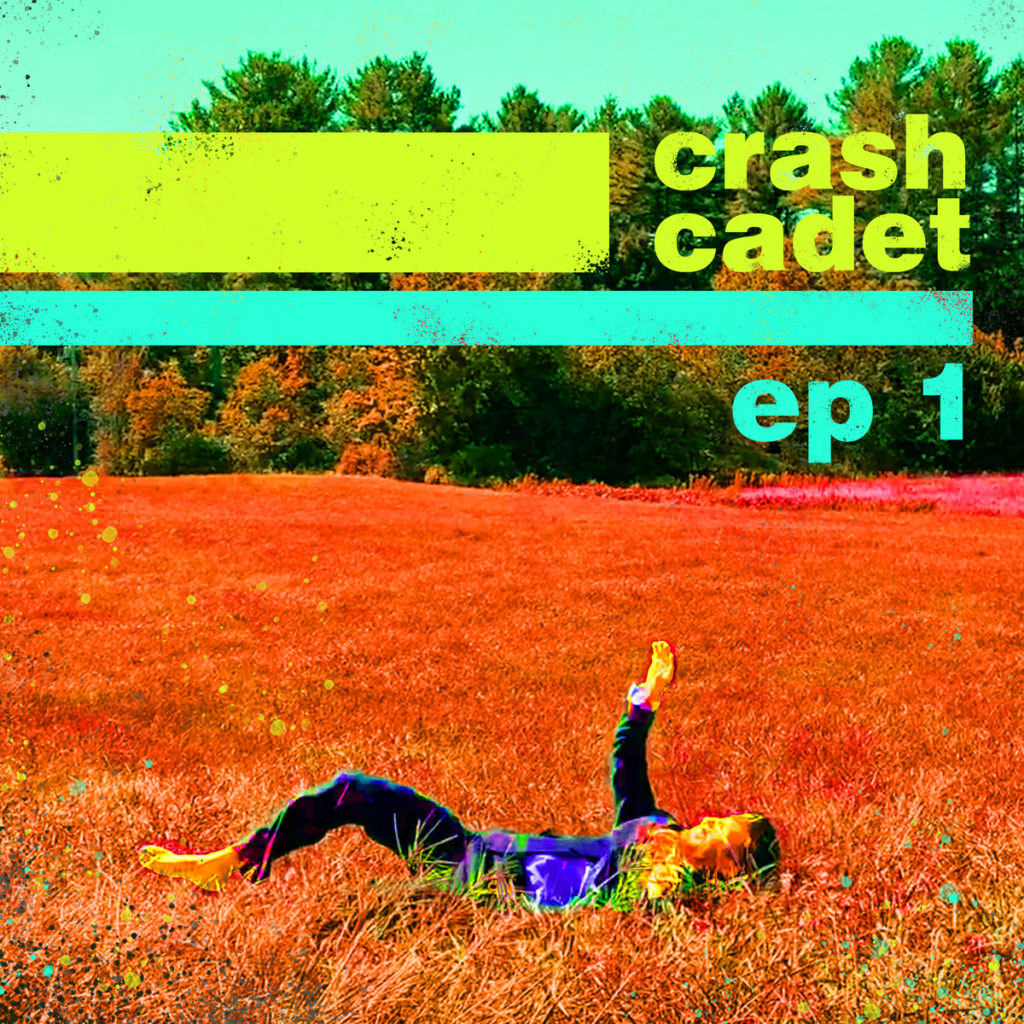
Back in June, Boston-based psych-rock project Crash Cadet – a solo project for Josh Rathbun – released “Crash Cadet II,” his aptly titled second full-length. We previously premiered a music video for “Tree Climber.” Just four short (or long) months later, Crash Cadet is back with a two song EP simply titled EP 1. The two songs emulate the mood at the beginning and end of summer, respectively.
The first track, “Do What You Want To,” kicks off with a fun, multi-guitar rhythm that sounds like a throwback to some innocent pop-rock songs of the 90’s. There is a trademark psych element as well, as the guitars get some fuzzed out elements to them. The vocals over the chorus are layered and lingering, which adds to the subtly psychedelic atmosphere. That’s not to say it has a haunting tone – it’s a completely peaceful and joyous piece. The lyrics are a call from one person to another, to drop the daily routine and spend the day outside enjoying the early summer air (socially distanced, I’ll add). The feeling of calling out sick to spend the day carelessly taking in the world is a perennial one for us once it hits ~May, and this song captures that mood.
“Riviera Girls,” meanwhile, takes a decidedly more somber tone. It’s not a sad song, but it is one that has a tinge of dread to it, centered on the looming equinox. Like the EP’s first track, it’s a direct message to someone – this time we get a name, Julianna. It’s a love letter of sorts, but one filled with some longing. There’s a bit of a foreboding, dreamy air to the whole piece that makes it seem like this meeting might not happen. This is coupled with some lines about him forgetting to call her and not exactly apologizing. There’s a sense of carelessness to it, similar but not exactly the same as “Want To” before it. The slower pace, dreamier vocals, and interruptions by some brief, chugging guitar give this song a hazy, lost attitude that mimics the one we’re forced through around this time of year.
At first glance, these two songs feel inapplicable to 2020 – a year where we’re all trapped inside and cannot experience these things we’ve always taken for granted. But they’re not inapplicable in practice; these songs were written in quarantine, and they both serve as reminders for how messy and complicated the before life was, both good and bad. Both songs are odes to feelings we never thought we’d have to have a longing for, and they couldn’t be released at a more appropriate time. EP 1, as well as “Crash Cadet II,” can be found on the band’s bandcamp, and on other streaming sites.
The Nude Party’s second album Midnight Manor, (dropped today) is different from what the six friends have done before. 2020 has forced the band off the road and into this weird collective limbo where tomorrow’s uncertainties force us to be present. Without incessantly performing and what would have been a live introduction to the album, the experience of Midnight Manor changes. Both musicians and listeners become a little more reflective, a little more internal. Yes, most songs will make you involuntarily dance, but the album brings us into a “conceptual space where the music lies,” an “aestheticism of creation.”
We know the band is comfortable with physical vulnerability – “nude” isn’t meant to be cheeky. With songs like “Time Moves on” and “Things Fall Apart,” we hear Patton Magee’s descents into lyrical vulnerability. His writing ventures into the raw and visceral: “It really numbed my mind / to watch you breathing / all fast and rough / you’re so out of time” (“Time Moves On.) Recording the album near home in the Catskills at Outlier Inn also allowed the band to explore possibilities within sound. With a baritone guitar, symphony drums, and a ton of gear at their disposal, they could experiment and play around to find the sounds they chase like “a little ELO nod” in “Shine Your Light.”
Even without the physical and temporal experience of live music, the album transports us with its imagery, sense of place, and range of sound. We’re at a slow dance (which I imagine as the concerts in Twin Peaks The Return) a dive bar, a highway car. Accompanied by two artistically crafted music videos (“Shine Your Light” covered by AP here and “Lonely Heather,”) the album captures the intimacy of performance.
When I called to talk about the new album, Austin Brose (vox, percussion) and Shaun Couture (vox, guitar) picked up the phone on the road heading to The White Mountains. I wasn’t surprised they were off somewhere. For The Nude Party, the normal is nomadic. Their 7-year stretch of pretty consistent touring has created a lifestyle of transience.
The band members have had space to reflect on their role as musicians during these times, what they want to share, and what this album means. Stream Midnight Manor here and read our interview with Sean and Austin below.
Allston Pudding: What does it mean to put out your second album in the context of 2020, the here and now? What has it been like to sit with Midnight Manor during this chaotic year?
Shaun Couture: It’s been a hard and heavy year. We didn’t want to promote ourselves when there was so much happening with all the social issues going on in the world. We didn’t want to make anything about us. At the same time, we’ve come to the conclusion that our music is our contribution to the world. However people take it, whether it makes them feel better or if they don’t like it, is the weight of being a musician and putting music out.
We’ve done what we can to morally contribute to what’s going on. At the same time at the end of the day, we are musicians and putting out records is what we do. The only way for us to feel sane and the only way to continue being who we are is to do what we do. And that’s putting out a record.
AP: As a listener I was thinking about how lyrics might have new connotations and meanings in the context of 2020. Since this album was written pre-covid, has it taken on a new meaning? Have you changed your personal views on it?
Austin Brose: I don’t know if personal views have changed but there’s a funny congruence between what otherwise would be romantic or relationship derived lyrics and which are now attributed to the greater humanity of what is happening. “The Cure Is You” was kind of a romantic idea. Of a person being a puzzle piece that helps another person out. It suits the situation now. In “Things Fall Apart” …shit is falling apart. It’s an absolute dumpster fire of a year. There are definitely lyrical themes that could be relatable to the human conditions we’re all facing without them ever meaning to.
AP: In the Consequence of Sound piece, Patton mentions specific influences—a fuzz sound and a couple bands that were influential. Can you tell me a little more about sound influences and what you were going for?
SC: We used fuzz before but used it way more on this record. One texture on this record that was more prevalent than the last one was all the percussion that we did. Especially with “Time Moves On.” There are a lot of layers to that song.
AB: In that one, I used an orchestra bass drum, orchestra symphony drum, and there’s a marimba part. To me, it’s indicative of our maturity in songwriting. If there’s a lot more going on, it opens up a lot of opportunities for me to experiment. And also the studio had that stuff. If they didn’t, I wouldn’t have been able to play symphony. Shaun borrowed a baritone guitar for that song too. We got to do a lot on this album that we didn’t get to do in the last one. Also, because we had 3 times as much time to record this, instead of pumping out everything in mayhem we got to sit with ideas and expound on what would sound good. Connor and Don put synths on a bunch of stuff.
SC: Yeah, people still think of us as a party band and think of how we were when we started. We’ve been doing this now for years and we’ve grown a lot. Lyrically, Patton really opened up and expresses himself in this album.
AP: Do you incorporate gear / tech into your set up?
SC: Not so much. None of us are huge gear heads. Everything we have with us is there for a reason. We don’t take anything we don’t use. When we’re in the studio we’ll try out sounds. Although I will say we have expanded. Especially by adding Catfish (Jon ‘Catfish’ Delorme) to the live band, he’s added another element with the pedal steel. We’ve also been using acoustic guitar more often.
Yeah, like the last track “Nashville Record Company” is acoustic.
SC: “Pardon Me Satan” also has an acoustic on it; “Easier Said Than Done” has an acoustic behind it too. That’s another texture that I really love. I love the old Dion and Bob Dylan Columbia Recordings where it’s high energy high power but always with an acoustic in the background and a tambourine that’s really high in the mix. It adds a jangle that I really like.
We appreciate quality sound, whatever it takes to get to that sound is what matters. Whether it be some pedal or an amp or a guitar. Personally, I love hearing the sounds and the production on records. It’s a really important part for me to have those aspects of the record right. I usually have a sound in mind and whatever it takes to get to it is all I care about. The baritone sound that I wanted to capture is influenced by this George Jones song called “The Race is On.” We appreciate good quality gear which for us has been dig[ital] gear since it works better with our sound and influence.
AP: You mentioned the influence of The Shine Brothers song “Manic Swing.” What are other influences or just things you’ve been into lately?
AB: This drive we listened to the new Fleet Foxes album so we could compare it to their new album. We just had some Cut Worms going, he just released an album that’s fucking impeccable.
SP: Lately a lot of Dion, I’m also really into early 2000s r&b. T-Pain.
AP: Shaun and I spoke about how the “Shine Your Light” video is a series of striking vignettes that stand on their own without needing to rely on context. In this album do the songs stand alone or play into each other?
AB: I think that falls under the aestheticism of Midnight Manor. We were just hashing through this and talking about what the title “Midnight Manor” means. We arrived at the idea of an aestheticism of creation. It’s not geographical but a place you go to in your head when you create something. It’s definitely exemplary of a series of vignettes and the video, it’s definitely exemplary of that. It can be seen as various related or unrelated things, could be taken on their own or on as a whole.
Lastly, how has the concept of home changed for you now that you’re off the road? Manor means house which directly contrasts with living on the road in that “Chevrolet Van.” What has that been like and to live together?
SC: We toured for the better part of six or seven years. We were on the road more than we were at home and now we’ve been able to have a home life and time to ourselves. Before when we were on tour we weren’t able to go out and camp and do stuff like this.
It’s been good creatively and psychologically for everyone. We’ve been able to explore other things and to get into our personal interests. Having that time gives us a chance to sit back and reflect on what’s happening in the world and what you personally can do as a band. When you’re on tour you don’t have that room in your headspace to think things through clearly.
We’re hard wired to living together, we’re used to being in a van together all the time. We all do our own thing and go on our own trips but we’re still hanging out on the porch at the end of the night jamming.
______
Midnight Manor gives us the mental escape that we need through a 12-track illusory midnight dream-state. Maybe we’ll all meet there, in this conceptual manor, and in that timeline we’re dancing, drinking, listening, and feeling. One day, it’ll be in person, but for now, in our minds, hearts, and ears. Available on all streaming platforms. Order on Bandcamp!