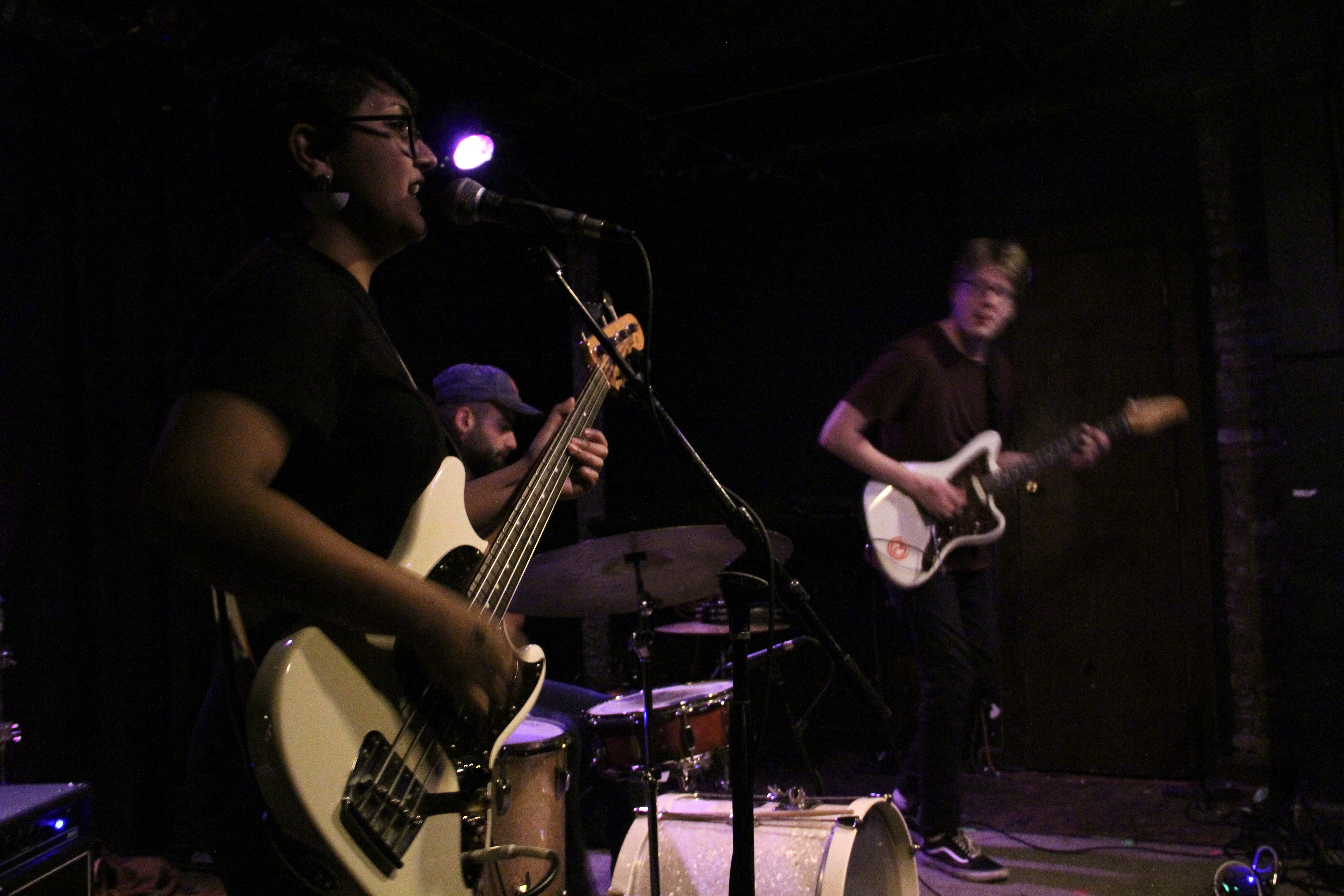
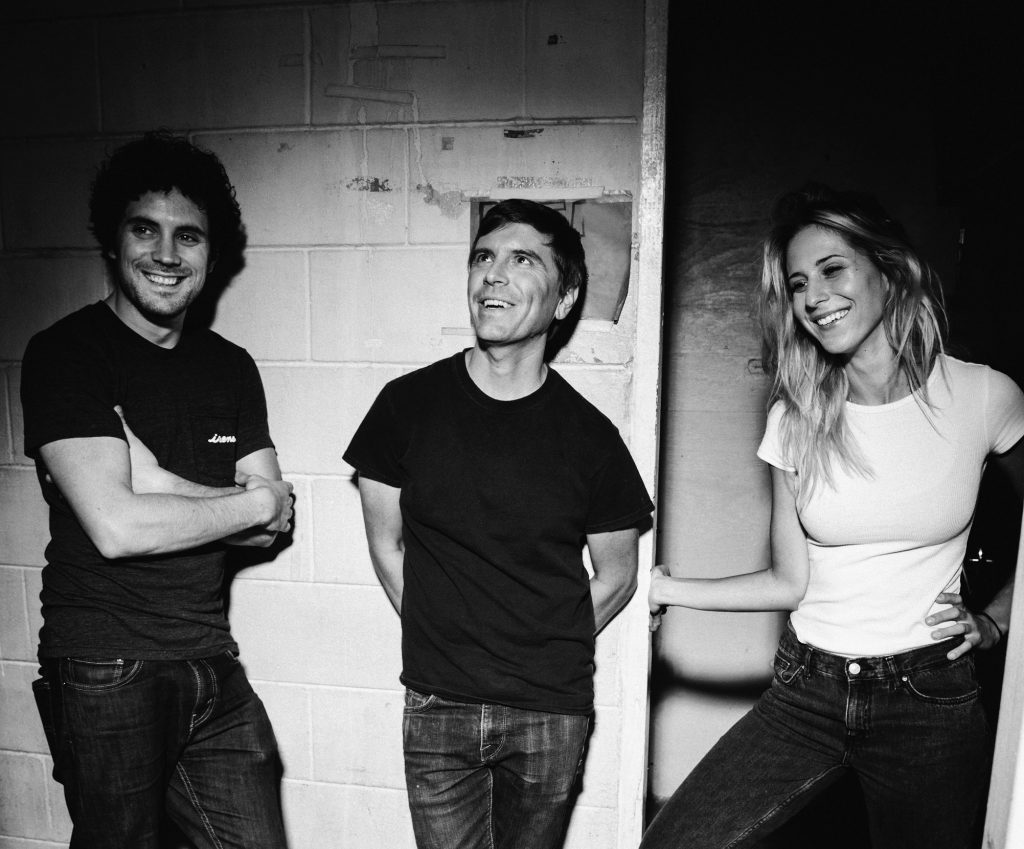
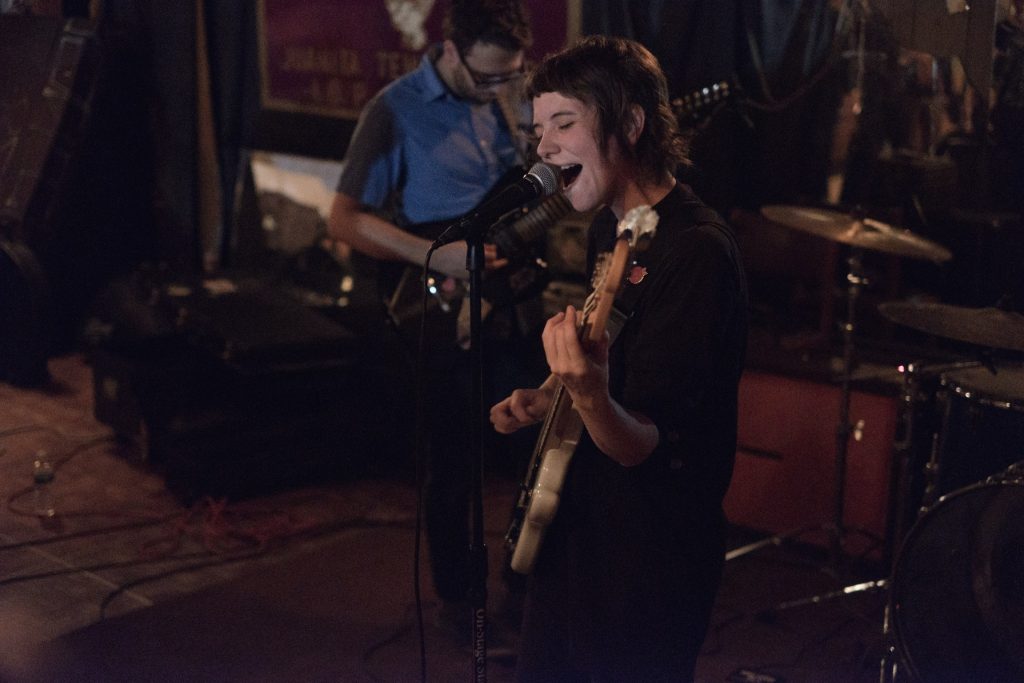
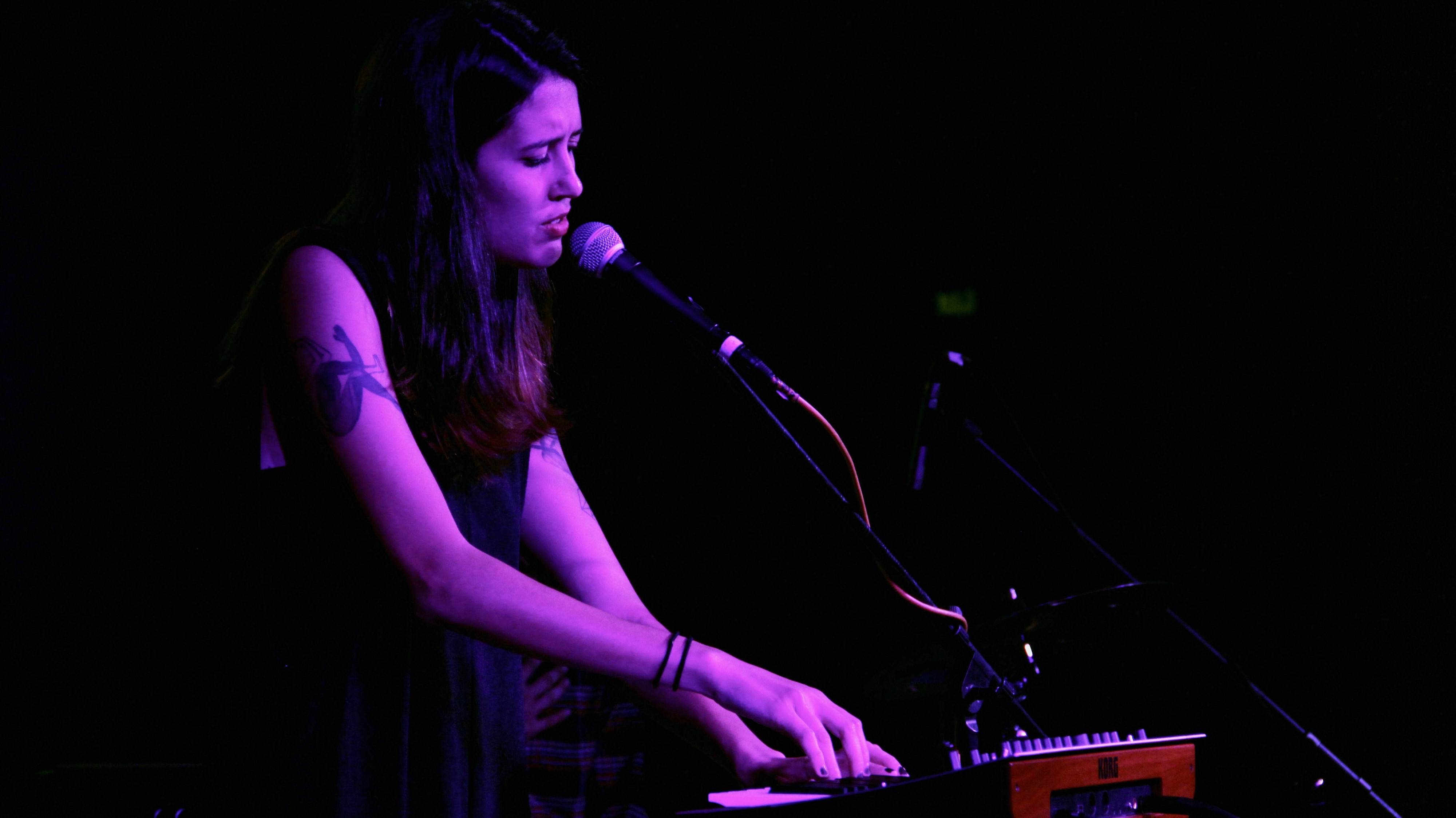
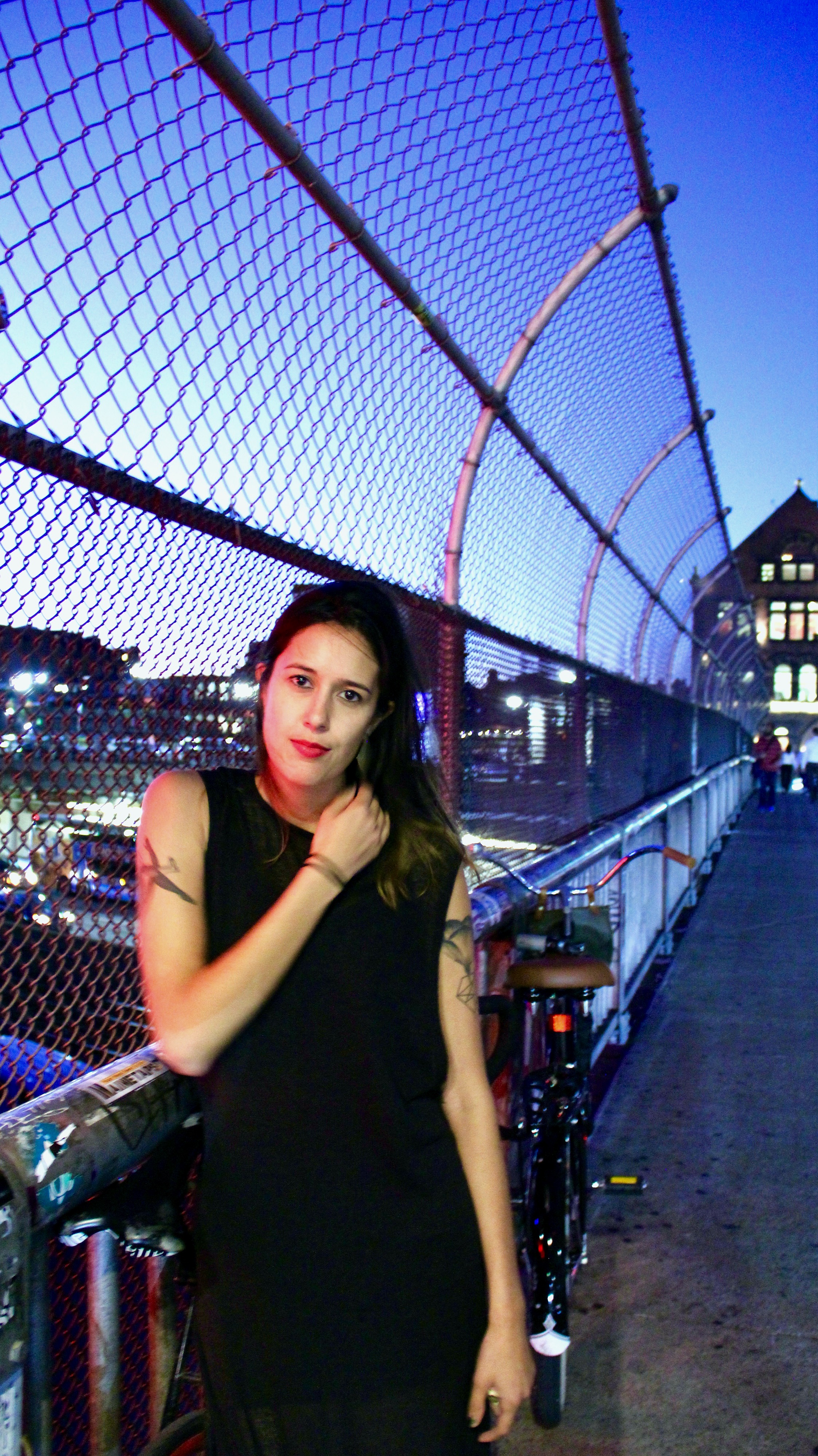
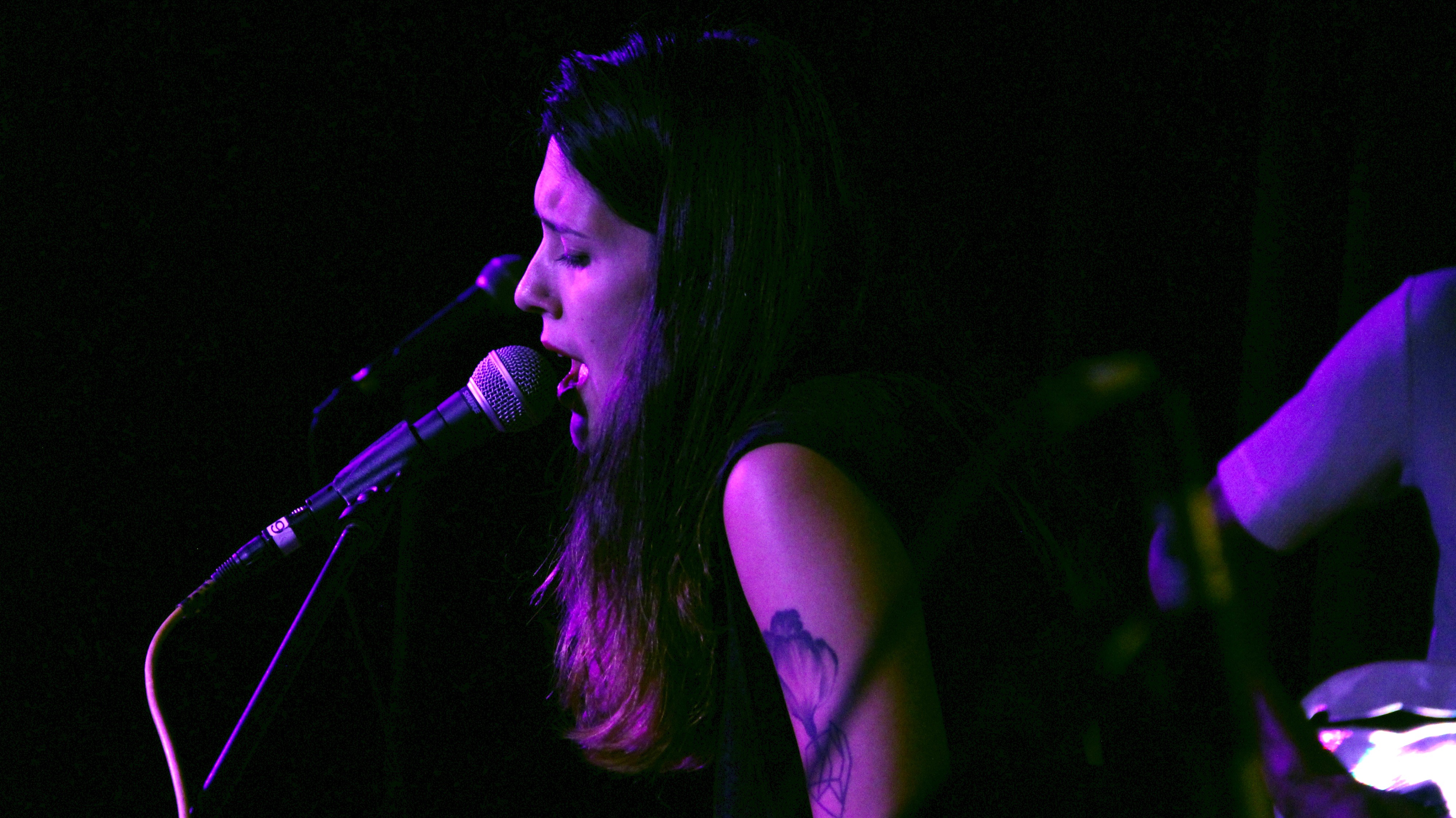
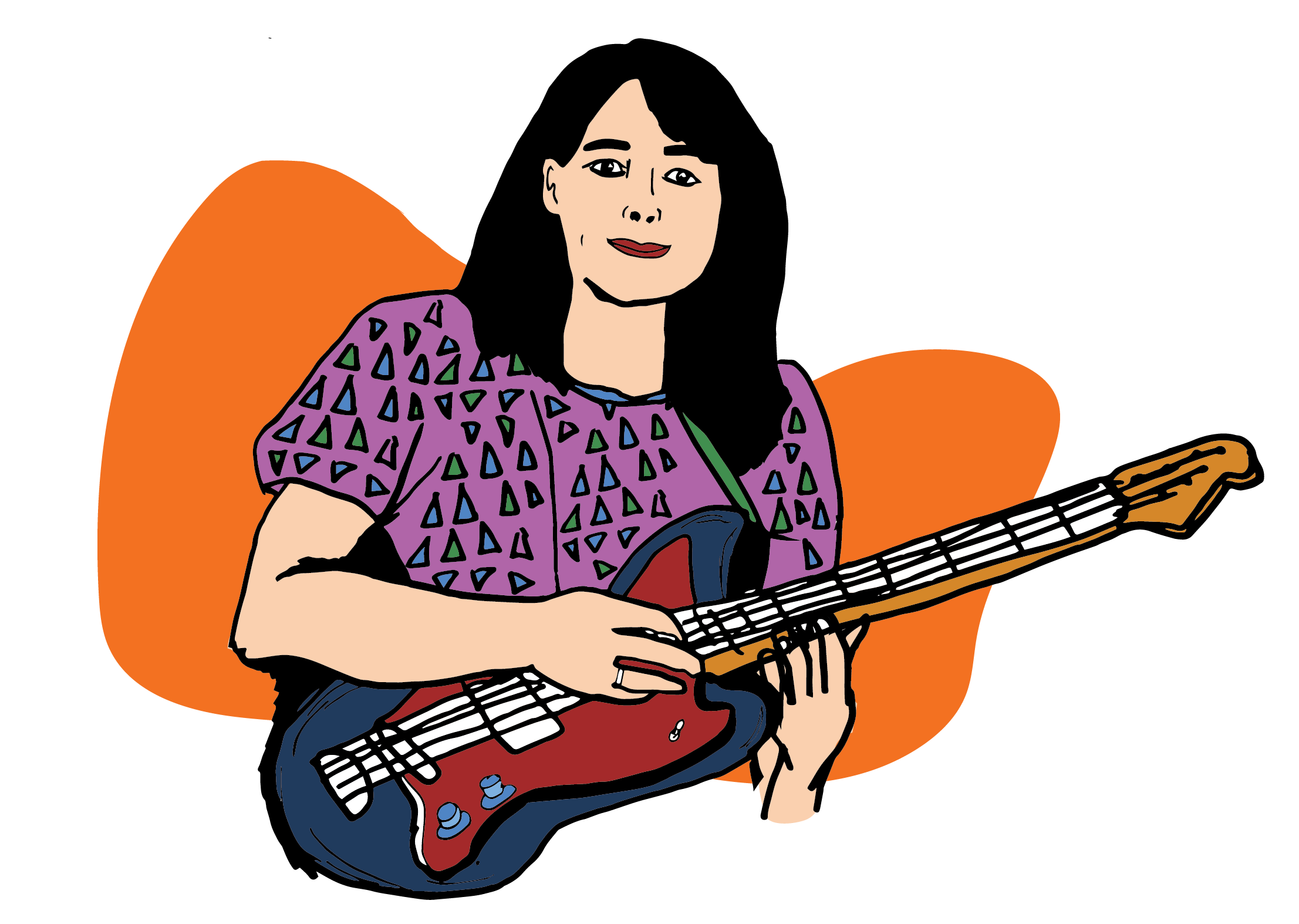
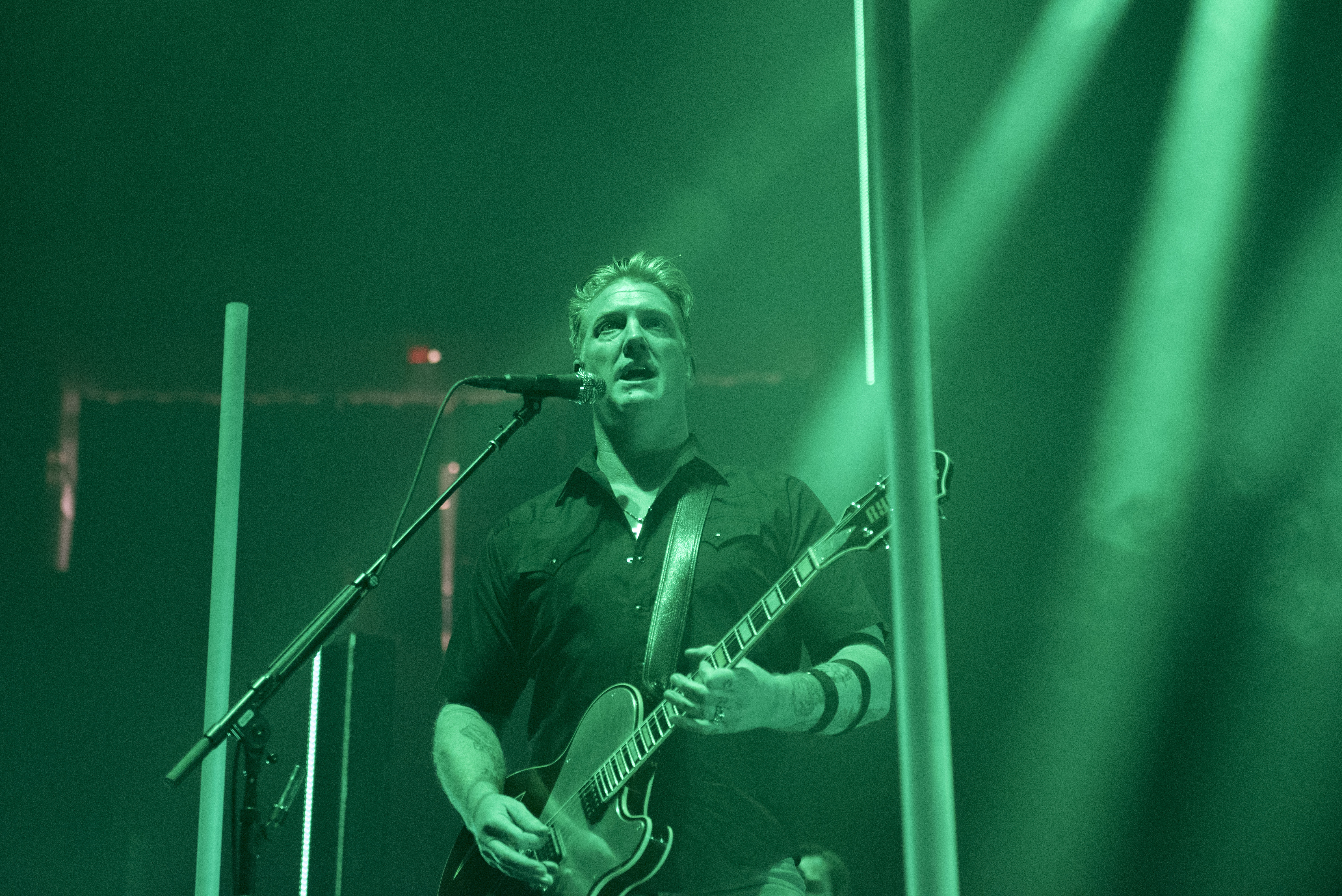
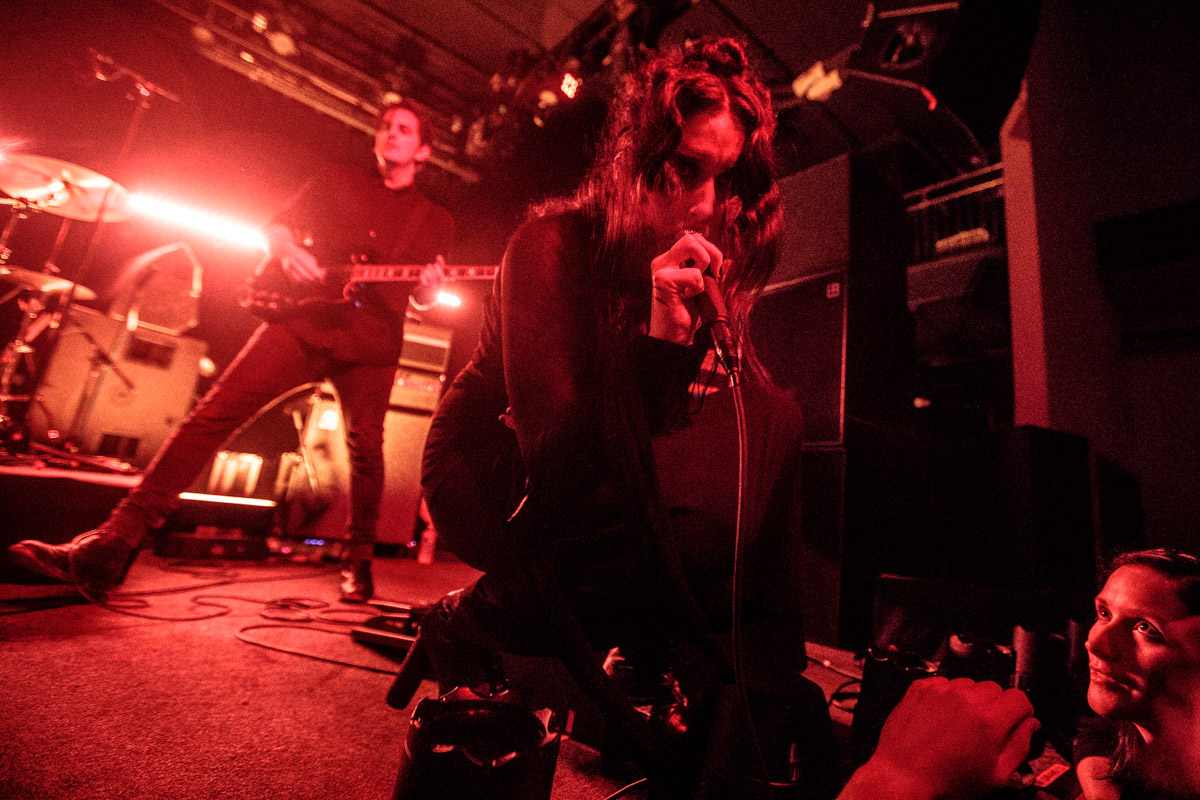
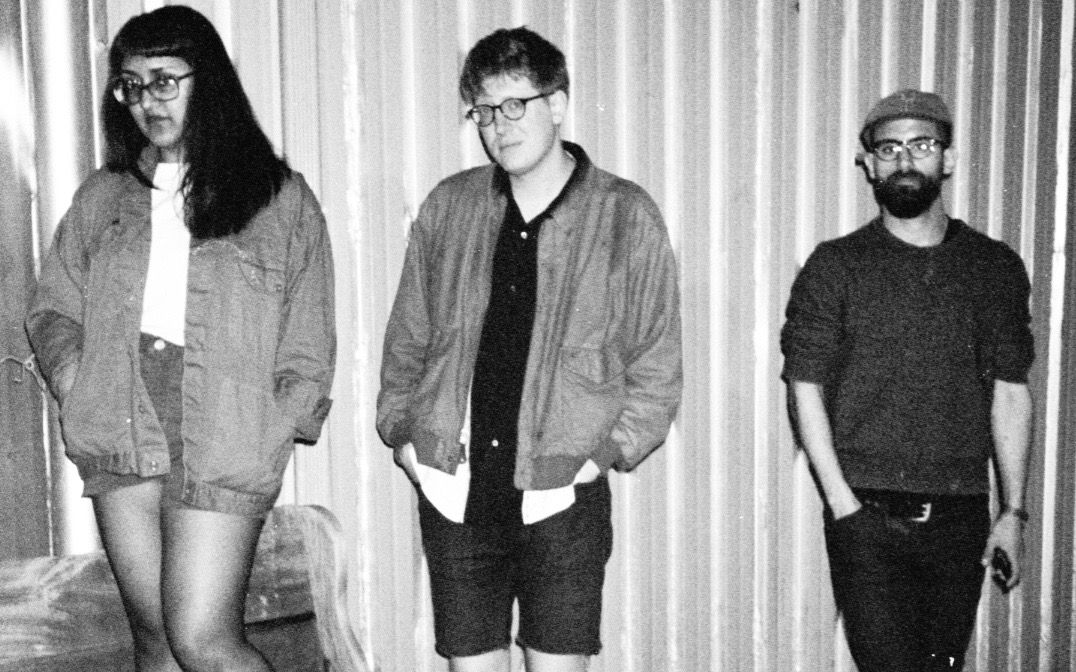
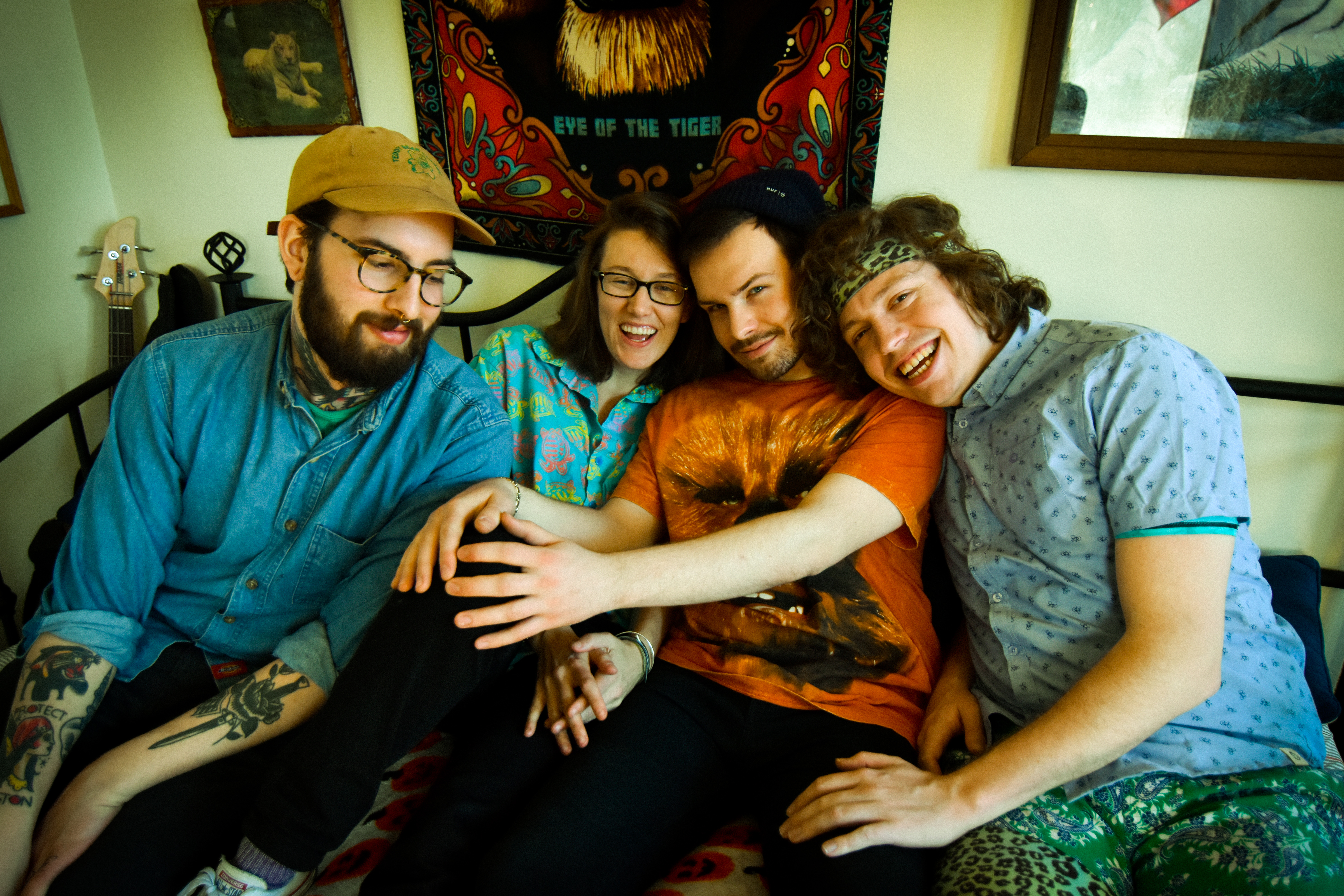
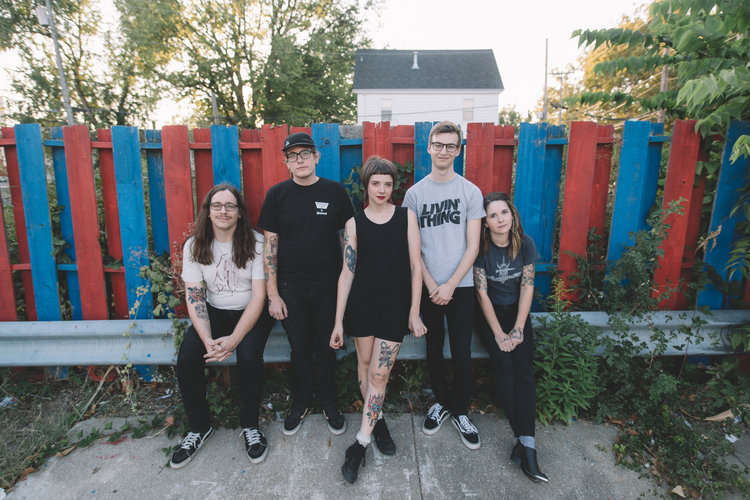
Mini Dresses came out to the Great Scott last Sunday, 10/22/17, alongside Bong Wish and Lina Tullgren to celebrate the release of their self-titled album, out now on Joy Void. The show was a night of dreamy escape – Bong Wish’s set was the most psychedelic of the night, with the lighting to match. Mariam Saleh performed solo and was able to pull off a shocking amount of complexity in her execution of material. She ended her set in a manner that amused and bemused, laying face-down in the middle of the crowd. Lina Tullgren introduced a rawer element into the night; despite her full backing band, the artist was able to bring a shocking amount of tenderness. There is a built in distance to Tullgren’s writing, it draws you in but puts up barriers as you are left hoping to glimpse its full depths. The two openers set the crowd up for a night of blissful dwelling in the moment and Mini Dresses delivered just that. Their songs are a bit more immediate than their openers, telling raw and personal narratives that are somehow universal experiences. In both recordings and on-stage, Lira and Caufield manage to balance out each other’s energy in the mix and arrangements.
We premiered the video for the song “Hands Down,” a lo-fi home video that will inspire outfit envy, and interviewed the band before the show – check that out here as well as our photos from that night.
With the release of their second full-length effort Losing, Nashville punks Bully are two-for-two when it comes to albums that make you want to run through a brick wall. 2015’s Feel Like is full of monster riffs, sing-along choruses, and cathartic moments. Losing is similar in kind, but the band leaves a little more breathing room to give the music and lyrics a chance to hit home.
Alicia Bognanno is the mastermind behind Bully who writes the music, produces their records, and is the owner of the best scream in music right now. Because every profile or interview with Bognanno is required by law to mention that she studied under Steve Albini at Electrical Audio in Chicago, you might be expecting a highly-produced sound. But Bully’s music isn’t marked by glossy production and studio tricks; it’s raw energy and emotion captured in precisely the right way.
We got the chance to catch up with Bognanno before Bully embarks on a tour in support of Losing. They’ll be playing a sold-out Great Scott on November 12th. If you don’t have tickets to the show yet, you should find a way to get some.
Allston Pudding: Was there anything you learned between the albums—whether it was writing, recording, touring—that you decided to do differently on this one?
Alicia Bognanno: There’s minor things that I think creeped in subconsciously. Something I learned off the first record from playing live so much was that it’s kind of a bummer being strapped to the microphone the whole time. I think there was a little bit of space written in the second record intentionally, so that it was a little more enjoyable for me to perform live and so that I could step away from it a little bit.
Overall it seemed like a smoother process since Reece [Lazarus], Clay [Parker], and I had got the first one out of the way and we’re used to working together and we’re back in the same studio. It just seemed like we were a little bit more prepared and everything went smoother than the first one.
AP: In what ways have you seen the band grow from when you first started to where you are today?
AB: We’ve all been playing together now for about four years and I think we’re more used to each other musically. We understand what we’re looking for and that’s always helpful. I think we’re tighter live. And I think we’re just more aware of each other and what’s going on, especially when we’re playing live.
AP: When you’re starting to make the new album what’s the first step you take?
AB: I just sit down in my music room and make myself play. There were a lot days where I’d sit down and it was successful and I felt like I’d written something I really loved. Other days I just made myself play to keep my muscles moving and write lyrics even though I knew I was going to redo them or not keep them. But that’s how it always starts; it’s just me sitting down with a guitar. In some cases if I’m bored I’ll sit with a bass and go from there.
AP: At the time you were doing that, did you know it was becoming an album?
AB: I was aware it was becoming an album. We had toured the first album for a year and a half. We were all ready to get working on the second record so we pulled the plug on touring so that we could come home and focus on the second record.
AP: With your production background do you enter the studio with everything pre-planned or do you like to get into the studio and tinker because of your comfort in there?
AB: I map out everything. I have the info lists mapped out and the microphones I’m going to use for everything. I have EQ notes and compression notes; I plan out everything.
AP: So is there room for improv when you get into the studio?
AB: There is when we get in there, but we’re on the clock. All the basic stuff that’s just going to take up time if I don’t prepare is worked out. A lot of the time if a microphone isn’t sounding how you want it to sound or the kick drum doesn’t sound right, little things like that, you’re going to switch it up and toy around. Especially for vocal stuff, there’s a lot more messing around. We usually set up about 7 different mics and shotgun all of them and see which one sounds the best. Basics are always mapped out to save time.
AP: Do you consider how difficult songs will be to play live when recording?
AB: For us it’s not usually too difficult because we keep everything pretty much the same as the live show. We don’t add a lot of extra parts as far as synthesizers or outside instruments that we don’t have live. For the second record there’s vocal stuff we can’t replicate live because there’s not 6 of me. That’s kind of the extent of what we can’t do live. But yeah, we track it all playing together and then we’ll overdub what needs to go on from there. We already have a sense of how it’s going to come off live prior to tracking because that’s how we had been practicing. It’s not too much of a stretch.
AP: The new album is very personal, how do you balance divulging too much personal information with writing what you really want to say?
AB: I don’t write things that I’m uncomfortable with putting out there. I’m comfortable with everything that’s been released. They are personal, but I don’t have to 150% explain every detail about what I was thinking or how I was feeling for every song. If I’m uncomfortable with something I won’t release it.
AP: What kind of emotional release do you get from being in a band and making music?
AB: It’s a very therapeutic experience. That has part to do with why I like to scream: it feels good and I get a sense of release when we play it live. It’s calming.
AP: Do you find that playing is a good way to get out those emotions from day-to-day life?
AB: Definitely. To me playing a live show is like if you’ve ever—do you run?
AP: I hate to run, actually.
AB: Ok, I hate running too which is why I play music [laughs]. I feel like it’s a similar feeling for people who like running. It releases endorphins and makes you feel good. It’s like you’re working through certain emotions. It’s a creative outlet for negative energy.
AP: Does it ever get tiring to be that emotional? Are there any days where you don’t have that emotion to get out?
AB: Sometimes, but not really. Usually I can relate a song to how I’m feeling even if it’s not exactly what it was intended to be when I wrote it. Playing live is just a rush. More than likely it’s going to be a solid show. People are going to be there because they like the record and you can feed off that energy. It makes it easier to tap into that emotion.
AP: Let’s end with kind of a cheesy question: what’s your favorite part of being in Bully?
AB: Probably getting to play shows every night. There’s so much of it that I love. I’d be really sad if it wasn’t happening. Being able to play every night and tour is a really rewarding feeling.
On Thursday October 19th, central Illinois-born band Looming played the basement of Hardcore Stadium (aka Cambridge Elks Lodge) on their first East Coast tour. The band is out in support of their new full length Seed released on No Sleep Records. In addition to Looming, Boston area bands Aviator (also a part of the No Sleep Records family), Rainsound and oldsoul were on the bill as well. Look through photos from the show below and make sure to read our interview with Jessica Knight of Looming from before the show as well!
Nandi Rose Plunkett is one of the most genuine people I have had the pleasure of interacting with. I am always delighted when our paths cross. Her presence feels as soothing as it is engaging, much like the music she produces as Half Waif. This year’s release form/a is a testament to the growth she has undergone as a musician in her own right, while being cast in the spotlight as a member of the band Pinegrove. The attention is not always positive – this summer Plunkett pennedan op-ed for Esquireabout the difficulty she has faced being the only female member of her other project. We sat down a few weeks ago to catch up while enjoying a cider at Bukowski’s where, even in dealing with latent misogyny, Plunkett embodied more than her fair share of grace and strength. Talking about her frustrations with a society that still silently endorses patriarchal values, she spoke to actively recognizing and discussing issues as they come up:
“It is crazy to me how much we take from the time we are young and how a lot of these experiences we take for granted as ‘Oh, this is part of how our life is.’ I’ve had a number of young girls come up to me at shows and it is the best thing, for them to say ‘Oh, I’ve read your article, thank you for that,’ but a couple of them have said that they didn’t even realize this was happening to them until they read it. And that’s scary, that we absorb it to a point that until we start talking about it we’re maybe not even aware that it’s an issue until we step outside of ourselves and examine it – and then we can get angry. […] I think talking about it such an important first step in recognizing it happening in your life and then helping others become aware of it. I’ve had so many men say that they didn’t even realize that was what [someone was] doing or being so outraged on my behalf but It’s like how do you not know that this happens? And they don’t! So I hate that it’s our responsibility to talk about it but it’s also a role I will gladly take on if I know that it’s going to make even one small footstep of change in the right direction. I think that’s where we have to start, just talking to each other and to men and shouting at the system until it starts to break.”
Her op-ed was released during a wave of female-centric journalism in popular media which has been a breath of fresh air in the often masculine driven space of arts journalism. But in the past five months leading up to the start of her current tour with Julien Baker, Plunkett has mostly dedicated herself to the process of writing and recording in a house in Chatham, NY, with the instrumentalists who contribute to her project, Zack Levine and Adan Carlo. The trio are all also members of the band Pinegrove – the other members of which have been living in a house in Kinderhook, 10 minutes away.
It wasn’t an easy find – Plunkett laughed while recounting the stress of the band’s first rent application being rejected. “There aren’t that many properties to rent in rural, upstate New York,” she said. “It’s not like the city where there’s all of these places – there were two houses we could have gotten in that area that really worked for us.
“The first one we got rejected from because basically they saw that we were musicians and I think that they freaked out. Then the next one we kind of learned our lesson and realized we have to send in our New York Times and New Yorker mentions which is so hard to be like – Well look what [we do] – but people need to see that because when they see ‘musician’ they think, “Oh, they’re not going to be able to pay, they probably don’t have real jobs, and they’re just making music in the woods.” But this is our profession, this is how we make money! We’re very fortunate that we’re in the position that we can support ourselves doing this.”
The band has been hunkered down since then and the house has served as a necessary change of scenery for Plunkett, who has found comfort in the wildlife and solitude. She said:
“Writing this album you get so internal, so in your head and in your stories. So I would go to the pond [outside of the house] to clear my head and what I loved about it was that there’s this whole other ecosystem that was existing right in front of my eyes that had nothing to do with me. Those animals didn’t care that I was standing there watching them. They didn’t care about my problems, they didn’t care that I was a musician or that I was writing an album – this whole pond life just went on. It was a really good way to get out of my head and put a lot into perspective.
I think that was something I couldn’t have done in the city. When you’re in the city you’re around all of these other people and their problems and they tell you about them – you’re very strapped into the sagas and dramas of people’s lives but when it’s just you and nature, it’s… soothing. […] There’s so many people around but you get mired down into your own shit and a lot of people’s, and being in nature, upstate, has been really freeing and I think that’s really given me the opportunity to focus on this album in a way that I couldn’t before.
It has been the most fun I have ever had working on a body of work. It’s been so fun! And it’s really reminded me that what I love about what I do is writing and recording. I also love performing and that’s cool too – there are elements of touring and performing that are really hard for me! I have really bad stage fright and lugging your gear, all of that, it’s challenging. So it’s good to remind myself why I’m doing this is for the love of writing and creating and being in the woods and getting to do that for five months is such a gift and a really good reminder for me.”
While setting has played a crucial role in the formation of this album, there are far more influences at play, the most overt being the passing of Plunkett’s grandmother.
The first time I met Plunkett she introduced me to her mother and sister. They were there to see her perform at the Great Scott, beaming with pride during her set. When we met up again in England she was coming from her grandmother’s house, whose gardens were taken out of a fairy tale. Needless to say, family is a crucial part of Plunkett’s identity and the passing of her grandmother was weighing heavy on her, only a few days after attending the funeral. Reflecting upon their relationship, the insight she provided into the special place grandparents hold, the passing of loved ones, and the beauty of simplicity:
“She really was one of the most important people in my life and there’s something really pure about your love for your grandparents. It’s not caught up in the complicated relationships that you might have with your parents or your siblings – that one generation removal allows it to exist in a really special place. I’ve really come to realize that something that my grandmother taught me was the purity of love and she lived this really simple, clear life. She was in the same house for fifty-seven years after she lost her home in Uganda, after her husband died unexpectedly from a heart attack and she had four young kids – she just found herself suddenly in England, this Indian woman, and she lived in that house ever since and didn’t work. So I’ve often wondered, what did she do all those years? What sustained her? And I came to realize – and even more so now after reading her journals since she passed – she was sustained by the love for her family and she was also a spiritual woman, had a guru she was very devoted to, and she just lived this really clear life. That was how she was in the world and it doesn’t always feel possible to live that way but I think I strive now to bring that out into the world in the way that she did. She was just gracious and grateful – she always talked about how lucky she was in her life and she had a really hard life but she wasn’t ever complaining. She just really was such a light to so many people. Even at the end all of the nurses, the hospital staff loved her and wanted to adopt her as their grandmother. She was just a really light being and I carry that with me now and I feel really grateful that I was her granddaughter and that I get to look in the mirror and I see her now, I see her even more.
“Something I’ve realized since she passed is that when she was alive she held her spirit inside of her but since she has passed her spirit exists in new ways. And so I kind of get to have more of her than I did when she was alive because I get to carry more of her spirit since she can’t carry it in her body anymore. And that makes me feel really good that I have that light inside of me now. I’m so glad that I’m working on this album that’s dedicated to her, it already was for her. It was already inspired by her in a lot of ways and she heard some of it before she died.
“Her passing – even though she was 95 – it was very unexpected. It was very quick, she went into the hospital and within a day and a half she passed. So we didn’t really have time to process that but I’m so glad that I have this now, this project that is about to come out. I’m about to finish it, this week I’ll be done with my vocals and I get to put that out to the world in her name.”
Lavender is sure to be an exploration of peace in one’s surroundings but also the people who are crucial to your sense of self. “[You are] looking at your past while simultaneously looking at your future, in that you’re going to become that,” she said. “It’s heavy stuff but it’s important.”
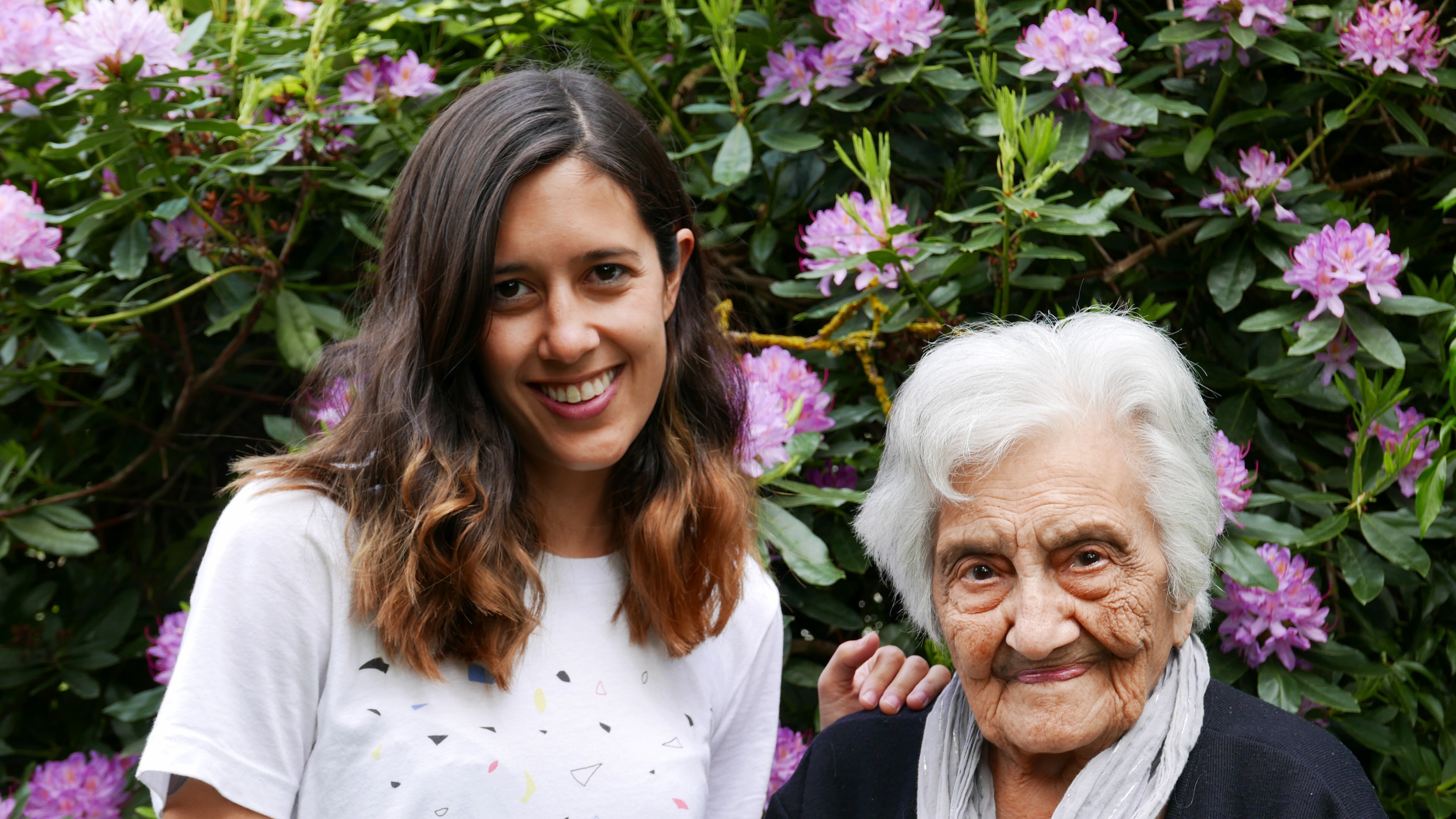
A photo of the artist and her grandmother, photo courtesy of artist and taken by Zack Levine.
This thread of reflection, anticipation of the future, and grounding was brought up again when we spoke about the vinyl release of her previous album Probable Depths and its inspiration, “Dream Cycle.” The song cycle was up-cycled into several tracks on the album with help from friend and producer Zubin Hensler, including “Nest” and “Tactilian.” Getting “Dream Cycle” ready for its release was a process that started for Plunkett in 2014. The three years since have seen plenty of growth for her; she recounted the following tweet, laughing at her progress while acknowledging it.
I make my music files like I make my bed-polished on the outside, a tangled mess beneath-& would b horribly embarrassed if u got into either
She commented further on that idea of nodding to ones’ past self:
“Listening to it, it sounds like a younger version of myself. I wouldn’t record those songs like that anymore but I think it’s cool to honor where we’ve come from and honor our journey as artists. To not have any pretenses, and not be like ‘I just came together! I just arrived put together!’ No way, I’ve been doing this for years and you really hear – I hope you can hear the trajectory. All of the original vocal tracks I did re-record for this but in the original ones made with the internal mics on the computer, they all have sirens in them […] and I kept some of them because I think it’s a testament to where I was, physically, when I was recording it.”
While we still have to wait a bit until the release of both Half Waif and Pinegrove’s new albums, Plunkett’s reflections on her own work provide an insight into identity that is universal – we are never done learning, growing, and reflecting.
On account of the Salem Witch Trials and the lost, evil souls of so many dead colonists, New England in the fall is irrevocably associated with everything spooky. Boston’s countless graveyards and ghost tour companies finally feel appropriate once the wind gets brisk and the leaves begin to fall. Autumn in Boston is also associated with something equally as scary: the return of thousands of students. Though any giant group of young adults would come with its own brand of terror, the students of Boston have also contributed a beloved college rock scene to the city. While bands like Dinosaur Jr., the Pixies, and the Breeders have become symbols of Boston’s music scene and ‘90s indie rock in general, one of their peers—Helium —has stayed lurking in the shadows.
Helium frontwoman, Mary Timony, is not from Boston but moved here for school (specifically, Boston University). Timony, a D.C. native, stated in a article for Talkhouse, “I always really loved D.C., but I found a home in Boston. To be honest, there were a few more women playing in Boston, so I probably felt like I fit in more.” Some of those women were Kim Deal and Juliana Hatfield, who both have ended up reaching a certain cult-icon status that Helium for some reason has only grazed.
While signed to Matador Records, Helium gained minor national success during their tenure. Forming in the early 1990s, the band hung around Cambridge and Allston-Brighton, practicing at the Sound Museum in Brighton. In the same Talkhouse piece, Timony describes writing “Superball,” one of Helium’s first and most iconic songs, on a mattress on the floor of her apartment on Pearl Street, just blocks from her old stomping ground, the Middle East.
Though Helium managed to sell out local venues at the peak of their career, their music was weird enough to keep them relatively fringe, even for indie standards. Timony’s lyrics became Helium’s calling card and, ultimately, what set them apart from their Matador lablemates. The band was irrevocably tied to imagery of witches, magic, and wilted flowers, with the Village Voice eventually calling Timony “Sylvia Plath in Dr. Martens” in 2002.
Granted, calling any woman of the ‘90s someone else but “in Dr. Martens” is generally cliche, but Timony’s lyrics had a dark and lilting wit that was undeniably in the same family as Plath’s poetry. “Hook me with your hand/ my mouth is full of sand/ Everything I say ends with and,” Timony sings in a husky falsetto on “Superball.” Her enigmatic lyrics are beautiful, seemingly nonsensical and not of this dimension; the world of Helium exists in an entirely different universe. She feels “creepy and sullen and running out of room in my little tomb” on their most successful song, “Pat’s Trick.” Even her description of general malaise has a ghoulish tone. The same is true on “I Am A Witch,” in which Timony softly proclaims, “I’m a witch, I’m a hag, a crone.” Her husky monotone is not timid, nor is it seductive; it’s terrifying, maybe not for the average listener, but at least for whomever she is specifically addressing. However, when she sings the chorus–– “I’ll never leave you alone/ ‘Til you admit how strong I’ve grown”–– it sounds almost as if she’s trying to convince herself as much as she is whatever bozo who fucked her over. As a vocalist, Timony became known for being relatively soft-spoken, but Helium’s music suggested that there was something stormier brewing beneath the surface. Her repeated allusions to witches, magic, and renaissance faires is evocative of New England’s trademark creepiness. Her Plathian lyrics, particularly on “I Am A Witch,” are quietly powerful; she’s not on stage smashing her guitar in a ripped up baby doll dress, but the reservedness of her physicality makes her power even more intimidating.
Timony perhaps was never awarded the same reverence as her witchy contemporaries, like Courtney Love or Babes In Toyland’s Kat Bjelland, because she was so unextreme. It’s a cliche at this point that men in music can be whatever they want to be and women are generally expected to be either ethereal goddesses or riot grrrls, but it still rings true. There is little room in mainstream pop culture for women who fall somewhere in the middle— women who aren’t brash and loud, but aren’t traditionally feminine, either. Timony isn’t quiet, but she tends to fly under the radar— someone who’s perhaps not enough of an exhibitionist to thrive in New York or L.A., which is what makes her and Helium so quintessentially Bostonian. On an instrumental level, Timony’s words and the band’s haunting melodies are reminiscent of the spookiness of riding the commuter rail into Salem after dark. It’s campy and real, simultaneously. By embracing their classical music training, Helium expanded the boundaries of what indie music could be. It can be fantastical, mythical, and impossible to place within a specific genre. Timony opened the door for women to be in bands without making the fact that they are a woman in a band an explicitly political act.
As Timony said herself in a 1996 interview with the Boston Globe, “It felt cool to become a witch or a monster in song, and then it was like I was becoming powerful by becoming this creature and saying whatever I wanted.” Helium broke up in ‘98, but Timony’s more recent music still holds the same mystical power. Even though she ultimately left the city to play in Wild Flag and Ex Hex, Helium’s specter still lingers. Boston is notoriously haunted, not only by colonial era spirits, but by the ghost of college rock past.
Last weekend, veteran desert-rockers Queens of the Stone Age played at Boston University’s Agganis Arena alongside British rock duo Royal Blood. Despite only dropping their debut album three years ago, Royal Blood is no stranger to performing alongside rock stars, having toured with the Foo Fighters in 2015. After picking up some valuable road experience from the Foos, the band went on to win the “Best British Group Award” at the Brit Awards, and later release their second record in 2017. By joining Queens of the Stone Age for the “Villains Tour,” Royal Blood continues to build upon their already impressive rock-resume, and after the Agganis show, they added yet another line of references to their CV. Likewise, Queens of the Stone Age has shown that they’re still capable of producing groundbreaking new music with the 2017 release of their seventh studio album, Villains. Scoring high praise from music critics all-around, Villains is undoubtedly one of the band’s best records to date, with credit given in part to producer Mark Ronson for helping them to adapt their signature sound into one that is noticeably poppier and smoother.
By 7:00pm, the sold-out arena was packed and buzzing with excitement as Royal Blood took to the stage. Ordinarily, rock fans don’t encounter many two-piece bands, and it’s even less common that one of these bands are able to entertain an arena full of people, but that’s exactly what they did.
Already well on their way to mastering a formidable stage presence, Royal Blood walked on to their entry music. Vocalist Mike Kerr addressed the crowd with a quick hello, then dived into the first song with drummer Thatcher. After an explosive opening, Kerr took a moment to share his genuine pleasure and excitement about playing the sold out arena, then introduced Thatcher, and the two charged into hit single “Little Monster.” Embellishing upon the already action-packed song, Thatcher took the crowd for a ride on a heart-thumping two minute drum solo. Doused in colorfully strobed lighting, the band powered through the first half of their set, eventually stopping as Kerr eyed a new instrument. “I like to call this a keyboard,” joked Kerr as he set down his bass and said, “That’s what we’ve been calling it at least. This is a new song called “Hole in Your Heart,” bare with us!” Afterwards, Kerr switched back to bass, and the band continued their set with “Figure It Out.” Other highlights from their set included the two members taking turns playing solos, Kerr leading the crowd in an orchestral cacophony of cheers, and Thatcher surfing through the crowd like a modern Poseidon. At the end of their set, the band stayed humble, thanking the crowd, and introducing the night’s main event, Queens of the Stone Age.
Just shy of 10:00pm, Queens of the Stone Age strutted on stage, led by the one and only Josh Homme. Setting the tone for the night, the band opened up with a diverse yet carefully chosen selection of songs including, “If I Had a Tail,” “Monsters In The Parasol,” and “My God Is The Sun,” before dipping their toes into new material with of of Villain’s most upbeat and danceable tracks, “Feet Don’t Fail Me.” In between each song, Homme injected some of his humor and charisma with transitions, ranging from witty one-liners like, “You paid, we’re here, let’s fuck,” to longer spun-out rants like his introduction to “No One Knows,” where he said, “We travel, we travel, we travel every day for 22 hours. But for two hours a day it’s this. Thank you for this. So dance, drink–––and I hope everyone gets laid tonight. Because life is hard, but if I’m not mistake it’s Saturday fucking night. And you know what that means, right? It mean anything could happen. Anything, anything at all.”
Aside from his witty transitions, Homme dominated the stage with his immense presence, fueled by the rest of the band’s powerful performances, particularly the non-stop drumming of Jon Theodore. Despite being the newest member of the band, having only joined in 2013, Theodore was treated with the same status as his senior bandmates, and given plenty of opportunities to show off his skills through jaw-dropping drum solos. Likewise, bassist Michael Shuman and guitarist Troy Van Leeuwen were given leeway to showcase their impressive musicianship, including Shuman’s wild stage antics and Leeuwen’s mastery of the lap steel guitar.
At one point, Homme began sipping tequila, and invited a doubtful fan to find out for himself what he was drinking, passing the glass into the floor. And to his amusement, the fan verified the contents of the drink, and then handed it back, to which Homme responded, “You guys must be crazy to give it back! This show’s just gonna get worse and worse. Just kidding–––I’m a functioning alcoholic.” And after spinning a tale about his dog Bob, Homme transitioned the band into a wild performance of “Domesticated Animals.” Other highlights from the setlist included the playful, “Make It Wit Chu,” in which Homme led the boys and the girls in a sing-off to let loose, the new album’s title track, “Villains Of Circumstance,” and fan-favorite, “Go With The Flow,” to end the set. After a 2-minute breather, the lights came back on for two more songs: an unexpected “Un-Reborn Again,” and the band’s unofficial anthem and classic closer, “A Song For The Dead.” Overall, between the fresh sound Royal Blood and the always evolving sound of Queens of the Stone Age, the crowd was was given more than their fill of guitar solos, drum fills, and bass lines, resulting in an epic night of rock and roll.
Maybe it’s our proximity to Salem, maybe it’s her slow but constant evolution into doom music, but every time Chelsea Wolfe visits town she sounds slightly more sinister. Her unique blend of electronic, industrial, folk, and metal always brings various characters to her shows. And in the shadow of her new album Hiss Spun, at the sold out Sinclair on October 19, she (and her fans) were giving off more ominous vibes than ever.
If Universal Studios and Chelsea Wolfe teamed up to create the park’s most terrifying ride, it would look and feel a lot like the intro to Wolfe’s set last Thursday. A pulsating black circle lit up in the center of stage as foreboding sound effects played. The touring band, including old friend and drummer Jess Gowrie, dressed in all black (including their instruments), and pointedly took the stage before Wolfe. Then, the ethereal doom queen strode towards the mic, draped in black like a tru goth, and opened their set with one of the fuzzier, heavier songs from Hiss Spun andtrack one, “Spun.”
As the band descended farther into the set with more songs from the newest album, like “16 Psyche” “Vex,” and “Particle Flux” Gowrie and Wolfe shone. Gowrie on drums was hypnotizing. There were so many massive motions and sounds coming from that kit, but with such preciseness, especially considering the balance between the thundering percussion and operatic vocals. On “Vex,” Sara Taylor from the openers, Youth Code, lended her gritty vox and hot-blooded energy.
Wolfe then sprinkled in a couple tracks off last year’s album Abyss and plunged into throwback “Tracks (Tall Bodies)” off Apokalypsis. All the while, the artist swayed softly to the gigantic monsters she molded into songs. Sometimes, as she sang about things like family secrets and bleeding out, she’d play a riff, then recoil. She never once smiled during the performance, but there might’ve been a sneer. The renditions of “Feral Love” and “The Warden” toward the end of her setseemed like crowd favorites.
A couple more selections from Hiss Spun, “Halfsleeper” off The Grime and the Glow (2010), and a haunting crescendo wrapped up a night of heavy, industrious rock for Chelsea Wolfe and her fans, who went all-out for this pre-Halloween show. Goths were serving lewks last week, and gave a prolific artist the time and respect she demands (and deserves). Here’s hoping that the aura of Chelsea Wolfe continues to smolder, and her talents in metal, electronic, folk lyricism continue to unfold.
Mini Dresses haven’t left our radar since their arrival in the Boston music scene, and we wouldn’t have it any other way. The dream pop outfit kicked off the 2016 round of Converse Rubber Tracks shows with Deerhunter at the Sinclair and have been popping up on the odd bill with your local faves Vundabar, Major Stars, and new label mates Horse Jumper of Love, as well as Montreal based TOPS.
Their self-titled was released on Joy Void last month – it’s a lo-fi, high impact album packed with crunchy harmonies, Garageband recordings, and tape hiss. We were able to hang with the band in anticipation of this release back in December of 2016 and the final product is exactly as foreshadowed.
We are especially excited to premiere the music video for the track we got a peak at during that last interview, “Hands Down!”
Speaking to us about the music video, Lira and Caulfield gave some insight into the artistic vision behind the video and the track’s songwriting. Read on for some additional discussion of the band’s recording process, nightmare tracks on the album, and the importance of artistic agency.
Allston Pudding: The video for ‘Hands Down’ has the very organic feel of an @artwerk666 video mixed with a rom-com outfit changing montage. What made you choose that artist direction for this particular song?
Mini Dresses: Ha, yes, nice referential material there! We were joking about how we wanted a structuralist video, almost, a video with just one type of shot, with minimized focus on just a few technical ideas (a wind machine, a cloth, different outfits…since there is a line in the song about a wrinkled shirt, the images are all about draperies). We used a cheap DV camera, which automatically lent the video a “cam girl” vibe, which works perhaps since the song deals with voyeurism and unrequited love.
AP: “Hands Down” is one of the standout tracks on your new album for me, partially because its simplicity allows for greater resonance. What made you choose to release a video for this track in particular?
MD: The lyrics of the song are already so cinematic — we thought it was funny to have a pared down video accompaniment for the track, which is so contained as a visual idea. Lira at times almost acts out the narrative of the song with her gestures and facial expressions, but it’s almost all on the level of suggestion.
AP: Your use of double tracked vocals and the lyrics to “Hands Down” strike a very fine balance of the personal and the universal experience of women; did you intend that resonance or was that how the story ended up telling itself?
MD: A little bit of both; while there are definite autobiographical markers in the lyrics (namely the geographical features like the persimmon tree and the lake shore), the lyrics sort of wrote themselves, and the song took on a life of its own. With the juxtaposition of the harmonized parts with the lead vocal, we tried to create tension between a single narrator and an echo/memory ripple/third-party observer, suggesting the persistence of memory, even if you don’t quite understand what it is you’re trying to remember…It’s funny, because Lira wrote the lyrics in a romantic state of mind, but after living with the song for a few years, it’s hard not to notice the sinister dimensions of the story.
AP: Was that a thread you found for the rest of the self-titled LP?
MD: An overarching narrative theme is the inner lives of women — their disappointments and attachments, reveries and coming to grips with realities.
AP: Your show on Sunday will be the release show for your self-titled – what do you think is the ideal setting for listening to this album?
MD: With headphones, or on vinyl! We don’t have any marching orders for how to experience these songs! Seasonally speaking, perhaps it strikes best in fall.
AP: You recorded this album all over the place, using a variety of effects and recording processes. Can you describe some of that experience and techniques for us?
MD: Yes, we recorded in a number of different studio locales, at different scales. As always, we did many things at home. Ian Doerr was our trusted recording engineer throughout, and had to suffer our indecisions when it came to production. The album was initially tracked all analog, with reel to reels, spring reverbs, tape echoes, antique mics, and the like, though we mixed digitally by and large. Sometimes we mangled the digital masters on cassette machines in states of ill-repair. We naturally gravitate towards equipment that is broken or half-functioning, charismatically, and we try to retain the resulting sonic imperfections in the final mix. We believe very much in a lo-fi ethos that isn’t about laziness or an aesthetics of unintentionality, and more about letting machines speak for themselves in a way that is essential to the songs.
AP: What was the common thread in production?
MD: It truly was pell mell. Almost every song had a different tracking process, tape machine, and mastering process. So it could be a commonality to say that we wanted to find a process unique to each song.
AP: Where was the strangest place that you recorded?
MD: Our kitchen (one of our favorite places to record to this day).
AP: Were there any tracks that came easily or evaded you a bit?
MD: “Emily” was a nightmare. Four different versions, and at one point that song broke the Tascam 388. It is the album opener, if only for the grief it caused.
AP: Mini Dresses was released on Joy Void – what made that label the right choice for you and this album?
MD: Joy Void approached us with a friendly and straightforward contract. We had been ambivalent about labels (and formalizing music releases, period) for a while, but when Joy Void approached us in person at a show, we thought “this is going to be okay”. They’ve been generous and easy collaborators. Their priority has been to preserve our agency and self-determination as a band, of which we’re so grateful. And it is more than a plus that they are local. Their offices (with Run for Cover) have hosted awesome charity concerts in Allston, and many are excited to see what else is in store.
Listen to Mini Dresses below and be sure to come out to Great Scott for their record release show this Sunday, 10/22!
Mini Dresses, Lina Tullgren, and Bong Wish Sunday October 22, 2017
Great Scott
1222 Commonwealth Avenue
Allston, MA 02134
“Perennials” premieres today via AP as the first-ever release from Death Party, Boston’s newest punk rock quartet. This band produces almost exactly the kind of music you’d expect from a band with a name like “Death Party”– ethereal, yet noisy and singable emo tunes— but they don’t stop there. Bandmates Dylan Vadakin, Amy Hoffman, Mario Taddeo, and Chance Wells have formed a project that’s fueled by anything but what’s conventional. Against all odds, the band succeeds in blending a vibraphone, angsty lyrics, and a pop punk sound.
Dreamed up in 2016, Death Party draws inspiration from alt/emo bands of the late aughties, but replaces their lead guitar with Vadakin’s vibraphone. The combo of dreamy sounds from a vibraphone and Taddeo on drums manages to create a sort of whimsical mess. Queue Hoffman’s vocals, which harken back to singers like Hayley Williams or Slingshot Dakota’s Carly Comando, along with Wells on bass, and we’ve got a single with real depth, previewing an EP with real potential.
Listen to “Perennial” by Death Party via bandcamp below.
Death Party’s EP Skate Away is scheduled to drop November 3rd. Don’t miss their release show at O’Brien’s on November 14th with You Vandal. Get your $8 tickets here, and RSVP via Facebook.
Over the years the Midwest has given us many influential acts within the emo/indie genre. We’re talking real emo like that birthed from the title of the late ’90s/early 2000s Deep Elm compilation albums known as The Emo Diaries.Polyvinyl was another label pumping out music with similar emotions and vibes during that time frame. The modern band Looming has built their house on top of the foundations laid by such music. Jessica Knight, Brandon Carnes, Mitch Baker, Nick Demarco, and Cassie Staub are carrying on the torch, spreading that Midwestern vibe to other regions of the US on tour now. Is Looming part of the emo revival? They definitely have emo embedded within their DNA but certainly are not defined by it. The band’s newest release Seed is out now, demonstrating a maturity in writing and lyrical content. We chatted with Jessica Knight of the band recently via email.
Allston Pudding: This tour is in support of your new album Seed. What is Seed all about?
Jessica Knight: It’s mostly about moving, being alone, and not being able to find Stag in Texas
AP: The album seems to have a sonic evolution from Nailbiter. Is there a story on the writing of the new songs that may differ from how the previous full length came about?
JK: Well, with Nailbiter we all lived in the same city, so the writing process was more of an in-the-same-room show-me-your-riffs sort of process. But, before we wrote Seed Brandon moved to Pittsburgh, where Cassie lives, and I moved to Austin, while our other members stayed in Springfield ,so it became more of a digital process of sending demos and videos back and forth until studio time.
AP: What is it like to have your producer also play in your band?
JK: It’s been really beneficial because it allows us more time to work with parts in the studio, and it is a lot of the reason we are able to operate from different parts of the country, because we could continue experimenting and writing in the studio and allows us to go back and change things as we decide to.
AP: What are the band’s favorite songs on Seed? Which song would you say shows the most growth as far as songwriting/arrangement for Looming?
JK: We all like all of the songs for their own reasons and we all probably have different answers as to which single is our favorite. Mine changes every day. We tried to write this record as a piece so i don’t know if the songs stand alone as well as they do together.
AP: How are fans receiving the new album?
JK: I think they like it? Do you like it?
AP: How much of your new live set is Seed vs previous material?
JK: It is 70% Seed and 29% Nailbiter and 1% bad jokes.
AP: As originally a Midwestern band, do you find it hard to connect with people on the East Coast?
JK: This is our first tour out there so I’ll let you know.
AP: Are there regions that you prefer to tour more than others?
JK: Depends on the season. I’m partial to Texas because I miss it. Nick says Texas because of the tacos. Cassie likes the cold. Brandon likes anywhere that has Taco Bell. Mitch is not here for me to ask because we have a fill in for him this time around.
AP: Can you share how Cassie and Nick became involved within the Looming camp?
JK: Me and Nick have been in two other bands before (Our Lady and Asthma) and have already toured together in the past. It was really easy to get him involved. Cassie has helped us out since the beginning and has been incredibly supportive, so when we decided it was time to add the extra sounds and third guitar for our record, we really wanted her to come along, because it really comes down to choosing people that you know you want to be stuck in a van with and these two are it for us.
AP: What made you choose to release Seed and Nailbiter on No Sleep Records?
JK: No Sleep chose us.
AP: Can we expect more solo tours in between full band tours?
JK: Yes! I’m going on one in January that should be announced very soon!
AP: What’s it like to be out on your own without the rest of the band backing you?
JK: Sad and weird and terrifying but also personally empowering. I feel better than ever when I finish those tours successfully. I also have been really lucky to hit the road with other bands who become my temporary support system and that is special on its own
AP: What artists influence you to continue to write music?
JK: Check out this playlist No Sleep Records made to answer this exact question! You can probably tell which ones are Brandon and which ones are me.
AP: Have you discovered any new bands or artists out on the road that you think are worthy of sharing?
JK: Constantly! This time we have been really lucky to play with some incredible locals. Stay-In played their first Chicago show with us and it was really rad. Moss Jaw and Oliver Houston in Grand Rapids were great. We always love playing with Choir Vandals. In Bloomington, IN we played with a band called Ghastly. Every night we get to see something new
AP: What is the hardest thing about maintaining a successful and active band while spread out over multiple states?
JK: The organization it requires to pull off practicing before a tour lol. The weeks leading into tour are EXTREMELY hectic for us because we all have to be in the same city for a week prior. But since we don’t see each other as often we are usually pretty stoked to be reunited.
AP: Outside of the band, what hobbies or interests keep the band members balanced and occupied when not playing in Looming?
JK: Nick is a tattoo apprentice and is constantly drawing everywhere we go (seriously go follow nick_knack_pattywhack on ig, his stuff is great)
Brandon screen prints and bikes a lot and him and Cassie play in another band called Night Night Boy.
Cassie likes baths, Deep Space Nine, chopping wood, building fires and going on long walks in the cemetery.
Mitch likes specialty soda pop, VR, whacky potato chips and hanging with his dog Rudy.
I just smoke a lot and watch Real Housewives with my dog.
AP: Would you consider Looming a lover of puppies? Some people just are not “dog” people.
JK: We all love dogs except Cassie. She likes rats and her two kitties. I work for Rover because I love dogs so much !!!!!! Nick has a loaf of bread known most commonly as a Corgi. I have a Morky. Brandon and Mitch both have labs. (editor’s note: we wish they sent us photos of the aforementioned animals)
Get a taste of Looming with this live video below, and check the details for tonight’s show!
Aviator, Looming, oldsoul, Rainsound
Thursday October 19, 2017
Hardcore Stadium
55 Bishop Allen Dr.
Cambridge, MA 02139